Absenteeism Statistics 2026: Cost and Trends


Used by recruiters, executives, consultants, and more.
Absenteeism Statistics 2026: Cost and Trends
Absenteeism costs US employers $225.8 billion annually in lost productivity, or $1,685 per employee. Workers with poor mental health miss nearly 12 days per year compared to 2.5 for others. The national absence rate held at 3.2% in 2025, matching 2024's rate, and 12 billion workdays are lost globally each year to untreated mental health conditions alone. Unplanned absence is a growing crisis with measurable costs.
Absenteeism - workers missing scheduled work for unplanned reasons - has been climbing steadily across industries. While some absence is unavoidable, the scale and cost of unplanned absences reveal a deeper problem. Mental health challenges, chronic stress, disengagement, and burnout now drive more missed days than physical illness. The result is a workforce that is increasingly unreliable and organizations that bear enormous hidden costs.
This post presents 19 statistics that quantify the scope, cost, and drivers of workplace absenteeism. These numbers come from the CDC Foundation, Bureau of Labor Statistics, Gallup, and major workforce health studies.
Key Absenteeism Statistics (2026)
- Absenteeism costs US employers $225.8 billion annually in lost productivity, or $1,685 per employee (CDC Foundation).
- Workers with poor mental health report nearly 12 days of unplanned absence per year, compared with just 2.5 days for everyone else (Gallup).
- The US national absence rate held at 3.2% in 2025, matching the elevated rate recorded in 2024 (BLS).
- Highly engaged teams show 78% lower absenteeism than disengaged teams, one of the largest effects in Gallup's engagement research (Gallup Q12 Meta-Analysis).
- 12 billion working days are lost globally every year to depression and anxiety alone, at a cost of $1 trillion in lost productivity (World Health Organization).
- Global employee engagement fell to just 20% in 2025, and the resulting disengagement cost the world economy an estimated $10 trillion in lost productivity (Gallup State of the Global Workplace 2026).
- Nearly 3 in 4 (72%) US employees face moderate to very high workplace stress, one of the leading drivers behind rising unplanned absence (Aflac WorkForces Report).
1. Absenteeism costs US employers $225.8 billion annually
The CDC Foundation calculates that worker illness and injury cost US employers $225.8 billion annually in lost productivity. This figure encompasses both direct wage costs for missed days and the indirect productivity losses from disrupted workflows, delayed projects, and overburdened colleagues who must cover for absent workers. The $225.8 billion represents a baseline cost that exists even in healthy organizations. It does not fully account for the cascading effects of absence on team morale, client satisfaction, and project timelines. The true economic impact of absenteeism is almost certainly higher than this already staggering figure.
Source: CDC Foundation - Worker Illness and Injury Costs US Employers $225 Billion Annually
2. The average cost of absenteeism is $1,685 per employee per year
Across the US workforce, absenteeism costs an average of $1,685 per employee per year. For a company with 500 employees, that translates to $842,500 in annual productivity losses from unplanned absences alone. The per-employee cost varies significantly by role and industry. Senior employees and specialists cost more to replace temporarily, and industries with tight scheduling - healthcare, manufacturing, and logistics - face disproportionately higher costs when workers fail to show up. The $1,685 average masks wide variation, but it provides a useful baseline for calculating organizational impact.
Source: CDC Foundation - Worker Illness and Injury Costs US Employers $225 Billion Annually
3. Workers with poor mental health miss nearly 12 days per year vs. 2.5 for others
Gallup research found that workers with fair or poor mental health report approximately 12 unplanned absence days per year, compared to just 2.5 days for workers with good to excellent mental health. That is a nearly fivefold difference. The mental health absence gap has enormous financial implications. Generalized across the US workforce, these extra missed days cost the economy an estimated $47.6 billion annually in lost productivity. Mental health has become the leading driver of unplanned absence, surpassing physical illness, family obligations, and transportation issues.
Source: Gallup - The Economic Cost of Poor Employee Mental Health
4. The national absence rate held at 3.2% in 2025, matching 2024's rate
The Bureau of Labor Statistics reported that the US national absence rate for full-time workers was 3.2% in 2025, matching the 3.2% rate recorded in 2024 and up from 3.1% in 2023. (BLS notes the 2025 figure is an 11-month average that excludes October, due to the federal government shutdown, so it is not strictly comparable to prior years.) At the scale of the US economy, even a steady 3.2% rate represents tens of millions of lost workdays a year. The rate has now held at this elevated level for two consecutive years after rising from 3.1% in 2023, suggesting that the factors driving absenteeism - mental health challenges, burnout, disengagement, and chronic illness - have not improved. Without intervention, the absence rate is unlikely to fall on its own.
Source: BLS - Absences from Work of Employed Full-Time Wage and Salary Workers
5. 12 billion workdays are lost globally each year to untreated mental health
The World Health Organization estimates that 12 billion workdays are lost annually worldwide due to depression and anxiety alone. The vast majority of these absences stem from conditions that are treatable but go unaddressed due to stigma, lack of access, or insufficient employer support. Twelve billion days is an almost incomprehensible number. It represents the equivalent of millions of full-time workers producing nothing for an entire year. The global scale underscores that absenteeism driven by mental health is not a niche problem affecting a few vulnerable workers - it is a pandemic-scale crisis affecting every economy on Earth.
Source: World Health Organization - Mental Health at Work
6. Highly engaged teams experience 78% lower absenteeism
Gallup's latest meta-analysis of engagement data found that highly engaged teams experience 78% lower absenteeism than their disengaged counterparts. This is one of the largest effect sizes in engagement research and establishes a direct, measurable link between how workers feel about their jobs and whether they show up. The 78% gap means that engagement is not a "soft" metric - it is a hard predictor of attendance reliability. Organizations that invest in engagement are not just improving satisfaction scores. They are directly reducing the unplanned absences that cost $225 billion per year.
Source: Gallup - Q12 Meta-Analysis Report
7. Unplanned absences cause 36.6% productivity loss vs. 22.6% for planned absences
The average productivity loss from an unplanned absence is 36.6%, compared to 22.6% for a planned absence. The difference exists because planned absences allow managers and teams to prepare, redistribute work, and maintain continuity. Unplanned absences create chaos. The 14-percentage-point gap between planned and unplanned absence costs makes a strong case for proactive health management. Every absence converted from unplanned to planned - through better health support, mental health days, and flexible scheduling - reduces the productivity impact by more than a third.
Source: TeamSense - 20 Statistics Centered Around Employee Absenteeism
8. In Canada, 500,000 workers miss work weekly for mental health reasons
Every week, 500,000 Canadian workers miss work due to mental health-related issues, costing the Canadian economy $51 billion annually. This weekly cadence illustrates that mental health absenteeism is not episodic - it is a persistent, recurring drain that affects a large fraction of the workforce at any given time. The Canadian data is particularly valuable because Canada tracks mental health absences more rigorously than many countries. The 500,000 weekly figure likely represents a lower bound for other developed economies with similar workforce characteristics but less comprehensive tracking.
Source: CAMH - Mental Health, Stigma and the Workplace
9. Healthcare support roles show among the highest absenteeism at 4.1%
The Bureau of Labor Statistics found that healthcare support occupations have one of the highest absenteeism rates of any occupation group at 4.1% - well above the national average of 3.2%. Frontline healthcare workers face unique pressures: physical demands, emotional exhaustion, exposure to illness, and staffing shortages that prevent adequate rest. The elevated rate in healthcare is particularly concerning because these are the roles where absence has the most direct impact on human wellbeing. When healthcare workers cannot show up, patient care suffers. The high absenteeism rate among healthcare workers is both a symptom of an overstressed system and a cause of further system strain.
Source: BLS - Absences from Work of Employed Full-Time Wage and Salary Workers
10. Workers with poor sleep miss 2.29 days per month, costing $44.6 billion
Research on sleep and workplace productivity found that workers with poor sleep quality miss an average of 2.29 workdays per month due to sleep-related impairment. Across US businesses, this costs $44.6 billion annually. The sleep-absenteeism connection is often overlooked. Poor sleep affects concentration, mood, immune function, and decision-making. Workers who sleep badly are more likely to call in sick, more likely to have accidents, and more likely to underperform on the days they do show up. Sleep quality has become a workplace productivity factor that organizations can no longer ignore.
Source: Gallup - Poor Sleep Linked to $44 Billion in Lost Productivity
11. Unplanned absenteeism costs businesses approximately $600 billion annually
Some analyses place the total cost of unplanned absenteeism at approximately $600 billion per year across US businesses, or roughly $4,080 per employee. This higher estimate includes indirect costs that the CDC Foundation's $225.8 billion figure does not fully capture: temporary worker costs, overtime for remaining staff, lost business opportunities, and the management time consumed by absence administration. The gap between the $225.8 billion and $600 billion estimates reflects how much of absenteeism's true cost is invisible. Direct wage costs are only the beginning. The ripple effects through teams, projects, and client relationships multiply the impact significantly.
Source: Forbes - Understanding The Rise Of Workplace Absenteeism In 2024
12. Lost productivity per employee can reach $11,000 annually from absences
Detailed workforce analysis shows that lost productivity from absences can reach $11,000 per employee per year when accounting for all direct and indirect costs. This figure is significantly higher than the CDC Foundation's $1,685 average because it includes the downstream effects on team productivity, overtime costs, and the reduced output of returning workers who need time to catch up. For high-skill, high-salary roles, the per-employee cost is even higher. When a senior engineer, consultant, or project manager misses a week, the impact on deliverables, client relationships, and team velocity often exceeds their weekly salary.
Source: Sedgwick - Absenteeism Is on the Rise
13. Absenteeism is rising, signaling deeper workforce health problems
The rise in US absence rates - from 3.1% in 2023 to 3.2% in 2024, where the rate has now held for a second year in 2025 - reflects a workforce that is becoming less healthy, less engaged, and less resilient. Contributing factors include the long-term mental health effects of the pandemic, rising burnout rates, an aging workforce, and the chronic disease burden. The elevated, sticky rate matters because it indicates that current interventions are insufficient. Despite billions spent on wellness programs and employee assistance programs, absence rates have not come back down. The factors driving absenteeism are growing faster than the solutions being deployed to address them.
Source: EA Workforce - Workforce Reliability in 2026
14. Chronic diseases are the leading driver of absenteeism costs for employers
CDC research found that chronic health conditions - including obesity, hypertension, physical inactivity, smoking, and diabetes - are the leading drivers of employer absenteeism costs. Workers with multiple chronic conditions miss significantly more days and cost significantly more per absence than healthy workers. Chronic disease management has become a workplace productivity strategy. Organizations that help employees manage chronic conditions through healthcare access, wellness programs, and workplace accommodations see direct returns in reduced absenteeism. Prevention is even more cost-effective, but it requires long-term investment that many companies are reluctant to make.
Source: CDC - Absenteeism and Employer Costs Associated with Chronic Diseases
15. Mental health-related absences cost the US economy $47.6 billion per year
Gallup estimates that mental health-related unplanned absences cost the US economy $47.6 billion annually in lost productivity. This figure is derived from the difference in absence rates between workers with good mental health (2.5 days per year) and those with poor mental health (nearly 12 days per year), extrapolated across the workforce. The $47.6 billion represents the cost of mental health that employers cannot access through standard wellness programming. Many workers with poor mental health never seek treatment, never use EAP services, and never disclose their struggles. They simply miss more work, and the costs accumulate silently.
Source: Gallup - The Economic Cost of Poor Employee Mental Health
16. Addressing absenteeism requires tackling engagement, not just attendance
The data makes clear that absenteeism is a symptom, not a root cause. The 78% gap between engaged and disengaged teams' absence rates shows that workers who feel connected to their work, their manager, and their team simply show up more reliably. Attendance policies, disciplinary procedures, and monitoring systems treat the symptom without addressing the underlying causes. Effective absenteeism reduction comes from improving the conditions that make workers want to be present: meaningful work, supportive management, mental health resources, and a culture where people feel valued and connected.
Source: Gallup - Q12 Meta-Analysis Report
17. Global employee engagement fell to 20% in 2025, costing $10 trillion
Gallup's 2026 State of the Global Workplace report found that global employee engagement dropped to 20% in 2025, down from a peak of 23% in 2022, marking the first time engagement has declined for two consecutive years. Low engagement cost the world economy an estimated $10 trillion in lost productivity last year, equivalent to roughly 9% of global GDP. Disengagement and absenteeism are closely linked: as shown above, highly engaged teams already show 78% lower absenteeism than disengaged ones. A shrinking share of engaged workers globally suggests that the conditions keeping people out of work - disconnection, burnout, and low morale - are becoming more common, not less.
Source: Gallup - State of the Global Workplace 2026
18. Federal government employees have the highest industry absence rate at 5.0%
Among all industry sectors tracked by the Bureau of Labor Statistics, federal government employees had the highest absence rate in 2025 at 5.0%, well above the 3.0% rate for the private sector and the 3.2% national average across all full-time workers. Public-sector workers overall averaged 4.2%, also elevated relative to private industry. The gap likely reflects factors common in large public-sector workforces: an older average employee age, more generous sick-leave policies, and higher unionization rates, which are associated with more absence being reported rather than hidden.
Source: BLS - Absences from Work of Employed Full-Time Wage and Salary Workers
19. Nearly 3 in 4 US employees face moderate to very high workplace stress
The 2025-2026 Aflac WorkForces Report found that 72% of US employees face moderate to very high stress at work, with burnout climbing to a six-year high. Gen Z has overtaken millennials as the most burned-out generation, with 74% reporting at least moderate burnout, compared with 66% of millennials. Chronic stress and burnout are consistently linked to higher unplanned absence, reinforcing the pattern seen throughout this data: as stress and disengagement rise, so does the number of days employees are unable to show up for work.
Source: Aflac - American Workforce Burnout Reaches 6-Year High
The Absenteeism Crisis: More Days Lost, Higher Costs
These 19 statistics show that absenteeism is not a minor operational inconvenience - it is a $225.8 billion annual drain (and potentially $600 billion when all costs are counted) that is getting worse, not better. The national absence rate remains at a multi-year high. Mental health is now the dominant driver of unplanned absences. And the gap between engaged and disengaged teams shows that absenteeism is fundamentally a people problem, not a policy problem.
The mental health dimension deserves particular attention. Workers with poor mental health miss nearly five times as many days as their healthier peers, costing $47.6 billion per year. Globally, 12 billion workdays vanish annually to depression and anxiety alone. These numbers dwarf the impact of physical illness and suggest that mental health support is the single most effective lever for reducing absenteeism.
The engagement data points toward solutions. When highly engaged teams experience 78% less absenteeism, the path forward is clear. Organizations that invest in meaningful work, supportive leadership, and genuine connection will see their absence rates decline. Those that rely on attendance tracking and disciplinary measures will continue watching their workforce become less reliable and more expensive.
Absenteeism costs $225.8 billion per year. Workers with poor mental health miss nearly 12 days vs. 2.5 for others. The most effective attendance policy is not a policy at all - it is a workplace where people genuinely want to show up.---
Keep teams aligned even when someone is absent
These 19 statistics show that unplanned absences create information gaps. When a team member misses a meeting, they miss the decisions, action items, and context discussed in that session. Catching up takes time - from both the absent worker and the colleagues who must bring them up to speed. Each absence creates a knowledge deficit that compounds across the team.
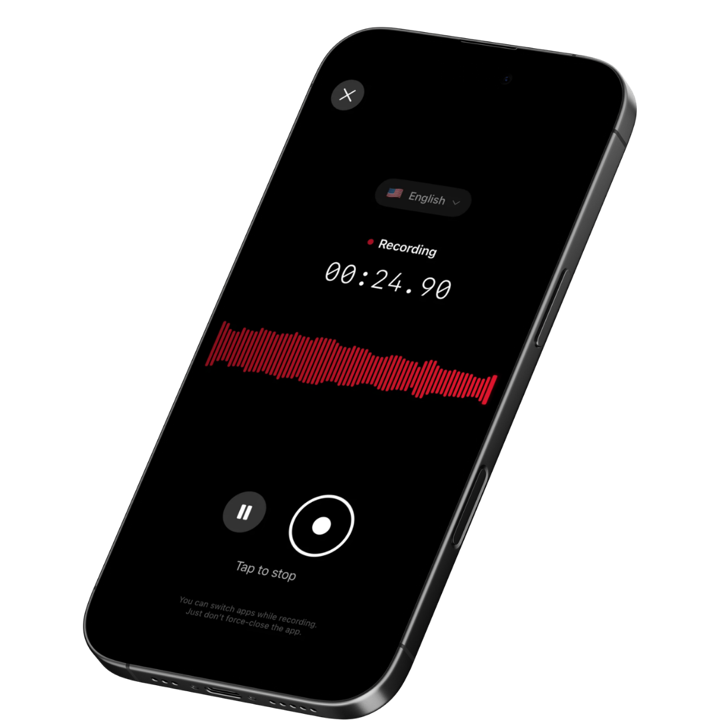
Voice-captured meeting records eliminate this problem. When every meeting is recorded, transcribed, and summarized by AI, absent team members can review exactly what happened in minutes - not hours. No one needs to repeat themselves. No decisions fall through the cracks.
Download Speakwise from the App Store and ensure no team member ever misses critical information again with AI-generated meeting transcripts, summaries, and action items that sync to Notion.
Join 10,000+ professionals who keep their teams informed and aligned regardless of who was in the room.
Get Speakwise Free
4.9-star App Store Rating | iOS Optimized

🎯 4.9★ App Store Rating | 📱 Built for iOS
