Active Listening Statistics 2026
Used by recruiters, executives, consultants, and more.
Active Listening Statistics 2026
70% of effective communication hinges on active listening. Yet only 2% of the population truly masters the skill. Active listening reduces workplace errors by 25%, cuts misunderstandings by 40%, and decreases turnover by 20%. Managers trained in active listening see a 30% boost in employee satisfaction. These 16 statistics show why listening is the most undervalued skill in the workplace.
Listening is the foundation of every productive conversation. It determines whether teams align, clients feel heard, and conflicts resolve or escalate. Despite its importance, active listening receives a fraction of the training investment that speaking, writing, and presenting do. The result is a workforce where nearly everyone talks but almost no one truly listens.
This post covers 16 statistics on active listening in 2026. These numbers reveal the measurable impact of listening on errors, engagement, retention, and leadership effectiveness - and the enormous gap between its importance and its practice.
1. 70% of effective communication depends on active listening
Active listening is not a soft skill. It is the majority of communication itself. Research shows that 70% of effective communication hinges on active listening. This means that the quality of any conversation, meeting, or negotiation is determined more by how well people listen than by how well they speak. Organizations that invest exclusively in presentation and writing skills while neglecting listening are optimizing the minority of the communication process.
Source: Gitnux - Active Listening Statistics 2025
2. Only 2% of the population has mastered active listening
Despite its critical importance, only 2% of people have truly mastered active listening. This statistic reveals an enormous competency gap. When 98% of people have not mastered the skill that drives 70% of effective communication, the cumulative impact on workplace productivity, relationships, and decision-making is incalculable. Active listening is simultaneously the most important and most neglected communication skill.
Source: Gitnux - Active Listening Statistics 2025
3. Active listening reduces workplace errors by 25%
The practical impact of active listening on work quality is measurable. Active listening reduces workplace errors by approximately 25%. When people truly hear instructions, context, and feedback, they execute more accurately. In specialized fields, the effect is even larger. Healthcare settings that implement active listening protocols reduce communication-related errors by nearly 50%.
Source: Stribe - Active Listening in the Workplace
4. 85% of misunderstandings stem from poor listening
The root cause of most workplace miscommunication is not unclear speaking. It is inadequate listening. 85% of misunderstandings in communication are attributed to a lack of active listening. This finding shifts the responsibility for communication breakdowns from speakers to listeners. Organizations that want to reduce miscommunication should invest as much in listening skills as they do in presentation and writing training.
Source: WiFi Talents - Active Listening Statistics 2025
5. Active listening cuts misunderstandings by 40%
When active listening is practiced consistently, the results are significant. Active listening reduces misunderstandings by 40%. Given that misunderstandings are the precursor to most workplace conflicts, errors, and delays, a 40% reduction cascades into improvements across every operational metric. The return on listening skills training is not abstract. It shows up in fewer mistakes, less rework, and faster alignment.
Source: Gitnux - Active Listening Statistics 2025
6. Managers trained in listening see 30% higher employee satisfaction
Manager listening quality directly predicts team satisfaction. Managers who received training in active listening saw a 30% increase in employee satisfaction scores. This improvement comes not from managers saying different things but from employees feeling genuinely heard. Satisfaction driven by listening is more durable than satisfaction driven by perks because it addresses a fundamental human need for acknowledgment.
Source: WiFi Talents - Active Listening Statistics 2025
7. 74% of employees say being heard boosts engagement and motivation
Three-quarters of employees (74%) report that feeling heard at work increases their engagement and motivation. Additionally, 40% of employees say they are motivated to perform better specifically when their managers practice active listening. These numbers connect listening directly to discretionary effort. Employees who feel heard go above and beyond. Employees who feel ignored do the minimum.
Source: Jobera - Active Listening Statistics 2025
8. Active listening decreases turnover rates by 20%
Retention responds measurably to listening quality. Active listening can decrease organizational turnover rates by 20%. When employees feel their concerns, ideas, and feedback are genuinely received, their attachment to the organization strengthens. The inverse is equally true: employees who feel unheard cite it as a primary reason for leaving. Listening is a retention tool that costs nothing but time and attention.
Source: Gitnux - Active Listening Statistics 2025
9. 64% of HR professionals rank active listening as the top leadership skill
Human resources professionals have identified what distinguishes effective leaders. 64% of HR professionals say active listening is the top leadership skill. This ranking places listening above strategic thinking, decisiveness, and communication - the traditional leadership competencies. The finding suggests that the most effective leaders are those who create space for others to be heard before making decisions.
Source: Jobera - Active Listening Statistics 2025
10. 55% of employees feel more valued when managers listen actively
Over half of employees (55%) report feeling more valued and understood when their managers practice active listening. Feeling valued is one of the strongest predictors of engagement, retention, and discretionary effort. This connection means that active listening is not just a communication technique. It is a validation mechanism that signals to employees that their contributions and perspectives matter.
Source: WiFi Talents - Active Listening Statistics 2025
11. Active listening boosts collaboration and productivity by 25%
The productivity gains from active listening extend beyond individual error reduction. Active listening enhances collaboration and team productivity by up to 25%. Teams where members truly listen to each other coordinate more effectively, avoid duplication, and build on each other's ideas. The 25% productivity improvement makes listening training one of the highest-ROI team development investments available.
Source: Jobera - Active Listening Statistics 2025
12. 70% of workplace mistakes are caused by poor communication
The connection between listening and error prevention is underscored by a broader communication statistic. 70% of workplace mistakes are caused by poor communication. Since active listening represents the majority of the communication process, improving listening quality directly addresses the root cause of seven in ten workplace errors. No other single intervention targets such a large share of operational failures.
Source: Gitnux - Active Listening Statistics 2025
13. Active listening is ranked a top soft skill by LinkedIn and the WEF
Active listening has moved from a nice-to-have interpersonal skill to a formally recognized professional competency. Both LinkedIn Learning and the World Economic Forum rank active listening as a top soft skill for 2025 and beyond. This institutional recognition signals that employers, educators, and policymakers view listening as essential infrastructure for the future of work.
Source: Agilus - Active Listening Essential Soft Skill 2025
14. More than half of managers fail to listen effectively
The listening gap is most consequential at the management level. Research shows that more than half of managers fail to listen effectively to their teams. Given that 70% of team engagement is attributable to the manager and 74% of employees say being heard boosts engagement, this manager listening failure is a primary driver of the global engagement crisis. Fixing manager listening could be the single most impactful intervention available.
Source: Stribe - Active Listening in the Workplace
15. 8-10 hours of listening training can cut conflicts by over 50%
The training investment required for meaningful listening improvement is surprisingly modest. Research suggests that investing just 8 to 10 hours in active listening training can reduce workplace conflicts by over 50%. It can also boost communication effectiveness by 85% and reduce burnout and turnover. Few other training programs deliver this level of impact in such a short time investment.
Source: Combined HCM - Boost Business ROI with Active Listening
16. Listening training increases participants' skills scores by 30%
Active listening is a learnable skill. Research shows that active listening training programs increase participants' listening skills scores by an average of 30%. This measurable improvement confirms that listening is not a fixed personality trait. It is a capability that responds to instruction and practice. Organizations that treat listening as a trainable skill see rapid and measurable returns.
Source: Gitnux - Active Listening Statistics 2025
The Listening Deficit: Why Organizations Underinvest in Their Most Important Skill
The pattern across these statistics is striking. Active listening drives 70% of communication quality. It reduces errors by 25%, turnover by 20%, and misunderstandings by 40%. It boosts productivity by 25% and satisfaction by 30%. Yet only 2% of people master it, and more than half of managers fail at it.
This deficit exists because listening is invisible. Organizations measure and reward visible outputs: presentations delivered, reports written, deals closed. Listening produces no visible artifact. The manager who truly hears their team creates engagement, retention, and trust - but these outcomes are attributed to "good management" rather than the specific skill that produced them.
The data makes the case for treating listening as infrastructure rather than instinct. Ten hours of training produces a 50% reduction in conflict and a 30% increase in listening scores. These are among the highest-ROI training investments available. Organizations that recognize listening as a strategic capability rather than a personality trait will build teams that communicate more effectively, make better decisions, and retain more talent.
Active listening is responsible for 70% of communication quality, yet receives less than 1% of most training budgets. The data says this is the single largest skill gap in the modern workplace.---
Never miss what matters in a conversation
Even the best listeners face a fundamental limitation: human memory. We retain only a fraction of what we hear, regardless of how attentively we listen. The details, nuances, and action items from important conversations fade within hours. Active listening helps in the moment. Capturing the conversation preserves it forever.
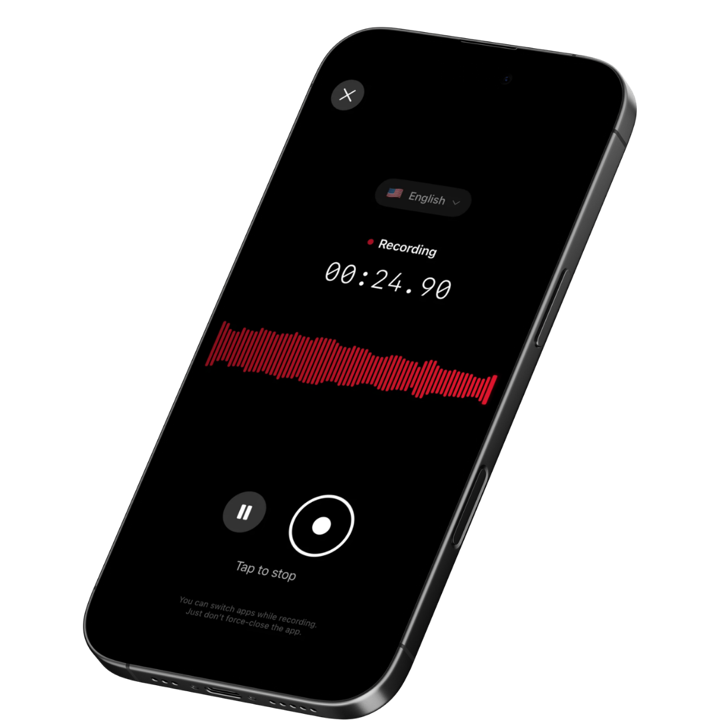
Voice recording with AI transcription bridges the gap between listening well and remembering everything. Record meetings, coaching sessions, and client calls. Get accurate transcripts and AI-generated summaries. Review what was actually said rather than relying on what you remember being said.
Download SpeakWise from the App Store and capture every conversation with 95%+ transcription accuracy, instant summaries, and automatic Notion sync - so your active listening never goes to waste.
Join 10,000+ professionals who combine active listening with AI-powered capture to never miss a critical detail again.
Get SpeakWise Free
4.9-star App Store Rating | iOS Optimized

🎯 4.9★ App Store Rating | 📱 Built for iOS
