ADHD in the Workplace Statistics 2026: The Hidden Cost
Used by recruiters, executives, consultants, and more.
ADHD in the Workplace Statistics 2026: The Hidden Cost
Roughly 15.5 million U.S. adults (6.0%) now live with ADHD, according to the CDC's 2024 MMWR national survey. Adults with ADHD miss an average of 22 workdays per year (WHO World Mental Health Survey), earn $10,791 less in annual income (Biederman et al., Journal of Clinical Psychiatry), and are 60% more likely to be fired from a job (CHADD). The total productivity cost to the U.S. economy is estimated at $67-116 billion annually. Meeting-heavy knowledge work amplifies every one of these costs, because working memory, time perception, and sustained attention are exactly the functions ADHD disrupts most.
ADHD is no longer a childhood diagnosis that gets left behind at graduation. Prevalence among adults has risen sharply since 2020, and remote/hybrid work has made the executive-function gap between ADHD and non-ADHD workers both wider and more visible. The workplace, built around meetings, calendars, and follow-through, is essentially a daily stress test for the traits ADHD makes hardest.
This post collects 11 statistics on ADHD in the workplace: prevalence, productivity cost, comorbidity, job stability, income, treatment access, and entrepreneurship. It is written for HR leaders, managers, and ADHD professionals who want a clearer picture of what is actually happening.
Key ADHD in the Workplace Statistics (2026)
- ADHD in the workplace affects roughly 15.5 million U.S. adults (6.0%), or about 1 in 16 workers (CDC MMWR, 2024).
- Adult ADHD costs the U.S. economy an estimated $67-116 billion a year in lost productivity and income (Biederman & Faraone, Harvard Medical School).
- Adults with ADHD miss an average of 22 workdays per year, roughly 4 full working weeks (WHO World Mental Health Survey).
- Employees with ADHD are 60% more likely to be fired from a job than their non-ADHD counterparts (CHADD).
- 47% of adults with ADHD have an anxiety disorder, more than double the rate of adults without ADHD (Kessler et al., American Journal of Psychiatry).
- Among adults with ADHD who take stimulant medication, 71.5% report difficulty getting their prescription filled because of ongoing shortages (CDC MMWR, 2024).
- 29% of entrepreneurs report having ADHD, nearly 5x the rate in the general population (Freeman et al., Small Business Economics, 2019).
1. 15.5 million U.S. adults have ADHD, up from 10.5 million in 2003
The CDC's National Center for Health Statistics Rapid Surveys System found that 6.0% of U.S. adults (roughly 15.5 million people, or 1 in 16) had a current ADHD diagnosis in 2023. That is up from the 4.4% figure established by the Harvard-led National Comorbidity Survey Replication in 2006.
The rise reflects both better adult diagnosis and genuinely higher prevalence, especially in women who were under-diagnosed as children. More than half of adult ADHD diagnoses (55.9%) were made in adulthood, at age 18 or older. For managers, the practical implication is that at least 1 in 16 of your knowledge workers has ADHD, and many do not yet know.
Source: CDC MMWR - ADHD Diagnosis, Treatment, and Telehealth Use in Adults (2024)
2. ADHD costs the U.S. economy an estimated $67-116 billion per year
An analysis by Biederman and Faraone at Harvard Medical School estimated the annual productivity cost of adult ADHD at $67-116 billion in the United States alone, driven by lost workdays, reduced on-the-job performance, and higher turnover.
The figure excludes direct healthcare spending and untreated cases, so the true cost is likely higher. Per worker, the average productivity loss is estimated at $8,900-$15,400 per year compared to colleagues without ADHD. This is not a motivation gap. It is a structural mismatch between the way offices are built and the way ADHD brains process information.
Source: Biederman & Faraone, Harvard Medical School (MedGenMed)
3. Adults with ADHD miss 22 workdays per year on average
The WHO World Mental Health Survey Initiative, covering more than 7,000 workers across 10 countries, found that adults with ADHD missed an average of 22 days of work per year - roughly 4 full working weeks. That is 8.4x the absenteeism rate of workers without ADHD.
Most of those days are not classic sick days. They are "present but unable to produce" days, used to catch up on tasks, recover from overwhelm, or avoid critical meetings. Employers typically record them as PTO or unexplained absences, which masks the underlying cause and blocks access to accommodations.
Source: de Graaf et al., Occupational and Environmental Medicine (WHO WMHS)
4. ADHD workers are 60% more likely to be fired from a job
CHADD (Children and Adults with ADHD), the largest ADHD advocacy organization in the U.S., reports that employees with ADHD are 30% more likely to have chronic employment issues, 60% more likely to be fired from a job, and three times more likely to quit a job impulsively than their non-ADHD counterparts.
The gap is not about intelligence. It is about the sustained attention, time management, and follow-through that most office roles quietly require. Knowledge work environments that rely on recall from unstructured meetings, buried email threads, and verbal hand-offs disproportionately penalize ADHD workers.
Source: CHADD - When Employers Help Employees with ADHD Succeed, Everyone Wins
5. Adults with ADHD earn $10,791 less per year
A peer-reviewed study by Biederman and colleagues, published in the Journal of Clinical Psychiatry, found that U.S. adults with self-reported ADHD had household incomes averaging $10,791 less than matched controls without ADHD. Projected across the working-age ADHD population, a related Harvard analysis puts the aggregate household income loss as high as $77 billion annually.
The wage gap is tightest in high-structure, high-accountability roles such as law, finance, and corporate project management. It narrows substantially in roles where ADHD traits (hyperfocus, divergent thinking, crisis performance) are assets: emergency medicine, creative direction, startup founding, and sales.
Source: Biederman et al., Journal of Clinical Psychiatry
6. 47% of adults with ADHD have an anxiety disorder, more than double the rate without ADHD
Research published in the American Journal of Psychiatry (Kessler et al., National Comorbidity Survey Replication) found that adults with current ADHD have significantly elevated rates of co-occurring conditions: 47.1% have any anxiety disorder (versus 19.5% of adults without ADHD), 38.3% have any mood disorder (versus 11.1%), and 15.2% have a substance use disorder (versus 5.6%).
Comorbidity compounds workplace impact: an ADHD worker with untreated anxiety is far more likely to avoid public speaking, decline meeting participation, or leave a role after a single difficult performance review. Employers who treat ADHD as a single-axis issue often miss the larger picture driving turnover.
Source: Kessler et al., American Journal of Psychiatry
7. Only about 1 in 4 employees who disclose a disability or neurodivergent condition go on to request accommodations
Deloitte's Disability Inclusion @ Work 2024 global survey of 10,000 workers with disabilities, chronic health conditions, or neurodivergent conditions (a category that includes ADHD) found that nearly 9 in 10 had disclosed their condition to someone at work, but only about one-quarter had gone on to request a workplace accommodation. Among those who did ask, 74% had at least one request rejected.
Non-request is driven by fear of bias, doubt that accommodations will be approved, and the effort of formally asking for them. For ADHD specifically, this means most companies are planning workflows, meeting cadences, and tooling without accounting for one of the largest cognitive minorities in their org chart, even when employees have already disclosed.
Source: Deloitte - Disability Inclusion @ Work 2024: A Global Outlook
8. 29% of entrepreneurs report having ADHD, nearly 5x the general population rate
Freeman, Staudenmaier, Zisser, and Andresen surveyed 242 entrepreneurs and 93 comparison participants and found that entrepreneurs reported ADHD at a rate of 29%, compared with roughly 6% in the general U.S. adult population. ADHD was the second most common condition in their sample after depression (30%), and 32% of entrepreneurs reported two or more co-occurring mental health conditions.
ADHD traits that underperform in structured roles - divergent thinking, risk tolerance, hyperfocus on novel problems, action bias - are assets in founder roles. This is not a consolation statistic; it is evidence that workplaces are designed around a narrow attention profile, and redesigning them captures value that currently leaves the building.
Source: Freeman et al., Small Business Economics (2019)
9. 71.5% of adults with ADHD struggle to fill their stimulant prescription
The CDC's 2024 MMWR report found that among the roughly one-third of adults with ADHD who take a prescription stimulant, 71.5% reported difficulty getting their ADHD medication filled in the previous 12 months because it was unavailable, a consequence of the ongoing U.S. stimulant shortage.
For managers, this means a meaningful share of ADHD employees are working through unmedicated stretches even while actively trying to treat their condition. Untreated or under-treated ADHD symptoms translate directly into the meeting-recall, time-management, and follow-through problems documented throughout this list, making medication access a workplace productivity issue as much as a clinical one.
Source: CDC MMWR - ADHD Diagnosis, Treatment, and Telehealth Use in Adults (2024)
10. More than a third of adults with ADHD receive no treatment at all
The same CDC report found that 36.5% of U.S. adults with a current ADHD diagnosis were not receiving any treatment - medication, counseling, or behavioral therapy - at the time of the survey. Roughly half of adults with ADHD have used telehealth for ADHD-related care, which the CDC notes can reduce access barriers around scheduling and geography.
Untreated ADHD in the workforce is not a hypothetical: it is the baseline for more than a third of diagnosed employees. Combined with the accommodation gap above, most organizations are managing a substantial population of unmedicated, unaccommodated ADHD workers without knowing it.
Source: CDC MMWR - ADHD Diagnosis, Treatment, and Telehealth Use in Adults (2024)
11. ADHD hyperactivity and impulsivity are positively linked to becoming an entrepreneur
A 2025 meta-analysis synthesizing 298 effect sizes from 47 studies found that ADHD hyperactivity/impulsivity symptoms are positively associated with entrepreneurial attitudes and behaviors - people with these traits are more likely to start a business in the first place. Inattention symptoms, by contrast, were negatively associated with post-launch business outcomes.
The pattern mirrors what shows up inside existing companies: the same traits that create friction in a structured, meeting-heavy job (impulsivity, difficulty sustaining routine attention) can be assets in venture creation, while sustained follow-through - the skill most workplaces demand - is where ADHD founders and employees alike need the most support.
Source: Tran, Wiklund, Antshel et al., Entrepreneurship Theory and Practice (2025)
What These Numbers Reveal Together
Three patterns emerge from the data. First, ADHD is common and growing: 6% of adults, rising, with more than half of cases diagnosed only in adulthood and over a third of diagnosed adults receiving no treatment at all. Second, the cost is concentrated in exactly the activities knowledge work is made of: meetings, follow-through, and sustained written output. Third, the interventions that would close the gap - accommodations, treatment access, disclosure-friendly cultures - are requested far less often than they are needed, even after employees have disclosed.
The gap is not ADHD worker output. ADHD adults are over-represented among founders and entrepreneurs - environments where the same traits that hurt in meetings become assets. The gap is between how meetings currently work and how ADHD brains process information. Closing that gap is a tooling problem, not a motivation one.
The trajectory is clear: AI meeting tools, written action items, and async-first workflows will become standard accommodations by the end of this decade, because the productivity math only points in one direction. Teams that make the shift early will capture the roughly 5x entrepreneurial upside ADHD workers already demonstrate outside of meeting-heavy orgs.
The workplace was not built for ADHD brains. AI tools that capture, summarize, and surface what was said are the single biggest lever for closing the gap.---
Capturing Meetings Without Losing Focus
Most of the ADHD workplace cost comes from the same source: spoken commitments made in meetings that never get written down in a place the ADHD brain can find them later. Working memory slips, time blindness blurs deadlines, and 22 missed workdays per year compound from there.
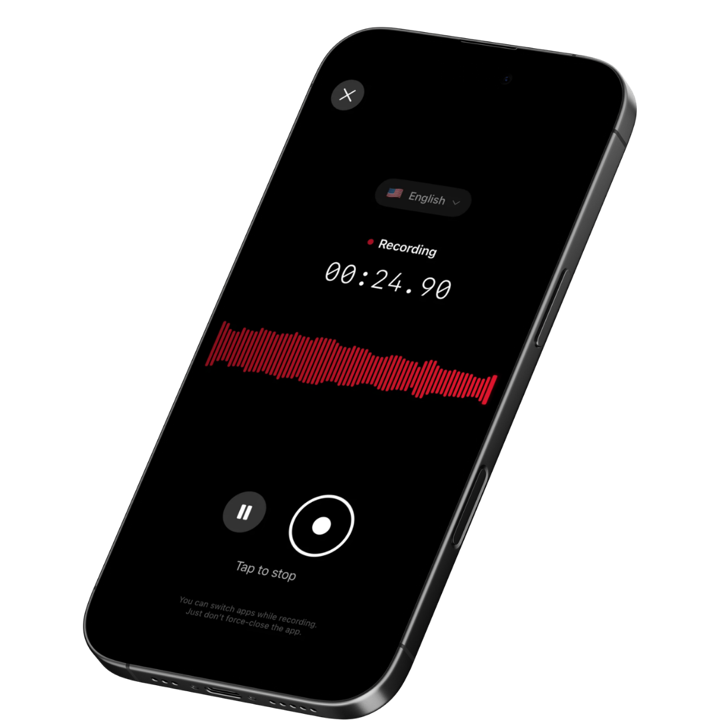
Speakwise solves that specific problem. Record any in-person or hybrid meeting with one tap (or hands-free via AirPods), and get a full transcript, a structured AI summary, and an extracted action-item list with owners. Everything syncs to Notion, so the list is where the ADHD brain already looks. No retyping, no end-of-day reconstruction, no lost decisions.
Download Speakwise from the App Store and stop losing what was said in meetings.
Join 10,000+ professionals who rely on Speakwise to capture meetings, surface action items, and close the executive-function gap that ADHD workplaces still charge interest on.
Get Speakwise Free
4.9-star App Store Rating | iOS Optimized

🎯 4.9★ App Store Rating | 📱 Built for iOS
