After-Hours Work Statistics 2026: Late-Night Emails, Always-On Culture, and Boundary Erosion
Used by recruiters, executives, consultants, and more.
After-Hours Work Statistics 2026: Late-Night Emails, Always-On Culture, and Boundary Erosion
76% of employees check work email outside of business hours. 40% open their inbox before 6 AM. Working 55 or more hours per week increases stroke risk by 35%-and collectively, long working hours contribute to 745,000 deaths from heart disease and stroke every year. The boundary between "work" and "life" hasn't just blurred-for millions of knowledge workers, it has effectively vanished.
The concept of "leaving work at work" feels almost quaint in an era of smartphones, Slack notifications, and globally distributed teams operating across time zones. What began as the occasional after-dinner email check during the early smartphone era has evolved into what Microsoft researchers now call the "infinite workday"-a state of perpetual professional availability where chats arrive before sunrise, meetings stretch past 8 PM, and the average employee is interrupted 275 times per day. The always-on culture didn't arrive with a single dramatic shift. It crept in gradually, one "quick reply" at a time, until checking work messages became as reflexive as checking the weather. But the consequences are anything but gradual. Researchers across disciplines-from occupational medicine to organizational psychology-are now documenting the measurable toll that boundary erosion takes on our health, relationships, productivity, and cognitive function. The data is sobering, and it challenges the deeply held assumption that more availability equals more output.
In this post, we'll explore 18 statistics that reveal the true scope and human cost of after-hours work in 2025 and 2026. These numbers span late-night email habits and weekend work patterns, health consequences documented by the World Health Organization, productivity research from Stanford, and burnout data from global surveys of tens of thousands of workers. Whether you're a leader wondering if your team's always-on culture is sustainable, an employee feeling the weight of constant connectivity, or someone trying to understand why evenings feel less restorative than they used to, these data points paint a clear and urgent picture of what happens when work follows us home-and never leaves.
Key After-Hours Work Statistics (2026)
- After-hours work has become the norm rather than the exception, with 76% of employees checking work email outside of business hours (Business News Daily).
- 40% of employees now check their email before 6 AM as part of what Microsoft calls the "infinite workday" (Microsoft WorkLab).
- Working 55 or more hours per week raises stroke risk by 35% and ischemic heart disease mortality risk by 17% (World Health Organization).
- Long working hours contribute to 745,000 deaths from heart disease and stroke every year worldwide (World Health Organization).
- Global employee engagement fell to just 20% in 2025, costing the world economy an estimated $10 trillion in lost productivity (Gallup).
- On an average weekend day, 30% of employed Americans are still on the clock, according to 2025 data from the Bureau of Labor Statistics (BLS American Time Use Survey).
- By 10 PM, nearly a third (29%) of active knowledge workers are back checking their inbox (Microsoft WorkLab).
1. 76% of employees check work email outside of business hours
The after-hours email habit is not a niche behavior-it is the overwhelming norm. Research shows that 76% of employees check their work email during non-business hours, with significant variation based on work arrangement. Among remote workers specifically, the number climbs to 81%, with 63% checking email on weekends and 34% checking email while on vacation. What was once considered exceptional dedication has become a baseline expectation in most knowledge work environments, fundamentally reshaping how employees experience their time away from the office. The implication is stark: for the vast majority of knowledge workers, "off the clock" is a fiction. The workday does not end when you leave the office or close your laptop-it ends when you fall asleep, and for many, it resumes the moment they wake.
Source: Business News Daily - After-Hours Emails and Weekend Work
2. 40% of employees check email before 6 AM, and after-hours chat messages are up 15% year over year
Microsoft's 2025 Work Trend Index report, based on survey data from 31,000 knowledge workers across 31 countries and analysis of Microsoft 365 productivity signals, reveals the emergence of what researchers call the "infinite workday." 40% of employees now check their email before 6 AM. Chats sent outside the standard 9-to-5 window have increased 15% year over year, with an average of 58 messages per user now arriving before or after traditional work hours. Meetings starting after 8 PM have risen 16% year over year, driven in part by cross-time-zone collaboration. The workday isn't just extending at the edges-it is dissolving entirely.
Source: Microsoft WorkLab - Breaking Down the Infinite Workday
3. Employees spend an average of 8 hours per week on work email after hours
The time investment in after-hours email is substantial. Research examining the habits of knowledge workers found that employees spend an average of eight hours per week reading and responding to company-related emails outside of normal business hours. That is the equivalent of a full additional workday every week-devoted not to deep, focused work, but to the reactive, context-switching demands of inbox management. For an employee working a standard 40-hour week, after-hours email alone represents a 20% extension of their effective working time without any corresponding increase in compensation or recovery.
Source: Business News Daily - After-Hours Emails and Weekend Work
4. Employees are interrupted every 2 minutes during core work hours-275 times per day
The fragmentation of the modern workday extends well beyond after-hours intrusions. According to Microsoft's research, employees are now interrupted every two minutes during core work hours-adding up to approximately 275 interruptions per day from meetings, emails, and chat messages. The average employee receives 117 emails and 153 Teams messages daily. Nearly half of employees (48%) and more than half of leaders (52%) report that their work feels "chaotic and fragmented." This constant barrage during the day creates a spillover effect: when employees cannot complete focused work during business hours, they compensate by working evenings and weekends, perpetuating the cycle of always-on availability.
Source: Microsoft WorkLab - Breaking Down the Infinite Workday
5. The mere expectation of after-hours email availability causes exhaustion-even when employees don't actually work
Perhaps the most striking finding in after-hours work research is that employees do not need to spend actual time on work emails to suffer the consequences. A landmark study titled "Exhausted But Unable to Disconnect," authored by researchers at Virginia Tech, Lehigh University, and Colorado State University, found that it is not the volume of after-hours email, but the organizational expectation of availability that drives employee exhaustion. This phenomenon, called "anticipatory stress," creates a constant state of anxiety and uncertainty as a result of perceived or anticipated threats. Employees who feel expected to be reachable are unable to psychologically detach from work-and the resulting strain extends to their families and significant others, even when the employee never opens their inbox. The researchers also found that employees who prefer a strict separation between work and family time experienced even greater difficulty detaching than those comfortable blending the two domains.
Source: Virginia Tech News - Employer Email Expectations and Health Effects
6. Working 55+ hours per week increases stroke risk by 35% and heart disease mortality by 17%
The World Health Organization and International Labour Organization published a landmark joint study analyzing data from 194 countries. Their findings: working 55 or more hours per week is associated with a 35% higher risk of stroke and a 17% higher risk of dying from ischemic heart disease, compared to working a standard 35-40 hour week. Long working hours are now recognized as the occupational risk factor with the largest disease burden, responsible for approximately one-third of the total estimated work-related burden of disease globally. The researchers emphasized that no job is worth dying for, and that governments, employers, and workers must collaborate to set limits that protect health.
Source: World Health Organization - Long Working Hours and Health
7. Long working hours caused 745,000 deaths from heart disease and stroke in a single year
The WHO/ILO study quantified the global death toll: in 2016, long working hours led to 745,000 deaths from ischemic heart disease and stroke-a 29% increase since 2000. Broken down, 398,000 people died from stroke and 347,000 from heart disease attributable to working 55 or more hours per week. Deaths from long-hours-related heart disease increased 42% over the study period, while stroke deaths rose 19%. The majority of victims were men (72%) who had worked excessive hours between ages 45 and 74 and died between ages 60 and 79-suggesting that the health consequences of overwork accumulate silently over decades before manifesting fatally.
Source: World Health Organization - Long Working Hours and Health
8. Productivity per hour drops sharply after 50 hours per week-and collapses after 55
Stanford economics professor John Pencavel's widely cited research demonstrates that the relationship between working hours and output is not linear. Productivity per hour declines sharply once employees exceed 50 hours per week. After 55 hours, the decline becomes so severe that additional hours produce essentially zero additional output. Workers who put in 70 hours per week produced no more total work than those who stopped at 55. Pencavel describes this as a "highly nonlinear effect"-the difference between adding five hours at 35 hours per week versus five hours at 50 hours per week is dramatic. For employers encouraging after-hours work, this means the extra evening and weekend hours may literally be adding nothing to the bottom line.
Source: Stanford Institute for Economic Policy Research - The Productivity of Working Hours
9. 40% of remote workers say unplugging after work is their biggest challenge
The difficulty of disconnecting is not a minor inconvenience-it is the defining challenge of remote work. In a survey of 200 full-time remote workers, 40% identified unplugging after work hours as the single biggest challenge they face, outranking isolation, communication difficulties, and distractions at home. When your office is your living room and your work device is the same phone on your nightstand, the psychological cues that once signaled "work is over" simply do not exist. The challenge is not willpower; it is architecture. The environments that facilitate always-on availability provide almost no structural support for disconnection. Without a commute to create a transition, without colleagues packing up to create social pressure, and without a physical office to leave behind, remote workers must manufacture their own boundaries from scratch-and four in ten are failing at it.
Source: Remote.co - Full-Time Remote Workers Struggle Most with Unplugging After Work Hours
10. Global employee engagement dropped to 20% in 2025-costing an estimated $10 trillion in lost productivity
Gallup's 2026 State of the Global Workplace report found that employee engagement fell to just 20% worldwide in 2025, its lowest level since 2020. This disengagement carries a staggering price tag: an estimated $10 trillion in lost productivity globally, or roughly 9% of world GDP. Manager engagement fell from 27% to 22% between 2024 and 2025-the sharpest year-over-year drop Gallup has recorded for the metric. Meanwhile, employee thriving ticked up slightly to 34% worldwide, though Gallup notes that daily negative emotions like stress, anger, and sadness remain above pre-pandemic levels. The always-on culture appears to be producing the opposite of its intended effect-rather than driving engagement through constant availability, it is fostering a depleted workforce that is physically present but mentally checked out. The irony is telling: organizations demanding more hours and more responsiveness are getting less engagement and less output in return.
Source: Gallup - State of the Global Workplace Report
11. 58% of professionals check their email first thing in the morning-often before getting out of bed
The workday now begins before employees are even vertical. Research shows that 58% of professionals check their email first thing in the morning, with many doing so before getting out of bed. Additionally, 64% of professionals now check email primarily on mobile devices, 84% keep their email app open in the background throughout the day, and 64% rely on push notifications. The result is that work communication is no longer something employees actively choose to engage with-it is an ambient presence that demands attention from the moment they wake up until the moment they fall asleep. The smartphone, designed to bring convenience, has become a 24/7 tether to the office.
Source: cloudHQ - Workplace Email Statistics 2025
12. Employees who constantly check work email on days off report stress levels of 6.0 out of 10
The American Psychological Association has documented a clear connection between constant email monitoring and elevated stress. Among employed Americans who check their work email constantly on their days off, the average reported overall stress level is 6.0 on a 10-point scale. The APA's broader research on technology and stress found that blurred boundaries between work and personal life mean people are perpetually "on"-answering emails late at night, skipping breaks, and failing to achieve the psychological recovery that time off is designed to provide. Constant checking does not reduce anxiety about missing something; it maintains and reinforces it, creating a feedback loop of monitoring and stress.
Source: APA - Stress in America: Technology and Social Media
13. Insufficient sleep costs $1,967 per worker annually in lost productivity-and 38% of employees report workplace fatigue
The after-hours work cycle has a direct line to the bedroom. Research shows that almost 38% of employees experienced fatigue while at work during the previous two weeks. The financial toll is measurable: reductions in productivity and motivation, along with fatigue-related health care costs, are estimated to cost individual employers around $1,967 per employee per year, adding up to approximately $136.4 billion annually for U.S. companies as a whole. Late-night email checking disrupts the wind-down process that healthy sleep requires, creating a vicious cycle where after-hours work causes poor sleep, which causes poor performance, which causes more after-hours work to compensate.
Source: Sleep Foundation - Sleep and Job Performance
14. Working overtime is associated with a 61% higher injury rate in the workplace
The consequences of overwork extend beyond mental health and productivity into physical safety. Research published in the journal Occupational and Environmental Medicine found that working in jobs with overtime schedules was associated with a 61% higher injury hazard rate compared to jobs without overtime, with a clear dose-response effect as weekly hours climbed. A separate, broader meta-analysis of 46 studies published between 1998 and 2018 found that long working hours were associated with 37% higher odds of mental health decline among affected workers, alongside elevated rates of injuries, poor sleep, and exhaustion. These findings suggest that the always-on culture does not just make workers tired and unhappy-it makes workplaces measurably more dangerous, as fatigue impairs judgment, slows reaction times, and reduces the attentional resources needed to work safely.
Source: PMC - The Impact of Overtime and Long Work Hours on Occupational Injuries and Illnesses; PMC - The Effect of Long Working Hours and Overtime on Occupational Health
15. Over a dozen countries have enacted "right to disconnect" laws-but the U.S. has none
The global response to always-on culture has been legislative, and it is accelerating. France pioneered the right to disconnect in 2017, requiring companies with more than 50 employees to negotiate terms ensuring workers can disengage from work communications outside regular hours. Since then, Spain, Italy, Belgium, Ireland, Portugal, Argentina, Chile, Peru, Luxembourg, Mexico, and Ontario (Canada) have enacted similar protections. Australia passed its right to disconnect legislation in February 2024, granting employees the enforceable right to refuse to monitor or respond to work-related contact outside working hours. Portugal has gone further, making it an administrative offense punishable by monetary fines for employers to contact employees outside working hours. The trend is clear: governments around the world are recognizing that individual employees cannot solve this problem alone, and that structural protections are necessary. In the United States, however, no federal or state right-to-disconnect law exists, despite multiple failed legislative attempts including California's Assembly Bill 2751-leaving American workers to navigate the always-on culture without structural protection in the world's largest knowledge economy.
Source: DLA Piper - A Look at Global Employee Disconnect Laws
16. 30% of employed Americans work on an average weekend day
The blurring of "work time" and "personal time" shows up clearly in how Americans actually spend their weekends. According to the Bureau of Labor Statistics' American Time Use Survey, released in June 2026 with 2025 data, 30% of employed people worked on an average weekend day, compared to 81% on an average weekday. On the days they worked, full-time employees logged 5.5 hours on a typical weekend day versus 8.5 hours on a typical weekday-meaning nearly a third of the workforce gives up part of every weekend to the job, before even accounting for after-hours email and chat. Workers with less education worked longer weekend hours than those with a bachelor's degree or higher, suggesting the burden of weekend work is not evenly distributed across the workforce.
Source: U.S. Bureau of Labor Statistics - American Time Use Survey
17. By 10 PM, nearly a third of workers are back checking email-and the weekend never fully starts
The infinite workday doesn't stop at dinner. Microsoft's telemetry data across Microsoft 365 users shows that by 10 PM, nearly a third (29%) of active workers dive back into their inboxes, and the average employee now sends or receives more than 50 messages outside of core business hours. The pattern extends into the weekend: nearly 20% of employees who are actively working on the weekend check their email before noon on Saturday and Sunday, and more than 5% are back in their inbox on Sunday evenings after 6 PM. Microsoft researchers point to this as measurable evidence of the "Sunday scaries"-anticipatory work anxiety that begins before the workweek does.
Source: Microsoft WorkLab - Breaking Down the Infinite Workday
18. Leaders report "a lot of stress" at a higher rate than the employees they lead
Being in charge doesn't buy immunity from the always-on culture-if anything, it deepens it. Gallup's State of the Global Workplace 2026 report finds that leaders are substantially more likely than individual contributors to report experiencing a lot of stress, anger, sadness, and loneliness the previous day. Leaders report a "lot of stress" rate of 46%, seven percentage points higher than individual contributors, even though leaders also score highest on engagement (26%) and thriving (43%). The pattern suggests that the constant availability and responsiveness the always-on culture demands of leadership carries a measurable emotional cost that outpaces its status rewards.
Source: Gallup - State of the Global Workplace Report
The After-Hours Paradox: Why More Availability Produces Less
The 18 statistics above converge on a single, uncomfortable conclusion: the always-on culture is failing on its own terms. It promises higher output through constant availability, but delivers diminishing productivity after 50 hours. It promises competitive advantage through responsiveness, but produces a workforce where global engagement has fallen to just 20%-the lowest level in five years-even as leaders themselves report the highest daily stress of anyone in the organization. It promises connection across time zones and geographies, but creates a state of perpetual anticipatory stress that prevents employees from ever truly recovering-even when they are not actually working.
This is the after-hours paradox. The very behaviors that organizations reward-the late-night email reply, the weekend Slack message, the pre-dawn inbox scan-are systematically undermining the cognitive resources that make knowledge work valuable. Stanford's research is unambiguous: a worker who puts in 70 hours produces no more than one who works 55. The WHO's data is stark: overwork is now the leading occupational risk factor for disease. And the psychology is clear: it is not the time spent on after-hours email that destroys wellbeing, but the expectation that you should be available, the ambient anxiety that something might need your attention, the inability to ever fully leave work behind.
The structural forces driving always-on culture are real and deeply embedded. Distributed teams span time zones, making "after hours" a relative concept. Remote work has removed the physical cues that once signaled the end of the workday. Communication tools designed for convenience have become instruments of perpetual interruption. And perhaps most importantly, professional cultures continue to reward visibility and responsiveness over rest and recovery, sending a clear signal that the way to get ahead is to never log off. The fact that over a dozen countries have felt the need to legislate the right to disconnect tells us that the problem will not resolve itself through individual willpower alone.
But the research also suggests a path forward-one built on boundary architecture rather than boundary discipline. Organizations can protect meeting-free blocks, establish explicit norms around after-hours communication, and model healthy disconnection from the top down. Individuals can restructure their environments to create friction between themselves and work communication during off-hours. And technology can play a different role entirely: instead of tethering us to the inbox, it can help us capture what matters quickly and process it later, on our own terms. The goal is not to ignore the ideas and obligations that surface after 5 PM. It is to handle them in a way that preserves our health, our relationships, and the cognitive capacity that makes our work valuable in the first place.
The data is clear: always-on does not mean always-productive. The most sustainable path to high performance is not working more hours-it is protecting the hours when you are not working, so that the hours when you are can actually count.---
Ready to capture thoughts on your schedule-not your employer's?
The statistics above reveal a cruel irony at the heart of the after-hours work problem. Some of our best ideas genuinely do arrive outside of business hours-in the shower, during a walk, while cooking dinner, in the quiet moments before sleep. These thoughts deserve to be captured. But the tools we currently use to capture them-email, Slack, project management apps, even a quick "I'll just jot this in a doc"-drag us right back into work mode. Opening your laptop to save one idea means seeing seventeen notifications. Unlocking your phone to record a thought means confronting a wall of unread messages. The act of capturing the insight becomes the act of re-engaging with work, and suddenly your evening is gone.
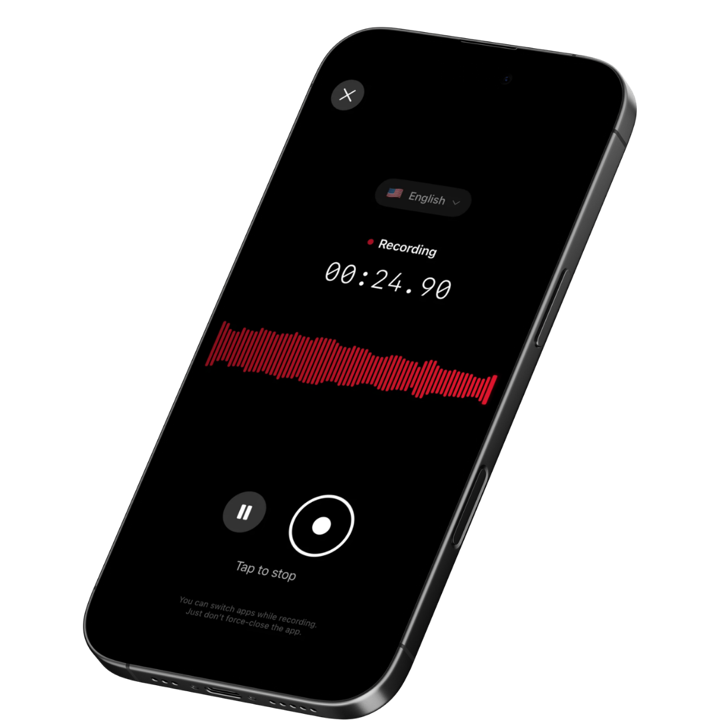
Voice capture offers a fundamentally different approach. When an idea strikes at 9 PM, you don't need to open your laptop, log into Slack, or compose an email. You simply speak-and AI handles the rest. Capture the thought in seconds, and deal with it during work hours when your brain is fresh.
Download SpeakWise from the App Store and discover how one-tap recording, AI transcription, intelligent summaries, and Notion integration can help you capture after-hours insights without sacrificing your evening.
Join 10,000+ professionals who've discovered that the best way to handle after-hours thoughts isn't ignoring them or working late-it's capturing them in seconds and processing them tomorrow.
Get SpeakWise Free →
4.9★ App Store Rating | iOS Optimized

🎯 4.9★ App Store Rating | 📱 Built for iOS
