AI in the Workplace Statistics 2026: Adoption Rates, Productivity Impact & Employee Sentiment
Used by recruiters, executives, consultants, and more.
AI in the Workplace Statistics 2026: Adoption Rates, Productivity Impact & Employee Sentiment
Generative AI adoption has reached 54.6% among U.S. adults-nearly double the rate of personal computers three years after their mass-market debut. With employees reporting up to 7.5 hours saved weekly and tech giants investing over $380 billion in AI infrastructure, these 17 statistics reveal how artificial intelligence is reshaping every corner of the modern workplace.
We're witnessing the fastest technological shift in workplace history. In just three years since ChatGPT's launch, AI has moved from experimental curiosity to daily business tool. Yet beneath the headlines lies a more complex reality: workers simultaneously embrace AI's productivity gains while harboring deep concerns about job security, training gaps, and what it all means for their careers.
In this post, we'll explore 17 compelling statistics that capture AI's transformation of work in 2025. These numbers reveal not just adoption rates and time savings, but the human story behind them-the excitement, anxiety, and massive skills gap that define this pivotal moment. Whether you're an executive planning AI strategy, a professional adapting to new tools, or simply curious about where work is heading, these data points offer a clear, evidence-based picture of AI's current impact.
1. AI adoption has reached 54.6%-nearly double the rate of PCs at the same stage
According to the Federal Reserve Bank of St. Louis, 54.6% of U.S. adults aged 18-64 now use generative AI, up from 44.6% just one year ago. To put this in perspective: three years after the IBM PC launched in 1981, only 19.7% of Americans had adopted personal computers. Three years after the internet opened to commercial traffic, adoption stood at 30.1%. AI is spreading faster than any previous workplace technology. Source: St. Louis Fed Real-Time Population Survey
2. 91% of organizations now use at least one AI technology
AI is no longer optional. Research from Azumo found that 91% of employees report their organizations are using at least one AI technology in 2025, with 54% specifically using ChatGPT or other generative AI tools. Enterprise adoption has exploded, with 1.5 million enterprise "seats" as of March 2025-a 10x increase in just one year. Source: Azumo AI Workplace Statistics
3. Employees using AI save an average of 7.5 hours per week
A study from the London School of Economics in collaboration with Protiviti found that professionals using AI save an average of 7.5 hours weekly-essentially a full workday. This translates to approximately $18,000 per employee per year in productivity gains. Even more striking: employees with AI training save 11 hours per week compared to 5 hours for those without training. Source: LSE/Protiviti Report via PRNewswire
4. 52% of workers feel worried about AI in the workplace
Despite productivity gains, anxiety runs deep. Pew Research Center found that 52% of U.S. workers feel worried about how AI may be used in the workplace, compared to just 36% who feel hopeful and 29% who feel excited. Notably, 40% of workers ages 18-29 report feeling overwhelmed-higher than any other age group. Source: Pew Research Center
5. Tech giants are investing over $380 billion in AI infrastructure
The scale of corporate commitment to AI is staggering. Amazon, Alphabet, Microsoft, and Meta have collectively committed over $380 billion in capital expenditures for 2025, with the majority targeting AI infrastructure. Amazon alone is spending approximately $125 billion, while Microsoft has allocated $80 billion for fiscal 2025. Source: CNBC
6. 78% of professionals using AI at work bring their own tools
The "Bring Your Own AI" phenomenon has taken over workplaces. According to research compiled by Azumo, 78% of professionals using AI at work are bringing their own tools rather than relying on employer-provided solutions. This grassroots adoption has flipped traditional technology rollouts on their head-employees are often ahead of their IT departments. Source: Azumo AI Workplace Statistics
7. Only 12% of workers have received any AI training
Here's the alarming disconnect: while AI adoption soars, training remains scarce. Pew Research Center found that although roughly half of employed adults received some form of work training in the past year, only 12.2% took a class or received training specifically on AI tools. This skills gap threatens to leave many workers behind. Source: HR Dive/Pew Research
8. AI users save an average of 5.4% of their work hours
Federal Reserve Bank of St. Louis research found that workers using generative AI saved 5.4% of their weekly work hours on average-roughly 2.2 hours in a standard 40-hour week. When calculated across the entire U.S. workforce, this represents a potential 1.1% increase in aggregate productivity. Source: St. Louis Fed
9. 49% of employees hide their AI use from colleagues and managers
AI adoption comes with a culture of secrecy. A Laserfiche survey revealed that 49% of Americans who use AI at work keep it to themselves, with 15% deliberately avoiding telling their manager. The reasons? Workers worry about being seen as lazy (16%), taking on risk (15%), or being out of step with company policy (16%). Source: Laserfiche 2025 Survey
10. 88% of employees use AI in daily work, but only 5% use it to transform their work
Here's the productivity paradox: while nearly 9 in 10 employees use AI daily, their usage remains limited to basic applications like search and summarizing documents. The EY 2025 Work Reimagined Survey found that only 5% are using AI in advanced ways to fundamentally transform how they work-leaving up to 40% of potential productivity gains unrealized. Source: EY 2025 Work Reimagined Survey
11. 85 million jobs will be displaced while 97 million new roles emerge by 2026
The World Economic Forum's analysis projects that while AI and automation will displace 85 million jobs globally, 97 million new positions will emerge-a net positive of 12 million jobs. However, this optimistic outlook requires massive investment in reskilling, as 77% of new AI jobs require advanced degrees, creating significant skills gaps. Source: World Economic Forum Future of Jobs Report
12. 27% of AI users save over 9 hours per week
The time savings from AI are not evenly distributed. Research shows that 27% of users save more than 9 hours weekly, with 18% saving more than 10 hours per week. For "superusers," savings can exceed 20 hours weekly. Among daily AI users, 33.5% report saving four or more hours in a single work week. Source: Azumo/ITIF
13. 68% of employees have received no AI training in the past 12 months
Despite AI's rapid integration into daily work, the LSE/Protiviti study found that 68% of employees have received no AI training whatsoever in the past year. This training gap is creating a two-tier workforce: employees with training are twice as productive with AI, saving 11 hours weekly compared to 5 hours for the untrained. Source: LSE/Protiviti Report
14. AI adoption has doubled among white-collar workers in two years
Gallup research found that 27% of white-collar employees now report frequently using AI at work-an increase of 12 percentage points since 2024. Industries leading adoption include technology (50%), professional services (34%), and finance (32%). However, front-line and production workers show essentially flat adoption, shifting from 11% in 2023 to just 9% in 2025. Source: Gallup Workplace Research
15. 46% of employees believe time saved by AI belongs to them, not their employer
A philosophical divide is emerging around who owns AI-generated productivity gains. Research shows that nearly half of employees (46%) believe the time they save using AI belongs to them rather than their company. However, most (77%) say they would still use at least half of their reclaimed time on work-related activities. Source: Netguru AI Adoption Statistics
16. 39% of employees identify as "AI Bloomers" while 37% are "Gloomers"
McKinsey's research reveals a workforce divided into distinct AI mindsets: 39% are "Bloomers" (AI optimists who want to collaborate with their companies on responsible solutions), while 37% are "Gloomers" (skeptics who want extensive top-down AI regulations). Another 20% are "Zoomers" (wanting rapid deployment with few guardrails), and just 4% are "Doomers" (fundamentally negative about AI). Source: McKinsey Superagency Report
17. Occupations with higher AI exposure show larger unemployment increases
The St. Louis Federal Reserve found a correlation (0.47 coefficient) between AI exposure and unemployment rate changes between 2022 and 2025. Computer and mathematical occupations-among the most AI-exposed-saw some of the steepest unemployment rises, while blue-collar jobs and personal service roles with limited AI applicability experienced smaller increases. Source: St. Louis Fed
The Productivity Paradox: Why Potential Isn't Translating to Reality
The statistics paint a fascinating picture of contradiction. Workers are adopting AI faster than any previous technology, yet most aren't using it to transform their work. Companies are investing hundreds of billions of dollars, yet 95% of organizations in one MIT study found zero return on their AI investments. Employees are saving hours each week, yet nearly half hide their AI use from managers.
The gap between AI's potential and its realized impact comes down to three critical factors: training, strategy, and culture. With only 12% of workers receiving AI-specific training, most employees are teaching themselves-and that self-education often stays secret. Without clear organizational guidance, workers experiment cautiously rather than transformatively.
For professionals looking to stay ahead, the path forward is clear: embrace AI tools now, but do so strategically. The workers saving 10+ hours weekly aren't just using AI more-they're using it more intentionally, for higher-value tasks, with better prompting skills honed through practice.
The question isn't whether AI will change your work. It's whether you'll be among the 5% using it to transform your productivity-or the 95% leaving potential gains on the table.---
Ready to capture every brilliant idea-with AI-powered efficiency?
Voice notes bridge the gap between human thought and AI capability. Speaking is 3x faster than typing, and with AI transcription accuracy now exceeding 96%, your spoken ideas can instantly become searchable, actionable text.
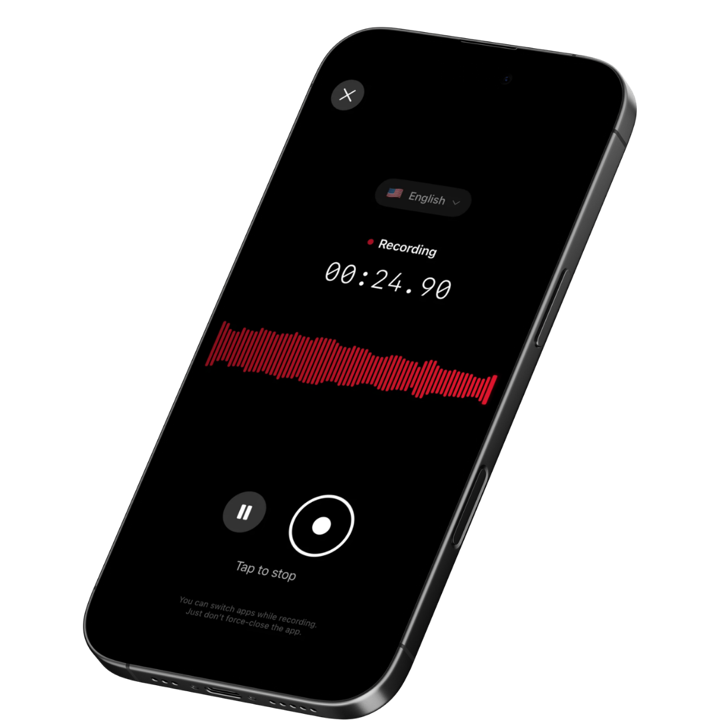
→ Download SpeakWise from the App Store and see how one-tap recording, AI transcription, intelligent summaries, and Notion integration can transform how you capture meetings, ideas, and conversations.
Join 10,000+ professionals who've discovered that AI-powered voice capture isn't just about saving time-it's about ensuring no valuable insight ever escapes again.
Get SpeakWise Free →
4.9★ App Store Rating | iOS Optimized

🎯 4.9★ App Store Rating | 📱 Built for iOS
