AI Productivity Tools Statistics 2026: Adoption Surge, Time Savings, and the Automation Revolution


Used by recruiters, executives, consultants, and more.
AI Productivity Tools Statistics 2026: Adoption Surge, Time Savings, and the Automation Revolution
Three out of four knowledge workers now use AI tools daily. Global spending on generative AI surged to $644 billion in a single year. Yet a landmark study of 6,000 executives found that 89% of firms saw zero measurable productivity impact. These 17 statistics expose the staggering contradiction at the heart of the AI productivity revolution-and reveal what actually separates the winners from the rest.
The AI productivity tools landscape in 2026 presents one of the most fascinating paradoxes in modern business history. On one side, adoption metrics are shattering every record in technology history. Workers are embracing AI faster than they adopted personal computers, the internet, or smartphones. Companies are pouring hundreds of billions into AI infrastructure, and individual employees report saving hours every week. On the other side, macroeconomic data stubbornly refuses to show the expected productivity boom. CEOs admit they cannot measure AI's impact. Economists are invoking a 40-year-old paradox to explain why the numbers do not add up.
The truth, as these 17 statistics reveal, is more nuanced than either the hype or the skepticism suggests. AI productivity tools are delivering real, measurable value for individual workers-but translating those individual gains into organizational and economic productivity requires something most companies have not yet figured out: simplicity, integration, and workflow redesign. The tools that win are not the most powerful or the most feature-rich. They are the ones people actually use every day without thinking about it.
In this post, we break down 17 data-backed statistics that capture the full picture of AI productivity tools in 2026-from the staggering investment numbers to the surprising reality of how workers actually use these tools, and why the simplest AI applications often deliver the biggest returns.
1. 75% of knowledge workers now use AI at work-and half started in the last six months
Microsoft's 2025 Work Trend Index, based on a survey of 31,000 knowledge workers across 31 markets, found that 75% now use AI tools at work. Perhaps more striking: 46% of those users started within the previous six months, meaning AI tool adoption nearly doubled in a single half-year period. The report also found that use of generative AI in the workplace has nearly doubled compared to a year earlier, making it the fastest workplace technology adoption ever recorded. To put this velocity in context, it took email roughly a decade to achieve similar penetration rates among knowledge workers. AI tools accomplished it in under three years from ChatGPT's public launch. Source: Microsoft 2025 Work Trend Index
2. Global GenAI spending reached $644 billion in 2025-a 76% year-over-year increase
Gartner forecasts that worldwide generative AI spending totaled $644 billion in 2025, up 76.4% from the previous year. The breakdown reveals where the money is going: device spending nearly doubled to $398.3 billion, servers climbed to $180.6 billion, while software and services accounted for $37.2 billion and $27.8 billion respectively. This means 80% of GenAI spending is currently flowing toward hardware infrastructure rather than the software tools workers actually interact with. The imbalance is telling: the industry is building capacity far faster than it is building usable products, which helps explain why individual workers often find more productivity value in simple, consumer-grade AI apps than in expensive enterprise deployments. Source: Gartner GenAI Spending Forecast
3. 89% of firms report zero measurable productivity impact from AI
A landmark National Bureau of Economic Research study surveying 6,000 CEOs, CFOs, and senior executives across the U.S., U.K., Germany, and Australia delivered a sobering finding: 89% of respondents said AI had no measurable impact on their firm's productivity-defined as volume of sales per employee-over the past three years. Similarly, more than 90% reported no impact on employment. This study, published in February 2026, has reignited debate about the "Solow Paradox"-economist Robert Solow's famous 1987 observation that "you can see the computer age everywhere but in the productivity statistics." Nearly four decades later, the same gap between technological promise and economic measurement persists with AI. Source: Fortune/NBER CEO Study
4. U.S. workplace AI usage jumped to 45%, with daily use reaching 10%
Gallup's nationally representative survey of 23,068 U.S. adults found that the percentage of employees using AI at work at least a few times per year climbed from 40% to 45% between Q2 and Q3 2025. Frequent use-defined as a few times per week or more-grew from 19% to 23%, while daily usage increased from 8% to 10%. However, adoption remains heavily skewed by industry: 76% in technology and information systems, 58% in finance, and 57% in professional services, versus just 33% in retail and 37% in healthcare. The uneven distribution suggests that AI productivity tools have primarily penetrated roles centered on text, data, and communication-precisely the tasks where simple AI applications like transcription, summarization, and note-taking deliver the most immediate value. Source: Gallup Workplace AI Survey
5. AI users report saving an average of 2.2 hours per week-a 5.4% time reduction
The Federal Reserve Bank of St. Louis analyzed self-reported data from U.S. workers and found that those who used generative AI saved an average of 5.4% of their weekly work hours-approximately 2.2 hours in a standard 40-hour week. Among those who used AI in the previous week, the distribution of savings varied widely: 33% saved one hour or less, 26.4% saved two hours, 20.1% saved three hours, and 20.5% reported saving four hours or more. When calculated across the entire workforce including non-users, this translates to an estimated 1.1% increase in aggregate productivity. The data also reveals that workers using AI are approximately 33% more productive during the specific hours they spend with the tools-suggesting that the bottleneck is not AI capability but rather how few hours of the workweek are actually spent using AI. Source: Federal Reserve Bank of St. Louis
6. 78% of organizations now use AI in at least one business function-up from 55% just one year prior
Stanford's 2025 AI Index Report documented a dramatic acceleration in organizational AI adoption: the proportion of organizations reporting AI use jumped from 55% to 78% in a single year. Even more dramatic, the number reporting generative AI use in at least one business function more than doubled, from 33% in 2023 to 71% in 2024. Corporate AI investment reached $252.3 billion, with private investment climbing 44.5% and mergers and acquisitions up 12.1% from the previous year. Private investment in generative AI specifically reached $33.9 billion in 2024-up 18.7% from 2023 and over 8.5 times higher than 2022 levels, now representing more than 20% of all AI-related private investment. Source: Stanford HAI 2025 AI Index Report
7. Workers using AI are 40% faster at writing and summarization tasks-with 18% higher quality
Research compiled by Apollo Technical found that workers using generative AI tools completed writing and summarization tasks approximately 40% faster than those working without AI assistance. Notably, the quality of their output was also roughly 18% higher as judged by independent evaluators. This dual improvement in speed and quality represents a meaningful shift from earlier automation waves, which typically improved speed at the expense of quality or vice versa. The finding is particularly significant for professionals who spend large portions of their day on written communication, meeting notes, and documentation-the very tasks where AI-powered transcription and summarization tools deliver the most direct productivity gains. When speaking is 3x faster than typing and AI handles the polish, the compounding effect is substantial. Source: Apollo Technical AI Productivity Statistics
8. 90% of AI users say the tools save them time, yet 48% say their work feels chaotic and fragmented
Microsoft's Work Trend Index uncovered a striking contradiction: 90% of AI users say the tools help them save time, 85% say AI helps them focus on important work, and 84% say it makes them more creative. Yet in the same survey, 48% of employees and 52% of leaders describe their work as feeling "chaotic and fragmented." Workers are also sending 58 chats daily outside of work hours-a 15% year-over-year increase. The tools are saving time on individual tasks while the overall work environment grows more demanding. This is perhaps the most important insight in the entire AI productivity discussion: tool-level efficiency and workflow-level productivity are not the same thing. A worker can save 30 minutes drafting an email with AI and immediately lose that time to three more meetings that were scheduled because "everyone has more bandwidth now." Source: Microsoft 2025 Work Trend Index Annual Report
9. Only 6% of organizations qualify as "AI high performers" with measurable financial returns
McKinsey's 2025 State of AI Global Survey found that 88% of enterprises now report regular AI use. But only approximately 6% of respondents-designated as "AI high performers"-report that AI has driven earnings impact of 5% or more. The differentiating factor was revealing: organizations reporting significant financial returns from AI were twice as likely to have redesigned their end-to-end workflows before selecting their AI tools, rather than simply layering AI on top of existing processes. Revenue increases were most commonly reported in marketing and sales, strategy and corporate finance, and product development-functions where AI tools could be tightly integrated into daily decision-making rather than treated as occasional add-ons. Source: McKinsey State of AI 2025 Global Survey
10. AI leaders average just 1.5 hours of AI usage per week
The NBER study of 6,000 executives revealed that even among those actively using AI, engagement remained surprisingly limited. Two-thirds of executives reported using AI tools, but their average usage was just 1.5 hours per week-roughly 18 minutes per workday. A full 25% of respondents reported not using AI in the workplace at all. This minimal engagement from the very leaders tasked with driving AI transformation helps explain why organizational-level productivity gains remain elusive. If the people making AI strategy decisions spend less than 20 minutes per day actually using the tools, they lack the firsthand experience needed to understand which AI applications deliver real value and which are merely impressive demos. The implication is clear: AI productivity gains require hands-on usage, not just top-down mandates. Source: Fortune/NBER CEO Study
11. 56% of companies are "getting nothing out of AI," according to PwC research
PwC's 29th Annual Global CEO Survey, presented at the World Economic Forum in Davos, found that 56% of companies report receiving no meaningful value from their AI investments. PwC Global Chairman Mohamed Kande attributed the gap to organizations "forgetting the basics"-rushing to implement sophisticated AI solutions without first establishing clear use cases, clean data, and simplified workflows. The finding underscores that AI tool complexity, not capability, is the primary barrier to productivity gains. When more than half of companies investing in AI report zero returns, the problem is no longer about whether AI works. It works. The problem is that organizations are choosing complex implementations when simpler ones would deliver faster, more consistent results. Source: Fortune/PwC CEO Survey
12. Enterprise AI seats grew 10x in a single year to 1.5 million
The scale of enterprise AI adoption is unprecedented. OpenAI's State of Enterprise AI report documented that enterprise "seats"-individual employee licenses for AI tools-reached 1.5 million as of March 2025, representing a ten-fold increase from the previous year. This rapid scaling of paid enterprise accounts signals that organizations are moving well beyond free trials and experimentation into committed, budgeted AI tool deployments across their workforces. The sheer velocity of seat growth-from 150,000 to 1.5 million in twelve months-suggests that once an organization commits to an AI tool, internal adoption spreads rapidly as workers observe colleagues benefiting from the technology. The lesson for AI productivity: the tools that spread fastest within organizations are typically the ones that require the least training and deliver the most visible results. Source: OpenAI State of Enterprise AI 2025 Report
13. AI produces a $3.70 return for every $1 invested-but only for organizations that use it effectively
Research compiled by Apollo Technical shows that AI delivers an average ROI of $3.70 for every dollar invested-when implemented effectively. However, this average masks enormous variance. Organizations with clear AI strategies and redesigned workflows report returns significantly above this average, while those that simply bolt AI tools onto existing processes frequently see negative returns after accounting for implementation costs, training time, and workflow disruption. The gap between AI winners and losers is widening, not narrowing. This statistic should serve as both an incentive and a warning: AI productivity tools can deliver exceptional returns, but only when the implementation is thoughtfully matched to actual work patterns rather than aspirational use cases that sound impressive in board presentations but never become daily habits. Source: Apollo Technical AI Productivity Statistics
14. 37% of organizations have formally implemented AI to improve productivity-but 40% have not
Gallup's Q3 2025 workforce data reveals a three-way split in organizational AI strategy: 37% of employees said their organization has formally implemented AI technology to improve productivity, efficiency, and quality; 40% said their organization had not implemented any such technology; and 23% said they simply did not know. This means that even as individual AI adoption approaches majority status, fewer than four in ten organizations have a deliberate strategy for channeling that adoption into productivity improvements. The gap between grassroots adoption and organizational strategy is one of the defining characteristics of the current AI moment. Employees are finding their own tools, building their own workflows, and often hiding their AI usage from managers-creating a shadow AI ecosystem that delivers individual value but resists organizational measurement. Source: Gallup Workplace AI Research
15. By 2030, 75% of IT work will be done by humans augmented with AI, and 25% by AI alone
A Gartner survey of more than 700 CIOs, conducted in July 2025, projects a radical transformation of how work gets done within the next five years. CIOs expect that by 2030, zero percent of IT work will be done by humans without any AI assistance, 75% will be performed by humans augmented with AI tools, and 25% will be handled entirely by AI systems operating autonomously. This forecast represents the clearest institutional endorsement yet that AI tools will become as fundamental to knowledge work as computers themselves. The projection that zero percent of IT work will be performed without AI by 2030 is particularly significant: it implies that within five years, not using AI productivity tools will be as unthinkable as not using a computer or internet connection. The question is not whether professionals will use AI tools, but which ones they will choose and how seamlessly those tools will integrate into their daily workflows. Source: Gartner CIO Survey
16. The AI inference cost for GPT-3.5-level performance dropped over 280-fold in two years
Stanford's AI Index documented one of the most dramatic cost declines in technology history: the inference cost for a system performing at GPT-3.5 level fell more than 280-fold between November 2022 and October 2024. At the hardware level, costs have been declining by approximately 30% annually, while energy efficiency has improved by 40% per year. This cascading cost reduction means that AI capabilities that once required enterprise budgets are now accessible to individual professionals and small teams-fundamentally democratizing access to AI productivity tools. Features like real-time transcription, intelligent summarization, and natural language processing that cost thousands of dollars per month just three years ago are now available in consumer applications for a fraction of the price, or even free. This cost democratization is arguably the most important enabler of the AI productivity revolution, because it removes the budget barrier that historically limited advanced tools to large enterprises. Source: Stanford HAI 2025 AI Index Report - Economy Chapter
17. Executives predict AI will boost productivity by just 1.4% over the next three years
Perhaps the most telling statistic in the entire AI productivity landscape comes from the executives themselves. Despite the hype, the 6,000 leaders surveyed in the NBER study predicted that AI would increase their firm's productivity by a modest 1.4% and output by 0.8% over the next three years-while reducing employment by 0.5%. These tempered expectations from the people closest to AI implementation stand in sharp contrast to the transformative narratives promoted by AI vendors and investment analysts. As Apollo chief economist Torsten Slok wrote in a recent analysis: "AI is everywhere except in the incoming macroeconomic data." The disconnect between vendor enthusiasm and executive realism may ultimately prove healthy-it suggests that the leaders closest to implementation are moving past the hype cycle and beginning to identify which specific AI applications deliver genuine, repeatable productivity value versus which ones merely generate impressive one-off demonstrations. Source: Fortune/NBER CEO Study
The AI Productivity Paradox: Why Billions in Investment Haven't Moved the Needle
The 17 statistics above tell a story of profound contradiction. On one hand, we have the most rapid technology adoption in history: 75% of knowledge workers using AI, $644 billion in annual spending, enterprise seats growing tenfold in a year, and individual workers reporting meaningful time savings of two to four hours per week. On the other hand, we have 89% of firms seeing no measurable productivity impact, 56% of companies getting nothing from their AI investments, and executives predicting a mere 1.4% productivity improvement over the next three years. How can both realities coexist?
The answer lies in what McKinsey identified as the critical differentiator: workflow redesign. The 6% of organizations qualifying as "AI high performers" did not simply hand employees AI tools and hope for the best. They redesigned their end-to-end workflows first, then selected AI tools that fit those redesigned processes. In contrast, the vast majority of organizations made a fundamentally different choice-they layered increasingly complex AI tools on top of existing workflows, creating more friction rather than less. The result is the paradox Microsoft's own data captures: 90% of workers say AI saves them time on individual tasks, yet 48% say their overall work feels more chaotic and fragmented than ever.
This explains why the simplest, most focused AI applications often outperform sophisticated enterprise platforms in actual productivity impact. When a tool does one thing exceptionally well-transcribes speech to text, summarizes a meeting, extracts action items-workers adopt it instantly and use it consistently. There is no learning curve to navigate, no prompt engineering to master, no complex configuration to maintain. The tool fits naturally into existing behavior. Contrast this with enterprise AI deployments that require weeks of training, dedicated support teams, and constant management attention. The individual capability may be greater, but the actual productivity delivered is often lower because usage drops off rapidly after initial enthusiasm.
The data also reveals a timing dimension to the paradox. Stanford's documentation of the 280-fold decline in AI inference costs, combined with the explosive growth in enterprise seats, suggests we may be in the "installation phase" of a classic technology adoption curve-where investment runs far ahead of realized value. The executives predicting modest 1.4% productivity gains over three years may actually be expressing a realistic assessment of the implementation timeline: not that AI lacks potential, but that translating potential into organizational productivity takes longer than anyone wants to admit. The organizations that will emerge as AI productivity leaders are not those investing the most or deploying the most complex tools. They are the ones finding the simplest, highest-frequency use cases and building daily habits around them.
There is also a profound lesson about individual agency embedded in these numbers. Gallup shows that 45% of workers use AI at least occasionally, but only 10% use it daily. The Federal Reserve data shows that workers are 33% more productive during the hours they actually spend using AI. The math is straightforward: the individuals who integrate AI into their daily routines-not as an occasional experiment but as a habitual part of their workflow-will accumulate a compounding productivity advantage over those who use AI sporadically. The key is finding AI tools that are so simple and frictionless that daily use requires no deliberate effort. The best AI productivity tool is not the one with the most features. It is the one that becomes invisible-the one you reach for without thinking, the same way you reach for your phone to check the time. When an AI tool reduces a complex workflow to a single tap, daily usage becomes automatic, and the compounding productivity gains follow naturally.
The clearest lesson from these 17 statistics is counterintuitive: in the age of AI complexity, the biggest productivity gains come from radical simplicity. The tools that deliver are the ones that disappear into your workflow-one tap, one action, one result. No configuration. No learning curve. No friction between thought and capture.---
Ready to experience AI productivity that actually delivers?
The statistics are clear: most AI tools promise transformation but deliver complexity. They require training that 68% of workers never receive. They demand prompt engineering skills that most people never develop. They add layers of configuration and management overhead that eat into the very time savings they promise. The result? Eighty-nine percent of companies see no measurable productivity improvement despite billions in investment. The problem was never the AI. The problem was always the friction.
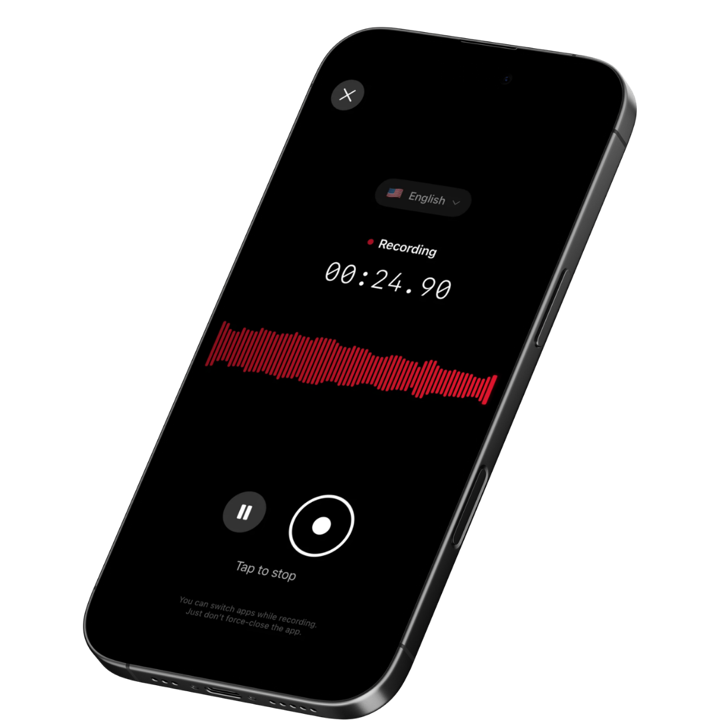
SpeakWise is AI productivity in its purest form. No complex setup. No learning curve. No prompt engineering. You speak, and AI transcribes, summarizes, extracts action items, and syncs to Notion. That's it. The entire workflow takes one tap and a few seconds of speaking.
Download SpeakWise from the App Store and discover how one-tap recording, AI transcription, intelligent summaries, and Notion integration can deliver the AI productivity gains the statistics promise-without the complexity they warn about.
Join 10,000+ professionals who've discovered that the most powerful AI tool isn't the most complex one-it's the one you actually use every day.
Get SpeakWise Free →
4.9★ App Store Rating | iOS Optimized

🎯 4.9★ App Store Rating | 📱 Built for iOS
