Asynchronous Communication Statistics 2026: Adoption Rates, Productivity Gains, and the Shift Away from Real-Time
Used by recruiters, executives, consultants, and more.
Asynchronous Communication Statistics 2026: Adoption Rates, Productivity Gains, and the Shift Away from Real-Time
70% of employees say their companies actively support asynchronous communication. 52% prefer async over real-time interactions. Loom users recorded 88 million videos in 2024, replacing an estimated 202 million meetings. With 42% of workers believing async is the future and meeting overload driving 78% of workers to say they can't get their work done, these 17 statistics reveal why the shift from synchronous to asynchronous communication isn't a trend-it's a structural transformation of how work gets done.
For decades, work has been organized around synchronous communication-meetings, phone calls, and the expectation that colleagues are available at the same time. This model made sense when everyone shared an office and a time zone. But in a world of distributed teams, global collaboration, and the proven costs of meeting overload, the synchronous default is breaking down. Asynchronous communication-messages, recordings, and documents that can be consumed on the recipient's schedule-offers a fundamentally different approach.
In this post, we'll explore 17 statistics that capture the rise of asynchronous communication in 2025 and 2026. These numbers reveal not just adoption rates and tool usage, but the productivity gains, preference shifts, and organizational outcomes that make the case for async-first workflows. Whether you're a leader designing communication norms for a distributed team, a manager drowning in status meetings, or a worker who'd rather record a five-minute update than sit through a thirty-minute call, these data points confirm what many already suspect: real-time isn't always the right time.
1. 70% of employees say their companies actively support asynchronous communication
Async communication has moved from niche practice to mainstream policy. Research shows that approximately 70% of employees report that their organizations actively support asynchronous communication methods-including recorded video messages, documented decisions, and structured written updates. This figure represents a dramatic shift from pre-pandemic norms, when synchronous communication (meetings and calls) was the default for nearly all workplace interaction. Source: Passive Secrets - Workplace Communication Statistics 2026
2. 52% of employees prefer asynchronous methods over real-time interactions
The preference shift is clear: more workers would rather communicate on their own schedule than in real time. Research shows that 52% of employees actually prefer asynchronous communication methods over synchronous ones like meetings and calls. This preference is driven by the ability to think before responding, process information at their own pace, and engage with messages without interrupting focused work. For knowledge workers whose output depends on deep concentration, async isn't just convenient-it's cognitively superior. Source: Passive Secrets - Workplace Communication Statistics 2026
3. 42% of workers believe asynchronous communication is the future of work
Nearly half the workforce sees the trajectory. Research shows that 42% of workers believe asynchronous communication represents the future of how work will be conducted-a figure that rises among remote and hybrid workers who have experienced the benefits firsthand. This belief isn't based on abstract theory; it's grounded in the daily experience of workers who've discovered that recorded updates, documented decisions, and thoughtful written communication often produce better outcomes than live meetings. Source: Passive Secrets - Workplace Communication Statistics 2026
4. Loom users recorded 88 million videos in 2024, replacing 202 million meetings
The most concrete evidence of async adoption comes from Loom's usage data. In 2024, Loom customers recorded 88 million videos-quick, asynchronous screen recordings and messages that replaced an estimated 202 million meetings. This 2.3:1 ratio of meetings-replaced-to-videos-recorded suggests that each async video eliminates the need for more than two live meetings, likely because a single recorded update can be viewed by multiple people who would otherwise each need separate synchronous conversations. Source: Atlassian - Loom 2024 Year in Review
5. Loom's revenue nearly doubled from $80M to $150M between 2023 and 2026
The market for async communication tools is growing rapidly. Loom's projected revenue for 2026 is approximately $150 million, nearly doubling from $80 million in 2023-representing 35% year-over-year growth. User adoption has expanded by 40% annually, with customers ranging from SMBs to Fortune 100 companies. This financial trajectory confirms that async video communication has found product-market fit across the enterprise landscape. Source: Fueler - Loom Usage Statistics 2026
6. Over 75% of employees are more likely to watch a video than read an email
Async communication isn't limited to text. Research shows that over 75% of employees are more likely to watch a video than read a text-based message or email. This preference for visual and auditory communication suggests that the most effective async strategies combine multiple formats-video for complex updates, audio for quick captures, and text for searchable documentation. The medium matters as much as the timing. Source: ClickUp - Async Video Communication
7. 55% of remote workers say most meetings could have been handled asynchronously
The meeting-to-async conversion opportunity is enormous. Research shows that 55% of remote workers believe a majority of their meetings could have been handled via email, recorded video, or other asynchronous communication methods. When combined with the 67% of executives who consider virtual meetings to be failures, the data suggests that most synchronous meetings exist not because the format is optimal, but because it's the organizational default nobody has bothered to change. Source: Notta Meeting Statistics
8. Email remains the primary communication method at 31%, followed by chat at 30%
The current communication landscape is fragmented across multiple async and sync channels. Research shows that employees' primary communication methods are: email (31%), online chat tools like Slack (30%), project management tools (15%), phone (7%), and in-person conversation (7%). This distribution reveals that async channels (email, chat, project tools) already account for the majority of workplace communication-but the way they're used often mimics synchronous expectations, with rapid response times expected for inherently asynchronous tools. Source: Passive Secrets - Workplace Communication Statistics 2026
9. 38 million videos were created with Loom AI in 2024
AI is accelerating async communication adoption. Loom's data shows that 38 million videos were created using Loom AI features in 2024, which help users automatically generate titles, summaries, and chapters for their recordings. This AI integration makes async video more consumable-recipients can skim a summary, jump to relevant sections, and extract action items without watching the entire recording. AI transforms async video from "watching a recording" into "scanning a document." Source: Atlassian - Loom 2024 Year in Review
10. Async-first companies report 25% reduction in meeting time
Organizations that deliberately adopt async-first communication policies see measurable reductions in synchronous overhead. Research from multiple case studies shows that companies implementing async-first norms-where the default is to communicate asynchronously unless the situation specifically requires real-time interaction-report approximately 25% fewer meetings. This freed-up time directly converts to deep work capacity, addressing one of the primary productivity drains identified across workplace research. Source: Cerkl - Asynchronous Collaboration
11. 32.6 million Americans work on remote teams, driving async tool adoption
The structural foundation for async communication continues to expand. By 2025, 32.6 million Americans work on remote teams-a population that inherently needs asynchronous communication to bridge time zones, schedules, and the impossibility of gathering everyone in one room simultaneously. This remote workforce represents the natural user base for async tools, and their communication habits are increasingly influencing the norms of organizations that also have in-office workers. Source: Kick Resume - Async Work
12. Speaking is 3x faster than typing, making voice capture the most efficient async method
The speed advantage of verbal communication has profound implications for async workflows. Research consistently shows that the average person speaks at approximately 150 words per minute compared to typing at 40-50 words per minute-a roughly 3x speed advantage. This means a five-minute voice recording captures the equivalent of 15 minutes of typed communication, making voice-based async tools the most time-efficient method for capturing thoughts, updates, and decisions without requiring a live meeting. Source: Atlassian - Asynchronous Communication
13. 78% of employees can't get their work done because of meeting overload
The strongest driver of async adoption is the pain of synchronous alternatives. Atlassian's research found that 78% of workers say they're expected to attend so many meetings that it's hard to get their actual work done. This meeting overload creates the business case for async communication: every meeting that can be replaced by a recorded update, written document, or voice note directly returns time to the workers who need it most. Source: Atlassian Workplace Woes: Meetings
14. Hybrid job postings grew from 9% to 24% between 2023 and 2025
The rise of distributed work arrangements creates structural demand for async communication. Hybrid job postings increased from 9% of all listings in early 2023 to 24% by Q4 2025, while fully remote postings grew from 10% to 15%. As more teams operate across different locations and schedules, the need for communication methods that don't require simultaneous presence grows proportionally. Async communication isn't optional for distributed teams-it's infrastructure. Source: Robert Half - Remote Work Statistics and Trends
15. Workers spend 57% of their time communicating and only 43% creating
The imbalance between coordination and production makes the case for more efficient communication. Microsoft's data shows that the average employee spends 57% of their time in communication activities-meetings, email, and chat-and only 43% in creation activities like writing, building, and producing. Async communication directly addresses this ratio by making communication more time-efficient: a five-minute recorded update replaces a thirty-minute meeting, freeing 25 minutes for creative work. Source: Microsoft Work Trend Index - Will AI Fix Work?
16. Documentation-first cultures reduce onboarding time by up to 50%
Async communication creates a persistent knowledge base that pays dividends beyond the immediate exchange. Companies with strong documentation cultures-where decisions, processes, and context are captured asynchronously rather than shared verbally in meetings-report up to 50% faster onboarding for new employees. New hires can self-serve information from recorded discussions, written documents, and transcribed meetings instead of waiting for colleagues to have time to explain things synchronously. Source: Chrono Platform - Async Communication Best Practices
17. 98% of workers want remote flexibility-making async communication essential infrastructure
The near-universal desire for location flexibility (98% according to Buffer) means async communication is no longer optional-it's foundational infrastructure for the modern workplace. When workers are distributed across locations, time zones, and schedules, the only communication that works reliably is communication that doesn't require everyone to be present at the same time. Async isn't a preference; it's the only architecture that supports how people actually want to work. Source: Buffer - State of Remote Work
The Communication Shift: From Simultaneous to Sequential
The statistics describe a workplace in transition. The synchronous model-where value is created by putting people in the same room at the same time-is giving way to a sequential model where information is captured, shared, and consumed on each person's schedule. This isn't the death of real-time collaboration; it's the recognition that most "collaboration" doesn't actually require simultaneous presence.
The evidence is compelling: 55% of meetings could be async. 52% of workers prefer it. Companies that adopt async-first policies cut meeting time by 25%. And tools like Loom are replacing hundreds of millions of meetings annually. The question isn't whether async communication works-it's how fast organizations will adapt.
The transition isn't about choosing between sync and async-it's about matching the communication format to the actual need. Real-time is essential for brainstorming, conflict resolution, and relationship building. But status updates, decisions, FYIs, and context sharing? Those work better asynchronously, where everyone can process on their own time, in their own focus state, without the coordination cost of scheduling.
The question isn't whether to communicate synchronously or asynchronously-it's whether you'll default to meetings for everything, or reserve them for what truly requires simultaneous presence.---
Ready to communicate asynchronously without the complexity?
The barrier to async adoption isn't willingness-it's tooling. Recording a video feels like production. Writing a detailed document takes time. Typing up meeting notes defeats the purpose of saving time. The ideal async tool captures information as fast as you can think it.
That's exactly what voice notes do. Speak your update, your decision, your thoughts-and let AI handle transcription, summarization, and organization. Three minutes of speaking replaces fifteen minutes of typing and thirty minutes of meeting.
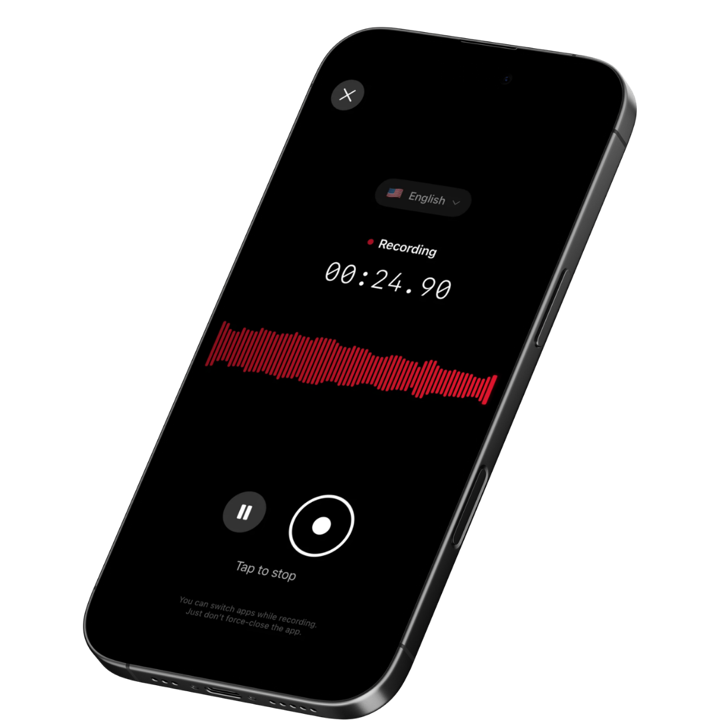
Download SpeakWise from the App Store and discover how one-tap recording, AI transcription, intelligent summaries, and Notion integration can make asynchronous communication as easy as having a conversation-without requiring anyone else to be on the other end.
Join 10,000+ professionals who've discovered that the best async communication tool is the one that works at the speed of speech.
Get SpeakWise Free →
4.9★ App Store Rating | iOS Optimized

🎯 4.9★ App Store Rating | 📱 Built for iOS
