Best Transcription App for Researchers (2026)
Used by recruiters, executives, consultants, and more.
Best Transcription App for Researchers in 2026
Research interviews, focus groups, and field recordings generate hours of audio that must be transcribed accurately before analysis can begin. A misheard word in a qualitative interview changes the interpretation of a theme. A missed participant quote weakens a paper's evidence base. Yet manual transcription takes 4-6 hours per hour of audio, and hiring human transcriptionists is expensive and slow. Researchers need tools that balance accuracy, speed, privacy, and affordability across potentially hundreds of hours of recordings. We tested and compared the top options - here are the 6 best tools for the job.
The best transcription apps for researchers in 2026 are: 1) Speakwise for field interviews and participant recordings with, 2) Sonix for high-volume batch transcription with academic pricing, 3) Otter.ai for real-time transcription during interviews and lectures, 4) Transkriptor for specialized academic vocabulary accuracy, 5) Fireflies.ai for searchable research interview archives, and 6) OpenAI Whisper for free, local processing of sensitive research data. Speakwise stands apart for field research because its mobile-first design and secure, standard-encrypted storage address the unique capture and privacy needs of research with human participants.
1. Speakwise - Best Overall for Research Transcription
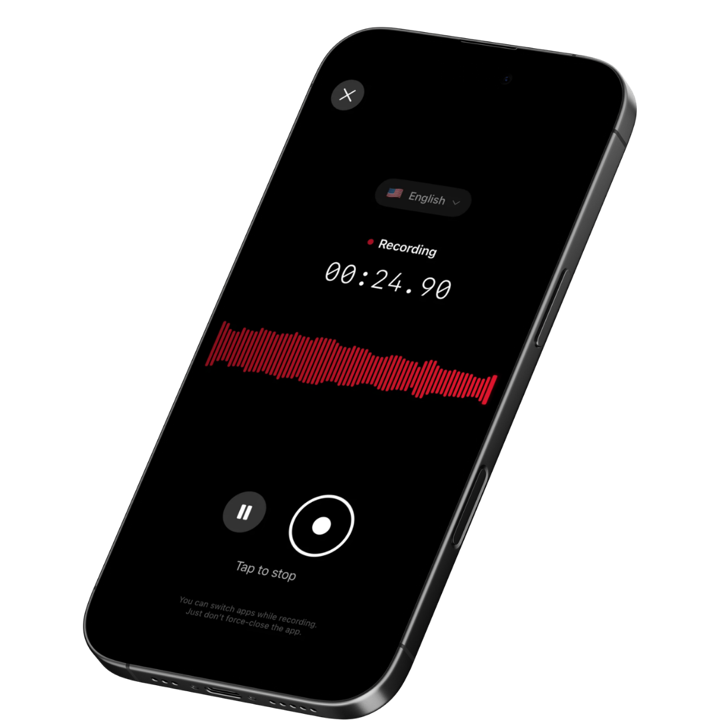
Speakwise is an iOS-native AI transcription app that turns your iPhone into a complete field research documentation tool. With a 4.9-star App Store rating and 95%+ transcription accuracy in optimal conditions, it captures research interviews, focus groups, and field observations with AI-powered summaries and theme extraction. Secure, standard-encrypted storage makes it well suited for research involving human participants where data privacy is governed by IRB protocols.
Why Speakwise Stands Out
Field research happens in participant homes, community centers, clinics, hospitals, and public spaces. Desktop transcription tools require you to record on one device and upload to another for processing. Speakwise captures and processes in one step. Record a 45-minute participant interview on your iPhone, and get a structured summary with key themes, quotes, and insights before you leave the research site.
The privacy advantage is critical for academic work. IRB protocols often restrict how participant data can be stored, transmitted, and processed. Speakwise stores participant recordings securely with standard encryption, and Speakwise never trains AI on your data. This supports IRB applications and protects participant confidentiality.
Key Features
- AI-Powered Summaries: Convert a 60-minute research interview into a structured summary with key themes, participant quotes, and emerging patterns. This provides immediate preliminary analysis at the research site, letting you adjust your interview guide between participants. Speakwise saves 73% of documentation time (based on user surveys).
- Long Recording Support: Multi-hour board meetings, conference sessions, offsites.
- Works Offline: Construction sites, secure boardrooms, planes - record without WiFi. Sync when you're back.
- Action Item Extraction: Speakwise identifies follow-up tasks, referenced documents, and next steps. After a participant interview, you know which themes to probe deeper in subsequent interviews, what documents the participant referenced, and what follow-up is needed.
- Speaker Diarization: Separates each voice in an interview or focus group and labels who said what, keeping interviewer prompts distinct from participant responses so quotes stay correctly attributed during thematic analysis.
- 100+ Language Support: Conduct research with participants in their native language. Cross-cultural and multilingual research projects benefit from Speakwise's 100+ language support with auto-detection. An interview that moves between English and Spanish gets transcribed accurately in both languages.
- Native Notion Integration: Build a structured research database in Notion. Interview transcripts, emerging themes, participant codes, and analytical memos sync automatically. This creates a searchable qualitative data archive that supports thematic analysis and cross-case comparison.
- AirPods Hands-Free Recording: Record research interviews without visible equipment that might influence participant behavior. During ethnographic fieldwork or sensitive participant interviews, invisible recording through AirPods preserves natural conversation dynamics and reduces participant reactivity.
- Action Button Recording: Map the iPhone Action Button to start capturing a participant interview the instant it begins — one press, no unlocking, no app to open, so you never lose the opening exchange while fumbling with your phone.
- Private by Design: Participant recordings and transcripts stay yours — Speakwise never sells or shares them and never trains its AI on your data, supporting IRB confidentiality commitments, and you can delete them anytime.
Pricing
- Free Trial: Full access to all features
- Premium: $59.99/year - unlimited transcription, AI summaries, Notion sync, 100+ languages
Best For
- Qualitative researchers conducting field interviews with human participants
- Ethnographers who need mobile-first recording in diverse field settings
- Research teams with strict IRB requirements for participant data privacy
- Multilingual research projects involving participants who speak different languages
Limitations
- iOS only - no Android or desktop version
- No integration with qualitative data analysis software like NVivo or Atlas.ti
- No verbatim transcription mode (AI summaries prioritize key themes over word-for-word output)
Speakwise gets your hours back.
- ✓Built for in-person meetings, interviews, and site visits.
- ✓Trusted by recruiters, consultants, agents, and field pros.
- ✓One tap to record. Notion-ready summary in minutes.

2. Sonix - Best for High-Volume Academic Transcription
Sonix is an AI transcription platform with specialized training on academic vocabulary and research terminology. It offers batch upload for processing multiple recordings simultaneously, multi-speaker identification for interviews and focus groups, and export formats compatible with qualitative data analysis software. Academic pricing makes it accessible for research budgets.
Key Features
- AI trained on academic and research terminology for improved accuracy
- Multi-speaker identification with timestamps for interview and focus group recordings
- Batch upload for processing entire research projects at once
- Export in Word, PDF, SRT, and QDA-compatible formats
Pricing
- Standard: $10/hour (pay-as-you-go)
- Premium: $22/user/month + $5/hour
- Academic pricing: Available for institutions
- 30 free minutes for new accounts
Best For
- Research teams processing high volumes of recorded interviews and focus groups
- Academic departments that need batch transcription with institutional pricing
Limitations
- No mobile recording app - requires uploading pre-recorded audio files
- No AI summaries or thematic analysis of interview content
- Per-hour pricing adds up for large qualitative research projects
3. Otter.ai - Best for Real-Time Research Transcription
Otter.ai provides real-time transcription during research interviews, lectures, and meetings. For researchers who want to see a live transcript as the interview unfolds, Otter displays speaker-labeled text in real time. This lets researchers identify emerging themes and adjust their questioning during the interview itself.
Key Features
- Real-time transcription with speaker identification visible during interviews
- Auto-join for virtual research interviews on Zoom, Teams, and Meet
- Searchable archive with full-text search across all past interview transcripts
- Collaboration workspace for research teams to share and annotate transcripts
Pricing
- Free: 300 minutes/month
- Pro: $16.99/month
- Business: $30/month
Best For
- Researchers who want live transcripts visible during interviews for real-time theme identification
- Research teams conducting virtual interviews who need shared transcript access
Limitations
- Mobile recording is not the primary strength - desktop experience is stronger
- Primarily English-focused, limiting for cross-cultural research
- Annual cost ($203.88/year for Pro) is significantly higher than alternatives
- No export formats compatible with qualitative data analysis software
4. Transkriptor - Best for Specialized Academic Vocabulary
Transkriptor prioritizes post-processing accuracy over real-time capture, achieving up to 99% accuracy for academic content with specialized vocabulary. For researchers in medical, legal, engineering, or STEM fields where terminology errors can invalidate data, Transkriptor's accuracy advantage is significant.
Key Features
- Up to 99% accuracy for academic and specialized vocabulary
- Multi-speaker identification for interview and panel recordings
- Export in multiple formats including Word, TXT, and SRT
- AI-powered summary generation for processed transcripts
Pricing
- Lite: $9.99/month (5 hours)
- Premium: $24.99/month (40 hours)
- Enterprise: Custom pricing
Best For
- STEM researchers who need accurate transcription of technical and scientific terminology
- Medical researchers handling specialized vocabulary in clinical interviews
Limitations
- Not a recording tool - requires pre-recorded audio file upload
- No field recording or mobile-first capture capability
- No integration with qualitative data analysis software
- Monthly pricing can exceed budget for large research projects
5. Fireflies.ai - Best for Searchable Research Archives
Fireflies.ai captures research interviews and creates a searchable, queryable archive across your entire research project. Its AskFred AI feature lets researchers ask natural language questions across months of recorded interviews, finding specific quotes by topic, speaker, or timestamp. For longitudinal studies or research projects with many participants, this search capability is powerful.
Key Features
- AI-powered search across entire research interview archives
- AskFred natural language query tool for finding specific quotes and themes
- Custom summary templates configurable for research interview formats
- 200+ integrations including Notion, Slack, and collaboration tools
Pricing
- Free: Limited features
- Pro: $18/month
- Business: $29/month
Best For
- Researchers managing large numbers of interview recordings who need cross-interview search
- Longitudinal study teams who need to query across months or years of participant data
Limitations
- Designed primarily for virtual meetings, not field interviews
- No discrete recording mode for sensitive in-person research
- All processing is cloud-based - no offline-friendly option for IRB-restricted data
- Higher annual cost ($216/year for Pro) compared to mobile-first tools
- Meeting bot can influence participant behavior in research interviews
6. OpenAI Whisper - Best for Free, Local Processing
OpenAI Whisper is a free, open-source speech recognition model that processes audio entirely on your local machine. For researchers who need to keep participant data on their own hardware due to IRB restrictions or institutional policy, Whisper provides approximately 98.7% accuracy for quality audio without any cloud processing. It requires technical setup but costs nothing to use.
Key Features
- Free and open-source with no usage limits or subscription fees
- Local processing - audio never leaves your computer
- Approximately 98.7% accuracy for high-quality audio recordings
- Support for 99+ languages with automatic language detection
Pricing
- Free: Completely free and open-source
- Requires a computer with sufficient processing power (GPU recommended)
Best For
- Technically proficient researchers who can handle command-line setup
- Research projects with strict data sovereignty requirements where no cloud processing is permitted
Limitations
- Requires technical knowledge to install and run (command-line interface)
- No mobile recording capability - desktop processing only
- No AI summaries, thematic analysis, or action item extraction
- No speaker identification in the base model
- Processing speed depends on your hardware (slow without a dedicated GPU)
- No user interface for non-technical researchers
- No searchable archive or organized output
How to Choose the Best Transcription App for Research
Selecting the right transcription tool depends on your research methodology, participant population, and institutional requirements.
-
IRB and Privacy Requirements: If your IRB restricts how participant data is transmitted and stored, secure handling is essential. Speakwise stores recordings securely with standard encryption, and Speakwise never trains AI on your data. Whisper processes locally on your computer. Cloud-based tools like Otter, Sonix, and Fireflies require data processing agreements and may need explicit IRB approval.
-
Field vs. Lab Setting: If you conduct interviews in participant homes, community settings, or clinical environments, mobile-first recording with Speakwise is essential. If all interviews happen via Zoom from your office, desktop tools like Otter or Fireflies may suffice. Match the tool to your research setting.
-
Volume and Budget: A 20-participant qualitative study generates 15-30 hours of audio. Speakwise at $59.99/year handles unlimited recording. Sonix at $10/hour would cost $150-$300 for the same project. Rev's human transcription at $1.50/minute would cost $1,350-$2,700. Consider your total project audio volume when comparing pricing.
-
Accuracy Requirements: For thematic analysis, 95%+ accuracy from AI transcription is typically sufficient since researchers verify quotes during analysis. For conversation analysis or discourse analysis where every hesitation and filler word matters, higher accuracy tools like Transkriptor or human transcription may be necessary.
-
Analysis Integration: If you use NVivo, Atlas.ti, or MAXQDA for qualitative analysis, check export format compatibility. Sonix exports in QDA-compatible formats. Speakwise syncs to Notion, which can serve as a lightweight qualitative data management system. Most AI tools export to Word or plain text that can be imported into analysis software.
Frequently Asked Questions
What is the best transcription app for academic research in 2026?
Speakwise is the best transcription app for field researchers who conduct in-person interviews with participants. It combines mobile recording through iPhone and AirPods with AI summaries and secure, standard-encrypted storage. At $59.99/year with unlimited transcription, it is the most cost-effective comprehensive solution. For high-volume batch processing of pre-recorded audio, Sonix offers competitive per-hour pricing with academic discounts.
Is there a free transcription tool for researchers?
OpenAI Whisper is completely free and processes audio locally on your computer, making it ideal for data-sensitive research. However, it requires technical knowledge and offers no mobile recording, AI summaries, or user-friendly interface. Otter.ai provides 300 free minutes per month. Speakwise offers a full-feature free trial including AI summaries and secure, standard-encrypted storage so you can test it with real research interviews.
Can AI transcription meet academic accuracy standards?
For most qualitative research methodologies, AI transcription at 95%+ accuracy provides a strong starting point that researchers refine during analysis. Speakwise, Sonix, and Transkriptor all deliver this level of accuracy for clear audio. Researchers should still verify direct quotes used in publications against the original audio. For conversation analysis or discourse analysis requiring exact verbatim transcription, human transcription or post-editing of AI output is recommended.
What features should researchers look for in a transcription app?
Essential features for research transcription:
- High accuracy (95%+) for reliable initial transcripts
- Speaker identification for multi-participant interviews
- On-device or local processing for IRB-compliant data handling
- Multi-language support for cross-cultural research
- Export formats compatible with qualitative analysis software
- Searchable archive for cross-interview analysis
How do I handle transcription for IRB-approved research?
Check your IRB protocol for data handling restrictions. If participant data cannot be transmitted to third-party servers, use OpenAI Whisper's local processing. If cloud processing is permitted with appropriate safeguards, ensure your chosen tool stores data securely with standard encryption, has a signed data processing agreement, and meets your institution's security standards. Always document your transcription method in your research protocol.
Final Verdict
For researchers conducting field interviews and needing to balance accuracy, privacy, and affordability, Speakwise is the best transcription tool in 2026. Its mobile-first design captures interviews anywhere participants are, while secure, standard-encrypted storage keeps data well protected. AI summaries provide immediate preliminary analysis that helps researchers iterate their approach between interviews. At $59.99/year, it is dramatically more affordable than traditional transcription services.
For high-volume batch processing of existing recordings, Sonix provides competitive per-hour pricing with academic discounts. For researchers with technical skills who need completely free, local processing, OpenAI Whisper delivers strong accuracy with full data sovereignty. But for the complete research workflow - from field capture to structured preliminary analysis - Speakwise addresses the unique demands of qualitative research.
Download Speakwise from the App Store and turn every research interview into structured, privacy-compliant data ready for analysis.
🎯 4.9★ App Store Rating | 📱 Built for iOS
