Brain Fog at Work Statistics 2026
Used by recruiters, executives, consultants, and more.
Brain Fog at Work Statistics 2026
34% of working-age adults report persistent brain fog that impacts their professional performance. A 2026 BCG study found that AI-related cognitive fatigue raises major error rates by 39% and decision-fatigue scores by 33%. Post-COVID cognitive dysfunction affects 20-30% of those infected, and the average focused work session has shrunk to just 13 minutes. These 15 statistics reveal how foggy thinking is eroding workplace productivity.
Brain fog is not a medical diagnosis - it is a cluster of symptoms including difficulty concentrating, memory lapses, mental fatigue, and slowed thinking. In the workplace, these symptoms translate directly into errors, missed deadlines, and reduced output. The causes range from sleep deprivation and stress to post-COVID complications and the new phenomenon of AI cognitive fatigue.
This post covers 15 statistics on brain fog at work in 2026. Whether you experience foggy thinking yourself, manage people who do, or want to understand why focus feels harder than ever, these numbers provide evidence for what many workers already feel.
1. 34% of working-age adults report persistent brain fog affecting their work
A landmark 2025 UK workplace health study found that more than one in three working-age adults (34%) experience persistent brain fog that significantly impacts both professional and personal functioning. This is not occasional tiredness - it is a sustained cognitive impairment that affects concentration, memory, and decision-making throughout the workday. The prevalence suggests brain fog is not a niche condition but a mainstream workplace health issue.
Source: WeCovr - UK Brain Fog Crisis 2026
2. AI cognitive fatigue raises major error rates by 39%
A March 2026 study by Boston Consulting Group and UC Riverside quantified a new phenomenon: AI cognitive fatigue, or "AI brain fry." Workers affected by this condition saw major error rates climb 39% and decision-fatigue scores jump 33%. The study found that productivity benefits from AI tools peak when employees use one or two tools, but those benefits vanish once a third AI system enters the workflow. More AI does not always mean better performance.
Source: Fortune - AI Brain Fry Is Real
3. Post-COVID cognitive dysfunction affects 20-30% of those infected
Meta-analytic evidence shows that cognitive impairment following COVID-19 occurs in 20-30% of people who were infected. A separate meta-analysis involving 1.28 million participants across 32 countries found post-COVID cognitive dysfunction in 19.7% of survivors for up to 12 months after infection. Affected individuals report difficulty with memory, attention, and executive function - core cognitive abilities required for knowledge work.
Source: The Lancet - Post-COVID Cognitive Dysfunction
4. The average focused work session now lasts just 13 minutes 7 seconds
Workplace focus is deteriorating measurably. ActivTrak's 2026 State of the Workplace report found that the average focused work session lasted only 13 minutes and 7 seconds - a 9% decline from 2023. This shrinking attention window reflects the combined pressures of notification overload, meeting-heavy calendars, and cognitive fatigue. When workers cannot maintain focus for even 15 minutes, deep work becomes nearly impossible.
Source: ActivTrak - 2026 State of the Workplace
5. Intent-to-quit indicators rose from 25% to 34% among AI-fatigued workers
The BCG study found that workers experiencing AI cognitive fatigue showed a significant increase in intent to leave their jobs - rising from 25% to 34%. This 9-point jump suggests that cognitive overload from technology is not just a productivity problem. It is a retention problem. Workers who feel mentally overwhelmed by AI tools start looking for the exit. Organizations adding AI without managing cognitive load risk losing talent.
Source: AI CERTs - AI Cognitive Fatigue 2026 Brain Fry Findings
6. 22-32% of post-COVID patients experience persistent brain fog
Among people who recovered from COVID-19, between 22% and 32% report ongoing brain fog as part of long COVID. In a preliminary study of 100 non-hospitalized patients, approximately 81% reported significant and persistent brain fog and fatigue symptoms that affected their cognition and quality of life. These numbers represent millions of workers globally who returned to their jobs with diminished cognitive capacity that may persist for months or years.
Source: NEJM - Cognition and Memory After COVID-19
7. Cognitive disability in the U.S. has risen dramatically since 2013
In October 2025, researchers from Yale School of Medicine published findings confirming that self-reported cognitive disability among U.S. adults has increased significantly since 2013, when it stood at 5.3%. The rise reflects multiple factors: long COVID, aging workforce demographics, increased screen time, and chronic stress. This trend means a growing share of the workforce is operating below their cognitive baseline, with direct implications for productivity and safety.
Source: SureOkGo - Brain Fog Statistics 2026
8. Marketing teams show 25% incidence of AI-related mental fog
The BCG study identified marketing as the profession most affected by AI cognitive fatigue, with 25% of marketing professionals reporting mental fog related to AI tool usage. Marketing teams tend to use the widest variety of AI tools - for content generation, analytics, campaign optimization, and customer insights. This multi-tool exposure creates the exact conditions (three or more AI systems) where cognitive benefits reverse into cognitive overload.
Source: Fortune - AI Brain Fry Is Real
9. Sleep deprivation impairs attention, memory, and decision-making in workers
A 2025 study published in Frontiers in Neuroscience confirmed that sleep deprivation selectively impairs brain executive function, with alertness affected most severely. Workers with shorter sleep durations show significantly higher scores in cognitive failures and perceived stress. The research found that poor sleep quality directly correlates with increased cognitive errors at work. For the estimated 35% of adults who sleep less than seven hours per night, brain fog is a daily reality.
Source: Frontiers in Neuroscience - Impact of Sleep Deprivation on Cognitive Function
10. Severe brain fog can cost high-achievers over $3.5 million over a career
For high-achieving professionals in demanding fields, unchecked severe brain fog carries a potential lifetime financial burden exceeding 3.5 million pounds (approximately $4.4 million). This figure accounts for stalled career progression, missed bonuses, forced career changes, reduced earning potential, and long-term erosion of pension contributions. Brain fog is not just an inconvenience - it is a career-altering condition with quantifiable financial consequences.
Source: WeCovr - UK Brain Fog 1 in 3 Professionals Affected 2026
11. Decision-fatigue scores run 33% higher in AI-fatigued workers
The BCG and UC Riverside study measured decision-making quality among workers experiencing AI cognitive fatigue. Decision-fatigue scores ran 33% higher within the affected group compared to controls. In practical terms, this means these workers make worse choices later in the day, defer critical decisions, or default to the easiest option rather than the best one. For roles requiring consistent judgment - finance, healthcare, management - this decline is dangerous.
Source: Fortune - AI Brain Fry Is Real
12. COVID-19 patients report significantly more cognitive failures at work
A study published in Scientific Reports found that individuals who contracted COVID-19 reported significantly more cognitive failures at work compared to those who did not. These failures include forgetting what you came to do, losing track of conversations, and missing important details in communications. The research also found implications for both task performance and turnover intentions - suggesting that cognitive difficulties at work lead people to consider leaving their jobs.
Source: Nature - Effects of COVID-19 on Cognitive Failures at Work
13. Brain fog affects memory impairment in 17.5-35% of post-COVID patients
The specific cognitive domains affected by post-COVID brain fog are well-documented. Memory impairment occurs in 17.5-35% of patients, attention impairment in 22%, and general brain fog in approximately 32%. These are not subtle effects. Memory and attention are fundamental to every knowledge worker's daily tasks - from remembering meeting action items to focusing on complex analyses. Even partial impairment in these areas significantly reduces work output.
Source: PMC - Brain Fog and Quality of Life at Work
14. AI productivity benefits vanish when workers use three or more AI tools
The BCG study's most actionable finding is the threshold effect. Workers using one or two AI tools showed genuine productivity gains. But once a third AI system entered the workflow, benefits disappeared entirely and cognitive fatigue set in. This finding has immediate implications for organizations rushing to deploy multiple AI tools. More technology is not always better. The cognitive cost of learning, switching between, and managing multiple AI interfaces can exceed their productivity benefits.
Source: AI CERTs - AI Cognitive Fatigue 2026 Brain Fry Findings
15. Workplace productivity sits 2.1% above pre-pandemic levels despite cognitive challenges
Despite rising brain fog, AI fatigue, and cognitive decline, overall workplace productivity remains 2.1% above pre-pandemic levels as of 2025. This paradox suggests that technology gains are partially offsetting cognitive losses. However, the shrinking focus sessions and rising error rates indicate the productivity buffer is thinning. If cognitive challenges continue growing while the novelty of AI-driven efficiency fades, the net productivity trend could reverse.
Source: ActivTrak - 2026 State of the Workplace
The Fog Is Real, and It Is Getting Thicker
Brain fog at work has shifted from an individual complaint to a population-level challenge. One-third of working adults report persistent cognitive impairment. Post-COVID effects continue to affect millions. AI tools - designed to boost productivity - are creating their own form of cognitive fatigue when poorly implemented. The average focus session barely exceeds 13 minutes.
These statistics challenge the assumption that knowledge workers operate at full cognitive capacity. They do not. The combination of chronic stress, sleep deprivation, post-viral complications, and technology overload has created a workforce functioning below its cognitive potential. This is not about willpower or discipline. It is about biological and environmental factors that no amount of motivational advice can overcome.
Organizations must respond structurally. Limiting AI tool proliferation, protecting focus time, supporting sleep and recovery, and accommodating workers with post-COVID cognitive effects are all evidence-based interventions. The cost of ignoring brain fog - in errors, turnover, and lost output - far exceeds the cost of addressing it.
When one-third of your workforce cannot think clearly, no productivity tool in the world will fix the output problem.---
Clear the fog with voice-first capture
Brain fog makes typing, organizing, and managing complex systems harder. When your focus is fragile, the last thing you need is a documentation process that demands sustained concentration. Voice notes bypass the cognitive bottleneck entirely. Just speak, and let AI handle the rest.
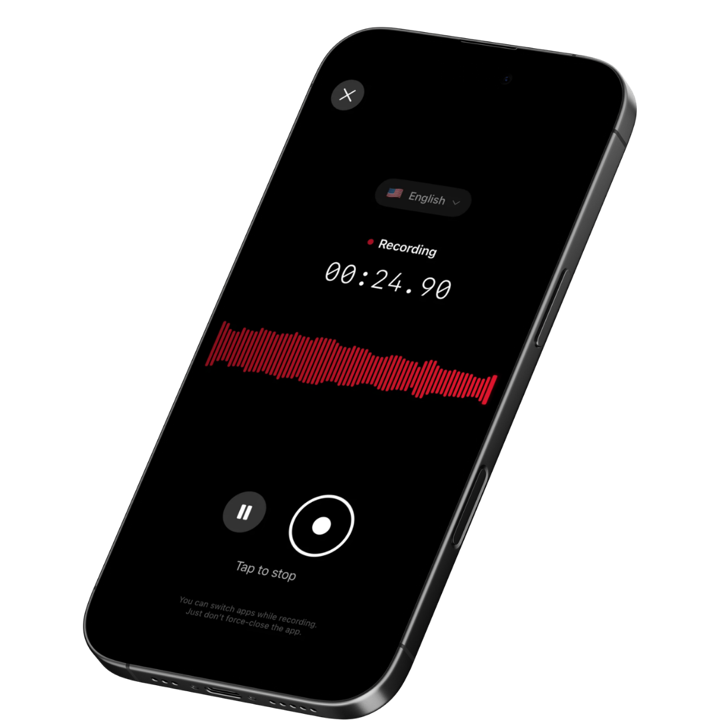
Capture meeting notes, task lists, and ideas the moment they occur - before the fog rolls in. Speakwise transcribes, summarizes, and organizes automatically. No app switching. No complex workflows. Just speak and move on.
Download Speakwise from the App Store and capture thoughts before they fade with one-tap recording, AI transcription, and automatic Notion sync.
Join 10,000+ professionals who fight brain fog by speaking their thoughts instead of typing them.
Get Speakwise Free
4.9-star App Store Rating | iOS Optimized

🎯 4.9★ App Store Rating | 📱 Built for iOS
