Brainstorming Statistics 2026: Key Research
Used by recruiters, executives, consultants, and more.
Brainstorming Statistics 2026: Key Research
Decades of research show that individuals working alone generate more ideas than traditional brainstorming groups. Writing ideas down before sharing produces 42% more original ideas. Teams that share embarrassing stories before brainstorming generate 26% more ideas across 15% more categories. Electronic brainstorming with 12 people outperforms both groups and individuals. These 16 statistics challenge everything you think you know about brainstorming.
Brainstorming is one of the most widely practiced and poorly understood activities in the modern workplace. Since Alex Osborn introduced the concept in 1953, it has become the default method for group ideation. Yet decades of controlled research reveal that traditional brainstorming - a group sitting around a table shouting out ideas - consistently underperforms alternative methods.
This post presents 16 statistics on brainstorming effectiveness, covering why traditional methods fail, what alternatives work better, and how organizations can restructure idea generation for better results. The data matters for anyone who facilitates, participates in, or schedules brainstorming sessions.
1. Individuals working alone generate more ideas than brainstorming groups
Research spanning decades consistently shows that individuals working independently produce more ideas - and better ideas - than groups using traditional brainstorming. This finding, replicated across hundreds of studies, challenges the foundational assumption of group brainstorming. The effect is known as "productivity loss in brainstorming groups," and it occurs because of turn-taking, social loafing, and evaluation apprehension - all of which suppress individual output.
Source: Psychological Science - There's a Better Way to Brainstorm
2. Writing ideas before sharing produces 42% more original ideas
Individuals who write down their ideas before sharing them with the group generate 20% more ideas overall and 42% more original ideas than those using traditional verbal brainstorming. Silent ideation eliminates the anchoring effect, where early ideas constrain everyone's thinking. It also gives introverted team members equal opportunity to contribute without competing for airtime in a group discussion.
Source: ImageThink - Group vs Individual Brainstorming
3. Teams sharing embarrassing stories first generate 26% more ideas
A study reported in Harvard Business Review found that teams who shared embarrassing personal stories before brainstorming generated 26% more ideas across 15% more categories than control groups. Vulnerability reduces evaluation apprehension - the fear that others will judge your ideas negatively. When team members see each other as human and fallible, they take more creative risks and explore unconventional directions.
Source: Psychological Science - There's a Better Way to Brainstorm
4. Structured brainstorming methods produce 50% more creative solutions
Teams using structured brainstorming methods - such as brainwriting, SCAMPER, or round-robin techniques - generate up to 50% more creative solutions than unstructured approaches. Structure provides constraints that paradoxically increase creative output. By giving participants specific prompts, time boxes, and rules for interaction, structured methods reduce the social dynamics that suppress ideas in free-form sessions.
Source: AhaSlides - How to Brainstorm Ideas
5. Asynchronous brainstorming produces 71% more ideas per person per minute
Analysis of idea generation rates shows that asynchronous brainstorming - where participants contribute ideas on their own time rather than simultaneously - produces a 71% higher rate of ideas per person per minute. Asynchronous formats eliminate production blocking, where participants must wait their turn to speak. They also allow people to contribute during their individual peak creative hours rather than during a scheduled meeting time.
Source: ScienceDirect - Brainstorming Group Research
6. Hybrid brainstorming outperforms both individual and group methods
Research shows that hybrid ideation - combining solo brainstorming followed by group discussion - outperforms both purely individual and purely group idea generation. The effect is strongest compared to traditional group brainstorming. The hybrid approach captures the volume and originality of solo thinking while adding the building and refinement that group interaction provides. Best of both worlds, backed by data.
Source: Tandfonline - How to Facilitate a Brainstorming Session
7. Electronic brainstorming with 12 people outperforms 12 individuals working alone
While traditional group brainstorming underperforms solo work, electronic brainstorming reverses this pattern. One study found that electronic brainstorming with 12 participants not only outperformed a 12-person verbal group but also surpassed 12 individuals working separately. The digital format eliminates production blocking and evaluation apprehension while maintaining the stimulation benefits of seeing others' ideas.
Source: Wiley - Electronic Brainstorming vs. Brainwriting
8. Electronic brainstorming effectiveness increases with group size
In traditional brainstorming, larger groups produce more process loss - the bigger the group, the worse the per-person output. Electronic brainstorming reverses this relationship. The positive effects of digital ideation increase with group size, because more participants provide more stimulation while the technology prevents blocking and social loafing. For large team ideation, digital formats are decisively superior.
Source: Wiley - Electronic Brainstorming vs. Brainwriting
9. Production blocking is the primary cause of brainstorming group failure
Production blocking - the reduction in idea generation caused by taking turns speaking - is the dominant explanation for why group brainstorming underperforms. In a group of six, each person can only speak for one-sixth of the total time. While waiting, they forget ideas, self-edit, and lose momentum. Any brainstorming format that eliminates turn-taking automatically outperforms traditional methods.
Source: Wiley - Electronic Brainstorming vs. Brainwriting
10. Evaluation apprehension causes people to withhold their most original ideas
Fear of judgment - called evaluation apprehension - causes brainstorming participants to self-censor. People withhold ideas they perceive as risky, unconventional, or incomplete. The most original ideas are precisely the ones most likely to be held back, because they feel the most vulnerable to criticism. Osborn's original brainstorming rules explicitly banned criticism, but decades of research show that the social pressure persists regardless of stated rules.
Source: Brain Hurricane - Why Group Brainstorming Fails
11. Brainwriting increases group productivity compared to face-to-face sessions
Brainwriting - where each group member writes down ideas anonymously on paper or cards - shows consistent productivity gains over traditional verbal brainstorming. The anonymity prevents idea anchoring and personality bias. It gives introverted team members equal contribution opportunity. And it produces a broader range of ideas because early contributions do not constrain later thinking the way verbal ideas do.
Source: Psychological Science - There's a Better Way to Brainstorm
12. Swarm intelligence platforms enable groups to brainstorm at the 97th percentile
Recent 2025 research found that platforms using conversational swarm intelligence allow large groups to brainstorm and prioritize ideas more productively than traditional methods. Groups using these AI-assisted platforms achieved effective collective intelligence scores at the 97th percentile. This suggests that technology-augmented brainstorming can overcome the process losses that plague traditional group sessions.
Source: Phys.org - Swarm Intelligence Brainstorming Study
13. Cognitively diverse teams consistently outperform homogeneous groups
MIT's Center for Collective Intelligence found that teams with diverse thinking styles and backgrounds consistently outperform homogeneous groups in creative problem-solving. This holds true across brainstorming formats. The diversity advantage comes not from demographic categories alone but from genuine differences in how team members approach problems. Varied perspectives create more starting points for ideation.
Source: Stanford d.school - Who Produces Better Ideas
14. Psychological safety is the single most important factor in team effectiveness
Google's Project Aristotle analyzed hundreds of teams and identified psychological safety as the number one predictor of team effectiveness, including creative output. Teams where members feel safe to take risks and be vulnerable produce more ideas and higher-quality solutions. Brainstorming sessions in psychologically unsafe environments are performative rather than productive - people contribute safe ideas to appear engaged.
Source: Psychological Science - There's a Better Way to Brainstorm
15. Ideation exhaustion occurs in most brainstorm sessions
In most brainstorming sessions, participants reach a point where no new ideas are generated - a state called ideation exhaustion. This plateau typically arrives faster in group settings than in individual work, because social dynamics cause premature convergence. Structured techniques like brainwriting, round-robin, and time-boxed sprints extend the ideation window and delay exhaustion by providing fresh prompts and perspectives.
Source: ScienceDirect - Brainstorming Group Research
16. Walking boosts creative output by 60% - applicable to brainstorming
Stanford research found that creative output increases by an average of 60% while walking. This finding has direct implications for brainstorming: walking brainstorms combine physical movement with idea generation, and the creative boost from walking persists even after sitting back down. A pre-brainstorm walk could prime the creative pump before the session even begins.
Source: Stanford Report - Walking Improves Creativity
Brainstorming Is Not Broken - It Is Misused
The research does not condemn brainstorming as a concept. It condemns the specific format most organizations use: unstructured verbal discussion in groups. The data consistently shows that better methods exist. Solo ideation before group discussion. Written before verbal. Structured before free-form. Digital before face-to-face for large groups.
The underlying principle is simple: remove the social dynamics that suppress ideas and add the structure that stimulates them. Production blocking, evaluation apprehension, and social loafing are predictable, well-documented phenomena. Any brainstorming format that addresses them will outperform the traditional approach. The 42% gain from writing first and the 71% gain from asynchronous ideation are not marginal improvements - they represent a fundamentally better way to generate ideas.
The future of brainstorming is hybrid: individual thinking followed by structured group refinement, augmented by digital tools that eliminate process losses. Organizations that adopt these evidence-based methods will generate more ideas, better ideas, and more diverse ideas - without requiring more time or more meetings.
The best brainstorming session starts in silence.---
Capture brainstorming ideas before they vanish
The biggest loss in any brainstorming session happens after it ends. Ideas discussed but not recorded fade within hours. Action items agreed upon verbally go untracked. The energy of the session dissipates without a structured capture system.
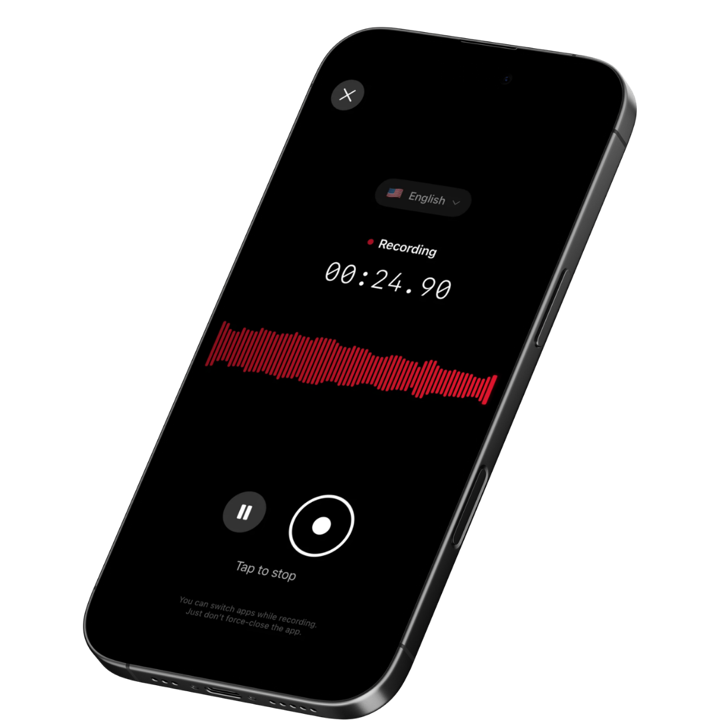
Voice recording solves the capture problem completely. Record the session, get an AI-generated transcript with key ideas extracted, and share it with every participant. No one needs to take notes during the session - everyone can focus entirely on ideation.
Download SpeakWise from the App Store and record your brainstorming sessions with one tap. AI transcription, automatic action item extraction, and Notion sync ensure every idea survives the transition from session to execution.
Join 10,000+ professionals who never let a brainstorming session's best ideas go unrecorded.
Get SpeakWise Free
4.9-star App Store Rating | iOS Optimized

🎯 4.9★ App Store Rating | 📱 Built for iOS
