Calendar Overload Statistics 2026: Back-to-Back Bookings, Focus Block Scarcity, and Scheduling Debt

Used by recruiters, executives, consultants, and more.
Calendar Overload Statistics 2026: Back-to-Back Bookings, Focus Block Scarcity, and Scheduling Debt
The average knowledge worker is interrupted every two minutes during core work hours. Employees need 19.6 hours of focus time each week but actually get just 10.6. Unproductive meeting time has doubled since 2019 to five hours per week, and 92.4% of recurring meetings have no end date, silently colonizing calendars indefinitely. These 17 statistics reveal how calendar saturation has quietly become the defining productivity crisis of the modern workplace.
Calendar overload is not simply about having too many meetings. It is a systemic problem that compounds across every dimension of work: cognitive, emotional, and organizational. When calendars fill with back-to-back bookings, the spaces between meetings disappear. Those spaces are where thinking happens. That is where decisions crystallize, where creative ideas form, and where the actual work of knowledge work gets done. Without protected focus time, employees find themselves trapped in a paradox: spending their entire day communicating about work while having almost no time to do the work itself. The consequences ripple outward from individual burnout to team dysfunction to enterprise-wide productivity loss measured in billions of dollars annually. And because calendar bloat accumulates gradually, one recurring standup here, one weekly sync there, most organizations do not realize the scale of the problem until their people are already overwhelmed.
In this post, we'll explore 17 statistics that reveal the true depth of calendar overload in 2025 and 2026. These numbers go beyond surface-level meeting counts to expose the structural forces behind scheduling debt: the focus time deficit, the cost of context switching, the zombie meetings that never expire, and the cascading effect that back-to-back bookings have on deep work, employee wellbeing, and organizational output. Whether you are a team lead rethinking your meeting culture, an individual contributor protecting your calendar boundaries, or an executive trying to understand where your workforce's productive hours actually go, these data points provide the evidence base for meaningful change.
1. Employees are interrupted every 2 minutes during core work hours, 275 times per day
The scale of workplace interruptions is staggering. Microsoft's Work Trend Index research found that employees using Microsoft 365 are interrupted an average of every two minutes during core work hours by meetings, emails, or chat messages, totaling approximately 275 interruptions per day. Each interruption forces a context switch that fragments attention and makes sustained deep work nearly impossible. The same research found that employees receive an average of 153 Teams messages and 117 emails daily, creating a constant stream of demands that compete with any focus time the calendar might theoretically allow. When your calendar is packed with meetings and your inbox is constantly pinging, the gaps between interruptions are simply too short to accomplish anything meaningful.
Source: Microsoft Work Trend Index - Breaking Down the Infinite Workday
2. Employees need 19.6 hours of focus time per week but only get 10.6
There is a massive gap between the focus time knowledge workers need and what their calendars actually allow. Reclaim AI's analysis of over 320,000 users found that employees need an average of 19.6 hours per week of uninterrupted focus time to be productive, but they only manage to get 10.6 hours. That is a deficit of nine hours every single week, nearly an entire workday of focus time that meetings, scheduling conflicts, and calendar fragmentation steal from productive output. Over the course of a year, that deficit adds up to more than 460 hours of lost deep work per employee.
Source: Reclaim AI - Smart Meetings Trends Report
3. 68% of workers say they don't have enough uninterrupted focus time
The focus time crisis is not a niche complaint from a small minority. Microsoft research found that 68% of people say they do not have enough uninterrupted focus time during the workday due to frequent meetings and communication demands. When more than two-thirds of the workforce reports the same structural problem, it is no longer an individual time management issue. It is a systemic calendar design failure. The sheer density of meetings leaves employees without the sustained blocks of concentration required for complex problem-solving, strategic thinking, and creative work.
Source: Microsoft Work Trend Index - 2025 Annual Report
4. The number of meetings has tripled since 2020
The pandemic did not just temporarily increase meeting volume. It permanently reset the baseline. According to Microsoft's longitudinal data tracking workplace behavior across hundreds of millions of users, the number of meetings has tripled since 2020. While some of this increase reflects the necessary shift to remote collaboration, much of it represents meetings that replaced informal hallway conversations, quick desk-side check-ins, and other lightweight interactions that never needed a calendar invite. What once would have been a two-minute conversation at someone's desk became a 30-minute calendar hold with a video link. Five years later, these meeting substitutes have calcified into recurring calendar fixtures, and the total volume shows no signs of returning to pre-pandemic levels. The tripling is not a temporary spike; it is the new normal.
Source: Microsoft Work Trend Index - 2025 Annual Report
5. Communication consumes 60% of the workday, leaving only 40% for actual creative work
The balance between communication and creation has tipped decisively toward communication. Microsoft's research across its massive user base found that employees spend approximately 60% of their time in meetings, email, and chat, leaving only 40% available for creative tasks and focused work. In other words, for every eight-hour workday, fewer than three and a half hours are spent on the output that organizations actually hire knowledge workers to produce. This ratio is even more extreme for managers, who according to Reclaim AI data average only 3.6 hours per day on actual task work, with just 50.2% of that time spent productively. The calendar has essentially become a tool for consuming time rather than producing results, and the more senior you are, the worse the ratio becomes.
Source: Microsoft Work Trend Index - Breaking Down the Infinite Workday
6. 92.4% of recurring meetings have no end date
Perhaps the most alarming contributor to calendar bloat is the zombie meeting: the recurring event that was set up once and never revisited. Fellow's research found that 92.4% of all recurring meetings are created without an end date. This means they persist indefinitely on participants' calendars, automatically regenerating week after week regardless of whether they still serve a purpose. Over time, these perpetual meetings accumulate like sediment, gradually filling calendars until there are no open blocks left. Without a built-in expiration mechanism, recurring meetings become the single largest source of scheduling debt in most organizations.
Source: Fellow - Meeting Statistics and Behavior Trends
7. Unproductive meeting time has doubled since 2019 to five hours per week
The problem is not just that there are more meetings. It is that the proportion of wasted meeting time is growing. Asana's 2024 State of Work Innovation report found that the number of hours employees spend in unproductive meetings has doubled since 2019, reaching five hours per week. That translates to roughly one full month of wasted meeting time per employee per year. The report highlights that this increase is driven by meetings that lack clear agendas, include too many participants, and could have been handled through asynchronous communication instead.
Source: Asana - 2024 State of Work Innovation Report
8. 82.5% of workers have had to miss or reschedule meetings due to calendar conflicts
Calendar saturation has reached the point where meetings routinely collide with other meetings. Reclaim AI's research found that 82.5% of professionals have had to miss or move a meeting because they had multiple meetings overlapping on their calendar. Additionally, almost 80% of people reported they could not attend a scheduled meeting because they had to focus on a higher-priority task that demanded immediate attention. This is not an occasional scheduling hiccup. It is a structural reality for the vast majority of knowledge workers. When more than four out of five people regularly face double-booked time slots, calendars have exceeded their carrying capacity, and the system is fundamentally broken.
Source: Reclaim AI - Smart Meetings Trends Report
9. Lack of focus time is the number one cause of burnout, affecting 63.4% of employees
Calendar overload does not just reduce productivity. It actively damages employee health. Reclaim AI's survey data identified the lack of focus time as the single largest driver of workplace burnout, impacting 63.4% of employees. When calendars are so packed that employees cannot find uninterrupted time to complete their core work, the resulting stress, frustration, and sense of falling behind creates a burnout spiral. Employees work longer hours to compensate for the focus time their meetings consumed during the day, leading to exhaustion that further degrades their performance in the meetings themselves. Microsoft's data confirms this pattern: meetings after 8 p.m. have risen 16%, and employees now send 58 chats outside of work hours daily, a 15% year-over-year increase. The calendar is not just consuming the workday; it is consuming the evening too.
Source: Reclaim AI - Smart Meetings Trends Report
10. 71% of senior managers say meetings are unproductive and inefficient
The people who attend the most meetings are also the most critical of their value. Research published in Harvard Business Review found that 71% of senior managers rated their meetings as unproductive and inefficient. This statistic is particularly telling because senior managers typically have significant influence over meeting culture, yet even they feel powerless to change it. The same study found that 65% of senior managers said meetings prevented them from completing their own work, and 64% said meetings came at the expense of deep thinking. Executives now spend an average of 23 hours per week in meetings, up from fewer than 10 hours in the 1960s. This reveals a leadership class trapped by the very meeting culture they theoretically control, spending the majority of their working hours in rooms rather than on the strategic thinking their roles demand.
Source: Harvard Business Review - Stop the Meeting Madness
11. 64% of recurring meetings lack a clear agenda
Calendar overload is compounded by meeting quality problems. The Calendly 2024 State of Meetings report found that 64% of recurring meetings and 60% of one-off meetings lack a clear agenda or plan. Without an agenda, meetings tend to expand to fill their allotted time, wander off topic, and end without clear outcomes or action items. Approximately 40% of workers identified the lack of follow-up notes or action items as the defining characteristic of their least productive meetings. This absence of structure means that much of the time blocked on calendars produces minimal value, yet the calendar cost remains the same. When nearly two-thirds of recurring meetings have no defined purpose for each session, the calendar is essentially being filled with unstructured conversation rather than productive collaboration.
Source: Calendly - State of Meetings 2024
12. 60% of meetings are ad hoc, and one in ten is scheduled at the last minute
Even when employees try to protect their calendars, spontaneous meeting requests erode their plans. Microsoft's Work Trend Index found that 60% of meetings are ad hoc rather than recurring, and one in every ten meetings is scheduled at the last minute. Further compounding the unpredictability, research shows that 35% of meeting invites are sent less than 24 hours in advance, giving attendees almost no time to prepare or rearrange their schedules. This unpredictability makes it nearly impossible for employees to plan focused work blocks with any confidence. A seemingly open afternoon can be shattered by a sudden meeting invite, fragmenting the very time that was supposed to be reserved for deep work. The combination of relentless recurring meetings and unpredictable ad hoc requests creates a calendar environment where no time feels truly protected.
Source: Microsoft Work Trend Index - Breaking Down the Infinite Workday
13. Managers spend 5.8 hours per week in unnecessary meetings, an 87% increase since 2019
The unnecessary meeting burden falls disproportionately on managers. Asana's 2024 research found that managers now spend 5.8 hours per week in meetings they consider unnecessary, representing an 87% increase since 2019. For individual contributors, the wasted meeting load jumped even more dramatically, from 1.7 hours in 2019 to 3.7 hours in 2024, a 118% increase. Executives saw their wasted meeting time rise from 3.5 to 5.3 hours per week. Across every level of the organization, the trend is the same: people are spending significantly more time in meetings they believe should not exist.
Source: Asana - 2024 State of Work Innovation Report
14. 43% of workers spend three or more hours per week just scheduling meetings
Before meetings even begin consuming productive time, the act of scheduling them creates its own tax on the calendar. Calendly's State of Meetings 2024 survey of over 1,200 workers across the United States and United Kingdom found that 43% of respondents spend at least three hours per week just coordinating and scheduling meetings. This includes the back-and-forth emails to find available times, the calendar Tetris of fitting meetings into fragmented schedules, and the rescheduling that happens when conflicts inevitably arise. For someone already spending 14.8 hours per week in meetings, adding three or more hours of scheduling overhead means that meetings and their administrative scaffolding can consume an entire day of the workweek before any productive work begins. Scheduling overhead is the hidden cost of calendar overload that rarely appears in meeting time calculations but consumes meaningful hours every week.
Source: Calendly - State of Meetings 2024
15. It takes 23 minutes and 15 seconds to refocus after an interruption
The true cost of a meeting is not just the time spent in the meeting itself. It includes the recovery time afterward. Research from the University of California, Irvine, found that it takes an average of 23 minutes and 15 seconds for a person to fully refocus on a task after being interrupted. Applied to calendar overload, this means a 30-minute meeting actually consumes closer to 53 minutes of productive capacity. For someone with five meetings in a day, the recovery time alone adds nearly two hours of lost productivity on top of the meeting time itself. Back-to-back scheduling eliminates recovery windows entirely, creating a compounding attention deficit that persists throughout the day.
Source: My Hours - Time Management Statistics
16. Meeting costs average $29,000 per employee per year
Calendar overload carries an enormous financial burden. Flowtrace's analysis of 1.3 million meetings found that meetings cost an average of $29,000 per employee per year when accounting for salary time, preparation, and follow-up. With a typical employee spending 392 hours annually in meetings, amounting to more than 16 full workdays, the aggregate cost is staggering. For a company of 500 employees, that translates to $14.5 million per year in meeting costs alone. Across the entire United States economy, unproductive meetings are estimated to cost businesses upwards of $37 billion per year. And because much of this spending goes toward meetings that participants themselves rate as unproductive, the waste represents one of the largest hidden line items in any organization's budget. Unlike other cost categories that face regular scrutiny, meeting costs are rarely audited or optimized because they are embedded in salary time rather than appearing as a discrete expense.
Source: Flowtrace - State of Meetings Report 2025
17. 84% of workers spend recovery time venting to colleagues after bad meetings
The damage from unproductive meetings extends beyond the meeting itself and even beyond the 23-minute refocusing period. Asana's research found that 84% of employees spend part of their post-meeting "cooling off" time venting to colleagues about the bad meeting they just attended. This means that a single poorly run meeting does not just waste the time of the people who were in it; it also consumes the time of the colleagues they vent to afterward. In 2024, workers reported experiencing a "meeting hangover" after 28% of their meetings, where they felt too drained or frustrated to immediately return to productive work. Calendar overload thus creates a secondary wave of productivity loss that cascades through the organization.
Source: Asana - 2024 State of Work Innovation Report
The Calendar Paradox: Why More Scheduling Creates Less Productivity
The statistics above reveal a paradox at the heart of modern work: the tools designed to organize our time have become the primary instruments of its destruction. Calendars were meant to coordinate collaboration and protect productive hours. Instead, they have become open-access systems where anyone in the organization can claim a slice of anyone else's time, with no governance, no cost signal, and no friction to slow the accumulation. The result is a tragedy of the commons, where individual scheduling decisions that seem reasonable in isolation, just one more 30-minute sync, just one more weekly check-in, collectively produce a landscape where sustained focus work is nearly impossible. Each meeting organizer optimizes for their own coordination needs without visibility into the cumulative burden they are placing on attendees' calendars.
What makes calendar overload particularly insidious is its self-reinforcing nature. When meetings consume the time that should have been used for actual work, employees fall behind on their tasks. Falling behind creates urgency, which triggers more meetings: status updates to explain delays, coordination calls to realign timelines, and escalation meetings to address the productivity shortfall caused by too many meetings in the first place. This feedback loop explains why meeting volume has tripled since 2020 and shows no signs of reversing. The meetings themselves generate the conditions that demand even more meetings.
The financial and human costs are substantial. At $29,000 per employee per year in meeting costs and five hours per week in demonstrably unproductive meetings, organizations are spending enormous resources on communication activities that their own employees rate as wasteful. Meanwhile, the focus time deficit of nine hours per week per employee is driving the burnout that 63.4% of the workforce reports. The calendar has become a mechanism that simultaneously drains budgets, exhausts people, and prevents the deep work that drives organizational value.
Perhaps most concerning is the finding that 92.4% of recurring meetings have no end date. This single statistic captures the root cause of scheduling debt: meetings are easy to create and nearly impossible to kill. Each recurring meeting represents a permanent claim on future calendar real estate, and without deliberate audit and cancellation processes, these claims accumulate until the calendar reaches saturation. Consider the math: if an organization adds just two new recurring 30-minute meetings per month without retiring any existing ones, within a year each employee can accumulate 24 additional hours of weekly meeting commitments. Calendar saturation is not a sudden crisis. It is a slow accumulation that crosses a critical threshold before anyone notices.
The solution requires not just better meeting practices, but a fundamental shift in how organizations think about synchronous versus asynchronous communication. Not every update needs a meeting. Not every decision requires a video call. And not every piece of information needs to be delivered in real time to an audience sitting in the same virtual room. The organizations that will thrive are those that treat calendar time as a scarce, expensive resource and actively seek alternatives for the information-sharing meetings that currently dominate schedules.
The data is unambiguous: calendar overload is not a scheduling problem. It is a communication design problem. Organizations that continue to default to meetings for information sharing, status updates, and routine coordination will continue to starve their workforce of the focus time that drives their most valuable output. The path forward requires replacing calendar-first communication with approaches that respect the scarcity of synchronous attention.---
Ready to take back your calendar?
Much of what fills our calendars does not require everyone to be in the same room at the same time. Status updates, project summaries, weekly recaps, quick decisions, and routine information sharing have all been absorbed into the meeting-industrial complex simply because meetings were the path of least resistance. But when 64% of recurring meetings lack an agenda and five hours per week are spent in meetings that employees themselves consider unnecessary, the real problem becomes clear: we are using synchronous, calendar-blocking meetings to share information that could flow asynchronously.
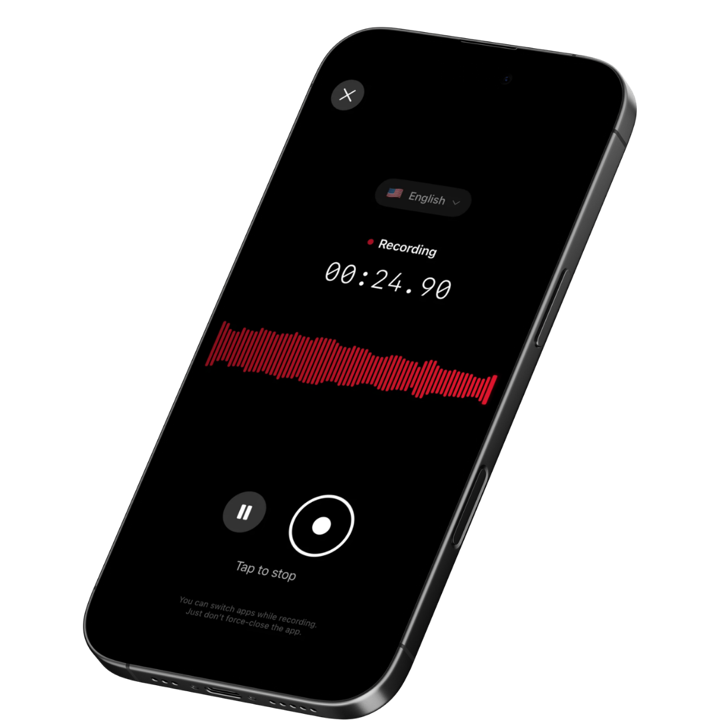
Voice capture offers a fundamentally different approach. Instead of blocking 30 minutes on everyone's calendar for a status update, you record a 2-minute voice memo-and AI handles the rest. Your team gets a transcript, a summary, and the key points without a single calendar invite.
Download SpeakWise from the App Store and discover how one-tap recording, AI transcription, intelligent summaries, and Notion integration can help you replace calendar clutter with async voice updates.
Join 10,000+ professionals who've discovered that the best way to fight calendar overload isn't better scheduling-it's fewer things that need scheduling.
Get SpeakWise Free →
4.9★ App Store Rating | iOS Optimized

🎯 4.9★ App Store Rating | 📱 Built for iOS
