Career Change Statistics 2026: Key Trends
Used by recruiters, executives, consultants, and more.
Career Change Statistics 2026: Key Trends
The average American worker changes jobs 12 times during their career, with median tenure now at just 3.9 years. 80% of career changers report being happier in their new role, and 77% earn the same or more within two years. Gen Z is projected to hold up to 17 jobs across 7 different careers in their lifetime. These 16 statistics reveal that career mobility has become the norm, not the exception, in the modern workforce.
The era of lifelong employment at a single company is over. Workers across every generation are switching roles, industries, and career paths at rates that would have been unthinkable a decade ago. Economic shifts, remote work, skills-based hiring, and changing values around work-life balance have made career changes both more common and more accessible than ever before.
This post covers 16 statistics on career changes in 2026. The data comes from the Bureau of Labor Statistics, Gallup, Deloitte, LinkedIn, and other major research sources. Whether you are considering a career shift or managing a team navigating one, these numbers provide essential context.
1. The average American changes jobs 12 times during their career
The Bureau of Labor Statistics reports that the average American worker holds approximately 12 different jobs over their career. This figure has climbed steadily over the past two decades as job loyalty has declined and labor market fluidity has increased. The notion of a "career ladder" at a single company has been replaced by a "career lattice" spanning multiple employers and sometimes multiple industries. For workers, this means career planning must account for transitions as a normal part of professional life.
Source: Apollo Technical - Career Change Statistics
2. Median job tenure has dropped to 3.9 years
The median tenure for U.S. workers has fallen to just 3.9 years, the lowest since 2002. This means half of all workers have been at their current job for less than four years. The decline reflects both voluntary mobility and structural changes in how companies hire and retain talent. Short tenure is no longer a red flag on a resume. It is the statistical norm. Employers who still penalize frequent moves are filtering out the majority of the modern workforce.
Source: Landbase - Job Change Frequency Statistics
3. 59% of U.S. professionals are actively seeking new employment
More than half of the American workforce is actively looking for a new job at any given time. This 59% figure represents a fundamental shift in worker mentality. Rather than waiting for dissatisfaction to reach a breaking point, workers now treat job searching as an ongoing activity. The always-available nature of job platforms like LinkedIn and Indeed has lowered the friction of exploring new opportunities to near zero. Passive loyalty has been replaced by active evaluation.
Source: Jobera - Career Change Statistics
4. Gen Z is expected to hold 17 jobs across 7 careers in a lifetime
Gen Z workers are projected to hold up to 17 different jobs spanning 7 distinct career paths during their working lives. This projection far exceeds previous generations and reflects the accelerating pace of career mobility. Gen Z's average tenure in their first five years of work is just 1.1 years, compared to 1.8 for Millennials, 2.8 for Gen X, and 2.9 for Baby Boomers. Rather than job-hopping, researchers describe this behavior as "growth-hunting" driven by ambition and a perceived lack of advancement opportunities.
Source: Randstad - Gen Z Workplace Blueprint
5. 80% of career changers report being happier in their new field
Career changes carry risk, but the data shows they pay off emotionally. 80% of people who made a career change report being happier in their new role than they were in their previous one. This high satisfaction rate holds across age groups and industries. The finding challenges the common fear that career changes lead to regret. For most people, the discomfort of transition is temporary, while the satisfaction of finding better-fitting work is lasting.
Source: Careershifters - Career Change Statistics
6. 77% of career changers earn the same or more within two years
Financial fear is the top barrier to career changes, but the data challenges it. According to BLS research, approximately 77% of career changers report earning the same or more within two years of making the switch. While many experience a short-term pay dip during the transition period, income recovery is the norm rather than the exception. The key factor is the growing prevalence of skills-based hiring, which allows transferable competencies to carry financial value across industries.
Source: Apollo Technical - Career Change Statistics
7. 83% of workers now rank work-life balance above pay
For the first time in major workforce surveys, work-life balance has overtaken compensation as the top priority for workers. 83% of respondents rank balance above pay when evaluating job opportunities. This shift is a primary driver of career changes in 2026. Workers are leaving higher-paying roles for positions that offer flexibility, autonomy, and sustainable workloads. The implication for employers is that competitive salaries alone can no longer prevent turnover if the job demands an unsustainable lifestyle.
Source: TieTalent - Career Change 2026
8. 85% of employers now use skills-based hiring practices
85% of employers report using skills-based hiring practices in 2025, up from 81% the year before. This shift has made career changes significantly more feasible by reducing the penalty for non-linear career paths. When employers evaluate what you can do rather than where you have been, industry switches become practical. The trend also means that workers who invest in transferable skills like communication, project management, and data analysis can move between fields with less friction.
Source: TestGorilla - State of Skills-Based Hiring 2025
9. 53% of employers have dropped formal degree requirements
More than half of employers have actively removed degree requirements for certain roles, up from just 30% in previous years. This represents a structural change in hiring that directly benefits career changers. Workers who built expertise through experience, self-study, or adjacent roles can now access opportunities that were previously gated by credentials. The decline of degree requirements is one of the most significant enablers of career mobility in the past decade.
Source: TestGorilla - State of Skills-Based Hiring 2025
10. 91% of Millennials expect to change jobs every three years
91% of Millennials anticipate job transitions approximately every three years throughout their working lives. This expectation has become self-fulfilling as both workers and employers have adapted to shorter tenures. Companies now design onboarding and development programs with the assumption that most employees will stay for two to four years. For Millennials, the three-year mark has become a natural evaluation point for career progression, compensation, and alignment with personal goals.
Source: Money Digest - Millennials and Gen Z Jobs Lifetime
11. 76% of workers seeking career changes prioritize remote work
Remote work access has become a deal-breaker for career changers. 76% of U.S. workers actively seek remote work opportunities, and 41% of those considering a career change specifically prioritize flexible work arrangements. The remote work revolution has expanded the geographic boundaries of career changes. Workers can now switch industries without relocating, reducing one of the largest barriers to professional transitions. Location independence has made the career change equation significantly more favorable.
Source: Apollo Technical - Career Change Statistics
12. 1 in 3 Gen Z workers plan to change jobs within the next year
One-third of Gen Z workers are planning a job change within the next 12 months. This rate of planned mobility is the highest of any generation currently in the workforce. The driving force is not dissatisfaction alone. Gen Z workers cite lack of advancement opportunities, insufficient learning and development, and misalignment with company values as their primary reasons for leaving. They are mobile because they are ambitious, not because they are disloyal.
Source: Randstad - Gen Z Workplace Blueprint
13. Workers aged 20-24 maintain a median tenure of just 1.4 years
Young workers cycle through jobs at an extraordinary pace. The median tenure for workers aged 20-24 is just 1.4 years, compared to 9.8 years for workers aged 55 and older. This gap reflects both generational attitudes and life-stage realities. Early-career workers are still exploring industries, building skills, and discovering what kind of work fits them. The rapid turnover is not necessarily negative. It often represents an efficient search process that ultimately leads to better career matches.
Source: Equiliem - Job Tenure Trends BLS
14. Deloitte finds 46% of Gen Z feel burned out by the intensity of their workload
The 2025 Deloitte Global Gen Z and Millennial Survey found that 46% of Gen Z workers feel burned out by the intensity of their workload. Burnout is one of the strongest predictors of career change intention. When workers feel chronically overextended, they do not just seek a new job. They often seek an entirely different career path in an industry they perceive as more sustainable. Burnout-driven career changes tend to prioritize wellbeing over advancement.
Source: Deloitte - Gen Z and Millennial Survey 2025
15. The global economy loses $8.9 trillion annually to low engagement
Gallup estimates that low employee engagement costs the global economy $8.9 trillion per year, equivalent to 9% of global GDP. Career changes are both a symptom and a potential cure for this crisis. When disengaged workers find better-fitting roles, their productivity and engagement increase dramatically. The economic argument for supporting career mobility, rather than penalizing it, has never been stronger. Companies that help employees find the right fit benefit from the engagement gains that follow.
Source: Gallup - State of the Global Workplace 2025
16. U.S. employee engagement fell to 31% in 2024, a 10-year low
Gallup reported that U.S. employee engagement dropped to 31% in 2024, marking a decade-long low. This decline coincides with rising career change rates, suggesting a connection between disengagement and mobility. When less than one-third of workers are engaged in their current roles, the pool of potential career changers grows enormous. The engagement crisis is not just an HR metric. It is the single largest driver of the career mobility wave that defines the 2026 workforce.
Source: Gallup - State of the Global Workplace 2025
Career Mobility Has Become the Default, Not the Exception
The statistics tell a clear story: career changes are now a standard feature of professional life, not a rare disruption. When the average worker holds 12 jobs, when 59% are actively looking for something new, and when 80% of those who make the leap report being happier, the question is not whether to change careers. It is when and how.
The structural barriers to career changes are falling rapidly. Skills-based hiring, dropped degree requirements, and remote work have made it easier than ever to move between industries and roles. Workers who invest in transferable skills and maintain a growth mindset are well-positioned to navigate these transitions successfully.
The organizations that thrive in this environment will be those that embrace career mobility rather than fight it. This means designing roles for impact rather than tenure, investing in employee development even when it makes people more marketable, and creating cultures where people stay because they want to, not because they feel trapped.
The most successful careers in 2026 are not linear paths up a single ladder. They are portfolios of experiences across multiple fields, built through intentional transitions.---
Document your career journey with voice
Career transitions demand reflection, preparation, and documentation. From recording your thoughts after informational interviews to capturing meeting insights at a new job, the transition period is when capturing information matters most. Missing a key detail during onboarding or forgetting a mentor's advice can slow your progress.
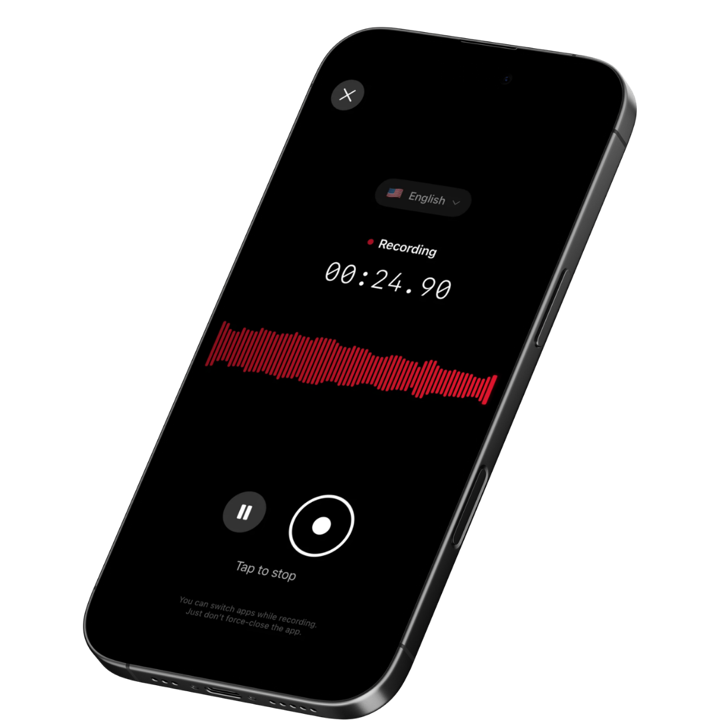
Voice recording makes career preparation effortless. Record your interview prep thoughts, capture networking conversations, and document your first-week observations at a new role. All without breaking your flow to type.
Download SpeakWise from the App Store and capture every insight from your career journey. AI-powered transcription, intelligent summaries, and Notion integration keep your professional development organized and searchable.
Join 10,000+ professionals who use voice capture to document their career growth and never lose a valuable insight.
Get SpeakWise Free
4.9-star App Store Rating | iOS Optimized

🎯 4.9★ App Store Rating | 📱 Built for iOS
