Cognitive Load Statistics 2026: Mental Bandwidth, Working Memory Limits, and Information Processing Strain
Used by recruiters, executives, consultants, and more.
Cognitive Load Statistics 2026: Mental Bandwidth, Working Memory Limits, and Information Processing Strain
Working memory can hold just 3-5 chunks of information at once, yet employees toggle between apps 1,200 times per day, and the most heavily-pinged workers are interrupted every 2 minutes during core hours. Task-switching consumes up to 40% of productive time, and information overload now costs the global economy an estimated $1 trillion annually. Your brain was never designed for this.
The modern knowledge worker faces a crisis that no amount of caffeine, productivity apps, or time-management frameworks can solve: the human brain has fundamental processing limits, and the modern workplace systematically exceeds every single one of them. Working memory, the cognitive workspace where you hold and manipulate information in real time, has a fixed capacity that has not evolved since our ancestors navigated savannas and small tribal communities. Yet the demands placed on that capacity have grown exponentially.
Every notification, every app switch, every unfinished thought you try to hold while searching for the right document--each one consumes a portion of your finite mental bandwidth. The result is not simply feeling "busy" or "distracted." It is a measurable, well-documented degradation of cognitive performance that costs individuals their best thinking and costs organizations billions in lost productivity, poor decisions, and employee burnout.
In this post, we will explore 19 statistics that quantify the cognitive load crisis facing modern professionals. These numbers span neuroscience research on working memory limits, workplace studies on interruption frequency and information overload, and economic analyses of the productivity toll. Together, they paint a striking picture of why managing cognitive load is no longer a nice-to-have--it is the single most important factor in unlocking human performance at work.
Whether you are a professional trying to protect your deep thinking time, a manager seeking to reduce burnout on your team, or simply someone who feels mentally exhausted by the end of every workday, these statistics will help you understand exactly what is happening inside your brain--and what you can do about it.
Key Cognitive Load Statistics (2026)
- Cognitive load overwhelms working memory the moment more than 4 chunks of information compete for attention at once (Cowan, 2001, Behavioral and Brain Sciences).
- Modern knowledge workers carry a heavy cognitive load from constant digital interruptions, with the heaviest-pinged employees (the top 20% by ping volume) interrupted 275 times over a full day (Microsoft Work Trend Index).
- Task-switching under cognitive load can consume up to 40% of a person's productive time (American Psychological Association).
- Information overload, a core driver of cognitive load, costs the global economy an estimated $1 trillion a year (Rensselaer Polytechnic Institute, 2024).
- 40% of employees worldwide report experiencing a lot of stress on a given day, a common symptom of chronic cognitive overload (Gallup, State of the Global Workplace 2026).
- Disengagement compounds cognitive load at scale: low employee engagement now costs the global economy an estimated $10 trillion in lost productivity, or 9% of global GDP (Gallup, State of the Global Workplace 2026).
- After-hours messaging extends the cognitive workday well past 5 p.m., with chat volume outside standard hours up 15% year over year (Microsoft Work Trend Index).
1. Working memory can hold only 3-5 chunks of information at a time
In 1956, cognitive psychologist George Miller proposed the famous "7 plus or minus 2" rule, suggesting that short-term memory could hold approximately seven items. But in 2001, Nelson Cowan published a landmark reconsideration of Miller's claim in Behavioral and Brain Sciences. After reviewing decades of memory research with more rigorous controls that eliminated rehearsal strategies and chunking artifacts, Cowan concluded that the true capacity of working memory is approximately four chunks of information--significantly less than previously believed. This means that at any given moment, your brain can actively juggle only a small handful of ideas, tasks, or data points before performance degrades. Every additional demand--an unwritten thought, a pending notification, a half-formed decision, a colleague's request you have not yet addressed--competes for one of those precious slots. In a workplace that generates hundreds of inputs per hour, four chunks is not much to work with.
2. Among the heaviest-pinged workers, interruptions strike every 2 minutes during core hours, 275 times over a full day
Microsoft's 2025 Work Trend Index Special Report, based on aggregated Microsoft 365 productivity signals from millions of users and a survey of 31,000 knowledge workers across 31 countries, found that among the top 20% of users by ping volume, employees receive a ping--whether a meeting invite, email, or chat message--every two minutes during an eight-hour workday. Over a full 24-hour cycle, that adds up to about 275 interruptions. This figure describes the heaviest-notification segment of the workforce, not the average knowledge worker's experience. Each ping still forces the brain to disengage from its current task, process the incoming signal, decide how to respond, and then attempt to re-engage with the original work. The cognitive cost is enormous and cumulative.
Source: Microsoft Work Trend Index, "Breaking Down the Infinite Workday" (2025)
3. It takes an average of 23 minutes and 15 seconds to refocus after a single interruption
Research by Gloria Mark and colleagues at the University of California, Irvine found that workers require an average of 23 minutes and 15 seconds to fully return to their original task after being interrupted. This is not simply the time to reopen a document or re-read a paragraph. It encompasses the full cognitive cycle of disengaging from the interruption, suppressing the new information, reloading the context of the prior task into working memory, and reaching the same depth of focus. When you combine this with the 275 daily interruptions reported among the heaviest-pinged workers, the math becomes devastating: deep, uninterrupted thinking becomes almost structurally impossible for that segment of the modern workplace.
4. Task-switching can consume up to 40% of a person's productive time
Research published by the American Psychological Association, based on experiments by psychologists Joshua Rubinstein, David Meyer, and Jeffrey Evans, demonstrated that switching between tasks exacts a significant cognitive toll. While each individual switch may waste only a fraction of a second, the accumulated cost over a full workday of constant switching adds up to as much as 40% of total productive time. The loss comes from two distinct cognitive processes: "goal shifting" (deciding to do one thing instead of another) and "rule activation" (loading the mental rules for the new task while suppressing the rules for the old one). Both consume finite mental resources that could otherwise be directed at meaningful work.
Source: American Psychological Association, "Multitasking: Switching Costs" (2006)
5. Digital workers toggle between different apps and websites roughly 1,200 times per day
A Harvard Business Review study of 20 teams across several Fortune 500 companies found that the average digital worker switches between applications and browser tabs approximately 1,200 times per workday. That equates to roughly 150 switches per hour during an eight-hour shift--one every 24 seconds. Each toggle requires the brain to briefly reorient, consuming an average of just over 2 seconds per switch. Over the course of a week, these micro-disruptions add up to nearly four hours lost solely to the cognitive overhead of processing each transition--roughly 9% of total working time spent doing nothing but mentally catching up.
6. 80% of global workers report experiencing information overload
A survey commissioned by OpenText and conducted by 3Gem in 2022, polling 27,000 consumers across 12 countries, found that 80% of respondents experience information overload. The primary drivers include being bombarded with information 24/7 and having too many apps and sources to check each day. This figure rose sharply from 60% in 2020, reflecting the acceleration of digital communication during and after the pandemic. Information overload does not simply mean "a lot of information." It is a cognitive state in which the volume of incoming data exceeds the brain's capacity to process it, leading to impaired decision-making, increased stress, and a persistent sense of being overwhelmed.
Source: OpenText / 3Gem Global Survey, reported via BigDATAwire (2022)
7. Information overload costs the global economy an estimated $1 trillion per year
Research highlighted by Rensselaer Polytechnic Institute in 2024 estimates the global economic cost of information overload at approximately $1 trillion annually. This staggering figure accounts for lowered employee productivity, reduced innovation, degraded decision-making quality, and increased error rates across industries. As Curt Breneman, dean of Rensselaer's School of Science, noted, information overload begins by eroding emotional health, job performance, and satisfaction at the individual level, then cascades upward to affect groups, organizations, and entire societies. The cost is not hypothetical--it manifests in slower project timelines, missed opportunities, and higher turnover rates.
Source: Rensselaer Polytechnic Institute, "Information Overload Is a Personal and Societal Danger" (2024)
8. Only 2.5% of people can genuinely multitask without performance degradation
A study by researchers Jason Watson and David Strayer at the University of Utah tested 200 participants on their ability to perform two demanding tasks simultaneously: driving a simulator and engaging in a complex phone conversation involving memorization and math. Only 2.5% of participants--dubbed "supertaskers"--showed absolutely no performance decrements when doing both tasks at once. For the other 97.5%, multitasking caused braking times to increase by 20%, following distances to grow by 30%, memory performance to decline by 11%, and math ability to fall by 3%. What felt like multitasking was actually rapid task-switching, with each transition exacting a measurable penalty in the form of slower reaction times, increased errors, and degraded working memory performance. The implication is clear: for nearly everyone, multitasking is not a skill to be developed. It is a cognitive illusion that systematically undermines performance.
9. 59% of workers cannot go 30 minutes without getting distracted
The "Lost Focus" report from workplace analytics platform Insightful, surveying 1,200 U.S. employees and employers in 2024, found that 59% of workers cannot sustain focus for even 30 minutes without encountering a diversion. The number climbs to 79% when the threshold is extended to a full hour. While phone notifications account for 62% of cited distractions, the single largest source of disruption is other people: over 70% of respondents identified colleague interruptions as the biggest obstacle to completing tasks. One-third of employers estimated these distractions translate to 5 or more hours of lost work per week--up to 25% of the entire workweek consumed by fragmented attention.
10. Knowledge workers spend 1.8 hours every day--9.3 hours per week--searching for information
According to McKinsey Global Institute research, the average knowledge worker spends roughly 20% of the workweek--about 1.8 hours per day or 9.3 hours per week--searching for internal information and tracking down colleagues who can provide it. In practical terms, this means that if a company hires five employees, only four are doing productive work at any given time. The fifth is perpetually searching for answers that already exist somewhere in the organization. This is not a technology failure or a training gap. It is a direct consequence of cognitive overload: when information is scattered across too many systems, the brain spends its limited processing capacity on retrieval rather than on thinking, creating, and deciding.
Source: McKinsey Global Institute, "The Social Economy" (2012)
11. 40% of employees worldwide experience "a lot of stress" every day
Gallup's State of the Global Workplace: 2026 Report, one of the largest ongoing studies of worker wellbeing, found that 40% of employees across the globe report experiencing significant stress on a daily basis. The report surveyed workers across more than 160 countries and also revealed that global employee engagement fell to 20% in 2025, its lowest level since 2020 and down from a peak of 23% in 2022. While stress has many contributing factors, cognitive overload is a primary driver: when the brain is consistently pushed beyond its processing limits by excessive information, constant interruptions, and unrelenting decision demands, the stress response shifts from an occasional acute reaction to a chronic baseline state. Over time, this chronic cognitive stress erodes both performance and wellbeing, creating a vicious cycle where overload leads to stress, stress reduces cognitive capacity, and reduced capacity makes the same workload feel even more overwhelming.
Source: Gallup, "State of the Global Workplace: 2026 Report"
12. 47% of employees feel burned out or frustrated due to inadequate information management tools
Coveo's 2025 Employee Experience Relevance Report found that nearly half (47%) of employees report feeling burned out or frustrated when they lack the right tools or information to succeed in their roles--a figure that increased 12 percentage points from the prior year. The report also found that employees waste an average of three hours per day searching for relevant information across fragmented systems. The connection between cognitive load and burnout is direct: when the brain must expend excessive energy on information retrieval, navigation between tools, and managing disorganized workflows, fewer cognitive resources remain for the creative, analytical, and interpersonal work that provides meaning and satisfaction.
Source: Coveo, "EX Relevance Report: Too Much Data, Not Enough Relevance" (2025)
13. Multitasking under digital distraction can temporarily reduce effective IQ by up to 10 points
A study conducted by Dr. Glenn Wilson at the Institute of Psychiatry, University of London, and commissioned by Hewlett-Packard, found that workers who were constantly distracted by incoming emails and phone calls experienced a temporary drop of up to 10 IQ points in their problem-solving ability. The researchers noted that this cognitive impairment was more than twice the decline observed in studies examining the effects of marijuana use on cognitive performance. While the effect is temporary and context-dependent, the finding underscores a critical point: the brain cannot simultaneously process competing information streams without measurable degradation in the quality of its output. In the modern workplace, where notifications are constant, this state of diminished cognitive performance is not an exception--it is the default.
14. Workers waste 59 minutes every day searching for information across scattered apps
Research conducted by Qatalog in partnership with Cornell University's Ellis Idea Lab surveyed 1,000 knowledge workers in the US and UK and found that employees lose an average of 59 minutes per day--nearly five hours per week--simply trying to locate information hidden across different applications and tools. The study revealed that the proliferation of productivity software, ironically designed to improve efficiency, has created a fragmented digital landscape where critical information is siloed across dozens of platforms. Each search episode requires the brain to recall which app or folder might contain the needed information, navigate to it, filter through irrelevant results, and then attempt to re-engage with the original task. The cognitive cost far exceeds the clock time involved.
Source: Qatalog / Cornell University Ellis Idea Lab Research (2021), via VentureBeat
15. Cognitive load theory demonstrates that learning and performance collapse when working memory is exceeded
Educational psychologist John Sweller developed Cognitive Load Theory (CLT) in the late 1980s, and it has since become one of the most empirically supported frameworks in cognitive science, with thousands of studies validating its core principles across education, medicine, engineering, and workplace design. CLT identifies three types of cognitive load: intrinsic load (the inherent complexity of the material being processed), extraneous load (the unnecessary burden imposed by poor design, disorganized information, or inefficient processes), and germane load (the productive effort directed at genuine understanding and integration of new knowledge). The central insight is that working memory has a hard limit, and when extraneous load consumes too much of that limited capacity, performance does not merely decline gradually--it collapses. This is not a gentle slope. It is a cliff edge. Below a certain threshold of available working memory, comprehension, problem-solving, and decision-making quality all degrade sharply. This principle applies directly to the modern workplace: every unnecessary app switch, poorly organized shared drive, redundant notification, and ambiguous communication increases extraneous cognitive load, leaving less and less capacity for the intrinsic and germane processing that constitutes actual productive thinking.
Source: Sweller, J. Cognitive Load Theory. In Psychology of Learning and Motivation, Academic Press (2011)
16. Workplace distractions and lost productivity cost U.S. companies an estimated $650 billion per year
The cumulative economic toll of fragmented attention is extraordinary. Research estimates that U.S. businesses lose over $650 billion annually due to workplace distractions and the associated productivity decline. This figure encompasses the direct costs of interrupted work, the downstream effects of degraded decision-making, the increased error rates that accompany cognitive overload, and the healthcare and turnover costs driven by chronic stress and burnout. To put this in perspective, that sum exceeds the GDP of many mid-sized countries and represents a hidden tax on every organization in the economy. On a per-employee basis, the impact is equally stark: individual workers lose anywhere from 5 to 10 hours per week to distractions, representing a significant portion of their total compensated time spent in a state of diminished cognitive performance rather than focused, high-quality output. For a company with 1,000 knowledge workers, the annual cost of cognitive overload runs into the tens of millions of dollars--most of it invisible because it manifests as slower work rather than absent work.
Source: Workplace Distraction Statistics, via PassiveSecrets, citing Business News Daily
17. Low employee engagement costs the global economy an estimated $10 trillion in lost productivity each year
Gallup's State of the Global Workplace: 2026 Report found that low employee engagement now costs the global economy approximately $10 trillion in lost productivity annually--equivalent to roughly 9% of global GDP. Worldwide engagement fell for a second consecutive year, dropping to 20% in 2025, its lowest level since 2020 and down from a peak of 23% in 2022. The connection to cognitive load is direct: disengaged employees are more likely to be mentally checked out and distracted, unable to sustain the focus that meaningful work requires, which compounds the productivity losses already caused by interruptions and information overload elsewhere in this list. At the scale of the global workforce, even small per-person losses in cognitive engagement add up to a multitrillion-dollar economic drag.
Source: Gallup, "State of the Global Workplace: 2026 Report"
18. 60% of workplace meetings are unscheduled or ad hoc, fragmenting the workday without warning
Microsoft's 2025 Work Trend Index Special Report, based on aggregated Microsoft 365 productivity signals, found that 60% of meetings are unscheduled or ad hoc rather than planned in advance. Unlike a calendar invite sent days ahead, an ad hoc meeting demands an immediate context switch, forcing workers to abandon whatever they were doing with no time to finish a thought or reach a natural stopping point. Because working memory can only hold a handful of chunks at once, an unplanned interruption is especially costly: there is no buffer to protect the task in progress before attention gets redirected. This unpredictability compounds the cognitive toll documented elsewhere in this report, where the heaviest-pinged workers are already interrupted 275 times over a full day.
Source: Microsoft Work Trend Index, "Breaking Down the Infinite Workday" (2025)
19. After-hours chat messages are up 15% year over year, extending the cognitive workday well past 5 p.m.
The same Microsoft Work Trend Index research found that chats sent outside the standard 9-to-5 workday increased 15% year over year, with the average worker now receiving 58 messages before or after normal business hours. This after-hours volume means the brain rarely gets a genuine reprieve from monitoring and processing incoming information, undermining the recovery time working memory needs to reset between demanding cognitive tasks. Combined with the 275 daily interruptions already reported among the heaviest-pinged workers, the finding points to a workday with no natural edges for that group--one where cognitive load accumulates from early morning until late at night.
Source: Microsoft Work Trend Index, "Breaking Down the Infinite Workday" (2025)
The Cognitive Load Paradox: Why More Tools Create More Problems
The statistics above reveal a profound irony at the heart of modern work. The tools and systems designed to make us more productive--email, messaging platforms, project management apps, shared drives, notification systems--have collectively created an environment that systematically overwhelms the very cognitive resources they were meant to support. Each tool adds another source of inputs to monitor, another interface to navigate, and another location where critical information might be hiding. The result is what researchers call the "cognitive load paradox": the more tools we adopt to manage complexity, the more complex our cognitive environment becomes.
This paradox helps explain why so many well-intentioned productivity strategies fail. Better to-do list apps do not solve the problem if the act of managing the to-do list itself consumes working memory. More sophisticated filing systems do not help if the brain must maintain a mental map of where information lives across dozens of platforms. Even notification management tools add yet another layer of cognitive overhead to an already overloaded system.
The fundamental issue is architectural. The modern knowledge worker's information environment is designed around the capabilities of software--unlimited storage, instant retrieval, parallel processing--rather than around the constraints of the human brain. Software can handle 1,200 app switches per day without breaking a sweat. Your prefrontal cortex cannot. Software can store and index millions of documents simultaneously. Your working memory tops out at four chunks. Until we design workflows that respect these biological limits rather than ignore them, cognitive overload will remain the defining challenge of professional life.
What the research consistently points toward is not fewer tools or less technology, but fundamentally different interfaces between humans and information. The most effective approaches are those that reduce the number of decisions, switches, and retrieval tasks that must pass through the bottleneck of working memory. Instead of requiring the brain to manage information across multiple systems, the most cognitively efficient workflows route information through a single capture point and let automation handle the sorting, organizing, and distributing. The brain is freed to do what it does best: think, create, connect, and decide.
Consider the cumulative picture these statistics paint. A worker with four chunks of working memory capacity toggles between apps 1,200 times, needs 23 minutes to refocus after each disruption, and spends nearly two hours daily just searching for information, and the heaviest-pinged segment of the workforce faces 275 interruptions on top of that over a full day. Meanwhile, 80% of global workers report feeling overloaded, 40% experience daily stress, and 47% feel burned out by inadequate tools. The economic cost runs into the hundreds of billions domestically and a trillion dollars globally. This is not a collection of isolated problems. It is a single, interconnected system failure--and the bottleneck is always the same: the hard limits of human cognitive capacity in an environment that was never designed to respect them.
The 19 statistics in this post are not just numbers. They are a diagnosis of a systemic problem--and a roadmap toward a fundamentally different approach to managing the information that fuels our work and our lives.---
Ready to lighten your cognitive load?
Every statistic in this post points to the same bottleneck: working memory. When you try to hold a thought, find the right app, choose a format, type it out, and file it in the right place, you are burning through your 3-5 chunks of cognitive capacity on logistics instead of insight. The research is clear that the cognitive cost of information management--not the information itself--is what drains mental bandwidth and degrades performance. The solution is not to think less. It is to offload the mechanical work of capturing and organizing information so your brain can focus on the thinking that only you can do.
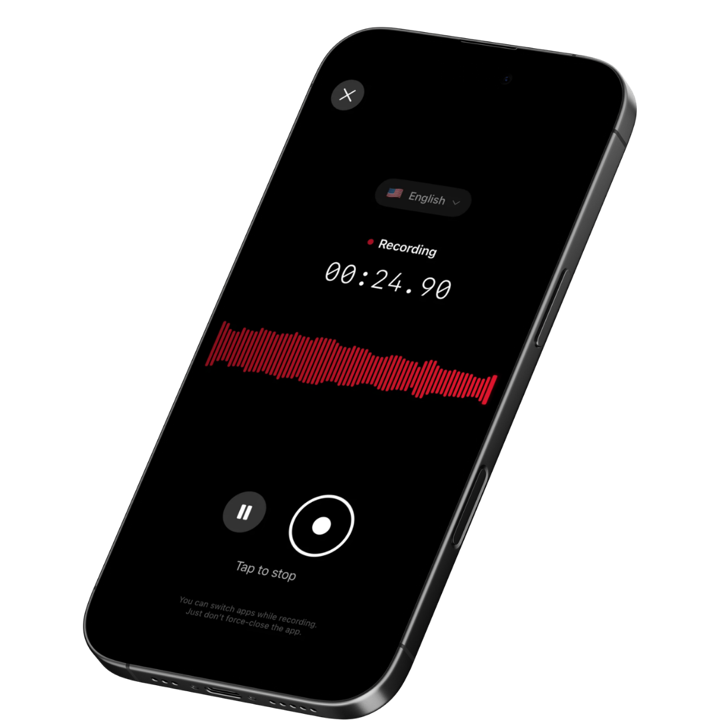
Voice capture offers a fundamentally different approach. Instead of holding thoughts in working memory while searching for the right app, format, or document, you simply speak--and AI handles the rest. Your working memory stays free for the work that matters.
Download SpeakWise from the App Store and discover how one-tap recording, AI transcription, intelligent summaries, and Notion integration can help you offload information instantly--freeing your mental bandwidth for deep thinking.
Join 10,000+ professionals who've discovered that the best way to manage cognitive load isn't a bigger brain--it's a smarter tool.
Get SpeakWise Free →
4.9★ App Store Rating | iOS Optimized

🎯 4.9★ App Store Rating | 📱 Built for iOS
