Communication Skills Gap Statistics 2026
Used by recruiters, executives, consultants, and more.
Communication Skills Gap Statistics 2026
Poor communication costs U.S. businesses $1.2 trillion annually. 91% of employees say their managers lack strong communication skills, and 69% of managers admit they lack proficiency in communication. 89% of bad hires fail due to missing soft skills, not technical gaps. These 16 statistics reveal why the communication skills gap has become the most expensive and widespread workforce problem in 2026.
Communication is the foundation of every workplace interaction. Meetings, emails, one-on-ones, client presentations, and team collaboration all depend on clear, effective communication. Yet the gap between what organizations need and what workers deliver continues to widen. As work becomes more distributed, asynchronous, and cross-functional, the demand for communication skills has outpaced the supply.
This post covers 16 statistics on the communication skills gap in 2026. The data comes from LinkedIn, Gallup, McKinsey, and major workforce surveys. Whether you lead a team, hire talent, or want to develop your own skills, these numbers reveal where the biggest gaps exist and what they cost.
1. Poor communication costs U.S. businesses $1.2 trillion annually
The financial cost of communication failures is staggering. Research estimates that U.S. companies lose roughly $1.2 trillion every year due to poor communication. This figure accounts for lost productivity, increased turnover, customer churn, and rework caused by misunderstandings. To put it in perspective, $1.2 trillion exceeds the GDP of most countries. The cost is not concentrated in any single industry. It is spread across every sector where people need to coordinate, collaborate, and share information.
Source: Employee Benefit News - Poor Communication Costs
2. 91% of employees say their managers lack strong communication skills
The perception gap between managers and their teams is enormous. 91% of employees in a recent survey said their managers do not communicate effectively. This disconnect drives disengagement, confusion, and frustration. Managers often believe they are communicating clearly because they understand the context. Their teams, lacking that context, receive fragmented or ambiguous messages. The gap is not about intelligence. It is about the skill of translating intent into clear, actionable communication.
Source: Pumble - Workplace Communication Statistics 2026
3. 69% of managers lack proficiency in communication
The employee perception is not unfounded. Research shows that almost 69% of managers themselves lack proficiency in communication skills. This is a leadership development crisis. Most managers were promoted for technical competence, not communication ability. Without deliberate training and practice, the transition from individual contributor to communicator-in-chief often fails. The result is a management layer that struggles with the very skill their role demands most.
Source: Sociabble - Workplace Communication Statistics
4. 89% of bad hires fail due to missing soft skills
Technical skills get people hired. Soft skills determine whether they succeed. Research shows that 89% of hiring failures are attributed to a lack of critical soft skills rather than technical deficiencies. Communication, teamwork, adaptability, and emotional intelligence are the skills that most often predict job performance. Yet hiring processes continue to over-index on technical assessments while under-investing in evaluating the interpersonal skills that actually determine success or failure.
Source: TestGorilla - State of Skills-Based Hiring 2025
5. 66% of business leaders face miscommunication daily
Miscommunication is not an occasional problem. It is a daily reality. 66% of business leaders report facing miscommunication every day, and 48% encounter it multiple times per day. These are not minor misunderstandings. Daily miscommunication leads to duplicated work, missed deadlines, conflicting priorities, and eroded trust. When two-thirds of leaders are dealing with communication breakdowns on a daily basis, the problem is systemic, not individual.
Source: Project.co - Business Communication Statistics 2026
6. 92% of hiring professionals say soft skills matter as much as hard skills
The hiring world has reached a consensus. 92% of hiring professionals believe that soft skills are equally or more important than hard skills when evaluating candidates. The remaining 8% are increasingly outliers. This consensus reflects decades of evidence showing that technical skills can be taught on the job, but communication deficiencies are difficult to remediate. Organizations that continue to hire primarily for technical ability while ignoring communication skills are building teams with a predictable failure point.
Source: Compunnel - Soft Skills Essential for Future Workforce
7. 77% of CEOs identify soft skills gaps as a major growth hurdle
At the executive level, the communication skills gap is recognized as a strategic threat. 77% of CEOs identify the lack of soft skills among employees as a major obstacle to organizational growth. This is not an HR talking point. It is a C-suite concern that affects revenue, market expansion, and competitive positioning. When communication failures slow decision-making, damage client relationships, and prevent effective collaboration, they become growth limiters that no amount of technical investment can fix.
Source: Compunnel - Soft Skills Essential for Future Workforce
8. Workplaces with strong communication have 4.5x higher retention
Employee retention is directly tied to communication quality. Research shows that workplaces with strong communication strategies retain employees at 4.5 times the rate of those that do not prioritize communication. The link is logical: employees who feel informed, heard, and clearly directed are far less likely to leave. Poor communication, by contrast, breeds frustration, disengagement, and the feeling that management does not care. Fixing communication is one of the highest-ROI retention strategies available.
Source: CoffeePals - State of Workplace Communication
9. 86% of employees blame poor communication for workplace failures
When things go wrong at work, communication is the most cited culprit. 86% of employees say poor communication is one of the top reasons their company struggles to meet its goals. This is not just about information transfer. It includes unclear expectations, inconsistent messaging from leadership, lack of feedback, and failure to close the loop on decisions. The breadth of communication failures means that improvement requires attention to every channel, format, and frequency of organizational communication.
Source: Pumble - Workplace Communication Statistics 2026
10. Communication-effective teams see up to 25% higher productivity
Clear communication has a measurable impact on output. When teams communicate effectively and consistently, productivity increases by as much as 25%. This gain comes from reduced rework, faster decision-making, fewer misunderstandings, and better alignment on priorities. A 25% productivity increase from communication improvement alone is remarkable. It means that most organizations are leaving a quarter of their potential output on the table because of preventable communication gaps.
Source: CoffeePals - State of Workplace Communication
11. 55% of global recruiters rank verbal communication as the most important skill
When asked to identify the single most important communication skill, 55% of global recruiters choose verbal communication. Presentation skills rank second at 47%, followed by active listening at 36%. This hierarchy reflects the reality that most professional interactions happen through spoken communication: meetings, calls, presentations, and one-on-one conversations. Written communication matters, but verbal skills determine how well people collaborate, persuade, and lead in real time.
Source: Apollo Technical - Workplace Communication Statistics
12. Employees who feel included in communication are 5x more productive
Inclusion in communication is a productivity multiplier. Research shows that employees who feel included in workplace communications are five times more productive than those who feel excluded. This finding highlights the difference between broadcasting information and creating genuine two-way communication. Workers who feel their voice matters, who understand the "why" behind decisions, and who receive consistent updates contribute dramatically more than those kept in the dark.
Source: CoffeePals - State of Workplace Communication
13. 70% of leaders say there is a skills gap in their organization
The skills gap is not a distant concern. 70% of leaders acknowledge that a skills gap exists in their organization right now, and 40% say it has worsened in the last year. Communication sits at the center of this gap. While technical skills can be addressed through training programs and certifications, communication skills require ongoing practice, feedback, and behavioral change. The difficulty of closing the communication gap explains why it persists despite widespread recognition of the problem.
Source: iMocha - Skills Statistics 2026
14. 78% of employers have hired for technical skills and lost on soft skills
78% of employers report having hired a candidate with strong technical skills who ultimately failed in the role due to poor soft skills or cultural fit. This statistic reveals the true cost of undervaluing communication in hiring. Each failed hire costs organizations an estimated 30-150% of the employee's annual salary in recruitment, onboarding, and replacement costs. Screening for communication competence during hiring is far less expensive than absorbing the cost of a failed placement.
Source: TestGorilla - State of Skills-Based Hiring 2025
15. 60% of employers say soft skills matter more now than five years ago
The importance of communication skills is accelerating. 60% of employers say it is more important for candidates to have soft skills today than it was five years ago. Remote work, global teams, asynchronous communication, and AI-augmented workflows have all increased the premium on clear, intentional human communication. As routine tasks become automated, the distinctly human skills of persuasion, empathy, and verbal clarity become the differentiators that drive career success.
Source: Compunnel - Soft Skills Essential for Future Workforce
16. Communication training can boost productivity by up to 30%
Investing in communication development pays measurable returns. Research shows that workplaces investing in both communication technology and employee training can see up to a 30% increase in productivity. This ROI makes communication training one of the most cost-effective development investments available. The challenge is that most organizations treat communication as an innate talent rather than a trainable skill. Companies that build systematic communication development programs gain a compounding advantage over those that leave it to chance.
Source: CoffeePals - State of Workplace Communication
The Skills Gap Is Really a Communication Gap
Across every data point, one pattern emerges: the most expensive, most widespread, and most persistent skills gap in the modern workforce is communication. Technical skills gaps can be identified and closed through training. Communication gaps are harder to detect, harder to measure, and harder to fix. They hide in meetings where no one speaks up, in emails that create more questions than answers, and in teams that work side by side but never truly align.
The cost is not abstract. $1.2 trillion in annual losses, 4.5x differences in retention, and 25% productivity gaps are concrete business outcomes that trace directly to communication quality. Organizations that treat communication as a strategic priority rather than a soft skill will outperform those that do not.
The encouraging news is that communication is trainable. Unlike many cognitive abilities, verbal clarity, active listening, and structured thinking can all be developed through deliberate practice. The organizations and individuals that invest in this development now will hold a significant advantage as communication skills become the primary differentiator in an AI-augmented workplace.
The $1.2 trillion communication gap is not a technology problem. It is a human skills problem that requires human development to solve.---
Close the communication gap with voice practice
The fastest way to improve communication skills is to practice communicating. Reading about communication helps. Actually speaking, recording, and reviewing your verbal communication transforms it. Voice capture creates a feedback loop that most professionals never access. You can hear your filler words, notice unclear explanations, and refine your messaging before it reaches your team or clients.
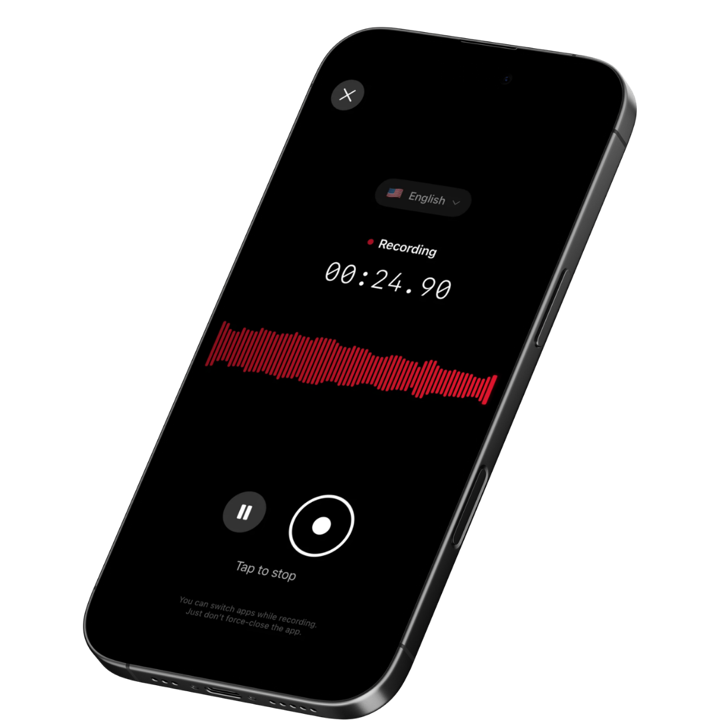
SpeakWise turns your iPhone into a communication development tool. Record meeting contributions, practice presentations, or capture your thoughts and review the AI-generated transcript to see exactly how you communicate.
Download SpeakWise from the App Store and start closing your own communication skills gap. AI transcription in 100+ languages, intelligent summaries, and instant feedback help you communicate more clearly every day.
Join 10,000+ professionals who use voice capture to sharpen their communication skills and advance their careers.
Get SpeakWise Free
4.9-star App Store Rating | iOS Optimized

🎯 4.9★ App Store Rating | 📱 Built for iOS
