Commute Time Statistics 2026: Data and Trends


Used by recruiters, executives, consultants, and more.
Commute Time Statistics 2026: Data and Trends
The average American spends 223 hours per year commuting - nearly six full workweeks. That time costs $8,158 annually in lost productivity. Remote workers save 72 minutes per day by skipping the commute, while commuters with trips over 10 miles face higher blood pressure and a 33% increased risk of depression. These 16 statistics reveal the true cost of getting to work in 2026.
The daily commute remains one of the most universal yet underexamined drains on worker productivity and wellbeing. As return-to-office mandates push more employees back onto highways and transit systems, the data paints a clear picture: commuting extracts a heavy toll that extends far beyond time.
This post compiles 16 statistics on commute times, costs, health impacts, and the growing shift toward remote and hybrid work. Whether you manage a distributed team or sit in traffic every morning, these numbers offer the full picture of commuting in 2026.
1. The average one-way commute in the U.S. is 27.6 minutes
27.6 minutes is the average one-way commute for American workers in 2026, up from 26.8 minutes in 2023. That translates to roughly 55 minutes per day and over 230 hours per year spent in transit. The steady increase reflects both suburban sprawl and the return of in-office mandates pushing workers back into congested corridors. For workers in major metros, the reality is even worse.
Source: Zippia - Average Commute Time Statistics
2. Americans spend 223 hours per year commuting - nearly six workweeks
223 hours annually. That is how much time the average U.S. worker spends getting to and from work, according to a 2026 analysis by MyPerfectResume. At the national average hourly wage of $36.53, that time equates to roughly $8,158 in lost productivity per year per worker. In high-wage metros like San Jose and San Francisco, the figure exceeds $12,000. This is not idle time - it is a measurable economic drain on both workers and employers.
Source: MyPerfectResume - The Invisible Pay Cut
3. New York State has the longest average commute at 33.4 minutes
33.4 minutes is the average one-way commute in New York State, the highest in the nation. Maryland follows at 32.8 minutes, then New Jersey at 31.7 minutes. At the city level, New York City averages 34.7 minutes each way. On the other end, South Dakota reports the shortest commutes at just 16.6 minutes. These geographic differences mean that where you work can cost you hundreds of additional hours per year.
Source: World Population Review - Commute Time by State
4. Less than 9% of workers commute more than an hour each way
Extreme commuting remains relatively rare but punishing. Less than 9% of workers face one-way commutes exceeding 60 minutes. Yet for these "super commuters," the health and productivity consequences are outsized. Research links commutes of this length to higher rates of obesity, depression, and cardiovascular disease. Most workers fall in the 15-to-29-minute range, but even moderate commutes add up to significant annual time losses.
Source: FinanceBuzz - Commuting in America Report
5. Every 6 additional commute miles reduces patent output by 5%
Harvard Business School research found that for every six miles added to an employee's commute, patent development dropped by 5% and patent quality fell by 7%. The impact was most severe among top performers - those in the 90th percentile of output. Long commutes do not just waste time. They actively degrade the quality of creative and intellectual work, hitting an organization's most valuable contributors the hardest.
Source: Harvard Business School - Commuting Kills Productivity
6. Commuters with trips over 10 miles face higher blood pressure
A study published in the American Journal of Preventive Medicine found that commutes exceeding 10 miles are associated with elevated blood pressure. A round-trip commute of just 20 miles correlated with higher blood pressure readings - a direct risk factor for heart disease and stroke. Workers commuting 30 miles or more also showed increased waist circumference and higher BMI. The car commute is not just a time problem. It is a cardiovascular risk factor.
Source: American Journal of Preventive Medicine - Commuting Distance and Health
7. Long commuters are 33% more likely to suffer from depression
Workers with long commutes face a 33% higher risk of depression compared to those with short or no commutes. The UK Office of National Statistics confirmed that long commuters report elevated levels of stress and anxiety. Car commuters experience higher stress and episodic moodiness more often than public transit riders, largely because of traffic unpredictability. The mental health toll of commuting is measurable and significant.
Source: Workable - The Psychological Impact of Difficult Commutes
8. Every additional hour in a car increases obesity likelihood by 6%
Each extra hour spent driving per day is associated with a 6% increase in the likelihood of obesity. Long-distance commuters are less likely to meet physical activity recommendations. They also report higher rates of fast food consumption, lower sleep quality, and decreased personal and social bonding. The commute creates a cascading lifestyle effect that compounds over years.
Source: SparkMap - Health, Environmental, and Economic Impacts of Commuting
9. Remote workers save 72 minutes per day by eliminating the commute
72 minutes daily. That is what remote workers reclaim by skipping the commute, adding up to 6 hours per week and the equivalent of 11 full workdays per year. Extreme commuters save more than three times that amount. This reclaimed time translates directly into higher productivity, better health, and improved work-life balance. It also explains why 79% of remote professionals report lower stress levels.
Source: Global Workplace Analytics - Telecommuting Statistics
10. Hybrid workers save $42 per day when working remotely
When in the office, hybrid workers spend an average of $55 per day - including $15 on commuting and $18 on lunch. Working from home eliminates most of these costs, saving roughly $42 per day. Over a year with two or three remote days per week, that adds up to thousands of dollars. The financial benefit of reduced commuting is one of the strongest drivers of hybrid work preference.
Source: Owl Labs - State of Hybrid Work 2025
11. 75% of employees engaged in some form of remote work in 2025
Remote and hybrid work have become the norm, not the exception. Throughout 2025, 75% of employees engaged in some form of remote work for at least part of the year. Hybrid job postings grew from 15% in mid-2023 to nearly 24% of all new positions by mid-2025. This shift has fundamentally changed commuting patterns, with fewer workers making the daily five-day trip to the office.
Source: Everhour - Remote Work Statistics 2025
12. 82% of remote workers say their mental health is better with flexible work
The mental health benefits of reduced commuting are clear. In 2025, 82% of remote professionals say their mental health is better with flexible work arrangements, and 79% report lower stress levels. These improvements are not abstract - they correlate with lower turnover, higher engagement, and better job satisfaction. Eliminating or reducing the commute is one of the simplest interventions for workplace wellbeing.
Source: Chanty - Remote Work Statistics 2026
13. Return-to-office mandates cost workers 223 hours and effectively cut pay
A 2026 analysis by AllWork found that returning to the office costs workers the equivalent of 223 hours per year in commute time. When combined with direct expenses like gas, transit fares, and vehicle maintenance, the total annual cost reaches $8,466. Researchers describe this as an "invisible pay cut" that disproportionately affects lower-wage workers in high-cost metros.
Source: AllWork - Returning to the Office Costs Workers 223 Hours
14. Car commuters average 27 minutes while rail riders spend 73 minutes
Transportation mode dramatically affects commute duration. Car commuters average 27 minutes each way, while those taking long-distance rail spend 73 minutes - nearly three times longer. Public transit riders fall somewhere in between. The choice of transport is often constrained by geography and infrastructure, meaning many workers have limited ability to reduce their commute time without changing jobs or homes.
Source: FinanceBuzz - Commuting in America Report
15. 1 in 4 commuters spend less than 15 minutes getting to work
Not all commutes are created equal. 25% of American workers enjoy commutes under 15 minutes. These short-commute workers report meaningfully higher life satisfaction and lower stress than their long-commute counterparts. The data suggests a sharp threshold effect: commutes under 20 minutes cause minimal harm, but the negative impacts escalate rapidly beyond the 30-minute mark.
Source: Zippia - Average Commute Time Statistics
16. Commute times are approaching pre-pandemic levels as remote work declines
After a sharp drop during 2020 and 2021, average commute times are climbing back toward pre-pandemic levels. This trend reflects both corporate return-to-office mandates and a gradual decline in fully remote positions. For workers who had grown accustomed to zero-commute days, the return represents a significant quality-of-life reduction - and the data on health, productivity, and costs explains why resistance remains strong.
Source: Yardi Kube - Commute Times Approaching Pre-Pandemic Levels
The Hidden Tax on Modern Work
These 16 statistics reveal commuting as something far more costly than a simple inconvenience. At 223 hours and over $8,000 per year, the commute functions as a hidden tax on productivity, health, and quality of life. The data on blood pressure, depression, and obesity transforms commute time from a scheduling issue into a public health concern.
The contrast between commuters and remote workers is stark. Those who eliminate the commute report better mental health, lower stress, and measurably higher productivity. Yet millions of workers are being called back to offices, absorbing the full cost without corresponding benefits. The research from Harvard Business School makes the business case clear: long commutes do not just harm workers - they degrade the quality of an organization's most important output.
The trajectory points toward a permanent hybrid model for knowledge workers. Organizations that reduce commute burden - through flexible schedules, remote options, or compressed workweeks - will hold a tangible advantage in recruiting, retention, and performance.
Commuting is not just about getting to work. It is about what you lose along the way - and whether that loss is worth it.---
Capture your best ideas before the commute steals them
Some of the best thinking happens during downtime - walking to the car, waiting on the platform, sitting in traffic. But without a way to capture those thoughts, they vanish by the time you reach your desk. The commute does not have to be dead time if you can turn passing ideas into organized notes.
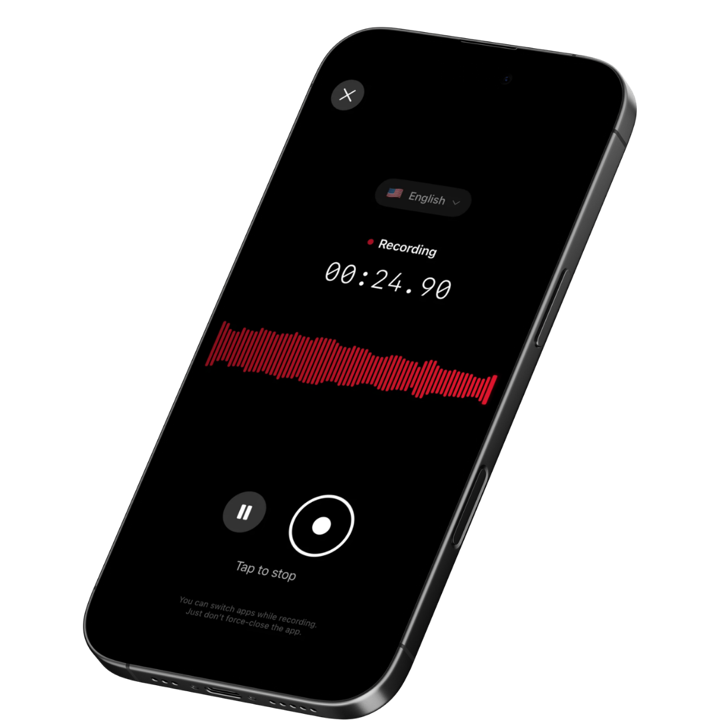
Voice recording makes the commute productive. A quick spoken thought becomes a transcribed note, a meeting summary, or an action item - all without typing or pulling over.
Download SpeakWise from the App Store and turn your commute into a capture session. One-tap recording, AI transcription in 100+ languages, and automatic Notion sync mean your ideas arrive at work before you do.
Join 10,000+ professionals who use their commute to capture ideas instead of losing them.
Get SpeakWise Free
4.9-star App Store Rating | iOS Optimized

🎯 4.9★ App Store Rating | 📱 Built for iOS
