Corporate Communication Overload Statistics 2026: Meetings, Emails, and Slack Messages
Used by recruiters, executives, consultants, and more.
The average employee now receives 117 emails and 153 Teams messages daily-while being interrupted every 2 minutes. With unproductive meetings costing businesses $399 billion annually and 80% of workers lacking the time or energy to do their jobs well, these 17 statistics reveal why corporate communication has reached a breaking point.
We've entered the era of the "infinite workday." Microsoft's latest Work Trend Index reveals a startling reality: 40% of employees now check email before 6 a.m., evening meetings have surged 16% year-over-year, and nearly a third of workers return to their inbox by 10 p.m. The traditional 9-to-5 has dissolved into a continuous cycle of digital communication.
In this post, we'll explore 17 compelling statistics that capture the true cost of communication overload in 2025. These numbers reveal not just meeting hours and message volumes, but the human story behind them-the fragmented focus, mounting burnout, and billions of dollars lost to coordination chaos. Whether you're a leader rethinking your company's communication culture, an employee drowning in notifications, or simply curious about why work feels so exhausting, these data points offer a clear, evidence-based picture of where we stand-and what needs to change.
1. Employees are interrupted every 2 minutes-275 times per day
Microsoft's 2025 Work Trend Index analysis of trillions of productivity signals reveals the staggering pace of workplace interruptions. During core work hours, employees face an average ping-from meetings, emails, or chats-every two minutes. Over a full day, that adds up to 275 interruptions. This relentless notification barrage explains why 48% of employees say their work feels chaotic and fragmented. Source: Microsoft Work Trend Index 2025
2. Knowledge workers spend 57% of their time communicating-not creating
The balance between doing work and coordinating work has tipped dangerously out of proportion. Microsoft's analysis of productivity signals shows that across Microsoft 365 apps, the average employee spends 57% of their time communicating (in meetings, email, and chat) and only 43% creating (in documents, spreadsheets, and presentations). For knowledge workers who rely even more on digital communication, this ratio skews further toward coordination. Source: Microsoft Work Trend Index - Will AI Fix Work?
3. The average employee receives 270 messages daily across email and Teams
Communication volume has reached overwhelming levels. Microsoft's research shows the average employee now receives 117 emails plus 153 Teams direct messages daily-a combined 270 interruptions before accounting for meetings, @mentions, or other notifications. Tuesday has emerged as the busiest day for meetings, with 23% of all weekly gatherings landing on that single day. Source: Microsoft News Center
4. Unproductive meetings cost U.S. businesses $399 billion annually
The financial toll of meeting dysfunction is staggering. Research shows that unproductive meetings cost businesses upwards of $399 billion annually, with an additional 24 billion hours wasted each year. For large companies employing 5,000 people, inefficient meetings can waste approximately $101 million per year-money that could fund innovation, better compensation, or strategic growth. Source: Superhuman/Fellow Meeting Statistics
5. Workers spend 11.3 hours per week in meetings-nearly a third of their workweek
Meeting time has exploded beyond sustainable levels. Research shows employees now spend an average of 11.3 hours per week in meetings, representing nearly a third of their entire workweek. For executives and senior managers, the situation is even more dire: they spend an average of 23 hours per week in meetings, leaving barely any time for strategic thinking or individual contribution. Source: Fellow App Meeting Statistics
6. 71% of senior executives say meetings are unproductive and inefficient
Perhaps most damning, the people running organizations know meetings aren't working. A Harvard Business Review survey found that 71% of senior managers believe meetings are unproductive and inefficient, while 65% said meetings keep them from completing their own work. Despite this near-universal acknowledgment, the meeting culture persists-because declining a meeting feels antisocial and questioning a "quick sync" seems difficult. Source: Notta Meeting Statistics
7. Only 30% of meetings are considered productive
The productivity paradox of meetings is stark: while organizations continue scheduling them at unprecedented rates, research shows only 30% of meetings are considered productive, and just 37% of workplace meetings actively use an agenda. The majority of gatherings lack clear objectives, have attendees who don't need to be there, and end without concrete action items-yet employees feel compelled to attend anyway. Source: Notta Meeting Statistics
8. 68% of workers don't have enough uninterrupted focus time during their workday
The erosion of deep work has reached crisis levels. Microsoft's global survey found that 68% of people say they don't have enough uninterrupted focus time during the workday. Half of all meetings occur during peak productivity hours (9-11 a.m. and 1-3 p.m.), directly competing with when employees would prefer to do their most cognitively demanding work. The result: fragmented attention and perpetual shallow work. Source: Microsoft Work Trend Index - Will AI Fix Work?
9. 78% of people attend so many meetings they can't get their work done
Meeting overload has become a universal complaint backed by hard data. Atlassian research found that 78% of people say they're expected to attend so many meetings that it's hard to get their work done. The cascading effect: 51% have to work overtime at least a few days a week due to meeting overload, rising to 67% for director-level employees and above. Meanwhile, 76% feel drained on days when they have lots of meetings. Source: Atlassian Workplace Woes: Meetings
10. It takes 23 minutes to refocus after an interruption-yet workers are interrupted every 3 minutes
The cognitive cost of interruptions far exceeds the interruption itself. Research from the University of California, Irvine shows that workers are interrupted roughly every three minutes, yet it takes an average of 23 minutes to fully regain focus after each disruption. The math is devastating: in a typical workday, continuous interruptions can prevent any meaningful deep work from occurring at all. Source: Eptura Workplace Statistics 2025
11. Slack users send 92 messages per day and check the app 13 times daily
Instant messaging has created a new layer of continuous partial attention. Research shows Slack users send an average of 92 messages per user per day and check the platform 13 times daily, with users spending an average of 1 hour and 42 minutes actively engaged on Slack. Power users, particularly in engineering and product roles, spend up to 3.1 hours daily on the platform. While 87% say Slack improved communication quality, this constant connectivity comes at the cost of uninterrupted focus. Source: SQ Magazine Slack Statistics 2025
12. 80% of the global workforce lacks the time or energy to do their job well
The capacity crisis is real. Microsoft's 2025 Work Trend Index found that while 53% of leaders say productivity must increase, 80% of the global workforce-both employees and leaders-report they're lacking the time or energy to do their job. This "capacity gap" between business demands and human limits has become one of the defining challenges of modern work, driving the push toward AI assistance and process redesign. Source: Microsoft Official Blog - Work Trend Index 2025
13. 55% of remote workers say most meetings "could have been an email"
The video call revolution created its own form of meeting bloat. Research shows that 55% of remote workers believe a majority of their meetings could have been handled via email or asynchronous communication. At the same time, executives consider more than 67% of virtual meetings to be failures-suggesting the problem isn't the medium, but the underlying meeting culture that defaults to synchronous communication regardless of actual need. Source: Notta Meeting Statistics
14. Email overload can decrease productivity by 40%
Email remains a significant productivity drain despite decades of attempts to tame it. Research shows that email overload can decrease productivity by 40%, with the average office worker receiving 121 emails daily. The heaviest email users (top 25%) spend 8.8 hours a week on email alone. More concerning: 40% of employees admit to having at least 50 unread emails in their inbox, and the average employee checks email 11 to 36 times per hour. Source: CloudHQ Workplace Email Statistics 2025
15. Context switching consumes up to 40% of productive time
The hidden tax of modern work is the constant switching between tools, tasks, and conversations. Research shows that chronic multitasking and frequent context switching can consume up to 40% of a person's productive time. A joint study by Qatalog and Cornell found it takes about 9.5 minutes on average to get back into a productive workflow after switching to a different digital app-and 45% of workers say toggling between too many apps makes them less productive. Source: Conclude.io Context Switching
16. 85% of employees receive work communications outside standard hours
The always-on culture has normalized boundary violations. Survey data shows that 85% of employees receive work-related communications outside standard work hours at least a few times a month, with 60% receiving them a few times a week or more frequently. The result: 58% of workers respond to these communications outside of work hours at least a few times a week, with only 6% never responding outside working hours. Source: SurveyMonkey Work-Life Balance Statistics 2025
17. 60% of knowledge workers' time is spent on "work about work"
The ultimate communication overload statistic may be this: according to Asana's research, 60% of knowledge workers' time is spent on coordination rather than the skilled, strategic jobs they were hired to do. Activities like communicating about work, searching for information, switching between apps, managing shifting priorities, and chasing status updates consume the majority of the workday-leaving less than half for actual value creation. Source: Asana Deep Work Research
The Communication Paradox: More Tools, Less Clarity
The statistics paint a troubling picture of contradiction. We have more communication tools than ever-yet 48% of employees say their work feels chaotic and fragmented. We schedule more meetings-yet 71% of executives call them unproductive. We send more messages-yet critical information gets lost in the noise.
The root cause isn't any single tool or behavior. It's the accumulation of well-intentioned communication channels that, together, create an environment of continuous partial attention. Each Slack message, each email, each "quick sync" seems harmless in isolation. But collectively, they prevent the deep focus that produces meaningful work.
The solution requires both cultural and technological change. Organizations need clearer norms around when synchronous communication is truly necessary, protected focus time that's actually respected, and AI tools that can summarize, prioritize, and filter the flood of information. For individuals, the path forward means setting boundaries, batching communication, and reclaiming the cognitive space that deep work demands.
The question isn't whether to communicate less-it's whether to communicate more intentionally. In an age of infinite interruptions, focused attention has become the scarcest resource of all.---
Ready to capture your thoughts without adding to the noise?
The irony of communication overload is that our best ideas often get lost in the chaos-forgotten in meetings that weren't recorded, buried in email threads, or simply never articulated because there wasn't time to write them down.
Voice notes offer a different approach. Speaking is 3x faster than typing, and with AI transcription accuracy now exceeding 96%, your spoken thoughts can instantly become searchable, organized text-without creating another notification for someone else.
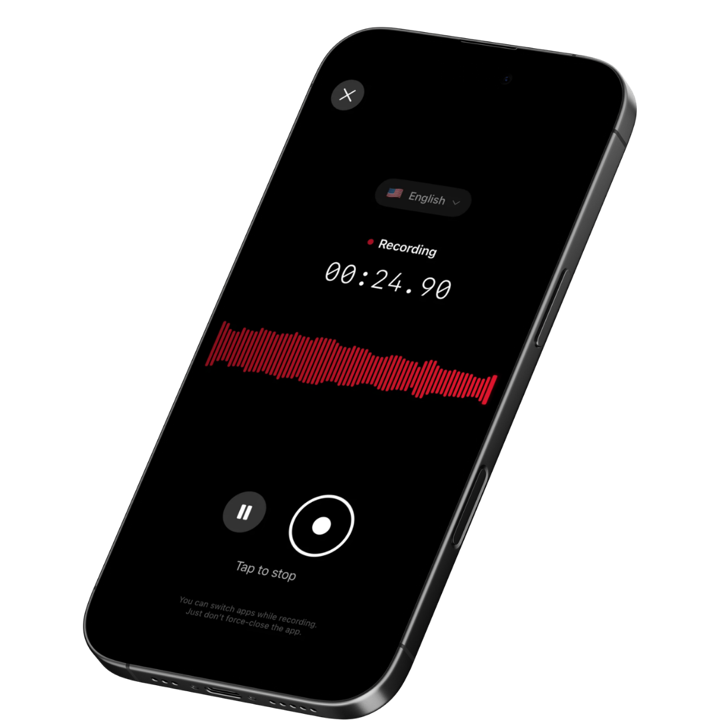
→ Download SpeakWise from the App Store and discover how one-tap recording, AI transcription, intelligent summaries, and Notion integration can transform how you capture meetings, ideas, and conversations-without contributing to anyone's inbox overload.
Join 10,000+ professionals who've discovered that the best way to escape communication chaos isn't sending fewer messages-it's capturing more thoughts before they slip away.
Get SpeakWise Free →
4.9★ App Store Rating | iOS Optimized

🎯 4.9★ App Store Rating | 📱 Built for iOS
