Coworking Space Statistics 2026


Used by recruiters, executives, consultants, and more.
Coworking Space Statistics 2026
The US coworking footprint grew to 8,973 locations in early 2026, a 15% increase year-over-year, reaching over 161 million square feet. Globally, there are an estimated 42,000 coworking spaces with 5.5 to 6 million users. 74% of coworking members report feeling more productive, 89% say they are happier, and 54% of operators are now profitable. These 15 statistics reveal how coworking has evolved from a niche trend into a core component of office infrastructure.
Coworking is no longer the domain of freelancers and startups. Corporate teams, remote workers, and hybrid organizations now drive the majority of demand. The global market is valued at over $17 billion and growing at about 8% a year. As hybrid work settles into stable patterns, coworking spaces are becoming the satellite offices that companies never planned to build.
This post covers 15 statistics on coworking market size, user demographics, productivity impact, and operator economics. Whether you are evaluating coworking for your team, launching a space, or tracking the commercial real estate market, these numbers define the current landscape.
Key Coworking Space Statistics (2026)
- Coworking spaces in the US expanded to 9,384 locations by Q2 2026, up 2.7% from the previous quarter (CoworkingCafe).
- The global coworking market is projected to reach $17.09 billion in 2026, growing at a compound annual growth rate of 8.01% (Research and Markets).
- 74% of coworking members say they feel more productive than working from home or a traditional office (Keevee).
- 89% of coworking members report being happier since joining, and 86% feel less isolated (Keevee).
- 54% of coworking operators reported profitability in early 2025, while 28% broke even and 18% operated at a loss (Allwork.space).
- Freelancers make up 40-42% of coworking members, the largest single user group (Jobera).
- The world had an estimated 42,000 coworking spaces in 2025, with growth to about 44,000 expected in 2026 (Flexas).
1. US coworking grew to 8,973 locations in early 2026, up 15% year-over-year
Between January 2025 and January 2026, the national coworking footprint expanded to 8,973 locations, up from 7,776 a year earlier. That is a 15% increase in just 12 months. Total flexible office inventory climbed 16% to more than 161 million square feet, adding roughly 22.5 million square feet to the market. This growth outpaces overall commercial office market trends. While traditional office vacancy rates remain elevated in many markets, coworking is absorbing demand from companies that want flexibility without long-term lease commitments.
Source: World Property Journal - Yardi 2026 Coworking Report
2. US coworking hit 9,384 locations by Q2 2026, up 2.7% in a single quarter
CoworkingCafe's Q2 2026 index found the US coworking count kept climbing after the start of the year, reaching 9,384 locations nationwide, up from 9,136 the previous quarter, a net gain of 248 newly recorded flex offices. Total square footage grew more slowly, up 1.5% to 166.36 million square feet, which pushed the average location size down 1.2% to 17,728 square feet as smaller spaces opened in secondary markets. Coworking now makes up 2.34% of the national commercial real estate market, up from 2.28% the quarter before.
Source: CoworkingCafe - US Coworking Industry Report Q2 '26
3. The number of US coworking operators grew from 3,729 to 4,338 in a year
It is not just locations that are multiplying. Yardi Kube data reported by World Property Journal shows the national operator base, the number of distinct companies running coworking spaces, rose from 3,729 to 4,338 between January 2025 and January 2026, a net gain of 609 new entrants. At the same time, the largest operator in the country grew its own network to 1,210 locations, adding 164 new sites. Both trends are happening together: big brands are scaling up, and new independent operators keep entering local and regional markets.
Source: World Property Journal - Yardi 2026 Coworking Report
4. Flexible workspace accounts for 2.2% of total US office inventory
Flexible workspace reached 2.2% of total US office inventory at the start of 2026, up from 2.0% a year earlier. That means roughly one out of every 45 square feet of office space nationwide is now coworking. While 2.2% seems small, the growth trajectory is significant. Before the pandemic, flexible workspace represented less than 1% of total inventory in most markets. Doubling market share in five years signals a structural shift in how companies lease and use office space. The trajectory suggests coworking could reach 5% within the next decade.
Source: World Property Journal - Yardi 2026 Coworking Report
5. The global coworking market is projected to reach $17.09 billion in 2026
The global coworking spaces market is projected to reach $17.09 billion in 2026, according to Research and Markets. The firm expects the market to keep growing at a compound annual growth rate of 8.01%, reaching $27.21 billion by 2032. The expansion is driven by hybrid work adoption, corporate demand for satellite offices, and the ongoing preference for flexibility over long-term leases. The market has matured beyond startup culture into a mainstream real estate category.
Source: Research and Markets - Coworking Spaces Market Size, Competitors & Forecast to 2032
6. 74% of coworking users feel more productive
Research shows that 74% of coworking members report feeling more productive than when working from home or a traditional office. The productivity boost likely comes from several factors: fewer household distractions than home offices, better infrastructure than coffee shops, and the social accountability of working around other professionals. Coworking spaces are designed for work. The lighting, furniture, internet speed, and noise management create an environment optimized for focus. For remote workers who struggle with the isolation of home offices, coworking provides structure without the constraints of a traditional office.
Source: Keevee - Coworking Statistics 2025
7. 89% of coworking members are happier since joining
A remarkable 89% of coworking members report being happier since joining a coworking space. Additionally, 86% say they feel less isolated compared to working from home. These numbers highlight the social and psychological benefits beyond productivity. Loneliness is one of the top complaints among remote workers, and coworking directly addresses it by providing a community. The happiness effect is not trivial. Happier workers are more engaged, more creative, and less likely to leave their jobs. For employers covering coworking memberships, the wellbeing return may exceed the productivity return.
Source: Keevee - Coworking Statistics 2025
8. Total global coworking users estimated at 5.5 to 6 million in 2025
Global coworking users reached an estimated 5.5 to 6 million in 2025, reflecting a mature, globally adopted model. The average member is 36 years old, nearly half are women, and Millennials remain the largest user group at 61%. This demographic profile has shifted significantly from the early days when coworking skewed heavily toward young male tech workers. The broadening user base reflects the normalization of flexible work across industries and demographics. As Gen Z enters the workforce in larger numbers, the user base is expected to grow further.
Source: Allwork.space - Coworking Statistics 2026
9. 54% of coworking operators reported profitability in early 2025
The coworking business model is maturing. 54% of all operators reported profitability in early 2025, while 18% operated at a loss. The remaining 28% were breaking even. These numbers represent a significant improvement from the pandemic era when many operators faced existential threats. Profitability is being driven by higher occupancy rates, longer lease terms from corporate clients, and operational efficiencies from better technology. The WeWork-era narrative of unsustainable growth has given way to a more disciplined industry focused on sustainable unit economics.
Source: Allwork.space - Coworking Statistics 2026
10. 72% of coworking operators reach profitability within two years
Time matters as much as the headline profitability rate. About 72% of coworking operators reach profitability within their first two years of operation, and 55% of members stay long-term at the same space rather than switching locations. Together, these numbers describe an industry that has moved past its early boom-and-bust years: operators now have a realistic profitability timeline, and members are sticking around once they find a space that works for them.
Source: Allwork.space - Coworking Statistics 2026
11. Global occupancy rate for coworking spaces reached 68% in 2025
The global average occupancy rate for coworking spaces reached 68% at the start of 2025. This is a healthy figure for the industry, above the breakeven threshold for most operators while still leaving room for growth. Occupancy varies significantly by market. Dense urban centers with strong hybrid work cultures tend to run higher. Suburban and secondary markets are catching up as companies establish satellite locations. The 68% figure also reflects a seasonal pattern, with occupancy typically peaking in Q1 and Q3 during heavy work periods.
Source: Optix - Coworking Industry Statistics 2025
12. Freelancers represent 40-42% of coworking users
Freelancers and self-employed workers represent roughly 40-42% of coworking users, making them the largest single user segment. Freelancers are also the fastest-growing user group. This makes sense: freelancers lack the office infrastructure that companies provide. Coworking gives them a professional workspace, meeting rooms for client calls, and a community of peers. Additionally, 64% of freelancers say they get additional projects from connections made in coworking spaces, making the membership not just a workspace expense but a business development investment.
Source: Jobera - Coworking Statistics 2025
13. 84% of coworkers say the space makes them more motivated
Research shows that 84% of coworkers report feeling more motivated when working from a coworking space. Motivation is driven by the structure and social environment that coworking provides. Working from home offers convenience but can lead to routine and isolation. Coworking introduces variety, social interaction, and the subtle motivation of working alongside other focused professionals. For employers looking to boost team morale, subsidizing coworking memberships may be more cost-effective than building or maintaining dedicated office space.
Source: Shortlister - Coworking Statistics 2025
14. 67% of coworking users report improved work-life balance
Two-thirds of coworking members say their work-life balance has improved since joining. The improvement comes from creating a physical boundary between work and home. Remote workers who use their living spaces as offices often struggle to "switch off" at the end of the day. Commuting to a coworking space creates a transition ritual that signals the start and end of the workday. For parents and people in small apartments, this separation is especially valuable. The 67% figure suggests that coworking solves a problem that remote work creates.
Source: Keevee - Coworking Statistics 2025
15. The coworking segment is projected to grow from $25 billion to $30 billion in 2026
Flexas' 2025-2026 analysis splits the flexible workspace industry into two parts: the core coworking segment (hot-desking and open-plan spaces) and the broader flexible office market that also includes private offices and managed suites favored by large corporations. The core coworking segment reached an estimated $25 billion in 2025 and is projected to grow to about $30 billion in 2026. Globally, the number of coworking spaces reached roughly 42,000 in 2025, with growth to about 44,000 expected in 2026. The growth is being fueled by corporate demand, as companies use coworking for satellite offices, project-based teams, and an alternative to long-term leases.
Source: Flexas - Coworking Statistics: 2025 Performance & Strategic 2026 Projections
From Niche to Infrastructure: The Coworking Transformation
These statistics tell the story of an industry that has crossed the threshold from alternative to mainstream. With more than 9,000 US locations, over 166 million square feet, and 5.5 million global users, coworking is now a significant component of the commercial real estate ecosystem. The 54% operator profitability rate confirms that the business model works.
The user-level data is equally compelling. 74% feel more productive, 89% are happier, and 84% feel more motivated. These are not marginal improvements. They represent a fundamentally better work experience for millions of people. For freelancers, who make up 40-42% of all members, the ability to land 64% more projects through onsite networking makes coworking one of the most effective professional development investments available.
The trajectory points toward continued integration of coworking into corporate real estate strategies. As hybrid work stabilizes, companies need flexible space that scales with their workforce. Coworking provides this without the risk and commitment of traditional leases. The 8.01% compound annual growth rate projected through 2032 reflects confidence that this integration is permanent.
Coworking has evolved from a lifestyle choice for freelancers into essential infrastructure for the distributed workforce.
Make every coworking conversation count
Coworking spaces are designed for connection and productivity. You bump into potential clients, brainstorm with peers, and take important calls in shared meeting rooms. But the open, dynamic environment makes it easy to lose track of ideas discussed, contacts mentioned, and commitments made during these interactions.
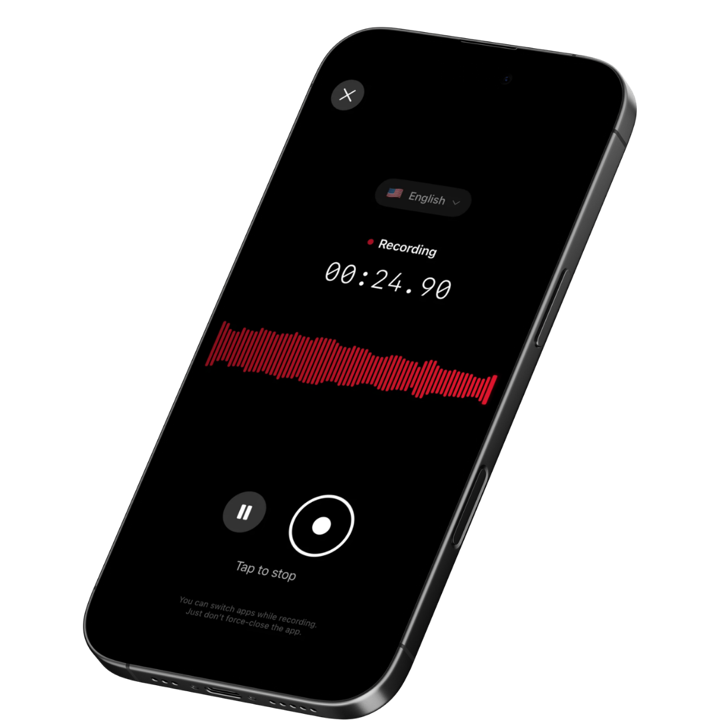
With Speakwise, you can capture conversations, client calls, and brainstorming sessions with one tap on your iPhone or AirPods. AI transcription turns spoken ideas into searchable text. Summaries highlight key points. Action items are extracted automatically. Everything syncs to Notion so your coworking conversations become organized, actionable records instead of fading memories.
Download Speakwise from the App Store and capture every valuable conversation from your coworking space with AI-powered voice notes.
Join 10,000+ professionals who use Speakwise to turn in-person conversations into organized, searchable records.
Get Speakwise Free
4.9-star App Store Rating | iOS Optimized

🎯 4.9★ App Store Rating | 📱 Built for iOS
