Cross-Functional Collaboration Stats 2026


Used by recruiters, executives, consultants, and more.
Cross-Functional Collaboration Stats 2026
93% of executives say cross-functional collaboration is more crucial than ever, yet 80% of senior leaders cite organizational silos as a significant barrier. 55% of organizations fight the negative effects of silos daily, cross-functional teams are 30% more likely to report gains from AI, and companies with strong collaboration are 5.5x more likely to outperform competitors. These 16 statistics reveal the gap between knowing collaboration matters and actually making it work.
Cross-functional collaboration has shifted from a nice-to-have to a strategic necessity. Complex products, global markets, and AI-driven workflows all require people from different functions to work together effectively. Yet most organizations still operate in silos that slow decisions, duplicate efforts, and block innovation.
This post covers 16 statistics on the state of cross-functional collaboration in 2026. From the executive consensus on its importance to the stubborn barriers that prevent it, these numbers paint a clear picture. The organizations that crack cross-functional work will win. Most have not cracked it yet.
1. 93% of executives say cross-functional collaboration is more critical than ever
The leadership consensus is overwhelming. 93% of executives say cross-functional collaboration between software, technology, and business teams is more critical to business success than ever before. This near-universal agreement reflects the reality that modern business challenges - from AI implementation to customer experience design - require expertise that spans multiple departments. No single team has all the answers anymore.
Source: Deviniti - 35 System of Work Statistics for 2026
2. 80% of senior leaders cite silos as a barrier to collaboration
Despite knowing collaboration matters, most leaders struggle to achieve it. Nearly 80% of senior executives cite organizational silos as a significant barrier to effective cross-functional collaboration. These silos emerge from separate reporting structures, misaligned incentives, different tools, and cultural divisions between departments. The gap between executive recognition of the problem and their ability to solve it represents one of the most persistent challenges in organizational design.
Source: 9cv9 - Cross-Functional Team Collaboration Statistics
3. 55% of organizations work in silos and fight it daily
Silos are not an occasional inconvenience. They are a daily reality for the majority of companies. 55% of organizations work in silos and contend with the negative consequences every single day. This means that more than half the business world is losing time, efficiency, and innovation to departmental boundaries that prevent information, decisions, and feedback from flowing where they are needed.
Source: CoffeePals - Breaking Down Silos
4. 40% of knowledge workers' collaborators sit in a different function
Cross-functional work is not a special event. It is the daily norm. 40% of knowledge workers' direct collaborators sit in a different job function. This means nearly half of all workplace collaboration already crosses departmental lines. When four out of ten collaborators work in a different function, the tools, processes, and habits that support cross-functional work become as important as those within a single team.
Source: Chanty - Workplace Collaboration Statistics 2026
5. Companies with strong collaboration are 5.5x more likely to outperform competitors
The performance payoff of effective collaboration is dramatic. Organizations with strong cross-functional collaboration are 5.5 times more likely to outperform their competitors. This multiplier effect comes from faster innovation cycles, better customer responsiveness, and more effective problem-solving. When teams share knowledge and coordinate effectively, the organization moves faster than the sum of its parts.
Source: ProofHub - Workplace Collaboration Statistics 2026
6. 65% of project failures stem from poor cross-team communication
Failed projects almost always involve a communication breakdown between teams. 65% of project failures stem from poor communication between different functional groups. This statistic is especially significant because it points to the interface between teams - not individual team performance - as the primary failure point. Projects do not fail because one team underperformed. They fail because teams did not coordinate effectively.
Source: 9cv9 - Cross-Functional Team Collaboration Statistics
7. Cross-functional teams are 30% more likely to report gains from AI
Teams that work across business units get more value from AI. Deloitte research found that cross-functional teams are 30% more likely to report significant gains in efficiency and innovation from using AI tools. This suggests that AI amplifies collaboration rather than replacing it. When diverse expertise combines with AI capabilities, the results exceed what any single department achieves alone.
Source: Deloitte - Bridging the AI Value Gap
8. 74% of executives say poor communication slows quality and speed
The operational cost of communication gaps between teams is clear. 74% of executives say that lack of communication interferes with both the speed and quality of work output. When cross-functional handoffs are unclear, work gets delayed, quality suffers, and teams spend time fixing problems that better coordination would have prevented. Speed and quality are not competing priorities. They are both casualties of poor cross-team communication.
Source: Deviniti - 35 System of Work Statistics for 2026
9. Only 36% of companies make cross-functional collaboration a top priority
Despite the overwhelming evidence for its importance, most organizations do not prioritize cross-functional work. Only 36% of companies make cross-functional collaboration a top strategic priority. The remaining 64% acknowledge its value but do not invest in the structural changes, incentive alignment, or cultural shifts needed to make it work. This gap between recognition and action explains why silos persist even when everyone agrees they should not.
Source: 9cv9 - Cross-Functional Team Collaboration Statistics
10. 41% of employees find it harder to collaborate across departments
The difficulty of cross-functional work is felt most by the people doing it. 41% of employees find it more challenging to collaborate across departments than within their own teams. Different terminology, unfamiliar processes, separate tools, and competing priorities all contribute to this friction. When cross-departmental collaboration feels harder, people naturally default to working within their own silos - reinforcing the very problem organizations are trying to solve.
Source: ProofHub - Workplace Collaboration Statistics 2026
11. Teams that track work together are 5.3x more likely to produce high-quality work
Shared visibility creates shared accountability. Teams that track work together across functions are 5.3 times more likely to produce high-quality output. This statistic highlights the importance of shared project management, transparent progress tracking, and unified systems where every contributor can see the full picture. Quality improves when no team operates in a black box.
Source: Deviniti - 35 System of Work Statistics for 2026
12. Collaboration with peripheral colleagues dropped 12%
Remote and hybrid work has an unexpected cost for collaboration networks. Collaboration with peripheral colleagues - people outside your immediate team - dropped by 12% in recent years. This decline is concerning because peripheral connections are often where innovation emerges. Fresh ideas come from unexpected combinations of expertise. When organizations lose these weak ties, they lose a critical source of creative problem-solving and organizational learning.
Source: Chanty - Workplace Collaboration Statistics 2026
13. 82% of companies lack unified success metrics across departments
Misaligned metrics create misaligned priorities. 82% of companies lack unified success metrics across departments, meaning that different teams often optimize for different - and sometimes conflicting - outcomes. When marketing measures leads, sales measures revenue, and product measures usage, cross-functional alignment becomes nearly impossible. Without shared metrics, cross-functional collaboration devolves into negotiation between competing departmental agendas.
Source: 9cv9 - Cross-Functional Team Collaboration Statistics
14. 60% of meetings are now unscheduled or ad hoc
The way teams coordinate is becoming less structured. 60% of meetings are now unscheduled or ad hoc, making it harder for cross-functional teams to plan deep work and coordinate intentionally. While spontaneous collaboration can be valuable, the dominance of unplanned meetings means that important cross-functional discussions often happen without preparation, documentation, or follow-through. The result is meetings that feel productive in the moment but produce no lasting record.
Source: Chanty - Workplace Collaboration Statistics 2026
15. When 30% of interactions cross team boundaries, problem resolution speeds up 40%
There is an optimal level of cross-boundary interaction that produces measurable results. When 30% of a team's interactions cross team boundaries, organizations see 40% faster problem resolution. This finding suggests that cross-functional collaboration does not need to be constant to be effective. A targeted, sustainable level of cross-team interaction produces outsized gains in speed and quality.
Source: ProofHub - Workplace Collaboration Statistics 2026
16. Companies with poor collaboration see 15-20% lower success rates on major initiatives
The cost of collaboration failure shows up most clearly in big bets. Companies with poor cross-functional collaboration see 15-20% lower success rates on major strategic initiatives. When large projects require coordination across engineering, marketing, sales, and operations, every silo becomes a potential point of failure. The difference between a 60% and 80% success rate on major initiatives often determines whether a company leads its market or falls behind.
Source: 9cv9 - Cross-Functional Team Collaboration Statistics
The Silo Tax: What Fragmented Collaboration Really Costs
The data reveals a troubling contradiction. Nearly every executive agrees that cross-functional collaboration is critical. Nearly every organization still struggles with silos. This gap is not caused by a lack of awareness. It is caused by a lack of infrastructure - the systems, processes, and habits that make cross-team work as easy as within-team work.
The financial case is clear. Companies with strong collaboration outperform competitors by 5.5x. Those with poor collaboration see 15-20% lower success rates on major initiatives. The difference adds up to billions across the economy.
The path forward involves three shifts: shared metrics that align incentives across departments, shared visibility into progress and decisions, and shared documentation that ensures cross-functional conversations produce lasting records. When teams can see each other's work, track shared goals, and reference past decisions, silos begin to dissolve.
Cross-functional collaboration does not fail because people refuse to work together. It fails because organizations have not built the systems that make working together easy.---
Document cross-team decisions before they disappear
The biggest silo in most organizations is not between departments. It is between the conversation where a decision was made and the system where it needs to be recorded. Cross-functional meetings produce agreements, action items, and context that belong to multiple teams. Without a reliable capture method, each team walks away with a different version of what was decided.
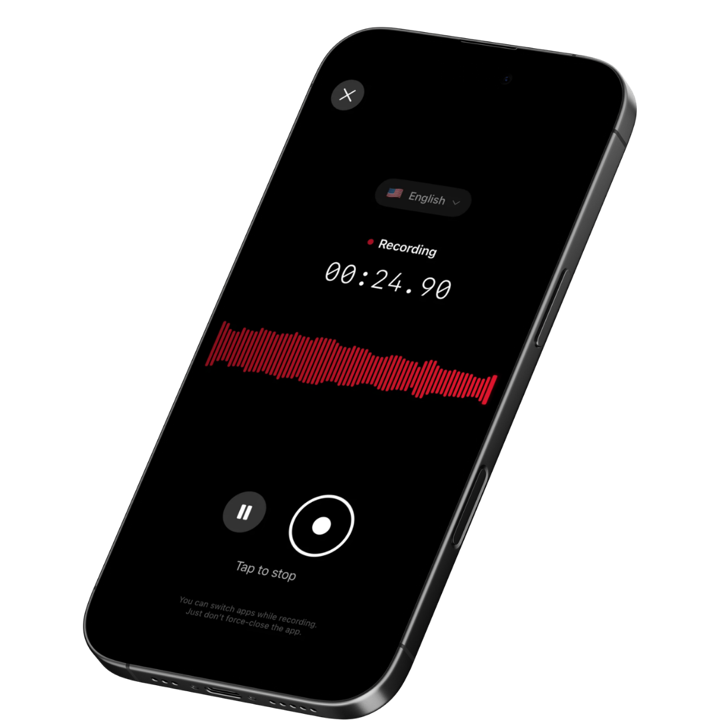
SpeakWise eliminates this gap. Record any cross-functional meeting with one tap. AI transcription captures every voice. Summaries extract decisions and action items. Everything syncs to Notion, where it becomes a shared record that every team can reference. No more conflicting notes. No more "I thought we agreed on something different."
Download SpeakWise from the App Store and start building a shared record of every cross-functional conversation that actually sticks.
Join 10,000+ professionals who use SpeakWise to bridge silos by capturing and organizing cross-team decisions automatically.
Get SpeakWise Free
4.9-star App Store Rating | iOS Optimized

🎯 4.9★ App Store Rating | 📱 Built for iOS
