Decision Fatigue Statistics 2026: Choice Overload, Mental Depletion, and Declining Judgment
Used by recruiters, executives, consultants, and more.
Decision Fatigue Statistics 2026: Choice Overload, Mental Depletion, and Declining Judgment
Judges' favorable rulings plummet from 65% to nearly 0% within a single session before a break, though researchers still debate why. More than half of organizations, 57%, still operate at low decision-making maturity, even as leaders lean harder on AI to help decide. And 73% of consumers report feeling overwhelmed by too many choices, with 74% walking away from purchases entirely. The cognitive cost of constant decision-making is real, and it touches every corner of modern life.
Decision fatigue is the measurable decline in the quality of decisions made after a long session of decision-making. Unlike physical fatigue, which announces itself through sore muscles and heavy breathing, decision fatigue operates invisibly. You do not feel your judgment deteriorating. You do not notice yourself defaulting to the path of least resistance. You simply make worse choices, one after another, as your cognitive resources deplete throughout the day. The phenomenon was first formally studied in the context of judicial rulings and consumer behavior, but its reach extends far beyond courtrooms and shopping aisles. It affects physicians prescribing medications, executives setting strategy, employees choosing productivity tools, and individuals managing every mundane detail of daily life. In a world that presents more options than ever before, the simple act of choosing has become a hidden tax on performance, health, and well-being. Understanding the scale of this problem is the first step toward designing systems and habits that protect our most valuable cognitive resource: the ability to make good decisions when they matter most.
In this post, we will explore 18 statistics that quantify the scope and severity of decision fatigue. These numbers span academic research, workplace surveys, consumer behavior studies, and healthcare data. Together, they paint a comprehensive picture of how choice overload, mental depletion, and declining judgment quality affect professionals, consumers, and organizations alike. Some of these findings are well established. Others are actively disputed by other researchers, and we say so plainly where that is the case. Whether you are looking to optimize your own daily routines, build better products, or make a case for simplifying processes at work, these data points provide the evidence you need.
From courtroom rulings that hinge on lunch breaks to retirement savings plans where too many options lead to inaction, decision fatigue shows up in surprising places. The research is clear, consistent, and increasingly urgent as our information-saturated world demands more choices from us every year.
Key Decision Fatigue Statistics (2026)
- Decision fatigue shows up at the organizational level too: 57% of organizations still operate at low decision-making maturity, even as 60% of executives now lean on AI to help decide (Deloitte 2026 Global Human Capital Trends).
- Judges in a widely cited study granted parole about 65% of the time at the start of a session, a rate that fell toward 0% by the end, though later researchers dispute whether fatigue or case order explains it (Danziger et al., PNAS 2011).
- In the classic "jam study," shoppers who saw only 6 jam varieties were 10 times more likely to buy than shoppers shown 24 (Iyengar & Lepper, 2000).
- A 2024 Accenture survey of 19,000 consumers found 73% feel overwhelmed by too many choices, and 74% have walked away from a purchase because of it (Progressive Grocer / Accenture).
- Physicians became 26% more likely to prescribe antibiotics by the fourth hour of a clinic session than in the first hour (Linder et al., JAMA Internal Medicine, 2014).
- The average desk worker now juggles 11 workplace apps, up from 6 in 2019, adding a steady stream of small decisions to every task (Gartner via CIO Dive).
- Not everyone agrees decision fatigue is real: a 231,076-call field study of nurse telephone triage decisions in 2025 found no evidence for it at all (Andersson et al., Communications Psychology, 2025).
1. Judges' favorable parole rulings drop from 65% to nearly 0% within each decision session, though the cause is disputed
One of the most cited studies in decision fatigue research, conducted by Shai Danziger and colleagues, analyzed 1,112 judicial rulings made by eight Israeli judges over a 10-month period. The results were striking: judges granted parole approximately 65% of the time at the beginning of each session, but that rate gradually declined to near zero by the end of the session. After a food break, favorable rulings spiked back to 65% before declining again. Each judge reviewed an average of 22.58 cases per day in sessions lasting roughly six minutes per case. This finding is famous, but it is also seriously contested. A rebuttal published in the same journal argued that cases were not reviewed in random order: represented prisoners tend to be scheduled earlier in a session, and unrepresented prisoners later, right before a break, which could produce the same pattern without any fatigue effect at all. The original researchers rejected this explanation, and the debate has continued for over a decade. The honest summary is that the pattern in the data is real, but what causes it is still an open question.
Source: Danziger, Levav & Avnaim-Pesso, PNAS (2011); for the critique, see Weinshall-Margel & Shapard, PNAS (2011)
2. Consumers are 10x more likely to purchase when choices are reduced from 24 to 6
In the now-famous "jam study," psychologists Sheena Iyengar and Mark Lepper set up tasting displays at an upscale grocery store. When 24 varieties of jam were offered, 60% of passersby stopped to sample, but only 3% made a purchase. When just 6 varieties were displayed, 40% stopped, and 30% bought a jar. Consumers exposed to fewer options were ten times more likely to follow through with a purchase. This study became the foundational empirical evidence for choice overload theory, demonstrating that more options do not lead to more action. Instead, excessive choice leads to decision paralysis, where the cognitive effort required to evaluate options exceeds the perceived benefit of choosing at all.
Source: Iyengar & Lepper, Journal of Personality and Social Psychology (2000)
3. 73% of consumers feel overwhelmed by too many choices, and 74% walk away from purchases
Research on consumer behavior has found that a solid 73% of consumers report feeling overwhelmed by the number of choices available to them. Even more telling, 74% have walked away from a purchase entirely because the decision felt too burdensome. These findings come from Accenture's 2024 Consumer Pulse Survey of 19,000 consumers across 12 countries. This is not a niche problem affecting indecisive individuals; it is a majority experience. The result is not just lost sales for businesses but a persistent sense of mental exhaustion for everyone navigating daily life.
Source: Progressive Grocer / Accenture Consumer Pulse Survey
4. Making choices measurably impairs physical stamina, persistence, and cognitive performance
A series of four laboratory studies by Kathleen Vohs, Roy Baumeister, and colleagues found that participants who made decisions among consumer goods or college courses subsequently showed reduced physical stamina (holding their hand in ice water for less time), less persistence in the face of failure, more procrastination, and lower quality and quantity of arithmetic calculations. A companion field study found that shoppers who reported making more active decisions showed less self-control afterward. This research sits inside the broader "ego depletion" theory of willpower, which has struggled to hold up under retesting. A 2016 Registered Replication Report that pooled 23 independent laboratories and 2,141 participants found a near-zero overall effect for the standard ego-depletion task. That large replication project did not retest these exact choice-based studies, so this specific finding has not been directly overturned, but it should be read as suggestive rather than settled science.
Source: Vohs et al., Journal of Personality and Social Psychology (2008); on the replication concerns, see Hagger et al., Perspectives on Psychological Science (2016)
5. Doctors are 26% more likely to prescribe unnecessary antibiotics by the fourth hour of a shift
Decision fatigue has measurable consequences in healthcare. A study published in JAMA Internal Medicine analyzed 21,867 acute respiratory infection visits across 204 clinicians in 23 practices and found that physicians became progressively more likely to prescribe antibiotics as their clinic sessions wore on. Compared with the first hour of a session, the odds of prescribing an antibiotic were 26% higher by the fourth hour, a statistically significant trend. As general practitioners move through their workday, they become more likely to prescribe antibiotics that are often unnecessary, reflecting a shift toward the easier, less confrontational decision of writing a prescription rather than explaining to a patient why they do not need one.
Source: Linder et al., JAMA Internal Medicine (2014)
6. People are more likely to lie and cheat in the afternoon than in the morning
Research by Maryam Kouchaki and Isaac Smith published in Psychological Science documented what they called the "morning morality effect." Across four experiments with both undergraduate students and a sample of U.S. adults, participants consistently engaged in less unethical behavior, including less lying and cheating, on tasks performed in the morning compared to the same tasks performed in the afternoon. The effect was mediated by decreases in moral awareness and self-control as the day progressed. This finding connects decision fatigue directly to ethical behavior: as our cognitive resources deplete, so does our ability to resist moral temptations. The decisions we make are not just less accurate by afternoon, they are less ethical.
Source: Kouchaki & Smith, Psychological Science (2014)
7. The average desk worker now uses 11 applications daily, nearly double the 6 used in 2019
A Gartner survey of 4,800 full-time employees found that the average number of applications a desk worker uses jumped from 6 in 2019 to 11. Each application switch represents a micro-decision: which tool to open, where to find the right feature, how to format the information, and where to save it. Nearly one-third of respondents said a lack of awareness of key information led them to make a wrong decision, and 45% said they received irrelevant notifications because of the sheer number of tools in use. The proliferation of workplace tools has created a paradox where technology designed to boost productivity simultaneously generates a constant stream of low-value decisions that drain cognitive resources throughout the day.
Source: Gartner Digital Worker Survey via CIO Dive
8. Knowledge workers spend 30% of their time searching for data, with large organizations using an average of 367 apps
A Forrester report found that knowledge workers lose nearly a third of their working hours simply looking for data across organizational systems, while large organizations maintain an average of 367 software applications and systems. This represents a massive hidden decision tax. Each search involves a series of choices: which system to check first, which keywords to use, whether the information is current, and whether to keep looking or start recreating it from scratch. When a third of your day is consumed by decisions about where information lives, there is little cognitive energy left for the decisions that actually create value.
Source: Forrester Research / Airtable Report
9. 43% of consumers feel mentally overwhelmed by the volume of information they face
A 2026 BCG survey of more than 13,000 consumers across 12 markets found that 43% feel mentally overwhelmed by the volume of information they encounter when making purchase decisions. As trust in traditional advertising erodes, consumers are narrowing their attention to a small circle of sources they already trust: experts, friends and family, and increasingly AI tools. This is decision fatigue at the population level. When every purchase requires filtering an unmanageable stream of reviews, ads, and recommendations, people cope by shrinking the number of sources they will even consider.
Source: BCG, "Five Consumer Shifts Reshaping Growth" (2026)
10. Decision quality declines measurably as the day progresses, with afternoon decisions faster but less accurate
Research analyzing chess players' decision-making behavior on the Free Internet Chess Server found a clear diurnal pattern: morning decisions were slower but more accurate, while decisions made later in the day were faster and less accurate. Players systematically changed their decision-making strategy throughout the day, playing a cautious style in the morning and a riskier style later on, with the accuracy decline reaching a plateau early in the afternoon. The implication for anyone making important choices in the afternoon is sobering: your brain is literally cutting corners whether you realize it or not.
Source: Leone, Fernandez Slezak, Golombek & Sigman, Cognition (2017)
11. Streaming viewers spend up to 14 minutes deciding what to watch, and 19% just give up
A November 2025 Nielsen and Gracenote report found that viewers worldwide spend an average of 14 minutes searching for something to watch, and U.S. viewers spend 12 minutes, up from 10.5 minutes in mid-2023. French viewers take the longest, spending 26 minutes on average, about as long as a full episode. When the search drags on, 19% of viewers give up and abandon the viewing session entirely, a share that jumps to 29% among viewers aged 18 to 24. Nearly half, 49%, say they would cancel a streaming service if it kept being this hard to find something to watch. This phenomenon, sometimes called "streaming paralysis," shows how decision fatigue operates even in low-stakes leisure contexts. If people cannot muster the cognitive energy to choose a show after a long day of decisions, it raises real questions about their capacity for the bigger choices still ahead of them.
12. In opt-out countries, organ donation registration exceeds 90%, compared to under 15% in opt-in countries
One of the most powerful demonstrations of how default options shape behavior comes from organ donation data, building on the original default-effect research by Shai Davidai, Tom Gilovich, and Lee Ross. In Austria, where organ donation is the default (opt-out), more than 90% of citizens are registered donors. In culturally similar Germany, where citizens must actively choose to register (opt-in), fewer than 15% have done so. The difference is not one of values or altruism; it is a difference of whether people must make an active decision or can accept the default. When fatigued by the volume of daily choices, people overwhelmingly stick with whatever requires no action.
Source: Davidai, Gilovich & Ross / Stanford SPARQ
13. 45% of healthcare studies that tested for decision fatigue found significant effects on clinical decisions
A 2025 systematic review published in Health Psychology Review examined the effects of decision fatigue specifically in healthcare professionals. Of the cases that quantitatively assessed the decision fatigue hypothesis, 45% provided evidence of significant decision fatigue effects across diagnostic decisions, test ordering, prescribing patterns, and therapeutic choices. The review encompassed 82 studies drawn from 14,740 records. While the finding that 45% of studies showed significant effects might seem modest, it is worth noting that clinical decision-making environments are among the most structured and regulated. If decision fatigue can penetrate even these highly controlled settings, its impact on less structured domains like personal productivity and information management is likely even greater.
Source: Maier et al., Health Psychology Review (2025)
14. Simplifying 401(k) enrollment increases plan participation by 10 to 20 percentage points
Research on retirement savings behavior has shown that the complexity of plan enrollment decisions leads directly to procrastination and failure to enroll. When employers offered "Quick Enrollment," a simplified sign-up process with pre-selected fund choices, to employees who had not yet joined their plan, participation increased by 10 to 20 percentage points, and Quick Enrollment tripled 401(k) participation among new hires at one company. In a separate study, when one large employer cut its number of investment options roughly in half, from 90 funds down to a simpler menu, affected employees saved an average of $9,400 in fees over a 20-year period and ended up with less risky portfolios. The retirement savings domain provides a clear, real-world demonstration that excessive choice does not empower people; it paralyzes them at precisely the moment when taking action would benefit them most.
Source: Choi, Laibson & Madrian, NBER Working Paper 11979; Center for Retirement Research at Boston College
15. 76% of employees experience burnout at least sometimes, with 28% burned out "very often" or "always"
Gallup research on workplace wellbeing found that 76% of employees experience burnout at least some of the time, with 28% reporting they feel burned out "very often" or "always." Decision fatigue is not the only driver of burnout, but it compounds with unmanageable workload and unclear communication from managers, two of Gallup's top named causes of burnout, to erode performance, morale, and retention across entire workforces.
Source: Gallup, "Employee Burnout: The Biggest Myth"
16. 7 out of 10 online shopping carts are abandoned, and decision fatigue is a documented driver
The average online shopping cart abandonment rate stands at 70.22%, calculated across 50 different studies compiled by the Baymard Institute. Shipping costs and checkout complexity are the most commonly cited reasons, but a 2025 study of 321 online shoppers who had recently abandoned a cart found that decision fatigue plays a significant mediating role between choice overload and cart abandonment: more product options led to more decision fatigue, which in turn led to more abandoned carts. For every 10 potential customers who fill an online cart, 7 walk away, and for at least some of them, the decision itself became too exhausting to complete.
Source: Baymard Institute Cart Abandonment Research; Özer Canarslan, OPUS Journal of Society Research (2025)
17. 57% of organizations operate at low decision-making maturity, even as AI use grows
Deloitte's 2026 Global Human Capital Trends survey of more than 9,000 business and HR leaders found that 60% of executives now regularly use AI to support their decisions, and nearly two-thirds, 64%, say strong decision-making is very important to their organization's success. Yet more than half of organizations, 57%, still operate at low decision-making maturity, with few teaching decision-making skills or giving employees the tools to support good decisions. Only 5% of leaders consider their organization to be ahead of the curve. Handing decisions to AI does not remove the underlying problem: an organization that has not learned how to decide well will not automatically decide well just because a tool is now in the loop.
Source: Deloitte, 2026 Global Human Capital Trends, "Decision-Making With AI"
18. Not everyone agrees decision fatigue is real: a 2025 study of 231,076 triage calls found no evidence for it
Decision fatigue is one of the most cited ideas in behavioral science, but it is also one of the most contested. A 2025 study published in the Nature journal Communications Psychology analyzed 231,076 real phone triage calls handled by 174 nurses at Sweden's national telephone triage and medical advice service, using comparison points specifically chosen to rule out competing explanations. The researchers found no evidence for decision fatigue: none of their pre-registered hypotheses were supported, and the data were more than 22 times more likely under the assumption that decision fatigue does not exist than under the assumption that it does. This does not erase the patterns described throughout this list, some of which rest on smaller or more contested studies, but it is a reminder that "decision fatigue" as a single, universal mental-depletion effect remains an open scientific question, even as the practical case for reducing unnecessary choices stands on its own.
Source: Andersson et al., Communications Psychology (2025)
The Decision Paradox: Why More Options Make Us Worse Off
The 18 statistics above converge on a central and counterintuitive insight: the modern abundance of choice is not a gift but a cognitive tax. We have been conditioned to believe that more options mean more freedom, more control, and better outcomes. The data mostly tells a different story, even where individual findings are still debated. More options tend to mean more cognitive load, more regret, more paralysis, and worse decisions. Psychologist Barry Schwartz captured this dynamic in his influential work "The Paradox of Choice," arguing that the dramatic explosion in available options has paradoxically become a source of suffering rather than satisfaction. When every option generates opportunity costs, rising expectations, and self-blame for suboptimal outcomes, the act of choosing itself becomes a burden.
What makes decision fatigue particularly insidious, where it does occur, is its invisibility. Physical fatigue signals itself clearly: you feel tired, your muscles ache, and your body demands rest. Decision fatigue produces no such warnings. You do not feel your judgment degrading. Doctors did not notice themselves prescribing more antibiotics as their shifts wore on. Chess players did not realize their afternoon moves were less accurate. The deterioration, when it happens, is silent, which means people can make their worst decisions of the day without any awareness that their cognitive resources have been depleted.
The workplace amplifies these effects dramatically. The average knowledge worker juggles 11 applications, spends 30% of their time searching for information, and faces a constant stream of decisions about which tool to use, how to format a document, where to save a file, and how to organize their notes. Each of these micro-decisions is individually trivial but collectively significant. They consume the same cognitive resource needed for strategic thinking, creative problem-solving, and ethical judgment. By the time a professional faces a genuinely important decision, they have already spent many mental "coins" on choices that added no real value.
The solution is not to make better decisions. It is to make fewer of them. The most effective strategies for combating decision fatigue involve eliminating unnecessary choices entirely through automation, defaults, routines, and tools that reduce the number of decisions required to accomplish a task. When you remove the decision about what to wear (Steve Jobs, Barack Obama), what to eat for breakfast (routine), or how to capture a thought (one-tap recording), you preserve cognitive resources for the decisions that genuinely deserve your full attention.
The evidence, while not settled on every point, points in a consistent direction: every unnecessary decision you eliminate is an investment in the quality of the decisions that remain. The professionals who perform best are not the ones who make the most decisions. They are the ones who have designed their lives and workflows to require the fewest.
Ready to make fewer decisions about how to capture information?
Every time you reach for a note-taking tool, you face a cascade of micro-decisions. Which app should I open? Should I type or write by hand? What format should I use? How should I organize this? Where should I file it? What tags should I apply? Each of these choices is small on its own, but collectively, they represent exactly the kind of decision accumulation that research shows degrades your cognitive performance throughout the day. When capturing a thought requires five decisions before you even begin recording it, valuable ideas slip away while you are still choosing your tool. The irony is clear: the tools designed to help you think better are making you think worse by demanding too many decisions before you can use them.
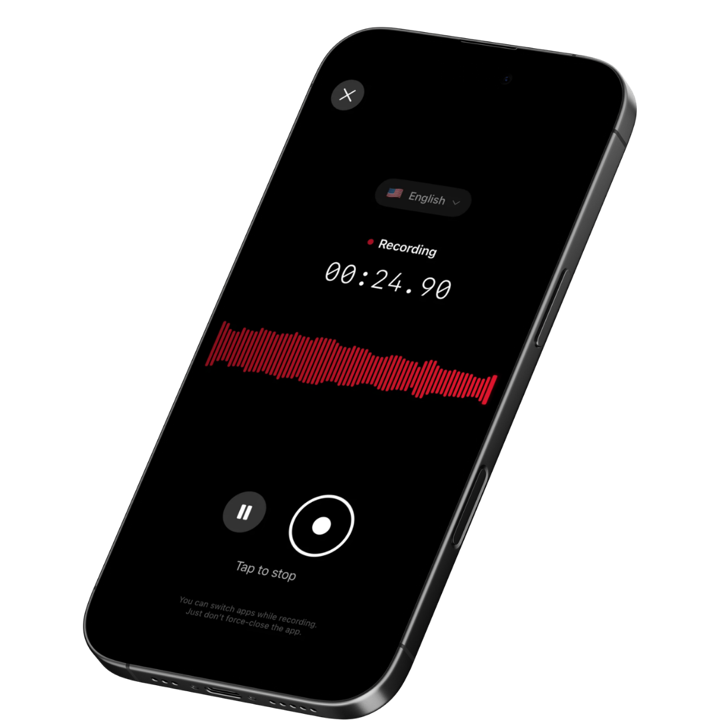
Voice capture offers a fundamentally different approach. Instead of deciding which app to open, what format to use, or how to organize your notes, you simply speak-and AI handles the rest. One decision. One tap. Zero cognitive overhead.
Download SpeakWise from the App Store and discover how one-tap recording, AI transcription, intelligent summaries, and Notion integration can help you capture information with zero decision overhead.
Join 10,000+ professionals who've discovered that the best tool is the one that requires the fewest decisions to use.
Get SpeakWise Free →
4.9★ App Store Rating | iOS Optimized

🎯 4.9★ App Store Rating | 📱 Built for iOS
