Deep Work Statistics 2026: Focus Time Trends, Productivity Windows, and the War on Concentration
Used by recruiters, executives, consultants, and more.
Deep Work Statistics 2026: Focus Time Trends, Productivity Windows, and the War on Concentration
The average knowledge worker gets just 2-3 hours of deep focus per day. Only 39% of tracked work time is spent in genuine concentration. Meetings have more than doubled in frequency over the past two years. Yet cutting meetings by 40% increases productivity by 71%. These 19 statistics reveal why deep work-the ability to focus without distraction on cognitively demanding tasks-has become the most valuable and rarest capability in the modern workplace.
Cal Newport defined deep work as "professional activities performed in a state of distraction-free concentration that push your cognitive capabilities to their limit." By this definition, most knowledge workers barely do deep work at all. Their days are fragmented by meetings, notifications, and the constant overhead of coordinating with colleagues. The result: the most valuable type of work-the thinking that creates breakthroughs, solves complex problems, and drives innovation-is systematically crowded out by the least valuable type of work: responding, attending, and toggling.
In this post, we'll explore 19 statistics that quantify the state of deep work in 2025 and 2026. These numbers reveal not just how little focused time workers achieve, but the structural barriers, proven interventions, and measurable outcomes that define the focus time crisis. Whether you're a leader considering no-meeting days, a manager trying to protect your team's focus, or an individual contributor who hasn't had an uninterrupted hour in weeks, these data points provide both a wake-up call and a blueprint.
Key Deep Work Statistics (2026)
- Deep work time has shrunk to just 2-3 hours a day for the average knowledge worker, out of a full eight-hour workday (Hubstaff 2026 Global Trends and Benchmarks Report).
- Only 39% of tracked work time is spent in genuine deep focus, according to the same 2026 Hubstaff analysis of over 140,000 workers (Hubstaff).
- Cutting meetings by 40% has been shown to raise employee productivity by 71% (FlexOS - Atlassian Research Analysis).
- Managers now lose 9 hours a week-about a quarter of their time-to meetings, nearly double the load carried by individual contributors (Hubstaff - 2026 Benchmarks by Role).
- Knowledge workers are interrupted roughly every 2 minutes during the workday, according to Microsoft's 2025 analysis of the "infinite workday" (Microsoft WorkLab).
- Focus efficiency has fallen to a three-year low of 60%, down from 63% in 2023 (ActivTrak 2026 State of the Workplace).
- 68% of employees say they don't have enough uninterrupted focus time during the workday (Microsoft Work Trend Index).
1. The average knowledge worker gets only 2-3 hours of deep focus per day
The cornerstone finding of modern productivity research is how little genuine focus time workers actually achieve. According to the Hubstaff 2026 Global Benchmarks Report, the average worker gets between two and three hours of focus time per day-meaning uninterrupted work periods without meetings, messages, or tool switching. That's roughly 25-37% of an eight-hour workday spent in the state that produces the highest-quality output. The remaining 5-6 hours are consumed by shallow tasks, coordination, and interruption recovery. Source: Hubstaff - How Work Is Really Structured 2026
2. Only 39% of tracked work time is spent in deep focus
Across all roles, industries, and work arrangements, deep focus represents a minority of the workday. Comprehensive workplace analytics show that only approximately 39% of tracked working time is spent in genuine deep concentration. The remaining 61% is divided among meetings, communication, administrative tasks, and the transition time between activities. This means that for every hour of true focus, workers spend roughly 1.5 hours on everything else-a ratio that inverts what most organizations need from their knowledge workers. Source: Hubstaff - How Work Is Really Structured 2026
3. Focus efficiency has fallen to a three-year low of 60%
The trend line for focus is moving in the wrong direction. ActivTrak's 2026 State of the Workplace report, which analyzed 443 million hours of work activity, found that focus efficiency-the share of total work time spent in focused, uninterrupted work-fell to 60% in 2025, down from 63% in 2023, while the average focused session declined 9% over the same period. This means workers aren't just getting less focus time; the focus time they do get is becoming less effective. The compounding effect of these parallel declines suggests that concentration itself is being eroded by the cumulative impact of digital interruptions. Source: ActivTrak - 2026 State of the Workplace
4. 68% of workers say they don't have enough uninterrupted focus time
Workers aren't just losing focus-they know it and they're frustrated. Microsoft's global survey found that 68% of employees say they don't have enough uninterrupted focus time during the workday. Half of all meetings occur during peak productivity hours (9-11 a.m. and 1-3 p.m.), directly competing with when workers would prefer to do their most cognitively demanding tasks. The result is a workforce that can identify the problem but can't solve it within existing organizational structures. Source: Microsoft Work Trend Index - Will AI Fix Work?
5. Reducing meetings by 40% increases productivity by 71%
The business case for protecting deep work is backed by compelling evidence. A study conducted by Benjamin Laker and reported in Harvard Business Review found that when organizations reduced meetings by 40%, employee productivity increased by 71%, and satisfaction improved significantly. This isn't a marginal gain from a marginal change-it's a transformative improvement that demonstrates how much productive capacity is currently locked behind meeting overload. Source: FlexOS - Atlassian Research Analysis
6. Knowledge workers with 3.5+ hours of daily focus time report being significantly more productive
There appears to be a focus threshold that separates productive days from frustrating ones. Worklytics' 2025 Productivity Benchmarks report found that knowledge workers who achieve at least 3.5 hours of daily focus time consistently report being more productive and more satisfied than those with less. This threshold suggests a practical target for organizations: if you can protect three and a half hours of uninterrupted work time for your team each day, you cross the line from fragmented struggle to productive flow. Source: Worklytics - 2025 Productivity Benchmarks
7. Meeting frequency has doubled compared to two years ago
The primary barrier to deep work continues to expand. Hubstaff's 2026 benchmarks find that the average person is now sitting in more than twice as many meetings as they were two years ago. This doubling-driven by remote work coordination needs, organizational uncertainty, and the reflexive scheduling of calls for issues that could be handled asynchronously-has directly compressed the time available for focused work. Every new meeting on the calendar is a deep work session that never happens. Source: Hubstaff - How Many Meetings Are Too Many? 2026 Benchmarks by Role
8. The average focused session has shrunk to just 13 minutes and 7 seconds
Session length is eroding along with overall focus time. ActivTrak's 2026 data shows that the average focused session now lasts just 13 minutes 7 seconds, down 9% from 14 minutes 23 seconds in 2023. That's a sharp reversal from the slight gains seen in earlier reports, and it means workers are being pulled out of concentration faster than ever. Thirteen minutes remains far below the 90-minute sessions that cognitive science identifies as optimal for complex problem-solving, indicating that workers are adapting to fragmented environments rather than achieving genuine deep work. Source: ActivTrak - 2026 State of the Workplace
9. Hybrid teams report the least focus time-just 31% of working hours
Work arrangement significantly impacts deep work capacity. Hubstaff's analysis found that hybrid teams reported the least amount of uninterrupted deep focus time at just 31% of working hours, compared to 45% for fully in-office teams and 41% for fully remote teams. The constant switching between home and office environments, combined with coordination overhead and "performative presence" on camera, creates a unique focus challenge for hybrid workers. Source: Hubstaff - How Work Is Really Structured 2026
10. The optimal deep work rhythm is shifting to 75 minutes on, 33 minutes off
Research on ideal work-rest ratios is evolving. DeskTime's 2025 analysis of the most productive employees found a shift in the optimal productivity rhythm toward 75 minutes of focused work followed by 33 minutes of rest-up from the 52-minutes-on, 17-minutes-off ratio DeskTime measured in 2014, and a pattern that aligns with the ultradian rhythms that govern human energy cycles. This ratio suggests that the popular Pomodoro technique's 25-minute focus sessions may be too short for complex knowledge work, while the 90-minute "deep work sprint" may be too demanding for most work environments. Source: DeskTime - Post-Pandemic Productivity 2025
11. AI users' daily focus time declined 9%, while non-users saw virtually no change
Counterintuitively, AI tool adoption may be reducing rather than increasing focus time. ActivTrak's 2026 State of the Workplace report, covering 443 million hours of work activity, found that AI users' daily focus time declined 9% year over year, compared to virtually no change for non-users. This suggests that while AI tools handle some routine tasks, they also introduce new coordination overhead, prompt-based workflows, and review requirements that fragment the day further. Source: ActivTrak - 2026 State of the Workplace
12. 57% of work time is spent communicating, not creating
The imbalance between coordination and creation is stark. Microsoft's analysis across Microsoft 365 apps shows that the average employee spends 57% of their time communicating-in meetings, email, and chat-and only 43% creating in documents, spreadsheets, and presentations. For knowledge workers, this ratio is even more skewed toward communication. Deep work requires creation, yet the modern workday is architecturally biased toward coordination. Source: Microsoft Work Trend Index - Will AI Fix Work?
13. 80% of workers say they would be more productive with fewer meetings
The workforce has identified the primary obstacle to deep work: meetings. Atlassian research found that 80% of respondents agree they would be more productive if they spent less time in meetings. This near-universal consensus exists across roles, industries, and seniority levels. The challenge isn't awareness-it's breaking the organizational inertia that treats meetings as the default response to every coordination need, even when asynchronous alternatives would be more effective. Source: Atlassian Workplace Woes: Meetings
14. Workers are productive only 2 hours and 53 minutes per 8-hour workday
When strictly measured, the amount of truly productive work in a standard workday is alarmingly low. Research across multiple productivity studies converges on approximately 2 hours and 53 minutes of productive output in an 8-hour workday. The rest is consumed by meetings, email, chat, social conversations, news browsing, food breaks, and the cognitive switching costs between activities. This figure represents the harsh reality behind the illusion of "being busy." Source: My Hours - Average Work Productivity Statistics 2025
15. The average workday has shrunk 2% since 2023, while productive hours are up 5%
Efficiency gains are possible even as focus time shrinks. ActivTrak's 2026 report found that the average workday shrank from 8 hours 53 minutes in 2023 to 8 hours 44 minutes in 2025-a 2% decline-while productive hours rose 5% (+19 minutes) to reach 6 hours 36 minutes daily. This suggests that some workers are getting better at compressing productive work into shorter windows, even if those windows remain fragmented. The trend toward shorter, more intense workdays may represent an adaptation to the focus crisis. Source: ActivTrak - AI Is Accelerating Work, Not Replacing It (2026)
16. Half of all meetings occur during peak productivity hours-9 to 11 a.m. and 1 to 3 p.m.
The scheduling of meetings actively sabotages deep work. Microsoft's analysis found that half (50%) of all meetings are scheduled during the 9-11 a.m. and 1-3 p.m. windows-precisely the hours when cognitive science says workers are most capable of complex, focused thinking. By occupying peak productivity hours with synchronous communication, organizations systematically ensure that their most valuable cognitive work gets pushed to the least optimal times-early morning, late afternoon, or after hours. Source: Microsoft WorkLab - Breaking Down the Infinite Workday
17. Managers lose nine hours a week-about a quarter of their time-to meetings
The meeting burden falls unevenly across roles. Hubstaff's 2026 benchmarks found that individual contributors spend around four hours a week in meetings (about 10% of their work week), while managers and team leads spend roughly nine hours a week in meetings-close to 25% of their total work time. That's nearly double the meeting load of individual contributors: every hour in a meeting is an hour that can't be spent on the strategic thinking the role requires. Source: Hubstaff - How Many Meetings Are Too Many? 2026 Benchmarks by Role
18. Knowledge workers are interrupted roughly every 2 minutes during the workday
The modern workday doesn't just lack long focus blocks-it actively prevents them. Microsoft's 2025 WorkLab analysis of the "infinite workday" found that employees are interrupted on average every two minutes by a meeting, email, or notification, and that 57% of meetings are unscheduled, ad hoc calls rather than planned events. Nearly half of employees (48%) and more than half of leaders (52%) say their work now feels chaotic and fragmented, and one in three employees say the pace makes it impossible to keep up. At that interruption rate, sustained deep work becomes structurally difficult regardless of individual discipline. Source: Microsoft WorkLab - Breaking Down the Infinite Workday
19. Only 3% of employees hit the AI usage "sweet spot" tied to peak productivity
AI's relationship with focus time is more nuanced than a simple decline. ActivTrak's 2026 report found that employees who spend 7-10% of their total work hours actively using AI tools show the highest productivity of any usage tier, at 95%-but only 3% of users fall within that range. Meanwhile, 80% of employees now use AI tools at work, up 52% in two years, with average time spent in AI tools up eightfold. The gap between widespread adoption and the narrow band of optimal use suggests most organizations are still fragmenting attention with AI rather than protecting it. Source: ActivTrak - AI Is Accelerating Work, Not Replacing It (2026)
The Focus Paradox: More Hours, Less Depth
The statistics reveal a workforce that is working longer but thinking less deeply. We've optimized for availability, responsiveness, and meeting attendance while systematically destroying the conditions that produce insight, creativity, and breakthrough thinking. The irony is sharp: organizations hire knowledge workers for their cognitive capabilities, then build environments that prevent those capabilities from being used.
The root cause is a coordination culture that treats every question as a meeting invitation, every update as an interruption, and every collaboration as a synchronous event. Deep work requires the opposite: protected time, asynchronous information flow, and the organizational permission to be unavailable.
The evidence for what works is compelling. Cutting meetings by 40% yields a 71% productivity increase. Protecting 3.5+ hours of focus time transforms worker output and satisfaction. No-meeting days give teams predictable rhythm for concentrated work. These aren't theoretical prescriptions-they're measured outcomes from organizations that chose depth over busyness.
The question isn't whether deep work matters-every organization acknowledges it does. The question is whether you'll protect it with the same urgency you bring to scheduling the meetings that destroy it.---
Ready to protect your deep work without losing the information flow?
The core tension of deep work is that disconnecting from communication means missing important information. Declining a meeting means missing the decision. Closing Slack means missing the context. The fear of missing out keeps workers tethered to shallow work.
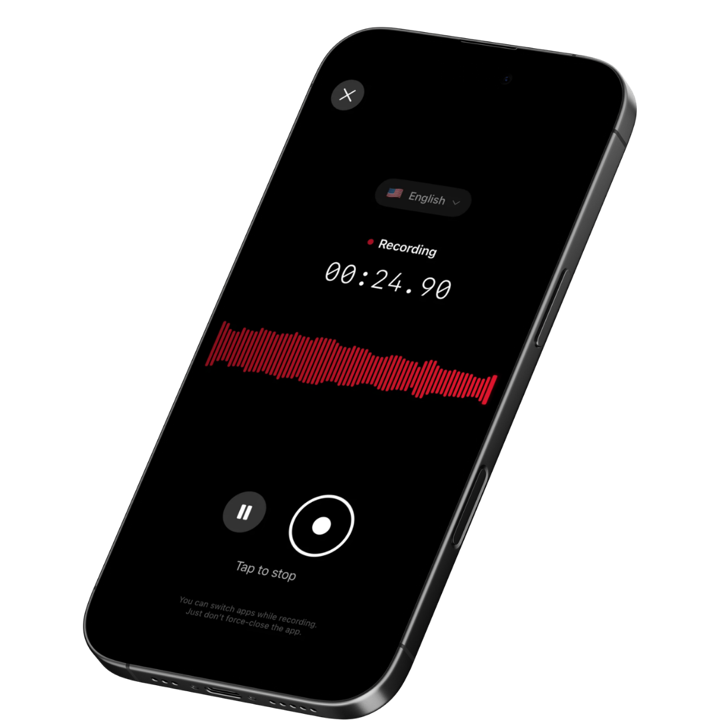
Voice capture resolves this tension. Record the meeting you can't attend. Capture the decision through a quick voice note. Let AI create the summary you'd otherwise spend 30 minutes writing. Deep work and information capture don't have to compete.
Download SpeakWise from the App Store and discover how one-tap recording, AI transcription, intelligent summaries, and Notion integration can help you protect your focus time while ensuring nothing important slips through the cracks.
Join 10,000+ professionals who've discovered that the best way to do deep work isn't disconnecting from information-it's capturing it without breaking your concentration.
Get SpeakWise Free →
4.9★ App Store Rating | iOS Optimized

🎯 4.9★ App Store Rating | 📱 Built for iOS
