Digital Fatigue Statistics 2026: Screen Exhaustion, Tool Burnout, and the Limits of Online Work
Used by recruiters, executives, consultants, and more.
Digital Fatigue Statistics 2026: Screen Exhaustion, Tool Burnout, and the Limits of Online Work
80% of global workers report lacking the time or energy to do their jobs effectively, the average knowledge worker toggles between apps 1,200 times per day, and two-thirds of all screen users now suffer from digital eye strain. These 20 statistics reveal how the very tools designed to make us productive are pushing us past our breaking point.
We have never been more connected, more equipped, or more digitally empowered than we are right now. The modern knowledge worker has access to hundreds of SaaS applications, instant messaging platforms, video conferencing tools, AI assistants, and cloud-based collaboration suites. On paper, this should be the golden age of productivity.
In practice, it is the age of digital fatigue.
Digital fatigue -- the cumulative mental, physical, and emotional exhaustion caused by prolonged interaction with digital devices and platforms -- has evolved from a pandemic-era buzzword into a chronic workplace crisis. It is not just about spending too much time on screens. It is about the relentless context switching between dozens of applications, the never-ending avalanche of notifications, the infinite scroll of communication channels demanding immediate attention, and the cognitive toll of being perpetually "on" in a digitally saturated work environment. It manifests as headaches, eye strain, insomnia, anxiety, reduced concentration, and a pervasive sense that despite working harder than ever, you are somehow falling further behind.
In this post, we present 20 data-backed statistics that quantify the scope and severity of digital fatigue across the modern workforce. From screen time trends and application overload to eye strain prevalence, burnout rates, and the erosion of after-hours boundaries, these numbers paint a sobering picture of how digital tools are systematically eroding the very productivity and wellbeing they were built to enhance.
Whether you are a manager looking to protect your team from digital overwhelm, a professional feeling the weight of constant connectivity, or an organization trying to understand why output is stalling despite record investment in technology, these statistics will give you the evidence you need to start making changes.
Key Digital Fatigue Statistics (2026)
- Digital fatigue affects nearly half of the workforce, with 49% of workers reporting persistent exhaustion from constant digital interaction (Haiilo).
- 80% of global workers say they lack the time or energy to do their jobs effectively, according to Microsoft's 2025 Work Trend Index (AllWork).
- The average knowledge worker faces 275 digital interruptions a day -- roughly one every two minutes (Microsoft WorkLab).
- 66% of digital device users worldwide suffer from computer vision syndrome, a form of chronic digital eye strain (Scientific Reports / Nature).
- Knowledge workers toggle between applications roughly 1,200 times a day, burning nearly 5 working weeks a year just reorienting (Harvard Business Review).
- Global employee engagement fell to just 20% in 2025, costing the world economy an estimated $10 trillion in lost productivity (Gallup - State of the Global Workplace 2026).
- 83% of employees now report feeling at least some degree of burnout, with digital overload as a leading accelerant (DHR Global).
1. 80% of global workers report lacking the time or energy to do their jobs effectively
Microsoft's 2025 Work Trend Index -- one of the largest annual studies of workplace productivity, surveying tens of thousands of workers across dozens of countries -- found that a staggering four out of five employees feel they do not have sufficient capacity to complete their work. This is not a problem of motivation, skill, or work ethic. It is a structural problem created by digital overload: too many tools demanding attention, too many messages requiring responses, too many meetings consuming the calendar, and too little uninterrupted focus time remaining for actual work. When the majority of the global workforce is running on empty, the issue is no longer individual -- it is systemic. The tools meant to empower workers have instead become the primary drain on their energy and time. Source: Microsoft Work Trend Index 2025 / AllWork
2. The average worker faces 275 digital interruptions per day -- one every two minutes
According to Microsoft's research into Microsoft 365 usage patterns across millions of users, employees are pinged by a meeting, email, or chat notification approximately every two minutes during core work hours. Over a full workday, that totals 275 separate interruptions. Each one breaks concentration, triggers a micro-recovery period, and prevents the kind of deep, sustained focus that complex knowledge work demands. The implications are staggering: if even a fraction of these interruptions require meaningful cognitive engagement, the worker never achieves the flow state necessary for creative problem-solving, strategic thinking, or high-quality output. The result is a workforce that is perpetually busy but rarely productive -- always responding, never creating. Source: Microsoft WorkLab - Breaking Down the Infinite Workday
3. Adults spend an average of 6 hours and 51 minutes per day on screens -- Americans spend over 7 hours
Global average daily screen time has reached approximately 6 hours and 51 minutes per person, with projections showing continued increases. U.S. adults exceed the global average, clocking in at 7 hours and 2 minutes per day as of late 2024. These figures represent cumulative time across all devices -- computers, smartphones, tablets, and smart displays -- and they have climbed steadily over the past decade with no signs of plateauing. For context, health experts and organizations like the American Heart Association recommend limiting recreational screen time to 2 hours per day. Most working adults blow past that threshold before their lunch break, and that is before accounting for the personal screen time they accumulate in the evenings. Gen Z (ages 13 to 28) reports even higher averages at around 9 hours daily, suggesting the problem will intensify as this demographic moves into leadership roles. Source: DemandSage - Screen Time Statistics 2026
4. Knowledge workers toggle between applications approximately 1,200 times per day
A landmark study published by Harvard Business Review, conducted across three Fortune 500 companies with 137 participants over five weeks and analyzing 3,200 days of work data, found that the average digital worker switches between apps and browser tabs roughly 1,200 times per day. This translates to nearly 4 hours per week -- or 5 full working weeks per year, roughly 9% of total annual work time -- spent simply reorienting after toggling. The cost of each individual switch averages just over 2 seconds, which sounds trivial until you realize that 65% of switches lead to yet another toggle within 11 seconds, creating cascading chains of fragmented attention that prevent any meaningful depth. In one extreme case observed in the study, a single supply-chain transaction required 350 toggles across 22 different applications, and one employee toggled over 3,600 times in a single day. The researchers noted that excessive toggling increases cortisol production, slows cognitive processing, and measurably impairs focus. Source: Harvard Business Review
5. 49% of workers report suffering from digital fatigue
Nearly half of all workers surveyed now say they experience digital fatigue -- the persistent exhaustion and disengagement caused by excessive digital interaction. This is a critical distinction: digital fatigue is not burnout from the work itself, but burnout from the medium through which work is conducted. The constant cycling between email inboxes, chat applications, video conferencing platforms, project management dashboards, documentation tools, and notification streams creates a unique form of cognitive depletion that traditional rest does not fully resolve. A weekend away from the office does not help when Monday morning brings a full inbox and a backlog of pending chat messages. Additionally, 40% of people surveyed said they interact more through devices than they do in person, and 39% worry that their device usage is negatively affecting their physical wellbeing. The fatigue is both psychological and embodied. Source: Haiilo - What Is Digital Fatigue
6. Communication consumes 60% of the average workday, leaving only 40% for actual creative work
Microsoft's extensive telemetry data reveals that emails, chats, and meetings now dominate the majority of a typical employee's day. That means for every 8-hour workday, roughly 4 hours and 48 minutes are spent communicating about work rather than doing it. Only 40% of the day -- about 3 hours and 12 minutes -- remains for the focused, creative, and strategic tasks that actually drive business value, generate revenue, and move projects forward. This ratio has steadily worsened as organizations have layered additional communication channels on top of one another without retiring older ones. Workers now juggle email, Slack, Teams, text messages, video calls, and in-app comment threads simultaneously. The irony is that 53% of leaders say productivity needs to increase, while workers have mathematically shrinking windows in which to produce anything of substance. Source: Moor Insights & Strategy - Microsoft Work Trend Index 2025
7. It takes 23 minutes and 15 seconds to fully regain focus after a single interruption
Research from the University of California, Irvine found that a significant interruption requires nearly a quarter of an hour to recover from -- not seconds, not a couple of minutes, but 23 minutes and 15 seconds to return to the original task with the same level of concentration. Now combine this with the 275 daily interruptions that knowledge workers face, and the math becomes impossible: there are simply not enough minutes in the day to recover from every break in focus. The result is that most workers operate in a state of perpetual partial attention, never fully engaged in any single task, always carrying the cognitive residue of the last interruption while anticipating the next. This is not a minor efficiency loss -- it is a fundamental breakdown in how knowledge work functions. Source: Gallup Business Journal - Too Many Interruptions at Work?
8. 66% of digital device users worldwide suffer from computer vision syndrome
A systematic review and meta-analysis published in Nature's Scientific Reports, encompassing 45 cross-sectional studies and 17,526 participants across multiple countries and demographics, found that the pooled global prevalence of computer vision syndrome (CVS) is 66% (95% CI: 59-74%). Symptoms include chronic eye strain, persistent headaches, blurred vision, dry eyes, light sensitivity, and neck and shoulder pain. This means roughly two out of every three people who regularly use digital screens are experiencing measurable physical harm from their devices. Prevalence varies sharply by geography and by pandemic-era conditions: included studies ranged from 12% in Japan to 97% in Pakistan, and one Indian study found prevalence jumped from 64.3% before COVID-19 lockdowns to 87.3% during them -- a pattern echoed by a comparable European lockdown study at roughly 90%. While it has moderated somewhat since, it remains endemic to screen-centric work environments. These are not minor complaints -- they are chronic conditions that compound daily and degrade quality of life over months and years. Source: Scientific Reports / Nature - CVS Meta-Analysis
9. The average organization now uses 305 SaaS applications
According to Zylo's 2026 SaaS Management Index, the average company portfolio comprises 305 distinct software applications, with the median portfolio holding 240. The dream of tool consolidation has essentially stalled -- overall app counts dipped by a meager 0.07% year-over-year, meaning companies are retiring old tools almost as slowly as they are adding new ones. Each additional tool means another interface to learn, another login to manage, another notification stream to monitor, another context switch to perform, and another layer of digital fatigue stacked onto every employee's daily experience. Spending keeps climbing regardless of the consolidation stall: average annual SaaS spend rose 8% year-over-year to $55.7 million per organization (median: $20.6 million), with large enterprises seeing their annual spend grow roughly 16% year-over-year. Source: Zylo 2026 SaaS Management Index
10. 68% of employees struggle with the pace and volume of their work, leading to burnout for 46%
Microsoft's research found that more than two-thirds of employees cannot keep up with the speed and quantity of tasks flowing through their digital workflows. This struggle converts directly into burnout for nearly half the workforce -- 46% report active burnout symptoms. Meanwhile, 48% of employees and 52% of leaders describe their work as feeling "chaotic and fragmented," a characterization that points directly to the disorienting effects of constant tool switching and communication overload. These are not the words of disengaged workers looking for excuses -- they are the words of overwhelmed professionals who are doing their best to navigate digital demands they cannot control. When leadership itself describes the environment as chaotic, the problem has reached the organizational core, not just the individual edges. Source: Moor Insights & Strategy - Microsoft Work Trend Index 2025
11. Workers send 58 chats daily outside of work hours -- a 15% year-over-year increase
The boundary between work time and personal time is not just blurring -- it is dissolving entirely. Microsoft's data shows that after-hours chat messages have grown 15% year over year, with the average employee now sending 58 messages outside of standard work hours. Meetings starting after 8 PM have increased 16% year over year, driven in part by expanding cross-time-zone collaboration, with 30% of meetings now spanning multiple time zones -- up 8 percentage points since 2021. And 40% of workers who are already online at 6 AM are checking email and calendars before the official workday begins. The "always-on" culture is not an abstract concept debated in management journals -- it is a measurable, accelerating trend that relentlessly extends the digital workday and directly fuels the fatigue, sleep disruption, and burnout documented in these statistics. When the workday has no clear endpoint, recovery never fully begins. Source: Microsoft WorkLab - Breaking Down the Infinite Workday
12. The average office worker receives 121 emails per day
Despite the meteoric rise of chat platforms, Slack channels, and project management tools -- all of which were supposed to replace email -- email remains a dominant and growing source of digital overload. The average knowledge worker now receives 121 emails daily and sends approximately 40 in return. Globally, more than 376 billion emails are sent and received every day. Research shows that email management consumes up to 28% of the entire workweek -- more than a full workday every week spent exclusively reading, writing, sorting, and responding to messages. Over a 45-year career, the cumulative time spent on email adds up to roughly 3,000 working days -- nearly 12 years of full-time work spent inside an inbox. Email was supposed to make communication more efficient. Instead, it has become one of the largest time sinks in professional life. Source: cloudHQ - Workplace Email Statistics 2025
13. 83% of employees report feeling burnout in 2026
The burnout epidemic has reached critical mass. According to DHR Global's 2026 workplace research, 83% of employees now report feeling at least some degree of burnout. Overwhelming workload is the top driver at 48%, followed by working too many hours at 40% and difficulty balancing work with personal or family life at 37%. The report finds burnout especially acute in retail, healthcare, and technology. The share of employees who say burnout is actively reducing their engagement has also jumped, from 34% in 2025 to 52% in 2026. Digital fatigue serves as a primary accelerant across all of these categories: every additional tool, notification, meeting invitation, and chat thread adds friction and cognitive load to an already overtaxed system. Burnout is not caused by any single factor -- it is the compound interest of hundreds of daily micro-stressors that digital environments generate. Source: DHR Global - The Burnout Problem Leaders Can't Ignore
14. Information overload costs the U.S. economy up to $1 trillion annually
The economic damage of digital fatigue is not confined to individual wellbeing or even company performance -- it scales to macroeconomic consequences. Research estimates that the aggregate impact of information overload, including reduced productivity, stifled innovation, degraded decision-making quality, increased error rates, and higher employee turnover, costs the American economy up to $1 trillion per year. This figure encompasses both the direct productivity losses that occur when workers spend more time processing information than creating value, and the harder-to-measure downstream effects of a workforce too overwhelmed to think creatively, spot opportunities, or solve complex problems. When nearly every worker in every industry is experiencing some form of digital overload, the economic drag becomes enormous -- even if it is invisible on any single company's balance sheet. Source: Wedia - Information Overload in 2025
15. 72% of workers feel occasionally overwhelmed by workplace information and communications
Nearly three-quarters of professionals admit that the sheer volume of information flowing through their digital channels periodically exceeds their capacity to process it. This is not a problem isolated to specific roles or industries -- it is pervasive across the knowledge economy. Even more concerning are the secondary consequences: 54% of office workers report ignoring cybersecurity alerts due to notification overload, and 47% acknowledge that information overload actively impairs their ability to identify genuine security threats. Digital fatigue is therefore not just a productivity problem or a wellbeing problem -- it is a security vulnerability. When people are overwhelmed by the volume of signals hitting their screens, they stop paying careful attention to the signals that matter most. An employee drowning in 275 daily notifications is statistically likely to miss the one that matters -- whether that is a phishing attempt, a critical deadline, or an important client request. Source: CybSafe via Haiilo
16. An extra hour of screen time in bed raises insomnia odds by 59% and costs 24 minutes of sleep
Research published in 2025, drawing on 45,202 adults aged 18 to 28, found a direct, dose-dependent relationship between screen exposure and sleep disruption that should alarm anyone who works primarily on digital devices. A one-hour increase in screen time after going to bed was associated with 59% higher odds of insomnia symptoms and a 24-minute reduction in total nightly sleep time. Given how much of the modern workday now bleeds into the evening -- after-hours email checking, late-night message responses, and weekend work sessions -- the compounding effect on sleep quality is severe. Poor sleep, in turn, amplifies every dimension of digital fatigue: it worsens cognitive impairment, heightens emotional reactivity, reduces attention span, and further degrades the productivity that was already under pressure from digital overload. This creates a vicious, self-reinforcing cycle: screens cause poor sleep, poor sleep reduces the capacity to manage digital demands, and reduced capacity leads to longer hours on screens trying to catch up. Source: Frontiers in Psychiatry - Screen Use and Sleep
17. Workers switch between 9 apps a day, and 56% feel they must respond to notifications immediately
Despite billions of dollars invested in workplace technology each year, the tools themselves are adding friction rather than removing it. Research from Asana finds that employees cycle through an average of 9 different applications per day, and 56% feel they must respond to notifications the moment they arrive. More than half of workers admit to multitasking during meetings, and over a third say they feel overwhelmed by persistent pings. The trend is accelerating rather than easing: 42% say they are spending more time on email than they were a year ago, 40% are spending more time on video calls, and 52% are multitasking more during virtual meetings than they were twelve months prior. Every switch carries a cognitive tax -- the brain must disengage from one context, reorient to another, recall the relevant state of the new application, and re-establish focus. Multiplied across thousands of daily transitions, this creates a chronic low-grade mental exhaustion that workers cannot shake even after they log off. The paradox is unmistakable: the more tools organizations add to the digital stack, the less effective each individual worker becomes. Source: Asana - Context Switching
18. Global employee engagement fell to just 20% in 2025, costing the world economy $10 trillion
Gallup's State of the Global Workplace 2026 report, based on more than 263,000 respondents surveyed across the year, found that global employee engagement dropped to 20% in 2025 -- its lowest level since 2020. Gallup estimates the resulting drag on productivity, innovation, and output costs the world economy roughly $10 trillion annually. The report also found that the share of employees reporting a lot of stress, anger, or sadness the previous day remains above pre-pandemic levels, even as workplaces have added more digital tools than ever to try to close the gap. The pattern mirrors what U.S.-focused research has already shown: adding more software does not automatically translate into more engaged, less exhausted employees -- it often does the opposite. Source: Gallup - State of the Global Workplace 2026
19. AI-native SaaS spend surged 108% in a single year -- 393% at large enterprises
Zylo's 2026 SaaS Management Index found that spend on AI-native applications jumped 108% year-over-year across its dataset, and 393% among large enterprises with more than 10,001 employees -- the fastest-growing category it tracks. Broader adoption of AI-category applications grew 181% in the same period. For workers already juggling hundreds of existing tools, this wave of new AI assistants, copilots, and agents represents yet another set of interfaces, logins, and notification streams layered onto an already saturated digital stack, even as 78% of IT leaders report unexpected charges tied to AI features or consumption-based pricing. Source: Zylo 2026 SaaS Management Index
20. Lack of recognition as a burnout driver nearly doubled -- from 17% in 2025 to 32% in 2026
DHR Global's 2026 workplace research found that the share of employees citing lack of recognition as a contributor to their burnout climbed from 17% in 2025 to 32% in 2026, one of the sharpest year-over-year jumps among all burnout drivers the firm tracks. The finding points to a compounding effect: as digital tools multiply and communication fragments across more channels, individual contributions become easier to lose track of and harder for managers to see, let alone acknowledge. The result is a workforce that feels not only busier but more invisible -- doing more, through more tools, while feeling seen less. Source: DHR Global - The Burnout Problem Leaders Can't Ignore
The Digital Fatigue Paradox: When the Cure Becomes the Disease
The 20 statistics above converge on a single, uncomfortable truth: the modern digital workplace is cannibalizing itself. Every tool, platform, and communication channel was introduced with the promise of making work faster, easier, and more productive. And in isolation, many of them deliver on that promise. A project management tool does organize tasks. A chat platform does enable quick communication. A video conferencing app does connect distributed teams. But the cumulative effect of adopting hundreds of these solutions simultaneously -- layering them on top of one another without ever retiring the old ones -- has created an environment where the overhead of managing tools has eclipsed the value they provide.
This is the digital fatigue paradox. A worker who receives 121 emails and 275 notification pings per day while toggling between 9 different applications and attending back-to-back video calls is not more productive than their counterpart from 2005 who had email and a phone. The data shows they are measurably less productive -- and measurably more exhausted, more anxious, more prone to errors, and more likely to burn out. The tools have multiplied, but human cognitive capacity has not. We still have the same working memory, the same attention span, the same need for uninterrupted deep focus. What has changed is the number of things competing for those finite resources.
The data makes this painfully clear. Communication now consumes 60% of the workday. Workers lose 5 full weeks per year just reorienting after app switches. 83% report feeling burnout. Two-thirds suffer from chronic digital eye strain. And the "always-on" culture means that even when the workday officially ends, the digital demands do not. After-hours messages are rising 15% year over year. Late-night meetings are up 16%. Workers are checking email at 6 AM and sending chats at 10 PM. The workday has become, in Microsoft's own framing, "infinite" -- and so has the fatigue that accompanies it.
What makes this paradox especially insidious is that the standard organizational response to declining productivity is to add more tools. Struggling with meeting overload? Deploy a meeting summarizer. Email taking too long? Add an AI email assistant. Knowledge scattered across too many platforms? Introduce a knowledge management system. Project status unclear? Implement a dashboard. Each individual solution addresses one symptom while simultaneously adding another application to the stack, another notification source to the stream, another interface to learn, and another layer of digital overhead to the daily experience. The net effect is often negative: the problem deepens even as spending increases. Organizations find themselves trapped in an escalation cycle, unable to solve digital fatigue by adding more of the thing that caused it. Until companies and individuals fundamentally rethink their relationship with digital tools -- prioritizing radical reduction, genuine consolidation, and interaction modalities that do not require screens or keyboards -- digital fatigue will continue to accelerate unchecked.
The most effective antidote to digital fatigue is not better digital tools. It is fewer screens, fewer keystrokes, and fundamentally different ways of capturing and processing information -- approaches that work with human cognition rather than against it.---
Ready to fight digital fatigue with a tool that doesn't add to it?
Every new productivity app makes the same pitch: it will save you time, reduce friction, and streamline your workflow. But every one of those apps also demands screen time, requires typed input, sends push notifications, and adds yet another interface to your already overflowing digital stack. The cumulative result -- as the 20 statistics above demonstrate -- is not liberation. It is exhaustion. The average knowledge worker is now spending more time managing their tools than doing the work those tools were supposed to enable. Adding another screen-based app to the pile does not solve digital fatigue. It deepens it.
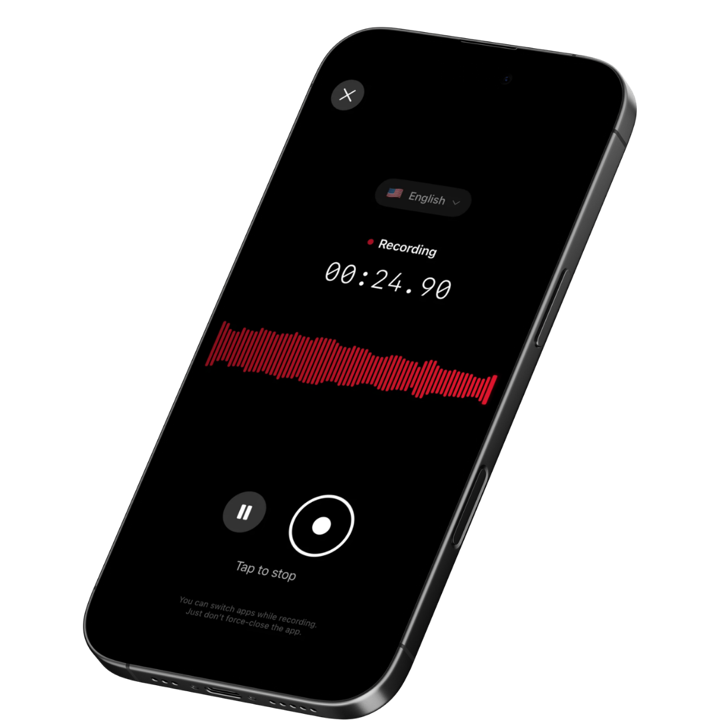
Voice capture offers a fundamentally different approach. Instead of staring at another screen, typing into another app, or navigating another interface, you simply speak--and AI handles the rest. No screen required. No typing needed. No digital fatigue added.
Download SpeakWise from the App Store and discover how one-tap recording, AI transcription, intelligent summaries, and Notion integration can help you capture information without contributing to digital fatigue.
Join 10,000+ professionals who've discovered that the cure for digital fatigue isn't another digital tool--it's a voice-first tool that gives your eyes and fingers a break.
Get SpeakWise Free →
4.9★ App Store Rating | iOS Optimized

🎯 4.9★ App Store Rating | 📱 Built for iOS
