Email Overload Statistics 2026: Inbox Volume, Response Time, and the Cost of Always-On Communication
Used by recruiters, executives, consultants, and more.
Email Overload Statistics 2026: Inbox Volume, Response Time, and the Cost of Always-On Communication
The average office worker receives 121 emails per day while 422 billion emails are sent globally-every single day. With 70% of workers citing email as their top stress source, 40% admitting to 50+ unread messages, and email consuming up to 28% of the workweek, these 20 statistics reveal why email overload remains the silent crisis that no productivity hack has managed to solve.
Email was supposed to make work faster. Instead, it created an always-on communication channel that follows workers from their morning alarm to their evening scroll. Despite decades of inbox management tools, email etiquette guides, and the rise of chat platforms like Slack and Teams, the average professional's inbox has only gotten fuller. The problem isn't email itself-it's the sheer volume of messages combined with the expectation that every one deserves a timely response.
In this post, we'll explore 20 statistics that capture the true scope of email overload in 2025 and 2026. These numbers reveal not just inbox volumes and time spent, but the psychological toll, productivity drain, and organizational costs of a communication channel that has metastasized beyond anyone's ability to manage. Whether you're an executive wondering why your team seems always busy but never productive, a professional drowning in unread threads, or simply someone who dreams of reaching inbox zero, these data points explain the scale of the problem-and why traditional solutions keep failing.
Key Email Overload Statistics (2026)
- Email overload costs knowledge workers up to 28% of their workweek-roughly 11 hours-managing their inbox, according to a McKinsey analysis cited by cloudHQ.
- The average office worker now receives 121 emails every day, before chat platforms like Slack and Teams add anything else (cloudHQ).
- 70% of professionals identify email as their primary source of workplace stress (Clean Email).
- Nearly 45% of all emails sent worldwide are spam, according to Kaspersky's 2025 Spam and Phishing Report (Securelist).
- 58% of workers now feel anxious when opening their inbox, per Insightful's 2025 Stress in the Workplace report (Insightful).
- 34% of workers fear that not responding to a message right away will hurt how their performance is perceived (SurveyMonkey).
- Global email volume has grown to 422 billion messages sent every single day in 2026 (cloudHQ).
1. The average office worker receives 121 emails per day
The inbox load facing modern professionals is relentless. Research shows that the average office worker now receives approximately 121 emails every single day-a figure that includes internal communications, external correspondence, automated notifications, newsletters, and spam that made it past the filter. At roughly 15 emails per hour during an eight-hour day, this creates a constant stream of incoming demands that competes with every other priority on a worker's plate. Source: cloudHQ - Workplace Email Statistics 2025
2. 422 billion emails are sent globally every day
The scale of email is almost incomprehensible. In 2026, global email volume reached 422 billion messages per day across 5.02 billion email users worldwide-up from 392 billion daily messages in 2025, a 7.7% year-over-year jump. This means humanity now sends more emails in a single day than there are stars in the Milky Way galaxy. The infrastructure supporting this volume is staggering, but the human capacity to process it hasn't evolved at all. Source: cloudHQ - Email Statistics Report 2025-2030
3. Workers spend up to 28% of their workweek on email
Email doesn't just fill your inbox-it fills your calendar. A McKinsey analysis found that knowledge workers spend up to 28% of their workweek reading, writing, and managing email-roughly 11 hours per week or more than two full hours per day. This makes email the second-largest consumer of work time after role-specific tasks, exceeding the time spent in meetings for many professionals. When more than a quarter of your workweek vanishes into your inbox, the remaining 72% must accommodate everything else. Source: cloudHQ - Workplace Email Statistics 2025
4. 70% of workers cite email as their top source of workplace stress
Email has become more than an annoyance-it's a health concern. Research shows that 70% of workers identify email as their primary source of workplace stress, with 42% describing their inboxes as "out of control." This stress isn't irrational-it reflects the genuine cognitive burden of monitoring, prioritizing, and responding to 121 daily messages while simultaneously trying to accomplish the work those messages discuss. The inbox has become a to-do list that anyone in the world can add to. Source: Clean Email - Email Productivity Statistics Report 2026
5. 40% of employees have at least 50 unread emails in their inbox
The dream of inbox zero remains exactly that for most workers. Research shows that 40% of employees admit to having at least 50 unread emails in their inbox at any given time, with many carrying backlogs of hundreds or even thousands. These unread messages represent a cognitive weight-each one is a potential task, question, or obligation that lingers in the background, creating ambient anxiety even when the inbox isn't actively open. Source: cloudHQ - Workplace Email Statistics 2025
6. Only 24% of emails received are actually important
The cruel efficiency problem of email is its signal-to-noise ratio. Analysis of email behavior shows that only about 24% of all messages received are important enough to warrant attention, with the remaining 76% consisting of newsletters, automated notifications, internal updates, and threads where the recipient was unnecessarily CC'd. Workers effectively spend hours each day sorting through a communication channel where three-quarters of the content doesn't require their involvement. Source: SaneBox - Unwrap Your Inbox 2025
7. Nearly 45% of all emails sent worldwide are spam
The email overload problem is compounded by a flood of unwanted messages. In 2025, nearly 45% of all emails sent globally-44.99% of worldwide traffic, to be precise-were classified as spam, scam, or malware. While modern filters catch most of these before they reach your inbox, the sheer volume consumes server resources, and the spam that does get through adds to the cognitive load of triaging every new message that arrives. Source: Kaspersky Securelist - Spam and Phishing Report 2025
8. The heaviest email users spend 8.8 hours per week on email alone
For the most email-dependent workers, the inbox has essentially become a full-time job within their full-time job. Research shows that the heaviest email users-the top 25%-spend 8.8 hours per week managing email, equivalent to an entire workday. These tend to be managers, executives, and client-facing professionals whose roles require constant communication-precisely the people whose deep thinking and strategic decision-making suffer most from perpetual email triage. Source: Microsoft WorkLab - Work Trend Index: Will AI Fix Work?
9. Email overload can decrease productivity by 40%
The productivity cost of email overload is dramatic. Research shows that email overload can decrease worker productivity by up to 40%-a figure McKinsey attributes to the time spent reading, composing, and managing messages combined with the context-switching cost of interrupting focused work to check the inbox. At this level of impact, email isn't just a communication tool; it's an active impediment to the work it's supposed to facilitate. Source: Clean Email - Email Productivity Statistics Report 2026
10. Workers check email 11 to 36 times per hour
The compulsive nature of email checking compounds its productivity toll. Studies show that the average employee checks their email between 11 and 36 times per hour-a behavior driven by both genuine work demands and the dopamine-seeking pattern of notification response. Each check represents a context switch, and with 23 minutes needed to fully regain focus after an interruption, the math becomes devastating: workers who check email every few minutes may never achieve true focused work during their entire day. Source: cloudHQ - Workplace Email Statistics 2025
11. 54% of workers check email while on vacation
The boundary between work and personal time has dissolved most visibly in email behavior. Research shows that 54% of workers check their work email while on vacation, while 28% say they're actually asked to do work during their time off. This "always-on" email culture means that even scheduled recovery time-the most basic defense against burnout-is consistently interrupted by the inbox. Vacations that include email aren't really vacations at all. Source: SurveyMonkey - Work-Life Balance Statistics 2025
12. 23% of total work time is spent just checking messages
Beyond composing and responding, the simple act of monitoring email consumes a significant portion of the workday. Research shows that 23% of total work time is spent just checking messages-not reading them thoroughly, not responding, just glancing at the inbox to see if anything new has arrived. This surveillance behavior reflects the anxiety that something important might be missed, creating a low-grade distraction that persists even when no new messages have arrived. Source: cloudHQ - Workplace Email Statistics 2025
13. Workers receive an additional 153 Teams or Slack messages daily on top of email
Email isn't suffering alone-it's being supplemented by chat platforms that add even more message volume. Microsoft's research shows the average employee receives 117 emails plus 153 Teams direct messages daily-a combined 270 message-based interruptions per day before accounting for meetings, @mentions, or other notifications. The promise that chat would reduce email has largely failed; instead, workers now manage two parallel communication channels, each demanding attention. Source: Microsoft News Center - Rise of the Infinite Workday
14. 40% of employees check email before 6 a.m.
The workday now starts in bed. Microsoft's Work Trend Index reveals that 40% of employees check their email before 6 a.m., signaling that the "always-on" culture has infiltrated the earliest hours of the morning. This pre-dawn email checking isn't driven by genuine urgency-it's driven by anxiety about what might have accumulated overnight and the desire to feel "on top of things" before the day officially begins. The result is a workforce that's already partially depleted before their workday even starts. Source: Microsoft Work Trend Index 2025
15. Email volume is projected to reach 451 billion daily messages by 2027
Despite the rise of Slack, Teams, and other communication platforms, email isn't shrinking-it's growing. Projections show global daily email volume will reach 451 billion messages by 2027, up from 422 billion in 2026. This growth is driven by expanding internet access in developing markets, increased automated and marketing emails, and the simple reality that email remains the universal communication standard for business, government, and inter-organizational coordination. Source: cloudHQ - Email Statistics Report 2025-2030
16. It takes an average of 64 seconds to recover from an email interruption
Every email check carries a hidden cost measured in lost momentum. Research from Loughborough University's landmark workplace study found it takes an average of 64 seconds to recover from an email interruption and return to work at the same rate as before-and that's the best-case scenario where no response is required. When an email does demand a reply, the interruption can extend far longer. Multiplied across the 11-36 email checks per hour that the average worker performs, these micro-interruptions fragment the workday into unusably small pieces. Source: Loughborough University - The Cost of Email Interruption (Jackson, Dawson & Wilson)
17. 85% of employees receive work communications outside standard hours
The inbox never closes. Survey data shows that 85% of employees receive work-related communications-primarily email-outside standard work hours at least a few times per month, with 60% receiving them multiple times per week. Only 6% of workers report never responding to work communications outside standard hours. This constant connectivity means the psychological weight of email extends far beyond the official workday, contributing to the "infinite workday" that Microsoft's research has documented. Source: SurveyMonkey - Work-Life Balance Statistics 2025
18. 58% of workers feel anxious when opening their inbox
Email overload isn't just a productivity problem-it's a documented source of psychological distress. Insightful's 2025 Stress in the Workplace report found that 58% of workers now feel anxious when opening their inbox, a symptom the report groups under "work communication overload" alongside chat and meeting fatigue. That anxiety response helps explain why so many workers describe their inbox as a source of dread rather than a simple task list-the emotional cost compounds on top of the time cost. Source: Insightful - Stress in the Workplace Report 2025
19. 29% of workers return to their inbox by 10 p.m.
The always-on inbox doesn't stop at dinner. Microsoft's "Rise of the Infinite Workday" research identified a "triple peak" pattern in daily work activity, with nearly a third of active workers-29%-returning to their inboxes by 10 p.m. This third peak, on top of the traditional morning and afternoon email surges, shows how thoroughly email has colonized what used to be personal time. Source: Microsoft News Center - Rise of the Infinite Workday
20. 34% of workers fear that not responding right away will hurt their reputation
Much of the compulsion to keep checking email isn't about the work itself-it's about self-preservation. SurveyMonkey's 2025 Work-Life Balance research found that 34% of workers believe failing to respond to a message quickly will lead to negative perceptions of their performance from managers or coworkers. That fear turns email into a reputational obligation as much as a communication tool, pushing workers to monitor their inbox far more often than the actual urgency of their messages would require. Source: SurveyMonkey - Work-Life Balance Statistics 2025
The Inbox Paradox: Indispensable but Unmanageable
The statistics paint a picture of a communication tool that has outgrown human capacity to manage it. Email remains indispensable-it's still the primary channel for formal communication, external correspondence, and documented exchanges. But at 121 messages per day, with only 24% actually important, and workers spending up to 28% of their week just managing the flow, the inbox has become a productivity trap disguised as a productivity tool.
The root problem isn't email design or inbox management techniques. It's that email has become the default repository for everything-decisions, discussions, documents, FYIs, CYAs, and conversations that would be better handled in other formats. When every thought, update, and question becomes an email thread, inboxes inevitably overflow.
The solution isn't to eliminate email-it's to reduce what ends up there. Organizations that shift status updates to dashboards, move discussions to structured channels, and capture meeting decisions through AI summaries rather than recap emails can dramatically reduce inbox volume. The goal is to make email the exception for important, formal communication rather than the default for everything.
The question isn't how to manage your inbox better-it's how to make your inbox smaller. In a world of 422 billion daily emails, the most productive message might be the one you never have to send.---
Ready to capture thoughts without adding to anyone's inbox?
The irony of email overload is that many messages exist because information wasn't captured elsewhere. Meeting recaps get emailed because the meeting wasn't recorded. Decisions get re-discussed because the original context was lost. Ideas get typed into threads because there wasn't a faster way to capture them.
Voice notes offer a radical simplification. Speaking is 3x faster than typing, and with AI transcription accuracy exceeding 96%, your spoken thoughts become searchable, organized text-sent directly to Notion instead of someone's inbox.
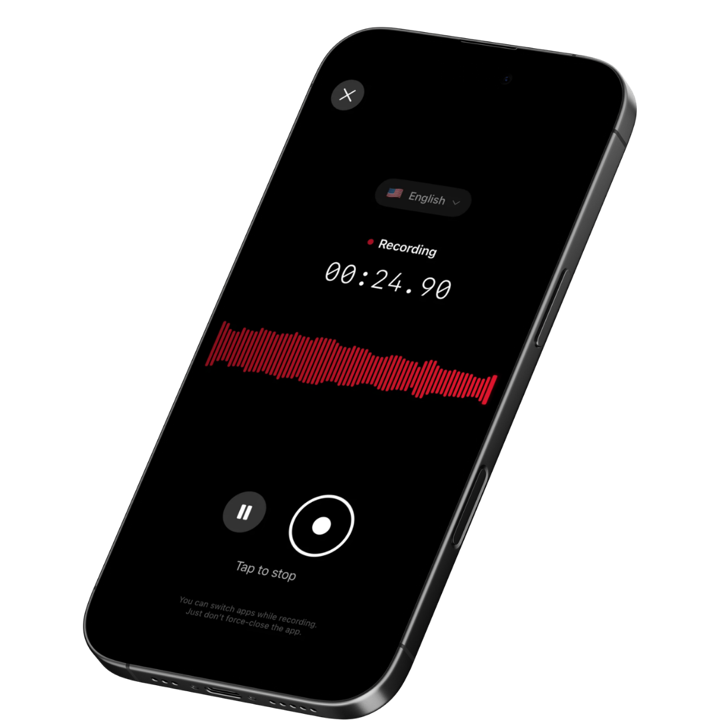
Download SpeakWise from the App Store and discover how one-tap recording, AI transcription, intelligent summaries, and Notion integration can help you capture information without contributing to anyone's inbox overload.
Join 10,000+ professionals who've discovered that the best way to fight email overload isn't better inbox management-it's creating less email in the first place.
Get SpeakWise Free →
4.9★ App Store Rating | iOS Optimized

🎯 4.9★ App Store Rating | 📱 Built for iOS
