Employee Autonomy Statistics 2026


Used by recruiters, executives, consultants, and more.
Employee Autonomy Statistics 2026
79% of autonomous employees report being engaged at work. Employees who feel they have autonomy are 2.3 times more likely to stay with their organization. Yet 51% of workers cite lack of autonomy as a cause of burnout, and one in five say they are losing control over their professional future. These 15 statistics reveal why employee autonomy has become the defining factor in engagement, retention, and workplace wellbeing.
Autonomy is not about working without oversight. It is about having meaningful control over how, when, and where you do your work. Research rooted in self-determination theory has consistently shown that autonomy is one of three basic psychological needs - alongside competence and relatedness - that drive intrinsic motivation. When organizations satisfy this need, they get engaged, creative, loyal employees. When they suppress it, they get burnout, turnover, and quiet quitting.
This post presents 15 statistics that quantify the state of employee autonomy in 2026. These numbers cover the current reality of workplace freedom, its measurable impact on business outcomes, and the growing tension between employee expectations and employer control.
1. 79% of autonomous employees are engaged at work
Autonomy and engagement are strongly linked. Research shows that 79% of employees who report having autonomy in their roles also report being engaged. This compares to significantly lower engagement rates among workers who feel micromanaged or tightly controlled. The relationship is not incidental. When workers have control over their processes and schedule, they develop a sense of ownership that translates directly into higher-quality output and stronger organizational commitment.
Source: CultureMonkey - How Autonomy in the Workplace Builds Trust, Accountability, and Innovation in 2026
2. Employees with autonomy are 2.3x more likely to stay
Retention is one of the strongest business cases for autonomy. Data shows that employees who feel they have genuine autonomy in their work are 2.3 times more likely to remain with their organization compared to those who feel controlled. In a market where replacing a knowledge worker costs 50-200% of their annual salary, this retention multiplier represents a significant financial return. Autonomy is not just a morale booster. It is one of the most cost-effective retention strategies available.
Source: CultureMonkey - How Autonomy in the Workplace Builds Trust, Accountability, and Innovation in 2026
3. 51% of workers report burnout linked to lack of autonomy
The absence of autonomy carries serious wellness consequences. More than half of workers (51%) identify lack of autonomy as a contributing factor to their experience of burnout. When employees feel they have no control over their schedule, priorities, or working methods, the psychological toll compounds over time. Burnout is not just about working too many hours. It is about working too many hours without feeling that any of those hours are truly your own.
Source: HR Dive - Autonomy Crisis May Be Leaving Workers Burned Out
4. One in five workers say they are losing control over their professional future
The autonomy crisis goes beyond daily tasks. According to a University of Phoenix report published in December 2025, 21% of workers believe they are losing control over their professional future. This feeling of powerlessness extends to career development, skill-building opportunities, and the ability to shape their own trajectory. When workers feel that decisions about their careers are made for them rather than by them, disengagement follows. The most talented employees - those with the most options - are the first to leave.
Source: University of Phoenix / Ivanti - 2025 Technology at Work Report
5. 86% of employees say they have the freedom to do their jobs
On the surface, autonomy levels appear healthy. People Insight's research found that 86% of employees report having the freedom required to get on with their jobs. However, this high-level metric masks important nuances. Having the freedom to execute assigned tasks is different from having the freedom to decide which tasks matter most, when to do them, and how to approach them. Task-level freedom without strategic autonomy creates the illusion of control without its psychological benefits.
Source: People Insight - Employee Engagement Statistics 2026
6. Employees are 12% more likely to feel happy with autonomy
Happiness at work correlates directly with autonomy. Research shows that employees are 12% more likely to report being happy with their job and engaged with their role when they have freedom and autonomy to work in their own way. While 12% may sound modest, it represents a meaningful shift in daily experience across millions of workers. Small improvements in happiness compound into large improvements in performance, creativity, and collaboration over time.
Source: RI Workplace - Autonomy is the Key to Employee Happiness
7. 67% of employees say their opinion is sought on decisions that affect their work
Decision-making autonomy is a critical dimension. People Insight data shows that roughly 67% of employees believe their opinion is sought on decisions that directly affect their work. This leaves one-third of the workforce feeling excluded from choices that shape their daily experience. Involving employees in decisions is not just about fairness. Research consistently shows that participative decision-making leads to higher-quality outcomes because the people closest to the work understand it best.
Source: People Insight - Employee Engagement Statistics 2026
8. 54% of men and 66% of women report low to medium autonomy
The autonomy gap is uneven across demographics. Research indicates that 54% of men and 66% of women say they experience low to medium levels of autonomy at work. The gender gap suggests that workplace autonomy is not distributed equally. Women are more likely to face micromanagement, limited decision-making authority, and fewer opportunities for self-directed work. Closing the autonomy gap is both an equity issue and a performance issue.
Source: PMC - The Growth and Collapse of Autonomy at Work
9. 48% of office workers experienced pressure to return to the office
Return-to-office mandates represent the most visible threat to workplace autonomy. Nearly half (48%) of office workers surveyed say they experienced pressure to return to the office in the past 12 months. When asked why their organization is pushing for in-office work, 32% of workers point to leaders wanting more "control." This perception - whether accurate or not - erodes trust and signals that the organization values compliance over outcomes.
Source: Ivanti - 2025 Technology at Work Report
10. 77% of knowledge workers prefer autonomy over a fancy headquarters
Location autonomy trumps office amenities. Research found that 77% of knowledge workers would prefer to work for a company that allows them to work from anywhere rather than one that offers a premium corporate headquarters. This statistic challenges the assumption that office perks - free lunch, game rooms, modern furniture - can substitute for genuine freedom. Workers want control over their environment more than they want an impressive one chosen for them.
Source: Primalogik - Modern Employee Autonomy Builds on Results-Oriented Freedom
11. 29% of fully remote workers are engaged versus 20% of on-site workers
Work arrangement directly impacts engagement through the mechanism of autonomy. Gallup's research found that 29% of fully remote workers report being engaged at work, compared to just 20% of their fully on-site counterparts. Remote work inherently provides more autonomy - control over environment, schedule flexibility, and freedom from constant oversight. This 9-percentage-point gap suggests that the autonomy embedded in remote work is a key driver of the engagement advantage.
Source: Gallup - State of the Global Workplace 2024
12. Autonomous motivation leads to higher creativity and knowledge sharing
The academic evidence for autonomy is robust. Self-determination theory research published in PMC shows that autonomous motivation - driven by intrinsic interest and personal values rather than external pressure - is consistently associated with better employee performance, higher creativity, and more frequent knowledge sharing. Controlled motivation, by contrast, leads to burnout and turnover. The implication is clear: how employees feel about why they work matters as much as how hard they work.
Source: PMC - Self-Determination Theory and Workplace Outcomes
13. Only 21% of employees globally feel engaged at work
The global engagement crisis is an autonomy crisis in disguise. Gallup's State of the Global Workplace report shows that just 21% of employees worldwide feel engaged. The cost to the global economy is $8.9 trillion annually in lost productivity. While many factors contribute to disengagement, autonomy is consistently identified as one of the top three drivers. Organizations cannot solve the engagement problem without addressing the autonomy problem that underlies it.
Source: Gallup - State of the Global Workplace
14. Manager engagement dropped from 30% to 27% in 2024
Managers are losing autonomy too. Gallup found that manager engagement fell from 30% to 27% in 2024. This matters because 70% of team engagement is attributable to the manager. When managers lack autonomy, they cannot extend it to their teams. The result is a cascade of disengagement that flows from leadership through management to individual contributors. Restoring manager autonomy may be the highest-leverage intervention available to most organizations.
Source: Gallup - State of the Global Workplace
15. Companies with high engagement see 21% higher profitability
The business case for autonomy-driven engagement is compelling. Gallup data shows that companies with highly engaged workforces experience 21% higher profitability, a 17% boost in productivity, and a 59% decrease in voluntary turnover. Since autonomy is one of the strongest predictors of engagement, investing in employee autonomy is not a soft initiative. It is a profitability strategy with measurable returns on investment.
Source: Gallup / WellSteps - Employee Engagement Statistics: 25+ Critical Insights for 2025
The Autonomy Paradox: Workers Want Freedom, Organizations Want Control
These statistics expose a fundamental tension. Workers overwhelmingly perform better, stay longer, and feel happier with greater autonomy. Yet many organizations are moving in the opposite direction - tightening return-to-office mandates, increasing monitoring, and centralizing decision-making. The data suggests this is a losing strategy.
The organizations that thrive in 2026 and beyond will be those that trust their people with outcomes and give them freedom over process. This does not mean abandoning structure. It means building systems that provide clarity, accountability, and information flow without requiring constant oversight.
The autonomy conversation is also an equity conversation. Women, younger workers, and those in less-visible roles consistently report less autonomy. Organizations serious about inclusion need to examine not just who has a seat at the table, but who has genuine control over their own work.
The highest-performing organizations in 2026 will not be the ones with the tightest controls. They will be the ones that gave their people the freedom to do their best work.---
Autonomy requires better information capture, not more meetings
The fear behind micromanagement is often a fear of missing information. If managers cannot see their team working, how do they know what is happening? The answer is not more check-ins, more status meetings, or more surveillance tools. The answer is better systems for capturing and sharing work context asynchronously.
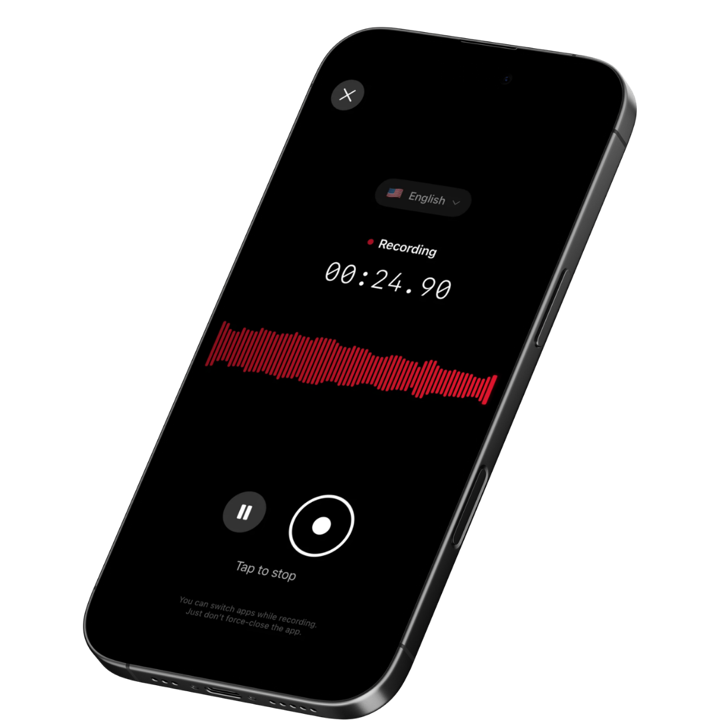
Voice notes make this simple. A 60-second debrief after a client call replaces a 30-minute status meeting. A quick voice summary of project decisions replaces three follow-up Slack threads. Autonomy and information flow do not have to compete.
Download SpeakWise from the App Store and give your team the tools to work autonomously while keeping everyone informed through one-tap voice capture and AI-powered summaries.
Join 10,000+ professionals who have discovered that autonomy works best when information flows freely - without requiring more meetings or more oversight.
Get SpeakWise Free
4.9-star App Store Rating | iOS Optimized

🎯 4.9★ App Store Rating | 📱 Built for iOS
