Employee Burnout Statistics 2026: Causes, Costs, and Recovery Trends


Used by recruiters, executives, consultants, and more.
Employee Burnout Statistics 2026: Causes, Costs, and Recovery Trends
43% of employees globally report feeling burned out at work-up from 38% just two years ago. In the U.S., 77% say they've experienced burnout at their current job. With burnout costing businesses $322 billion annually in lost productivity and burned-out employees being 2.8 times more likely to job-search, these 17 statistics reveal why employee burnout has become the defining workforce crisis of our time.
Burnout isn't just feeling tired after a long week. The World Health Organization now classifies it as an occupational phenomenon-"a syndrome resulting from chronic workplace stress that has not been successfully managed." It manifests as emotional exhaustion, detachment from work, and a growing sense that nothing you do makes a difference. And the data suggests it's getting worse, not better.
In this post, we'll explore 17 statistics that capture the full scope of employee burnout in 2025 and 2026. These numbers reveal not just how many workers are affected, but the cascading effects on turnover, healthcare costs, and organizational performance. Whether you're a leader trying to understand why your best people keep leaving, an HR professional building a wellness strategy, or an employee wondering if what you're feeling is normal, these data points offer clarity-and a roadmap for change.
1. 43% of employees globally report feeling burned out at work
Burnout has crossed from a Western workplace concern into a global epidemic. According to research compiled from multiple workplace surveys in 2025, over 43% of employees worldwide now report feeling burned out-up from 38% in 2023. This steady climb suggests that despite widespread awareness of the problem, organizations have failed to reverse the trend. When nearly half the global workforce reports chronic exhaustion, the issue transcends individual resilience and points to systemic failures in how work is structured. Source: Meditopia Employee Burnout Statistics 2026
2. 77% of workers have experienced burnout at their current job
The problem isn't limited to a stressed minority. Deloitte's comprehensive workplace burnout survey of over 1,000 respondents found that 77% say they have experienced burnout at their current job-not at a previous employer, but right now. This figure suggests that burnout isn't something workers leave behind when they switch companies; it follows them because the underlying conditions-always-on communication, meeting overload, and insufficient boundaries-are industry-wide. Source: Deloitte Workplace Burnout Survey
3. 91% say unmanageable stress impacts the quality of their work
Burnout doesn't just affect how employees feel-it degrades what they produce. Deloitte's survey found that 91% of respondents say unmanageable stress or frustration negatively impacts the quality of their work, while 83% say burnout can damage personal relationships. The implication for organizations is sobering: the vast majority of your workforce is telling you that stress is actively making their output worse, yet the response from most companies remains inadequate. Source: Deloitte Workplace Burnout Survey
4. 52% of U.S. employees report feeling burned out in 2024
American workers are burning out at even higher rates than the global average. Research by Wellhub found that 52% of U.S. employees reported feeling burned out in 2024, with 44% describing themselves as "emotionally drained" and 51% feeling "used up" at the end of each workday. These aren't occasional bad days-they represent a sustained depletion of cognitive and emotional resources that compounds over weeks and months. Source: Wellhub Employee Burnout Statistics
5. Women report 59% burnout rates versus 46% for men
The burnout gender gap is real and growing. Gallup data shows that women report burnout rates of 59% compared to 46% for men-a gap that has more than doubled since 2019. The reasons are multifaceted: women disproportionately shoulder caregiving responsibilities, face higher expectations for "office housework" like note-taking and scheduling, and are more likely to work in high-burnout sectors like healthcare and education. Ignoring this gap means losing female talent at accelerating rates. Source: Gallup Employee Wellbeing Research
6. 70% of Gen Z and Millennial workers experienced burnout symptoms within the last year
Younger workers aren't just complaining-they're burning out faster than their predecessors. Research shows that 70% of Gen Z and Millennial employees reported experiencing burnout symptoms within the past year, with Gen Z burnout rates exceeding 50%. This generation entered the workforce during a pandemic, normalized remote work and digital overwhelm simultaneously, and now faces the compounding effects of economic uncertainty and always-on work cultures. Source: Teamout Employee Burnout Statistics 2025
7. Mental fatigue and cognitive strain have surpassed workload volume as the leading burnout indicator
The nature of burnout is evolving. Deloitte's 2025 Workforce Intelligence Report highlights a critical shift: "mental fatigue, cognitive strain, and decision friction are now the leading indicators of burnout, surpassing workload volume for the first time." This means it's not just about working too many hours-it's about the constant context switching, decision overload, and digital noise that characterize modern knowledge work. The meetings, messages, and notifications may not look like "hard work," but they're draining cognitive resources at unprecedented rates. Source: HRD Connect - Burnout Is Back
8. Burnout costs businesses $322 billion annually in lost productivity
The financial toll of burnout is staggering. A Gallup study estimates that employee burnout costs global healthcare systems and businesses $322 billion annually in lost productivity alone. This figure doesn't include the downstream costs of turnover, recruitment, training replacements, or the quality degradation that burned-out workers produce before they finally leave. For organizations focused on the bottom line, burnout isn't a soft HR issue-it's a hard financial emergency. Source: Healium - Understanding the High Costs of Burnout
9. Burned-out employees are 2.8 times more likely to be actively searching for a new job
Burnout is the silent engine behind the Great Resignation's aftershocks. Research shows that burned-out employees are 2.8 times more likely to be actively searching for a new job compared to their non-burned-out peers. This means every burned-out worker represents a ticking clock on retention-and since replacing an employee costs roughly $15,000 on average, the math on burnout prevention becomes overwhelmingly clear. Source: Spring Health - Employee Burnout
10. Burnout costs employers $3,999 to $20,683 per employee per year depending on role
A groundbreaking study published in the American Journal of Preventive Medicine quantified the per-employee cost of burnout across role levels. Employee disengagement, overextension, and ineffectiveness over the course of one year costs an employer an average of $3,999 for a nonmanagerial hourly worker, $4,257 for a nonmanagerial salaried employee, $10,824 for a manager, and $20,683 for an executive. These costs accumulate silently across an organization, often invisible until a mass exodus reveals the true damage. Source: American Journal of Preventive Medicine - Health and Economic Burden of Burnout
11. 82% of knowledge workers report being at risk of burnout
The burnout crisis is particularly acute among knowledge workers. DHR Global's survey of 1,500 white-collar professionals found that 82% reported being "slightly" to "extremely" burned out-a figure driven by the unique pressures of knowledge work: relentless meetings, constant digital communication, and the cognitive demands of complex problem-solving without adequate recovery time. When four in five of your knowledge workers are at risk, the problem has moved beyond individual coping strategies. Source: HR Brew - Burnout and Engagement on the Rise
12. 70% of professionals feel their employers are not doing enough to prevent burnout
Despite the overwhelming evidence, action remains inadequate. Research shows that nearly 70% of professionals feel their employers are not doing enough to prevent or alleviate burnout within their organization. This perception gap-where companies believe they're addressing wellness while employees feel unsupported-creates a dangerous disconnect. Token wellness programs and pizza parties don't address the structural issues of meeting overload, always-on communication, and unrealistic workloads. Source: The Interview Guys - Workplace Burnout 2025
13. The WHO estimates 12 billion working days are lost annually to depression and anxiety
Burnout's toll extends far beyond the workplace. The World Health Organization estimates that 12 billion working days are lost every year to depression and anxiety-conditions frequently triggered or exacerbated by workplace burnout-costing the global economy approximately $1 trillion annually in lost productivity. These figures underscore that burnout isn't merely a performance issue; it's a public health crisis with economic consequences that rival many diseases. Source: WHO - Mental Health at Work
14. Burnout costs the U.S. healthcare system $4.6 billion per year in physician turnover alone
Healthcare provides a vivid case study of burnout's financial devastation. Research shows that burnout costs the U.S. healthcare system $4.6 billion annually, largely due to physician turnover and work-hour reductions. For every physician who leaves due to burnout, the cost to the organization ranges from $500,000 to over $1 million depending on specialty-replacement costs that include recruitment, onboarding, lost revenue, and the disruption to patient care continuity. Source: PLANSPONSOR - Workplace Mental Health Crisis 2025
15. 80% of the global workforce lacks the time or energy to do their job well
Perhaps the most alarming statistic comes from Microsoft's 2025 Work Trend Index: 80% of the global workforce-both employees and leaders-report they lack the time or energy to do their job. This "capacity gap" between what organizations demand and what humans can sustainably deliver has become the defining challenge of modern work, creating a vicious cycle where burnout reduces output, reduced output increases pressure, and increased pressure deepens burnout. Source: Microsoft Work Trend Index 2025
16. Workers who consistently work 3+ overtime hours face 60% higher risk of heart problems
Burnout doesn't just destroy careers-it destroys health. Research shows that white-collar workers who consistently worked three or more hours beyond their required hours faced a 60% higher risk of heart-related problems compared to counterparts who didn't work overtime. This statistic transforms the burnout conversation from abstract workforce management into a concrete matter of physical survival. Source: Clockify - Work-Life Quality Balance
17. 59% of employees have considered quitting due to burnout risks
Burnout has become a primary driver of voluntary attrition. Research shows that 59% of employees have actively mulled quitting their jobs due to burnout risks-not because of pay, not because of a bad manager, but because the pace and structure of work has become unsustainable. For organizations, this means more than half their workforce is one bad quarter away from updating their resume, making burnout the single largest preventable threat to talent retention. Source: CareerCloud Work-Life Balance Statistics
The Burnout Paradox: More Awareness, Less Action
The statistics reveal a maddening contradiction. Awareness of burnout has never been higher-the WHO has classified it, executives acknowledge it, and employees openly discuss it. Yet burnout rates continue to climb. The gap between recognition and response suggests that most organizational interventions are treating symptoms while leaving root causes intact.
The root cause isn't individual weakness or poor time management. It's a structural mismatch between how modern work is organized-always-on communication, back-to-back meetings, constant context switching, and blurred boundaries-and how human cognition actually functions. Our brains need recovery periods, focused deep work, and genuine disconnection to sustain performance. The modern workplace offers none of these.
The path forward requires both cultural and structural change. Organizations must move beyond wellness apps and meditation rooms to address the real drivers: reducing meeting overload, establishing genuine communication boundaries, protecting focused work time, and measuring managers on team wellbeing alongside output. For individuals, recovery starts with capturing information more efficiently-so you can attend fewer meetings, process less email, and reclaim the cognitive space that sustainable work demands.
The question isn't whether burnout is a problem-it's whether organizations will treat it as the existential threat the data says it is, or continue hoping awareness alone will somehow be enough.---
Ready to reclaim your energy without missing what matters?
The cruel irony of burnout is that much of the exhaustion comes not from doing meaningful work, but from the overhead of staying informed-attending meetings "just in case," reading through email threads, and sitting in syncs that could have been summaries. The information matters. The format is what's failing.
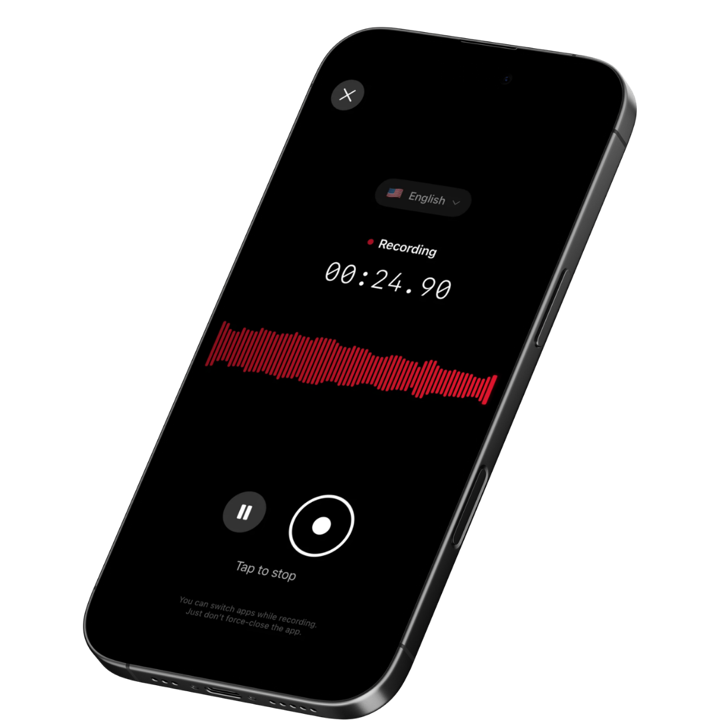
Voice recording and AI transcription offer an escape from this trap. By capturing meetings and thoughts effortlessly, you create a searchable record that eliminates the need to attend every call, repeat every update, and process every thread manually.
Download SpeakWise from the App Store and discover how one-tap recording, AI transcription, intelligent summaries, and Notion integration can help you work sustainably-without sacrificing the information that drives performance.
Join 10,000+ professionals who've discovered that the best way to fight burnout isn't working harder-it's capturing more of what matters and recovering the time that meetings and messages currently steal.
Get SpeakWise Free →
4.9★ App Store Rating | iOS Optimized

🎯 4.9★ App Store Rating | 📱 Built for iOS
