Employee Disengagement Statistics 2026


Used by recruiters, executives, consultants, and more.
Employee Disengagement Statistics 2026
Only 21% of employees worldwide are engaged at work, according to Gallup's latest data. The cost is staggering: $8.9 trillion in lost global productivity annually, roughly 9% of global GDP. In the U.S., disengaged employees cost employers $1.9 trillion per year. Manager engagement has dropped to 27%, and 60% of workers admit to quiet quitting. These 16 statistics reveal a workforce in crisis.
Employee disengagement is not a new problem, but it has reached new depths. Gallup's 2025 State of the Global Workplace report documented the first decline in global engagement in four years. The drop hit managers hardest - the very people responsible for engaging everyone else. The result is a vicious cycle: disengaged managers create disengaged teams.
This post covers 16 statistics that expose the full scope of the disengagement crisis in 2026. From the financial costs to the human impact, these numbers show why fixing engagement is not just an HR priority - it is a business survival issue.
1. Only 21% of employees worldwide are engaged at work
Gallup's 2025 State of the Global Workplace report found that global employee engagement fell to 21%, marking the first decline in four years. This means roughly four out of five workers are either not engaged or actively disengaged. The decline was driven by drops in manager engagement, increased organizational disruption, and erosion of workplace trust. Regional engagement varies significantly, with the U.S. and Canada leading at 31%.
Source: Gallup - State of the Global Workplace Report
2. Low engagement costs the global economy $8.9 trillion annually
The economic toll of disengaged workers is almost incomprehensible. Gallup estimates that disengagement drains $8.9 trillion from the global economy each year - equivalent to 9% of global GDP. This figure accounts for lost productivity, higher absenteeism, increased errors, and lower innovation output. For context, this amount exceeds the GDP of every country except the United States and China.
Source: Gallup - State of the Global Workplace Report
3. Manager engagement dropped from 30% to 27% in one year
The manager engagement crisis is the most alarming signal in Gallup's latest data. Manager engagement fell three percentage points in a single year, with young managers and female managers experiencing the largest declines. This matters disproportionately because 70% of team engagement is attributable to the manager. When managers disengage, the effect cascades across entire teams and departments.
Source: UNLEASH - Gallup's 2025 State of the Workforce Report
4. Disengaged employees cost U.S. employers $1.9 trillion annually
In the United States alone, the productivity drain from disengaged workers amounts to $1.9 trillion per year. This breaks down to roughly 34% of each disengaged employee's salary lost in reduced output. For a company with 500 employees, where even 50% are disengaged, the annual cost can exceed $10 million. The losses manifest as slower project delivery, missed deadlines, and reduced customer satisfaction.
Source: HR Dive - Worker Engagement Downward Spiral Continues
5. 60% of workers admit to quiet quitting
Gallup's research shows that six out of ten employees describe themselves as "not engaged" - doing the minimum required without investing discretionary effort. This is the statistical backbone of the quiet quitting phenomenon. These workers show up, complete basic tasks, but do not volunteer ideas, mentor colleagues, or go beyond their job description. They are physically present but psychologically checked out.
Source: CBS News - More Than Half of Employees Are Disengaged
6. Europe has the highest disengagement rate at 73%
European workplaces face the steepest engagement challenge globally. Nearly three in four European employees (73%) are not engaged, with an additional 15% actively disengaged. Only 13% of European workers report being engaged. The figures are particularly low in Western Europe, where strong labor protections may reduce termination risk but have not translated into higher engagement. Southern and Eastern Europe show similar patterns.
Source: Gallup - State of the Global Workplace Report
7. Engaged employees are 87% less likely to leave their employer
The retention gap between engaged and disengaged workers is dramatic. Engaged employees are 87% less likely to voluntarily leave their organization compared to disengaged colleagues. Given that replacing an employee costs 50-200% of their annual salary, engagement is one of the most cost-effective retention strategies available. Organizations with high engagement consistently report lower turnover, fewer recruitment costs, and stronger institutional knowledge.
Source: WellSteps - Employee Engagement Statistics 2025
8. 59% of U.S. employees reported burnout in 2024
Burnout and disengagement are deeply intertwined. Nearly six in ten American workers experienced burnout in 2024, with millennials hit hardest at 66% compared to 39% of baby boomers. Burnout erodes engagement by depleting the energy and motivation needed for discretionary effort. The cycle is self-reinforcing: burnout leads to disengagement, which increases workload on remaining engaged workers, causing more burnout.
Source: Workhuman - Workplace Wellness Statistics 2025
9. 48% of U.S. employees have left a job due to mental health
Nearly half of American workers have voluntarily resigned from a position because of mental health concerns. Two-thirds of those departures were voluntary, meaning employees chose to leave rather than being pushed out. This statistic connects directly to disengagement: workplaces that ignore employee wellbeing lose their most self-aware and proactive people first. The remaining workforce skews toward those who feel they have no choice but to stay.
Source: Workhuman - Workplace Wellness Statistics 2025
10. Companies with strong recognition see 21% higher profitability
Gallup's research shows that organizations with robust recognition practices enjoy a 21% uplift in profitability. Recognition addresses one of the most common drivers of disengagement: feeling invisible. Employees who receive regular, meaningful recognition are up to 10x more likely to feel they belong at their organization. Yet most companies underinvest in recognition, treating it as a soft perk rather than a profit driver.
Source: Workhuman - Workplace Wellness Statistics 2025
11. 40% of disengaged workers leave, costing 50-200% of their salary to replace
Four in ten disengaged employees eventually exit the organization. Each departure carries a replacement cost of 50-200% of the departing employee's annual salary. For a manager earning $80,000, replacement costs can reach $160,000 when factoring in recruiting, onboarding, training, and lost productivity during the transition. The hidden cost of disengagement is not just reduced output - it is the hemorrhaging of talent.
Source: ActivTrak - Cost of Disengaged Employees
12. Employees who feel cared for are 4.4x more likely to be engaged
The data on wellbeing and engagement is unambiguous. Workers who believe their organization genuinely cares about their wellbeing are 4.4 times more likely to report being engaged. Yet only 36% of employees have discussed personal wellbeing with a manager. This gap between what drives engagement and what actually happens in most workplaces explains much of the disengagement crisis. Caring is not optional - it is a performance strategy.
Source: Gallup - State of the Global Workplace Report
13. U.S. employee engagement hit a decade-low of 31% in 2024
American employee engagement dropped to its lowest level in ten years. Only 31% of U.S. workers reported being engaged in 2024, down from a peak of 36% in 2020. The decline has been steady, driven by post-pandemic disillusionment, return-to-office conflicts, and economic uncertainty. The U.S. still outperforms the global average of 21%, but the downward trend is concerning for the world's largest economy.
Source: Inclusion Geeks - Gallup 2025 Workplace Report
14. 70% of team engagement depends on the manager
Gallup's research confirms that managers are the single most important factor in team engagement. Seventy percent of the variance in team engagement scores is attributable to the quality of the manager. This finding underscores why the drop in manager engagement is so dangerous. When the people most responsible for engaging others are themselves disengaged, the entire organizational system breaks down.
Source: UNLEASH - Gallup's 2025 State of the Workforce Report
15. Active disengagement fell to 15% globally
There is one piece of relatively good news in the data. Active disengagement - workers who are not just checked out but actively hostile or undermining - dropped from 18% to 15%. While any level of active disengagement is costly, the decline suggests that the worst behaviors are moderating. However, the shift may simply mean more workers have moved from "actively working against" to "passively doing the minimum."
Source: Gallup - State of the Global Workplace Report
16. 36% of HR professionals cite burnout as the top driver of turnover
More than a third of HR leaders identify burnout as the primary reason employees leave their organizations. This ranks above compensation, career advancement, and management quality. The connection to disengagement is direct: burnout depletes the emotional resources needed for engagement. Workers who burn out first disengage, then leave. Addressing burnout is not separate from fixing engagement - it is a prerequisite.
Source: SurveyMonkey - Work-Life Balance Statistics 2025
The Disengagement Spiral Is Accelerating
The data reveals a self-reinforcing cycle. Disengaged managers create disengaged teams. Disengaged teams produce lower-quality work. Lower quality increases stress and burnout, which further reduces engagement. Breaking this cycle requires intervention at the manager level, where 70% of engagement is determined.
The financial stakes could not be higher. At $8.9 trillion in global costs, disengagement is not an HR issue - it is an economic crisis. The organizations that reverse this trend will gain an enormous competitive advantage. Those that ignore it will continue losing talent, productivity, and profit.
The path forward is not complicated, but it requires commitment. Invest in managers. Prioritize recognition. Take employee wellbeing seriously. Listen to your workforce. The data is clear: engaged employees stay longer, produce more, and drive profitability. The only question is whether leadership will act on what the numbers already show.
When four out of five workers globally are disengaged, fixing this is not an option. It is the highest-leverage investment any organization can make.---
Give your team a voice - literally
Disengagement often starts with silence. Employees stop sharing ideas. Managers stop asking for input. Feedback loops break down. The conversations that build trust and connection stop happening. Rebuilding engagement requires making it easy for people to be heard.
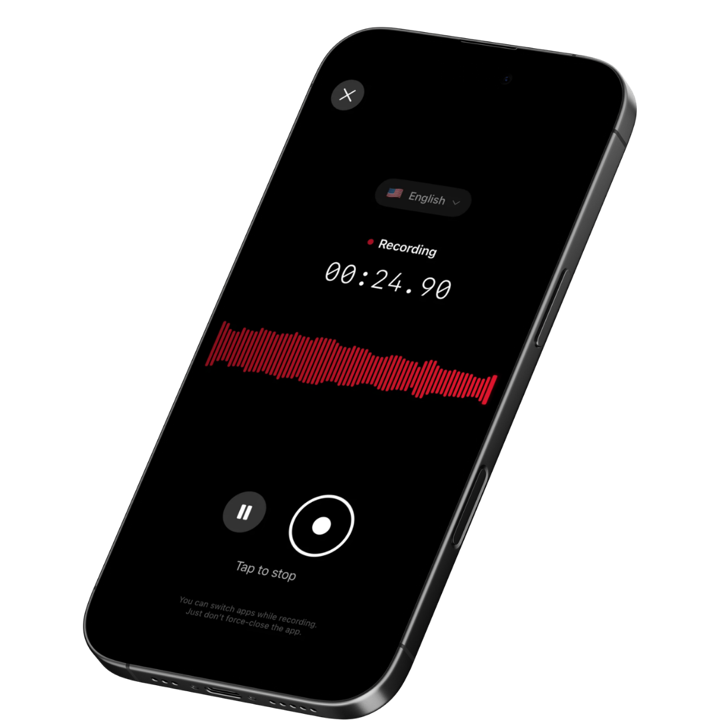
Voice notes remove the friction from capturing ideas, feedback, and reflections. Instead of composing a formal email or scheduling a meeting, employees can simply speak their thoughts and share them instantly.
Download Speakwise from the App Store and make it easier for your team to share ideas, capture meeting outcomes, and stay aligned - with one-tap recording, AI transcription, and Notion integration.
Join 10,000+ professionals who use voice to stay connected and engaged.
Get Speakwise Free
4.9-star App Store Rating | iOS Optimized

🎯 4.9★ App Store Rating | 📱 Built for iOS
