Employee Engagement Statistics 2026: Motivation Drivers, Quiet Quitting, and the Global Engagement Crisis


Used by recruiters, executives, consultants, and more.
Employee Engagement Statistics 2026: Motivation Drivers, Quiet Quitting, and the Global Engagement Crisis
Only 21% of employees globally are engaged at work-meaning nearly 8 in 10 are just going through the motions. Quiet quitting affects 59% of the workforce. Manager engagement has dropped to 27%. With low engagement costing the global economy $8.8 trillion annually and companies with engaged teams seeing 21% higher profitability, these 17 statistics reveal why the engagement crisis is the most expensive problem most organizations aren't solving.
Employee engagement isn't a feel-good metric-it's the single most reliable predictor of organizational performance. Engaged employees produce more, stay longer, innovate more frequently, and deliver better customer outcomes. Yet after decades of engagement surveys, culture initiatives, and leadership development programs, global engagement rates remain stubbornly low. The data suggests we're not just failing to improve-we're losing ground.
In this post, we'll explore 17 statistics that capture the full scope of the employee engagement crisis in 2025 and 2026. These numbers reveal not just how many workers are disengaged, but the financial costs, regional variations, and structural drivers that explain why. Whether you're a CEO questioning your company's engagement scores, an HR leader designing intervention programs, or a manager trying to understand why your team seems checked out, these data points provide the evidence base for urgent action.
1. Only 21% of employees globally are engaged at work
The global state of employee engagement is dire. Gallup's State of the Global Workplace report found that just 21% of employees worldwide are engaged at work-meaning they are enthusiastic about and committed to their role and organization. The remaining 79% are either passively going through the motions or actively working against their employer's interests. This figure represents a decline from the previous year and signals that the post-pandemic engagement recovery has stalled. Source: Gallup - State of the Global Workplace
2. Low employee engagement costs the global economy $8.8 trillion per year
The financial impact of disengagement is staggering in scale. Gallup estimates that low employee engagement costs the world approximately $8.8 trillion annually in lost productivity-equivalent to roughly 9% of global GDP. This figure accounts for the reduced effort, increased absenteeism, higher error rates, and lower innovation output that characterize disengaged workforces. At this scale, employee engagement isn't an HR initiative; it's a macroeconomic imperative. Source: Gallup - State of the Global Workplace
3. 59% of employees are "quietly quitting"-not engaged but not leaving
Quiet quitting has moved from social media trend to workforce reality. Gallup's data shows that 59% of employees globally fall into the "not engaged" category-doing the minimum required to keep their jobs without investing discretionary effort or emotional commitment. These workers show up, complete assigned tasks, and collect their paychecks, but they've mentally disconnected from the mission, the team, and the possibility that their work might matter. They're not leaving; they're just not trying. Source: Gallup - State of the Global Workplace
4. 18% of employees are "loudly quitting"-actively disengaged
Beyond quiet quitting lies something more destructive. Gallup identifies 18% of the global workforce as "actively disengaged"-workers who aren't just checked out but are actively undermining their organization through negative behavior, vocal complaints, and resistance to initiatives. These employees cost their organizations not just through their own reduced output but through the corrosive effect they have on the morale and engagement of colleagues around them. Source: Gallup - State of the Global Workplace
5. Manager engagement fell from 30% to 27%-the largest decline in Gallup's tracking
Perhaps the most alarming finding from Gallup's 2025 report is the sharp decline in manager engagement. Manager engagement dropped from 30% to 27% in a single year, with young managers and female managers experiencing the steepest drops. Since 70% of the variance in team engagement is attributable to the manager, this decline creates a dangerous multiplier effect: disengaged managers produce disengaged teams, and disengaged teams produce disengaged organizations. Source: UNLEASH - Gallup's 2025 State of the Workforce Report
6. 70% of team engagement variance is attributable to the manager
The single greatest lever for improving engagement isn't company culture, compensation, or perks-it's the direct manager. Gallup's extensive research across millions of employees shows that 70% of the variance in team engagement scores is determined by the quality of the manager. This means that engagement is primarily a local phenomenon, driven by the daily interactions between a manager and their team. Organizations that invest in executive perks while neglecting frontline manager development are solving the wrong problem. Source: Gallup - State of the Global Workplace
7. Companies with highly engaged employees see 21% higher profitability
Engagement isn't just about employee satisfaction-it directly impacts the bottom line. Gallup's meta-analysis of business units across hundreds of organizations found that companies with highly engaged workforces experience 21% higher profitability, a 17% boost in productivity, and a 59% decrease in voluntary turnover compared to those with low engagement. These aren't marginal improvements; they represent transformative advantages that compound year over year. Source: Archie - Employee Engagement Statistics 2026
8. 32% of employees admit to quiet quitting-doing the bare minimum
Self-reported quiet quitting rates provide a window into worker motivation. Research shows that 32% of employees openly acknowledge engaging in quiet quitting behaviors-performing just enough to avoid termination while withholding discretionary effort, creativity, and initiative. This figure likely understates the true prevalence, as many workers may not recognize their own disengagement or may be reluctant to admit it. The gap between this self-reported 32% and Gallup's observed 59% suggests many workers don't realize how checked out they've become. Source: Ragan Communications - Employee Engagement Hits Decade Low
9. Europe has the highest unengaged rate-73% of employees are not engaged
Regional variations in engagement reveal stark differences in workplace culture. Europe has the highest percentage of unengaged employees at nearly three in four (73%), with an additional 15% actively disengaged-meaning only about 12% of European workers are truly engaged. In contrast, Southeast Asia has seen engagement rise from 26% to 33%, the largest regional improvement. These variations suggest that engagement is shaped not just by organizational practices but by broader cultural, economic, and regulatory factors. Source: Archie - Employee Engagement Statistics 2026
10. Engaged employees are 87% less likely to leave their organization
The link between engagement and retention is one of the strongest in organizational research. Gallup data shows that engaged employees are 87% less likely to voluntarily leave their employer compared to disengaged colleagues. In a labor market where replacing a knowledge worker costs 50-200% of their annual salary, this retention differential transforms engagement from a "nice to have" into a hard financial necessity. Every point of engagement improvement directly reduces turnover costs. Source: WellSteps - Employee Engagement Statistics 2025
11. Only 33% of U.S. employees are engaged-a decade-low level
While the U.S. has historically led in engagement, even American workers are pulling back. Gallup's latest data shows that only 33% of U.S. employees are engaged-a decline that represents a decade-low level and marks a reversal of the steady gains made between 2010 and 2020. The post-pandemic engagement recovery that many organizations expected has not materialized; instead, a combination of return-to-office tensions, economic uncertainty, and communication overload has pushed engagement backward. Source: Ragan Communications - Employee Engagement Hits Decade Low
12. Disengaged employees have 37% higher absenteeism
Disengagement doesn't just reduce discretionary effort-it reduces presence altogether. Gallup's research shows that disengaged employees have 37% higher absenteeism rates than their engaged counterparts, including both unplanned absences and extended sick leave. This absenteeism creates a vicious cycle: when disengaged employees are absent, their workload shifts to engaged colleagues, increasing stress and burnout among the very people the organization most needs to retain. Source: People Managing People - Employee Engagement Statistics 2026
13. 85% of employees are more motivated when internal communication is effective
Communication quality emerges as a powerful engagement driver. Research shows that 85% of employees report being more motivated when management provides regular, transparent updates about company direction and performance. Conversely, poor communication is consistently ranked among the top drivers of disengagement. Workers who feel informed about organizational strategy, understand how their role contributes, and receive regular feedback from their manager are dramatically more likely to invest discretionary effort. Source: Cerkl - Employee Engagement Statistics 2025
14. Highly engaged business units achieve 10% higher customer satisfaction
Engagement's impact extends beyond internal metrics to the customer experience. Gallup's cross-industry analysis found that highly engaged business units achieve 10% higher customer loyalty and satisfaction scores compared to disengaged units. The mechanism is straightforward: engaged employees care more about quality, respond more attentively to customer needs, and are more likely to go above and beyond when problems arise. Disengaged employees do the minimum-and customers can tell. Source: Quixy - Employee Engagement Statistics 2025
15. Recognition is the #1 driver of engagement-yet 65% of employees feel unrecognized
Despite being the most effective and least expensive engagement lever, recognition remains drastically underutilized. Research consistently identifies recognition as the number one driver of employee engagement, yet 65% of employees report feeling that their contributions are not adequately recognized. This recognition gap represents an enormous missed opportunity: meaningful acknowledgment costs nothing but attention, yet organizations routinely fail to provide it-choosing instead to invest in expensive perks that research shows matter far less. Source: HireX - Employee Engagement Statistics 2026
16. Engaged teams experience 41% lower absenteeism and 59% less turnover
The operational benefits of engagement compound across multiple dimensions simultaneously. Gallup's meta-analysis found that the most engaged teams-those in the top quartile-experience 41% lower absenteeism, 59% lower turnover in high-turnover organizations, and 24% lower turnover in low-turnover organizations, compared to bottom-quartile teams. When combined with the productivity and profitability gains, these improvements create a compounding advantage that widens over time. Source: WellSteps - Employee Engagement Statistics 2025
17. Companies that act on engagement survey results see 8% higher engagement the following year
The most important engagement statistic may be this: organizations that actually take visible action on engagement survey feedback see an average 8% improvement in engagement scores the following year. Companies that survey without acting see engagement decline. The message is clear-employees don't need more surveys. They need evidence that their feedback leads to change. The survey itself is neutral; the organizational response is everything. Source: People Managing People - Employee Engagement Statistics 2026
The Engagement Paradox: More Measurement, Less Improvement
The statistics reveal a troubling pattern. Organizations have never measured engagement more rigorously, invested more in culture programs, or talked more about "putting people first." Yet global engagement sits at 21%, manager engagement is declining, and quiet quitting affects the majority of the workforce. The gap between intention and outcome suggests that most engagement initiatives are addressing symptoms while ignoring structural causes.
The structural causes are hiding in plain sight: meeting overload that prevents meaningful work, communication fragmentation that isolates rather than connects, recognition gaps that make effort feel invisible, and manager burnout that cascades through entire teams. No amount of free snacks or team-building exercises can compensate for work environments that systematically prevent people from doing work they find meaningful.
The path forward requires organizations to treat engagement as an operational discipline, not an annual survey exercise. This means reducing meeting overhead so people can do real work, equipping managers with time and tools to actually manage, creating feedback loops that demonstrate responsiveness, and building communication systems that inform without overwhelming.
The question isn't why engagement is low-the data makes the causes clear. The question is whether organizations will redesign work to make engagement possible, or keep surveying their way to the same disappointing results.---
Ready to engage your team without adding to their overload?
The irony of the engagement crisis is that many solutions-more meetings, more check-ins, more all-hands-add to the very communication burden that drives disengagement. Workers don't need more touchpoints. They need better information flow, less wasted time, and the feeling that their work matters.
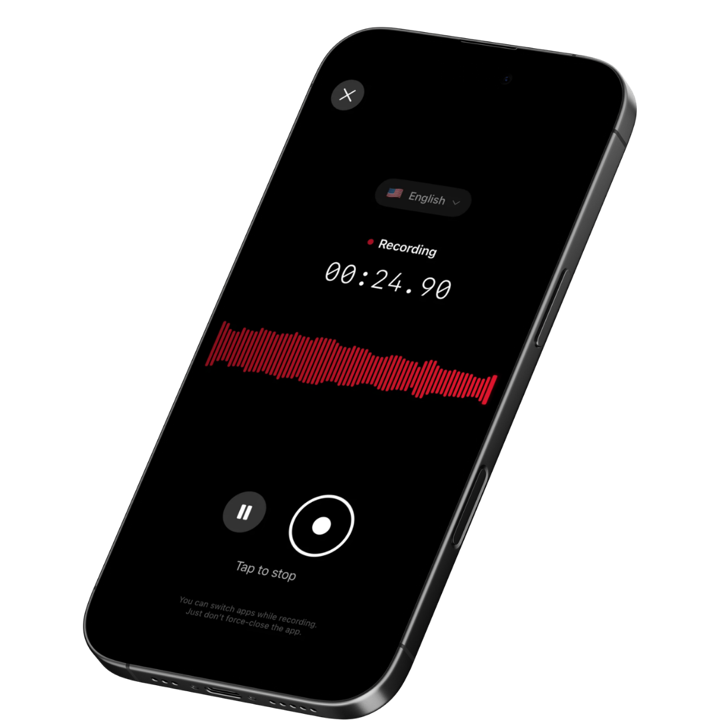
Voice capture offers a lighter touch. Quick voice updates replace lengthy status meetings. Recorded decisions replace email recap chains. AI summaries keep everyone aligned without requiring everyone's live attendance.
Download SpeakWise from the App Store and discover how one-tap recording, AI transcription, intelligent summaries, and Notion integration can help your team stay connected and aligned-without the meeting overload that drives disengagement.
Join 10,000+ professionals who've discovered that the best way to boost engagement isn't more meetings-it's less overhead and more meaningful work.
Get SpeakWise Free →
4.9★ App Store Rating | iOS Optimized

🎯 4.9★ App Store Rating | 📱 Built for iOS
