Employee Feedback Statistics 2026
Used by recruiters, executives, consultants, and more.
Employee Feedback Statistics 2026
96% of employees say regular feedback drives their daily motivation, yet less than 30% receive it consistently. Employees who get regular feedback are 3x more engaged than those receiving only annual reviews. Companies providing timely feedback see 14.9% lower turnover, and daily recognition makes 98% of employees feel valued compared to just 37% with annual feedback. These 16 statistics reveal the gap between what employees need and what most organizations deliver.
Employee feedback is one of the most studied topics in organizational psychology, and the findings are remarkably consistent. Frequent, specific, and timely feedback improves engagement, retention, productivity, and profitability. The evidence has been clear for decades. Yet most organizations still underdeliver. The gap between what the research says and what employees experience represents one of the largest untapped opportunities in people management.
This post covers 16 statistics on feedback frequency, business impact, generational preferences, and the shift from annual reviews to continuous feedback models. Whether you manage a team, design performance systems, or want to understand why your feedback culture falls short, these numbers provide both the diagnosis and the direction.
1. 96% of employees say regular feedback drives daily motivation
Research shows that 96% of employees state that receiving regular feedback is a primary driver of their daily motivation. This near-universal finding underscores that feedback is not a preference of certain personality types or generations. It is a fundamental human need in the workplace. People want to know how they are doing. They want to know their work matters. They want direction on how to improve. The 96% figure means feedback is not a bonus for high-performers. It is the baseline requirement for a motivated workforce.
Source: OrangeHRM - Employee Feedback Statistics 2026
2. Less than 30% of employees receive consistent feedback
Despite the near-universal desire for feedback, less than 30% of global workers report receiving the consistent feedback they want. This gap between desire and delivery is the central problem. Managers cite time constraints, discomfort with difficult conversations, and lack of training as barriers. But the real barrier is structural. Most organizations do not build feedback into the workflow. It remains an event, like a quarterly review, rather than a habit woven into daily management. Until feedback becomes systematic, most employees will continue to operate in an information vacuum.
Source: OrangeHRM - Employee Feedback Statistics 2026
3. Employees who receive regular feedback are 3x more engaged
Research shows that employees who receive regular feedback are three times more engaged than those who only receive annual reviews. The 3x multiplier is enormous. Engagement drives productivity, retention, and profitability. The mechanism is straightforward: regular feedback creates a feedback loop between effort and recognition. Employees understand what is valued, adjust their behavior accordingly, and feel seen. Annual reviews break this loop. By the time the review happens, the connection between specific actions and feedback has been severed by months of silence.
Source: Jobera - Employee Feedback Statistics 2026
4. Companies providing timely feedback see 14.9% lower turnover
Organizations that provide timely feedback witness turnover rates 14.9% lower than those that do not. In a tight labor market where replacing an employee costs 0.5x to 2x their annual salary, this retention improvement represents significant savings. For a 500-person company with 20% annual turnover and an average salary of $60,000, a 14.9% reduction in turnover saves approximately $180,000 per year. Timely feedback is one of the most cost-effective retention tools available. It costs nothing but time.
Source: HireBorderless - Employee Feedback Statistics 2026
5. 60% of employees want daily or weekly feedback
Research shows that 60% of employees desire quick daily feedback and more elaborate weekly feedback. This preference represents a dramatic shift from the annual review model that dominated for decades. The shift is driven by several factors: faster work cycles, more dynamic roles, and generational preferences for real-time information. For managers, meeting this expectation does not require lengthy sessions. A two-minute acknowledgment of good work, a quick course correction, or a brief Slack message counts. Frequency matters more than formality.
Source: OrangeHRM - Employee Feedback Statistics 2026
6. Daily recognition makes 98% of employees feel valued
Daily, weekly, and monthly recognition makes 98%, and 88% of employees feel valued respectively. Annual feedback drops the number to just 37%. The decline curve is steep and the message is clear: infrequent recognition fails almost two-thirds of employees. The difference between daily and annual recognition is not just frequency. It is relevance. Daily recognition connects to specific behaviors and outcomes. Annual recognition is abstract and often generic. The specificity of frequent feedback is what makes it meaningful.
Source: Nectar HR - Employee Recognition Statistics 2025
7. Employees receiving regular recognition are 3.6x more likely to be engaged
Employees who receive regular praise and recognition are 3.6 times more likely to be actively engaged in their roles. Recognition and feedback are closely related but distinct. Feedback provides direction. Recognition provides motivation. Together, they create a cycle of improvement and acknowledgment that sustains engagement. The 3.6x multiplier means that recognition is not a soft perk. It is a hard driver of the engagement that produces measurable business outcomes.
Source: HiBob - Employee Engagement Retention Statistics
8. 74% of organizations have shifted to ongoing performance feedback
Research shows that 74% of organizations have shifted to some form of ongoing performance feedback model, moving away from the traditional annual review. This migration reflects both employee demand and evidence that annual reviews are ineffective. However, shifting the model does not automatically improve outcomes. Many organizations that adopted continuous feedback still struggle with manager adoption, inconsistent quality, and lack of training. The 74% adoption rate measures intention. Actual implementation and effectiveness lag behind.
Source: Select Software Reviews - Performance Management Statistics 2026
9. 87% of HR leaders say annual reviews alone are insufficient
A striking 87% of HR leaders report that annual reviews alone are "insufficient for driving engagement and retention." This is a remarkable admission from the professionals who design and administer these systems. Annual reviews fail for several reasons: they rely on memory rather than data, they create anxiety instead of motivation, and they compress a year of performance into a single conversation. The 87% figure suggests that the death of the annual review as the primary feedback mechanism is not a prediction. It is a consensus among the people closest to the problem.
Source: Select Software Reviews - Performance Management Statistics 2026
10. Highly engaged teams are 18% more productive and 23% more profitable
Gallup research consistently shows that highly engaged teams, driven in part by consistent feedback, are 18% more productive and 23% more profitable than their disengaged counterparts. These outcomes are not aspirational. They are measured across thousands of organizations. The connection between feedback and profitability runs through engagement. Feedback drives engagement. Engagement drives discretionary effort. Discretionary effort drives productivity. Productivity drives profitability. Each link in the chain is supported by decades of research.
Source: Gallup - State of the Global Workplace 2025
11. 63% of frontline workers have not received performance-improving feedback
Research found that 63% of frontline workers are concerned that they have failed to receive feedback that would improve their performance. Frontline workers represent the majority of the global workforce, yet they are the least likely to receive regular feedback. Many work in environments where their managers are not present, work shifts that do not overlap with leadership, or operate in roles where feedback systems were never designed. The 63% figure represents a massive underserved population that stands to benefit most from improved feedback practices.
Source: Qualtrics - Employee Experience Trends 2026
12. 80% of employees prefer ongoing feedback over annual reviews
Survey data shows that 80% of employees now prefer ongoing feedback over traditional annual reviews. This preference spans generations, although it is strongest among younger workers. The preference is not about avoiding accountability. Employees want more feedback, not less. They want it delivered in a way that is timely enough to be actionable and specific enough to be useful. The 80% preference rate means that organizations still relying primarily on annual reviews are out of step with the vast majority of their workforce.
Source: ThriveSparrow - Employee Feedback Statistics
13. 28% of Millennials prefer feedback at least every four months
Generational preferences for feedback frequency vary significantly. 28% of Millennials prefer consistent reviews at least once every four months, while 44% of Gen X workers prefer an annual performance review. These differences mean that a one-size-fits-all feedback model will always leave some employees underserved. The most effective approach is a baseline of frequent, informal feedback supplemented by periodic structured reviews. This combination addresses both the Millennial desire for regularity and the Gen X preference for comprehensive assessment.
Source: OrangeHRM - Employee Feedback Statistics 2026
14. The most effective leaders hold check-ins every two weeks
Research identifies that the most effective leaders conduct brief but meaningful check-ins every two weeks. This cadence strikes a balance between staying connected and respecting autonomy. Biweekly check-ins are frequent enough to catch problems early and provide timely recognition, but spaced enough to allow employees independence between conversations. For remote teams, this cadence is especially important because there are no informal opportunities to check in casually. Scheduled biweekly meetings replace the hallway conversations that maintain alignment in offices.
Source: ThriveSparrow - Employee Feedback Statistics
15. Only 12% of employees feel recognized at work
Despite the proven impact of recognition, only 12% of employees feel truly recognized at work. A separate study found higher numbers, with 60% of US employees feeling meaningfully recognized. The variation likely reflects different definitions of recognition and different populations. Regardless of the exact figure, a significant portion of the workforce feels unrecognized. The cost of this recognition deficit is measured in engagement, retention, and productivity losses. Recognition is free. The failure to provide it is expensive.
Source: Select Software Reviews - Performance Management Statistics 2026
16. 70% of managers give praise at least monthly
Research shows that 70% of managers report giving praise at least monthly. However, employee surveys consistently show lower numbers, suggesting a gap between what managers believe they deliver and what employees perceive they receive. This perception gap is one of the most persistent findings in feedback research. Managers may believe a general "good job" counts as recognition. Employees may not register it because it lacks specificity. Effective praise names the behavior, explains why it mattered, and connects it to a larger goal. Most managers have not been trained to provide this level of specificity.
Source: Nectar HR - Employee Recognition Statistics 2025
The Feedback Gap: Universal Need, Inconsistent Delivery
These statistics describe a problem that is simultaneously simple and persistent. 96% of employees want regular feedback. Less than 30% get it. The business case is clear: 3x more engagement, 14.9% lower turnover, 23% higher profitability. The solutions are known: biweekly check-ins, specific recognition, ongoing feedback systems. Yet most organizations fail to close the gap.
The failure is not about awareness. 87% of HR leaders know annual reviews are insufficient. 74% have adopted some form of continuous feedback. The failure is about execution. Managers lack training, time, and organizational support. Feedback gets crowded out by urgent tasks. Recognition gets forgotten in the rush of daily work. The system defaults to silence.
The shift toward continuous feedback models is the right direction, but adoption without training is insufficient. Organizations that train managers on feedback delivery, build recognition into workflows, and measure feedback frequency alongside other KPIs will see the engagement and retention gains the research promises. Those that adopt the model in name only will wonder why their engagement scores remain flat.
Feedback is the lowest-cost, highest-impact management tool available. The gap between knowing this and doing it is where most organizations lose their people.---
Capture feedback conversations so nothing gets lost
The data shows that feedback frequency and quality drive engagement, retention, and performance. But the value of feedback conversations diminishes rapidly if key points are forgotten, commitments are not tracked, and follow-up does not happen. Managers who conduct 12+ check-ins per month cannot rely on memory to track every discussion, every commitment, and every development goal.
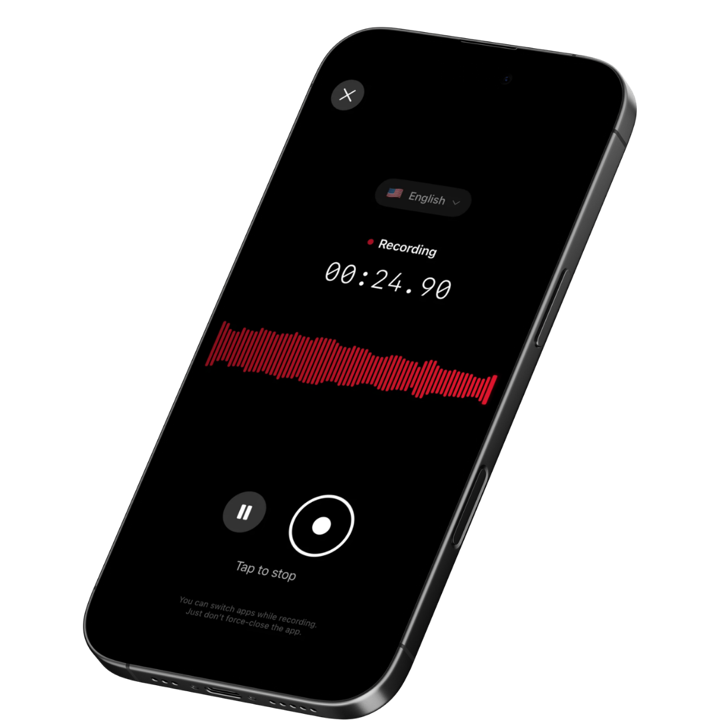
Speakwise turns feedback conversations into organized records. Record one-on-ones and coaching sessions with one tap. AI generates transcripts, summaries, and action items automatically. Managers and employees can reference past conversations, track progress on development goals, and ensure that feedback leads to action. Everything syncs to Notion for easy access and review.
Download Speakwise from the App Store and turn every feedback conversation into a documented, actionable record that drives real improvement.
Join 10,000+ professionals who use AI-powered voice notes to capture coaching sessions, one-on-ones, and team feedback.
Get Speakwise Free
4.9-star App Store Rating | iOS Optimized

🎯 4.9★ App Store Rating | 📱 Built for iOS
