Employee Monitoring Statistics 2026: Trends and Data
Used by recruiters, executives, consultants, and more.
Employee Monitoring Statistics 2026: Trends and Data
76% of North American companies now use monitoring tools, with global adoption at 64%. 78% of monitoring software includes screenshot capabilities. 43% of monitored employees plan to quit within a year. And the employee monitoring software market grew from $587 million in 2024 to a projected $7.27 billion by 2029. These 16 statistics reveal how employee monitoring has become one of the most divisive workplace issues of 2026.
Employee monitoring - sometimes called "bossware" - has expanded far beyond simple time tracking. Modern tools capture screenshots, log keystrokes, monitor chat messages, track application usage, and use AI to score employee productivity. The market is booming, fueled by remote work and employer demand for visibility. But the evidence on whether monitoring actually improves performance remains deeply contested.
This post covers 16 statistics that define the employee monitoring landscape in 2026. From market growth and adoption rates to employee pushback and regulatory developments, these numbers provide the full picture of a technology that is reshaping the employer-employee relationship.
1. 76% of North American companies use monitoring tools, with 64% global adoption
Employee monitoring has reached majority adoption worldwide. 76% of North American companies now use monitoring tools, and global adoption stands at 64%. More than half of all companies worldwide use some form of employee monitoring to oversee worker activity. The North American lead reflects both the earlier shift to remote work and a stronger employer-side market for monitoring software. The global figure is catching up quickly as remote and hybrid models spread internationally.
Source: Hubstaff - Employee Monitoring Statistics 2025
2. The employee monitoring software market is projected to reach $7.27 billion by 2029
The monitoring industry is experiencing explosive growth. The market grew from $587 million in 2024 to a projected $7.27 billion by 2029, representing a CAGR of 16.9% according to The Business Research Company. This 12x growth projection in just five years reflects surging employer demand for oversight tools. The growth is driven by remote work expansion, data security concerns, and the proliferation of AI-powered analytics that promise to turn employee activity data into productivity insights.
Source: The Business Research Company - Employee Monitoring Software Market 2025
3. 86% of monitoring tools have real-time activity tracking capabilities
Modern monitoring software is comprehensive. 86% of tools offer real-time activity monitoring, allowing managers to see employee screens as they work. 78% include screenshot capabilities that periodically capture what is on screen. 40% monitor internal chat messages, and 28% provide remote access to employee devices. This means most monitoring solutions go well beyond measuring output. They provide a window into the moment-by-moment activity of every monitored employee.
Source: WorkTime - Top 17 Employee Monitoring Software Industry Trends 2026
4. 7 out of 10 large companies will monitor employees by 2025
Gartner predicted that by 2025, seven out of ten large employers would monitor their employees, up from six out of ten in 2021. Current data suggests this prediction has been met or exceeded. The shift from 60% to 70% in just four years represents a significant acceleration in monitoring adoption among the largest employers. These companies set workplace norms. When the majority of large enterprises monitor, monitoring becomes an expected standard rather than an exception.
Source: Flowace - Top Employee Monitoring Statistics 2026
5. 72% of employees say monitoring does not improve their productivity
The fundamental premise of employee monitoring - that oversight drives better performance - is rejected by the people being monitored. 72% of employees say monitoring has no positive impact on their productivity. Some report that it actively decreases their output by adding stress, reducing autonomy, and encouraging surface-level activity metrics over meaningful work. This creates a paradox: the more companies invest in monitoring, the more employees report that it fails to deliver its intended benefit.
Source: Hubstaff - Employee Monitoring Statistics 2025
6. 56% of employees feel anxious about being watched at work
The psychological impact of monitoring is measurable and significant. Over 56% of employees feel anxious about being watched, and 43% believe monitoring invades their privacy. Anxiety consumes cognitive resources. When more than half of monitored employees experience anxiety from surveillance, the mental energy that could go toward creative thinking, problem-solving, and collaboration is redirected toward stress management and self-monitoring. The cognitive cost of being watched is real and non-trivial.
Source: Apploye - Employee Monitoring Statistics 2026
7. 42% of monitored employees plan to leave within a year vs. 23% of unmonitored peers
Monitoring is a significant retention risk. 42% of monitored employees plan to leave their current employer within a year, nearly double the 23% rate among unmonitored peers. This 19-percentage-point gap is especially concerning because the highest-performing employees typically have the most options. They can afford to leave for employers who offer trust-based management. The result is that monitoring may create adverse selection: the people most likely to leave are the ones organizations can least afford to lose.
Source: Hubstaff - Employee Monitoring Statistics 2025
8. 49% of employees pretend to be online while doing non-work activities
Monitoring has spawned a counter-industry of evasion. 49% of monitored employees admit to pretending to be online while actually doing non-work activities. 31% use anti-surveillance software specifically designed to avoid tracking. 25% actively research hacks to fake online activity. This response transforms monitoring from a productivity tool into an arms race. Employers invest in more sophisticated tracking. Employees invest in more sophisticated evasion. Neither activity produces any actual work output.
Source: Apploye - Employee Monitoring Statistics 2026
9. 68% of employers believe monitoring improves work output
There is a fundamental perception gap between employers and employees on monitoring effectiveness. 68% of employers think monitoring improves work output. But 72% of employees disagree. Employers may be conflating activity visibility with productivity improvement. Seeing more data about what employees do is not the same as employees doing better work. The gap suggests that employers are measuring the wrong things and drawing incorrect conclusions from their monitoring data.
Source: Hubstaff - Employee Monitoring Statistics 2025
10. 61% of companies use AI-powered analytics to measure employee productivity
AI has elevated monitoring from simple tracking to algorithmic judgment. 61% of U.S. companies now use AI-powered analytics to measure employee productivity or behavior. These systems analyze patterns of activity to generate productivity scores, predict disengagement, and flag "underperforming" employees. The shift from tracking inputs to algorithmically evaluating output raises questions about accuracy, fairness, and whether AI can meaningfully measure knowledge work productivity from activity data alone.
Source: High5Test - Employee Monitoring Statistics in the U.S. 2024-2025
11. 67% of U.S. employers collect biometric data from employees
Monitoring has expanded beyond digital surveillance to physical and biological data. 67% of U.S. employers collect biometric data, including fingerprints, facial recognition, and voice prints. In physical offices, 69% use video surveillance and 58.3% implement biometric access controls. This level of biological data collection goes far beyond traditional security needs. Employees are providing their physical identifiers to employers, often without full understanding of how that data is stored, used, or shared.
Source: High5Test - Employee Monitoring Statistics in the U.S. 2024-2025
12. Only 22% of employees know they are being monitored
Transparency in monitoring is alarmingly low. Only 22% of employees report knowing they are being monitored online. 44% are unaware of whether their employer uses biometric surveillance. This lack of transparency undermines any potential behavioral benefit of monitoring. If employees do not know they are being watched, monitoring cannot function as a deterrent or motivator. It serves only as a post-hoc surveillance tool, collecting data that employees never consented to sharing.
Source: ExpressVPN - Workplace Surveillance Trends in the U.S. 2025
13. The EU AI Act bans emotion recognition in employment and classifies workplace AI as high-risk
Regulation is catching up with monitoring technology. The EU AI Act, effective in 2026, specifically addresses workplace monitoring. It classifies workplace AI systems as "high-risk," requiring transparency, human oversight, and impact assessments. It bans emotion recognition technology in employment contexts entirely. Penalties for violations reach 35 million euros or 7% of global revenue. This legislation sets a precedent that may influence workplace monitoring regulation globally.
Source: CurrentWare - Employee Monitoring Trends 2026
14. 75% of employers use physical monitoring including video surveillance in offices
Physical surveillance is nearly as widespread as digital monitoring. 75% of employers use physical monitoring methods in office environments, including video surveillance (69%) and biometric access controls (58.3%). Even employees who are not remotely monitored face cameras, badge-tracking systems, and biometric scanners in their physical workplaces. The combination of digital and physical monitoring creates a comprehensive surveillance environment where employee activity is tracked regardless of work location.
Source: High5Test - Employee Monitoring Statistics in the U.S. 2024-2025
15. 54% of employees would consider quitting over increased monitoring
Monitoring intensity is approaching a breaking point for many workers. 54% of employees say they would consider leaving their job if their employer increased the level of surveillance. This does not mean they would leave over current monitoring levels, but that further escalation crosses a threshold. For organizations contemplating more aggressive monitoring, this statistic is a warning: every additional surveillance measure risks pushing more than half the workforce toward the exit.
Source: Apploye - Employee Monitoring Statistics 2026
16. Monitoring software with screenshot capture is used by 78% of tools on the market
Screenshot capture has become a standard feature in monitoring software. 78% of employee monitoring tools on the market include the ability to periodically capture employee screens. These screenshots provide employers with visual records of what employees were doing at specific moments throughout the day. For employees, knowing that their screen can be captured at any moment creates pressure to maintain visible activity at all times - even during natural breaks that support sustained productivity.
Source: WorkTime - Top 17 Employee Monitoring Software Industry Trends 2026
The Monitoring Backlash: When Oversight Undermines Output
These 16 statistics tell a consistent story. Employee monitoring is growing rapidly - 76% adoption in North America, a market projected to reach $7.27 billion. The technology is increasingly sophisticated, with AI analytics, real-time tracking, and biometric collection. But the promised productivity benefits are not materializing for the majority of workers.
72% say monitoring does not improve their work. 56% feel anxious. 49% game the system. 42% plan to quit. The data overwhelmingly suggests that monitoring measures activity, not productivity, and that the distinction matters enormously. A employee who looks busy on a screen capture is not necessarily producing valuable work. An employee who steps away from their desk to think through a complex problem may be doing the most productive work of their day.
The regulatory environment is shifting as well. The EU AI Act sets precedent for limiting workplace surveillance, particularly AI-powered monitoring and emotion recognition. Organizations that build monitoring-heavy cultures now may face costly compliance challenges as regulations expand. The alternative - trust-based management focused on outcomes rather than activity - consistently shows better results in retention, satisfaction, and actual output.
The evidence suggests that the fastest way to improve employee productivity is not to watch them more carefully, but to remove the barriers that prevent them from doing their best work.---
Replace Surveillance With Smarter Capture
The real productivity problem is not that employees waste time. It is that valuable information from meetings, calls, and conversations is lost because it was never properly captured. Monitoring tools track activity but miss the insights that actually drive work forward.
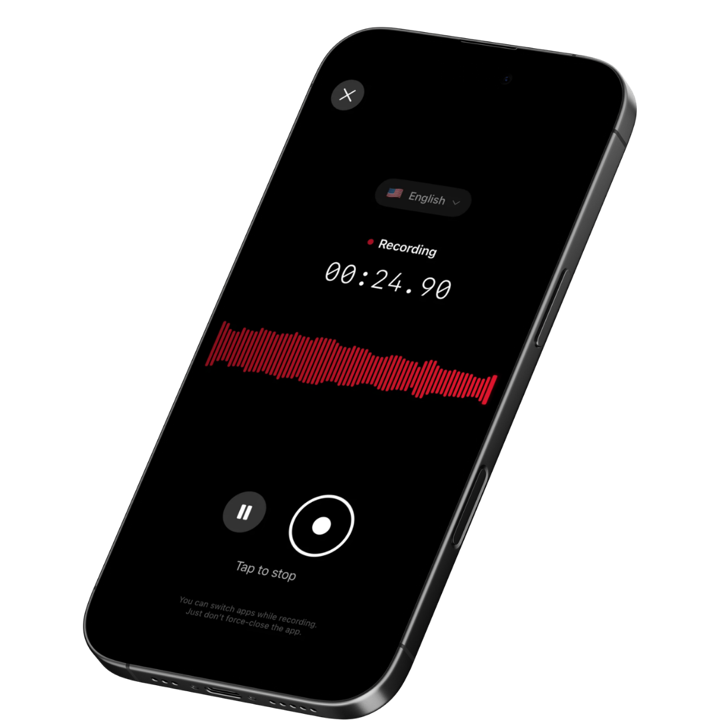
Voice capture addresses the real productivity gap. Instead of watching what employees do, give them tools to capture what matters. One-tap recording turns meetings, client calls, and brainstorming sessions into structured, searchable notes with automatic action items. Employees stay productive because they have the information they need - not because someone is watching.
Download Speakwise from the App Store and boost team productivity with AI-powered voice capture that builds trust and captures every important insight - no surveillance required.
Join 10,000+ professionals who improve productivity through better information capture, not more monitoring.
Get Speakwise Free
4.9-star App Store Rating | iOS Optimized

🎯 4.9★ App Store Rating | 📱 Built for iOS
