Employee Motivation Statistics 2026


Used by recruiters, executives, consultants, and more.
Employee Motivation Statistics 2026
Only 21% of employees worldwide feel engaged at work, costing the global economy $8.9 trillion in lost productivity annually. 65% of employees say their contributions are not adequately recognized. U.S. engagement hit an 11-year low in 2025, with 4.8 million fewer engaged workers than in late 2023. These 16 statistics expose the scope and cost of the employee motivation crisis in 2026.
Employee motivation is the invisible force that determines whether organizations thrive or merely survive. When people are motivated, they innovate, collaborate, and deliver results that exceed expectations. When they are not, they do the minimum, disengage quietly, and eventually leave, taking their skills and institutional knowledge with them.
This post presents 16 statistics on employee motivation and engagement in 2026. The data covers global engagement levels, the financial cost of disengagement, key motivation drivers, the quiet quitting phenomenon, and the outsized role that managers play in determining team motivation. These numbers are essential for anyone who leads people, designs organizational strategy, or wants to understand why so many workplaces feel stuck.
1. Only 21% of employees globally are engaged at work
The global engagement number is sobering. Just 21% of employees worldwide report being engaged at work, meaning they are enthusiastic about and committed to their role and organization. The remaining 79% range from "not engaged" (going through the motions) to "actively disengaged" (undermining organizational goals). This means that for every team of five, only one person is truly invested in their work.
Source: People Insight - Employee Engagement Statistics 2026
2. Low engagement costs the global economy $8.9 trillion annually
The price tag of disengagement is almost incomprehensible. Lost productivity from unengaged and actively disengaged employees costs the global economy approximately $8.9 trillion per year. This figure, equivalent to roughly 9% of global GDP, represents the gap between what the workforce could produce at full engagement and what it actually delivers. No other single workplace issue carries a comparable economic cost.
Source: People Insight - Employee Engagement Statistics 2026
3. U.S. engagement hit an 11-year low, with 4.8 million fewer engaged workers
The engagement crisis is intensifying in the United States. Employee engagement fell to an 11-year low in early 2025, with 4.8 million fewer engaged employees compared to the fourth quarter of 2023. This decline occurred despite record investment in employee experience initiatives. The data suggests that many engagement programs are not addressing the root causes of disengagement: recognition, communication, and career growth.
Source: Select Software Reviews - Employee Engagement Statistics 2026
4. 65% of employees feel their contributions are not adequately recognized
Recognition is the number one driver of engagement, and two-thirds of employees say they are not getting enough of it. 65% report that their contributions are not adequately recognized by their organization. This finding is both alarming and actionable. Recognition costs almost nothing to give. Its absence costs everything in terms of motivation, retention, and discretionary effort.
Source: HR Cloud - Employee Engagement Statistics
5. 69% of employees would work harder if they felt better recognized
The motivation impact of recognition is direct and measurable. 69% of employees say they would work harder if their efforts were better recognized. This is not about monetary rewards. It is about acknowledgment, appreciation, and the feeling that someone notices the work you put in. When organizations fail to recognize effort, they leave an enormous productivity reserve untapped.
Source: Advantage Club - Employee Recognition Statistics 2025
6. Engaged employees are 87% less likely to leave their employer
The retention advantage of engagement is massive. Engaged employees are 87% less likely to voluntarily leave their employer compared to disengaged colleagues. This statistic transforms the engagement conversation from a cultural aspiration into a financial imperative. Every percentage point increase in engagement directly reduces the turnover costs that drain budgets across industries.
Source: People Insight - Employee Engagement Statistics 2026
7. Between 20% and 40% of any organization's workforce are quiet quitters
Quiet quitting is not a fringe behavior. McKinsey research found that between 20% and 40% of any organization's workforce is made up of quiet quitters, employees doing the minimum required to keep their jobs without contributing additional effort, creativity, or initiative. This range means that in a 500-person company, between 100 and 200 employees are mentally checked out while physically present.
Source: McKinsey - Hidden Costs of Quiet Quitting
8. Disengagement costs U.S. employers $1.5 trillion per year
Within the United States alone, employee disengagement costs approximately $1.5 trillion annually in lost productivity. This figure accounts for reduced output, lower quality, increased absenteeism, and the ripple effects of disengaged workers on team morale. For the average large corporation, McKinsey estimates the cost of disengagement at approximately 4% of the total wage bill.
Source: Fortune - Quiet Cracking Is Spreading in Offices
9. 85% of employees feel more motivated with transparent management updates
Transparency is a powerful motivator. 85% of employees report feeling more motivated when management provides regular, transparent updates about company direction and performance. This does not require dramatic gestures. Consistent weekly or monthly updates about what is happening, why decisions are being made, and where the company is heading create a foundation of trust that fuels motivation.
Source: Kapable - Leadership Communication Statistics
10. 82% of employees say meaningful learning directly impacts their motivation
Learning is not just a retention tool. It is a motivation driver. 82% of employees report that meaningful learning opportunities directly impact their motivation at work. When employees feel they are growing, acquiring new skills, and becoming more capable, they bring more energy and engagement to their daily responsibilities. Stagnation is the enemy of motivation.
Source: Thirst - Employee Engagement Stats 2026
11. Hybrid employees report 24% higher engagement than fully on-site workers
Work arrangement matters for motivation. Hybrid employees report 24% higher engagement levels compared to fully on-site workers. This finding challenges the push for full return-to-office mandates. Employees who have autonomy over where they work feel more trusted, more productive, and more engaged. Removing that autonomy comes with a measurable motivation cost.
Source: Kapable - Leadership Communication Statistics
12. 70% of team engagement is attributable to the manager
Managers are the single most important factor in employee motivation. Gallup's research shows that 70% of the variance in team engagement scores is attributable to the manager. This means that changing the manager is often more impactful than changing the strategy, the benefits, or the office environment. The manager relationship is the relationship that determines whether an employee thrives or withers.
Source: People Managing People - Employee Engagement Statistics 2026
13. Employees who feel recognized are 45% less likely to leave within two years
Recognition has a durable effect on retention. Employees who feel recognized are 45% less likely to leave their organization within a two-year window. This finding establishes a clear connection between daily motivation practices and medium-term retention outcomes. Organizations that build consistent recognition into their culture are not just making people feel good. They are building a workforce that stays.
Source: Advantage Club - Employee Recognition Statistics 2025
14. Manager engagement fell from 30% to 27% in recent years
The people responsible for motivating teams are losing motivation themselves. Manager engagement dropped from 30% to 27% in recent years, with young managers under 35 and female managers experiencing the steepest declines. This is a structural problem. When managers are disengaged, the 70% of team engagement they influence degrades accordingly. The motivation crisis starts at the manager level.
Source: Select Software Reviews - Employee Engagement Statistics 2026
15. Burnout costs employers $4,000 to $21,000 per employee annually
The financial toll of burnout is measurable at the individual level. Burnout costs American employers between $4,000 and $21,000 per employee per year through lost productivity, increased absenteeism, and higher turnover. For a company of 1,000 employees, that adds up to approximately $5 million annually. Burnout is not just a wellbeing issue. It is a profitability issue.
Source: Fortune - Quiet Cracking Is Spreading in Offices
16. 92% of employees say trust in leadership drives their motivation
Trust is the bedrock of motivation. 92% of employees confirm that trust in their leadership team is an important factor in their motivation levels. When employees trust that leaders are honest, competent, and acting in the organization's best interest, they bring their full energy to work. When trust is absent, employees hold back, protect themselves, and invest their best effort elsewhere.
Source: Kapable - Leadership Communication Statistics
The Motivation Gap: Between What Employees Need and What They Get
These 16 statistics describe an economy running on a fraction of its potential. When only 21% of workers are engaged, the other 79% represent the largest untapped productivity resource in the world. The $8.9 trillion annual cost is not an abstract number. It shows up in missed deadlines, lower quality, higher turnover, and the slow erosion of competitive advantage.
The solutions are not mysterious. Recognition, transparent communication, meaningful learning, manager development, and workplace flexibility are the consistent drivers across every study. The problem is not knowing what works. It is doing it consistently at scale.
The manager emerges as the critical leverage point. At 70% of engagement variance, investing in manager effectiveness delivers the highest return of any engagement initiative. Yet manager engagement itself is declining. Until organizations solve the manager motivation problem, solving the employee motivation problem will remain out of reach.
$8.9 trillion in lost productivity is not a failure of strategy. It is a failure of daily management - one unrecognized contribution, one unclear message, and one missed conversation at a time.---
Boost team motivation by making every conversation count
The data is clear: recognition, transparency, and meaningful communication are the top motivation drivers. These are not annual initiatives. They happen in daily interactions - the one-on-one where a manager provides feedback, the team meeting where progress is acknowledged, the quick check-in where an employee feels heard.
The problem is that these high-impact moments are also the most fleeting. A great coaching conversation happens, but the specific praise, the commitments made, and the goals discussed fade from memory within days. Voice capture makes motivation moments permanent.
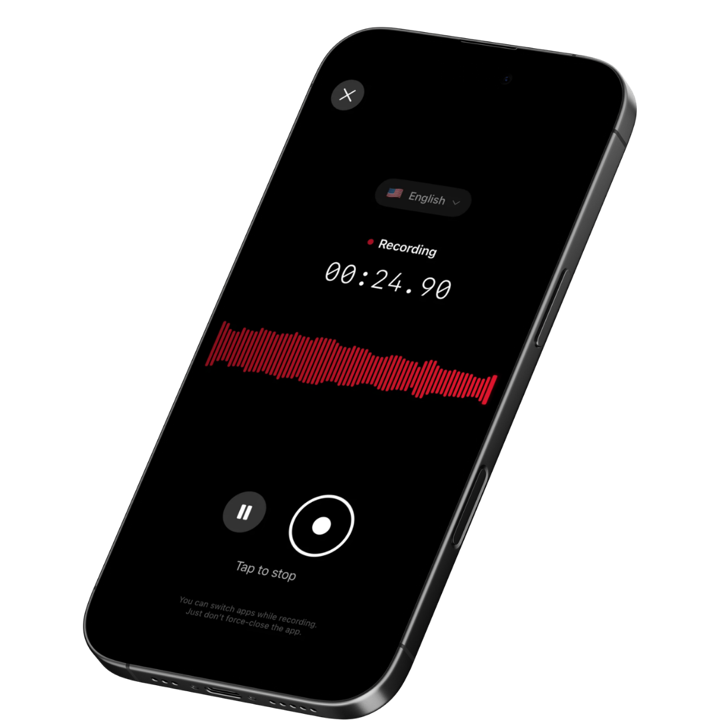
Download Speakwise from the App Store and capture every feedback session, recognition moment, and team conversation with one-tap recording, AI summaries, and automatic action item extraction.
Join 10,000+ professionals who strengthen team motivation by preserving the conversations that matter most.
Get Speakwise Free
4.9-star App Store Rating | iOS Optimized

🎯 4.9★ App Store Rating | 📱 Built for iOS
