Employee Onboarding Statistics 2026


Used by recruiters, executives, consultants, and more.
Employee Onboarding Statistics 2026
Only 12% of employees say their company does onboarding well. 20% of new hires quit within the first 45 days. Organizations with strong onboarding improve retention by 82% and productivity by over 70%. Yet 38% of companies limit onboarding to just one month. These 16 statistics reveal the gap between onboarding best practices and current reality.
First impressions at work are permanent. The first days, weeks, and months at a new job shape how employees perceive their employer, their team, and their future. When onboarding fails, new hires disengage before they ever fully engage. When it succeeds, it creates loyalty that lasts years.
This post covers 16 statistics on employee onboarding in 2026. These numbers highlight the current state of onboarding programs, the cost of getting it wrong, and the measurable returns of doing it right.
1. Only 12% of employees say their company does onboarding well
The onboarding satisfaction rate is alarmingly low. Just 12% of employees strongly agree that their organization does a great job of onboarding new hires. The other 88% experienced onboarding that ranged from mediocre to actively disengaging. This single statistic captures the scale of the problem. Nearly nine in ten new hires start their tenure with an organization already underwhelmed.
Source: AIHR - Employee Onboarding Statistics 2026
2. 20% of employee turnover occurs within the first 45 days
The window for onboarding failure is shorter than most organizations realize. 20% of all employee turnover occurs within the first 45 days of employment. By the time most onboarding programs are wrapping up, a fifth of new hires have already decided to leave. This timeline mismatch means that many organizations lose employees before the onboarding process even has a chance to work.
Source: Enboarder - Employee Engagement Onboarding Stats
3. 37.9% of employees leave within their first year
The early turnover problem extends beyond the first 45 days. Nearly 38% of employees leave within their first year, with two-thirds of those departures happening within the first six months. Each early departure represents a total loss on the organization's recruitment and training investment. When more than one in three new hires leaves before their first anniversary, the recruitment process is not the bottleneck. The onboarding process is.
Source: FirstHR - Onboarding Statistics 2025-2026
4. Strong onboarding improves new hire retention by 82%
The upside of effective onboarding is dramatic. Organizations with strong onboarding processes improve new hire retention by 82%. This is not a marginal gain. It represents a fundamental shift in the employer-employee relationship from the very first day. Strong onboarding communicates investment, clarity, and belonging - three factors that anchor new hires to the organization long-term.
Source: Enboarder - Employee Engagement Onboarding Stats
5. Effective onboarding boosts new hire productivity by over 70%
Retention is only half the story. Strong onboarding also improves new hire productivity by over 70%. Employees who understand their role, their team, and their tools from day one ramp up faster and contribute sooner. The productivity gap between well-onboarded and poorly-onboarded employees persists for months, meaning that onboarding quality directly affects team output throughout the entire first year.
Source: Enboarder - Employee Engagement Onboarding Stats
6. Employees feel 18x more committed after effective onboarding
The commitment multiplier from good onboarding is striking. Employees feel 18 times more committed to their employer after experiencing an effective onboarding process compared to those with poor onboarding experiences. Commitment at this level translates into discretionary effort, advocacy, and long-term career investment. The first weeks determine whether a new hire becomes a committed contributor or a passive clock-watcher.
Source: Enboarder - Employee Engagement Onboarding Stats
7. Only 31% of employees find onboarding engaging
Engagement during onboarding sets the tone for engagement throughout tenure. Yet only 31% of employees describe their onboarding experience as engaging. The remaining 69% found it boring, overwhelming, or irrelevant. Engagement during onboarding is not about entertainment. It is about creating meaningful connections to the work, the team, and the organization's mission from the earliest possible moment.
Source: FirstHR - Onboarding Statistics 2025-2026
8. 52% of new hires say paperwork dominated their onboarding
More than half of new employees (52%) reported that administrative tasks dominated their onboarding experience. They spent their first days buried in paperwork, systems setup, and compliance forms rather than learning about their role, meeting their team, or understanding organizational culture. When the first impression of a new job is filling out forms, the organization has prioritized process over people.
Source: AIHR - Employee Onboarding Statistics 2026
9. 38% of companies limit onboarding to one month
Onboarding program duration varies widely, but the most common approach is inadequate. 38% of organizations indicate that their onboarding period lasts only one month. Another 14% compress it into a single week. Research consistently shows that effective onboarding takes three to six months. Organizations that cut onboarding short sacrifice the relationship-building and knowledge transfer that prevent early turnover.
Source: AIHR - Employee Onboarding Statistics 2026
10. 74% of employees say their onboarding was not successful
Nearly three-quarters of employees (74%) say their onboarding experience was not successful. This self-assessment from the people who lived through the process is the most damning metric of all. It means that even among employees who stayed, the vast majority felt their onboarding failed to prepare them. They succeeded despite their onboarding, not because of it.
Source: FirstHR - Onboarding Statistics 2025-2026
11. Half of new hires leave during the first 90 days at some organizations
Enboarder's 2025 HR Leader Survey revealed that for 20.5% of respondents, half of their new employees leave during their first 90 days. These organizations are experiencing a revolving door that consumes recruitment resources, demoralizes existing teams, and prevents any meaningful knowledge accumulation. A 50% attrition rate in the first quarter signals a fundamental failure in the new hire experience.
Source: Enboarder - Employee Engagement Onboarding Stats
12. The average cost to onboard a new employee is $1,830
Direct onboarding costs average $1,830 per new hire. However, when factoring in manager time, training resources, technology setup, and productivity loss during the ramp-up period, the true cost ranges from $7,500 to $28,000 per employee. These costs are entirely wasted when a new hire leaves within the first few months - making effective onboarding as much a financial priority as a cultural one.
Source: Devlin Peck - Employee Onboarding Statistics 2025
13. Bad onboarding doubles the likelihood of job hunting
Employees who experience poor onboarding are twice as likely to start searching for a new job immediately. This means that organizations with weak onboarding programs are not just losing new hires. They are actively pushing them toward competitors. The recruitment investment that brought a talented person through the door is undermined by an onboarding experience that sends them right back out.
Source: Newployee - Employee Onboarding Statistics 2025
14. 75% of hybrid onboarded employees are satisfied
Work model affects onboarding outcomes. 75% of employees onboarded through a hybrid model reported satisfaction with their experience. In-person onboarding scored 73%, and fully remote onboarding came in at 71%. The hybrid advantage likely stems from combining the relationship-building of in-person interaction with the flexibility and self-pacing of remote work. As hybrid becomes the dominant model, onboarding programs must adapt.
Source: AIHR - Employee Onboarding Statistics 2026
15. 70% of employees who onboard well stay 3+ years
Long-term retention connects directly to onboarding quality. Around 70% of employees say they are more likely to stay for three or more years if they experienced good onboarding. This three-year benchmark matters because it represents the point at which most employees have fully ramped, built deep relationships, and begun to deliver their highest-value contributions. Good onboarding does not just prevent early exits. It enables peak performance.
Source: Apollo Technical - Statistics on Employee Onboarding 2025
16. Strong onboarding delivers a 60% increase in revenue per employee
The financial return on onboarding investment is measurable. Organizations with strong onboarding report a 60% increase in revenue per full-time employee and 1.5x growth in profit. These top-line impacts come from faster ramp-up times, higher engagement, lower turnover costs, and the compounding effect of employees who feel connected to their organization from day one.
Source: Appical - The ROI of Good Onboarding
The Onboarding Paradox: Everyone Knows It Matters, Almost No One Does It Well
The gap between onboarding's proven impact and its actual execution is one of the widest in all of HR. Every leader agrees that first impressions matter. Every study confirms that strong onboarding drives retention, productivity, and engagement. Yet 88% of employees say their organization gets it wrong.
The problem is not lack of awareness. It is lack of infrastructure. Most onboarding programs are built around administrative requirements rather than human connection. They front-load compliance paperwork and back-load the relationship-building and context-sharing that actually determine whether a new hire stays. The result is an experience that checks legal boxes while failing to create the belonging that retention requires.
The organizations that onboard well share a common trait: they treat onboarding as an ongoing process of context transfer, not a one-time event. They ensure that new hires understand not just what to do, but why it matters, how decisions are made, and where to find the information they need. This context transfer cannot happen in a single week or even a single month.
When 82% retention improvement is available to any organization willing to invest in onboarding, the question is not whether to prioritize it - it is why so few organizations do.---
Give new hires the context they need to succeed
The biggest onboarding challenge is transferring context. New hires need to understand team dynamics, decision-making patterns, project history, and organizational culture. Most of this context lives in conversations that happened before they arrived. Without access to that context, they spend months asking questions that have already been answered.
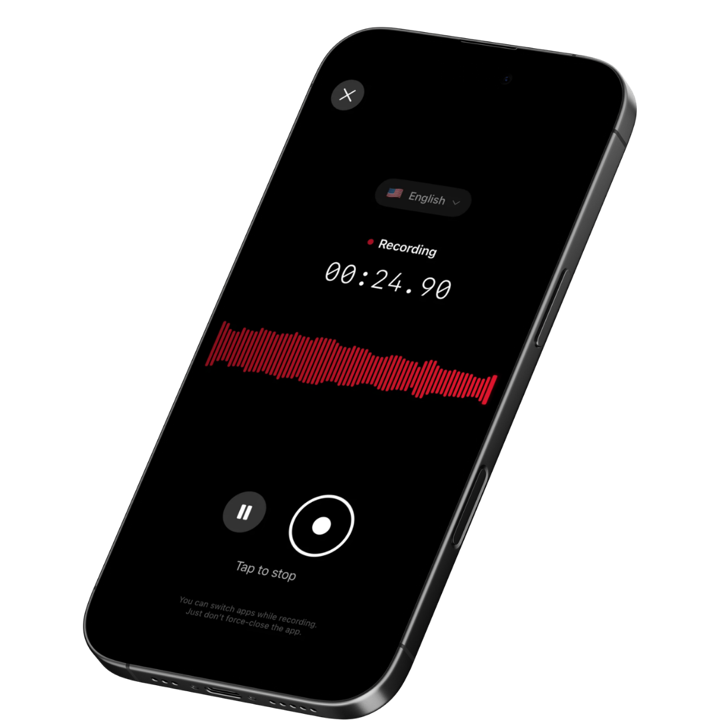
Voice recording with AI transcription captures the conversations that contain the context new hires need. Meeting summaries, team discussions, and strategic conversations become searchable resources. Instead of relying on institutional memory, new hires can access the actual discussions that shaped current priorities.
Download SpeakWise from the App Store and build an onboarding knowledge base with one-tap recording, AI transcription in 100+ languages, and automatic Notion sync.
Join 10,000+ professionals who accelerate onboarding by making every important conversation accessible and searchable.
Get SpeakWise Free
4.9-star App Store Rating | iOS Optimized

🎯 4.9★ App Store Rating | 📱 Built for iOS
