Employee Recognition Statistics 2026


Used by recruiters, executives, consultants, and more.
Employee Recognition Statistics 2026
Well-recognized employees are 45% less likely to turn over after two years. 66% of employees say they would leave if they felt unappreciated. Organizations with strong recognition programs experience 31% lower voluntary turnover. Yet 69% of employees report receiving no recognition in the past year. These 16 statistics reveal why recognition is one of the highest-ROI investments in talent retention.
Employee recognition has moved from a "nice to have" to a strategic imperative. As engagement declines globally and turnover costs escalate, organizations are discovering that consistent, meaningful recognition drives measurable business outcomes. The data is unambiguous: recognized employees stay longer, produce more, and engage more deeply.
This post covers 16 statistics on employee recognition in 2026. These numbers show the current state of recognition programs, their measurable impact on retention and engagement, and the gaps that most organizations still need to close.
1. Well-recognized employees are 45% less likely to leave after two years
Gallup's research on recognition and retention found that well-recognized employees are 45% less likely to have turned over after two years. This finding connects recognition directly to the bottom line. With the average cost of replacing an employee ranging from 50% to 200% of their salary, a 45% reduction in turnover translates to substantial savings. Recognition is not just a morale booster. It is a retention mechanism.
Source: Gallup - Employee Retention Depends on Getting Recognition Right
2. 66% of employees would leave if they felt unappreciated
Two-thirds of employees say they would leave their job if they did not feel appreciated. This statistic reframes recognition from a management style preference into a critical retention lever. When the majority of your workforce is one "thank you" away from staying or leaving, the business case for systematic recognition becomes impossible to ignore. Appreciation does not require budget. It requires consistency.
Source: Nectar - Employee Recognition Statistics 2025
3. Recognized employees are 7x more likely to be fully engaged
Employees who receive meaningful recognition are seven times more likely to be fully engaged in their work compared to those who receive little or no recognition. Given that global engagement sits at just 21%, this multiplier effect is significant. Recognition does not just make people feel good. It fundamentally changes how they show up, contribute, and invest their energy in work.
Source: Workhuman - Employee Recognition Statistics
4. 69% of employees received no recognition in the past year
Despite the overwhelming evidence for recognition's impact, 69% of employees report receiving no recognition in the past year. This gap between what the research recommends and what organizations actually deliver represents a massive missed opportunity. Nearly seven in ten workers go an entire year without being acknowledged for their contributions. The recognition deficit is not a resource problem. It is an awareness problem.
Source: Gallup - Employee Retention Depends on Getting Recognition Right
5. Weekly recognition boosts belonging 9x and productivity 6x
Consistent recognition frequency matters more than grand gestures. Employees who receive weekly recognition report nine times higher belonging and over six times greater productivity than those with less frequent feedback. This finding suggests that recognition works best as a habit, not an event. Annual awards ceremonies pale in comparison to a steady rhythm of genuine acknowledgment.
Source: WorkTango - Employee Recognition Statistics 2026
6. Employees who feel appreciated are 17x more likely to see long-term careers
The retention impact of recognition compounds over time. Employees who feel appreciated are 17 times more likely to envision a long-term career at their current company. This statistic transforms recognition from a short-term engagement tool into a long-term talent strategy. Organizations that build recognition into their culture do not just retain employees for another quarter. They build career-long loyalty.
Source: Select Software Reviews - Employee Recognition Statistics 2026
7. Recognition drives 2.9x higher engagement when done strategically
Gallup's research identifies specific pillars of strategic recognition. Employees who receive recognition that satisfies even one of these pillars are 2.9 times as likely to be engaged as those whose recognition does not meet any pillar. Strategic recognition means it is timely, specific, connected to values, and delivered by the right person. Generic praise falls flat. Targeted acknowledgment transforms behavior.
Source: Gallup - Employee Retention Depends on Getting Recognition Right
8. Organizations with recognition programs see 31% lower voluntary turnover
Companies that implement structured employee recognition programs experience 31% lower voluntary turnover rates. For a 10,000-person company, this can translate to savings of up to $16.1 million annually in turnover costs. The math is straightforward. Recognition programs cost a fraction of what turnover costs, making them one of the clearest positive-ROI investments in human capital.
Source: Applauz - Employee Recognition Statistics
9. High-engagement organizations are 23% more profitable
Gallup's meta-analysis shows that organizations with high employee engagement - driven significantly by recognition - are 23% more profitable. They also see 18% higher productivity, 78% lower absenteeism, and 21% lower turnover. Recognition is the thread that connects engagement to financial performance. It is not an expense line. It is an investment with measurable returns.
Source: HR Cloud - Employee Engagement Statistics
10. 72% of employees say personalized recognition is most meaningful
Generic recognition misses the mark. 72% of employees say recognition feels most meaningful when it is personalized to them. This means understanding what each person values, whether public praise, private acknowledgment, professional development opportunities, or tangible rewards. One-size-fits-all recognition programs underperform. The most effective organizations tailor their approach.
Source: Achievers - Employee Recognition Trends 2026
11. 65% of recognized employees are less likely to job search
Employees receiving high-quality recognition are 65% less likely to be actively looking or watching for another job opportunity. This statistic is particularly relevant in a labor market where passive candidates represent the majority of available talent. Recognition does not just prevent departures. It removes employees from the candidate pool entirely, shielding organizations from competitors.
Source: Gallup - Employee Retention Depends on Getting Recognition Right
12. 91% of organizations have recognition programs but only 31% rate them effective
The recognition infrastructure exists. 91% of organizations have rewards programs and 94% have recognition programs. But only 31% rate their program's effectiveness as high or very high. This gap between having a program and having an effective program is where most organizations fail. The issue is not whether recognition exists. It is whether it is delivered consistently, meaningfully, and strategically.
Source: WorkTango - Employee Recognition Statistics 2026
13. Only 43% of organizations regularly review recognition effectiveness
Fewer than half of organizations (43%) regularly review their recognition programs' effectiveness. Even fewer - just 33% - incorporate employee feedback into program design. Without measurement and feedback, recognition programs stagnate. They become bureaucratic check-boxes rather than genuine drivers of engagement. Effective recognition requires the same rigor as any other business process.
Source: WorkTango - Employee Recognition Statistics 2026
14. Replacing employees costs 40-200% of their salary
Gallup estimates that replacing frontline workers costs 40% of their salary, replacing technical employees costs 80%, and replacing leaders or managers costs up to 200%. These replacement costs make the ROI of recognition crystal clear. A simple, consistent recognition habit that costs virtually nothing can prevent losses that run into tens of thousands of dollars per departure.
Source: Gallup - Employee Retention Depends on Getting Recognition Right
15. 46% of organizations plan to build continuous recognition cultures in 2026
Looking ahead, 46% of organizations plan to enhance their recognition programs by fostering a continuous culture of recognition in 2026. Another 50% anticipate leveraging technology for better analytics and tracking. These trends signal that organizations are moving beyond annual awards toward embedded, data-driven recognition that operates as a daily management practice.
Source: Achievers - Employee Recognition Trends 2026
16. Coworker conversations are the top source of workplace inspiration
Recognition does not only flow from managers to employees. O.C. Tanner's research found that conversations with coworkers are the top source of inspiration for employees, and 68% have at least one coworker who inspires them. Peer-to-peer recognition programs that harness this natural dynamic can amplify the impact of formal manager recognition.
Source: O.C. Tanner - Culture Trends 2026
The Recognition Gap: Programs Exist, Impact Does Not
The data reveals a frustrating paradox. Nearly every organization has a recognition program. Barely a third consider theirs effective. Meanwhile, 69% of employees go a full year without being recognized. The gap is not in infrastructure. It is in execution.
Effective recognition shares three traits: it is frequent, specific, and personal. Weekly beats annual. "Your client summary saved us three hours of prep" beats "great job." A direct message from a respected peer beats a generic company-wide email. The organizations seeing 45% retention improvements and 7x engagement multipliers are doing recognition differently, not just more often.
The trajectory for 2026 is promising. Nearly half of organizations plan to shift toward continuous recognition cultures. But the shift requires more than software. It requires managers who notice contributions in real time, teams that share context openly, and systems that make it easy to capture and acknowledge good work as it happens.
Recognition is not a perk. It is the single most cost-effective retention strategy the data has ever identified.---
Capture contributions worth recognizing
One barrier to consistent recognition is simple: managers and peers do not always see the work that deserves acknowledgment. When contributions happen in meetings, conversations, and calls that others miss, recognition opportunities disappear. The work matters. But if no one captures it, no one can acknowledge it.
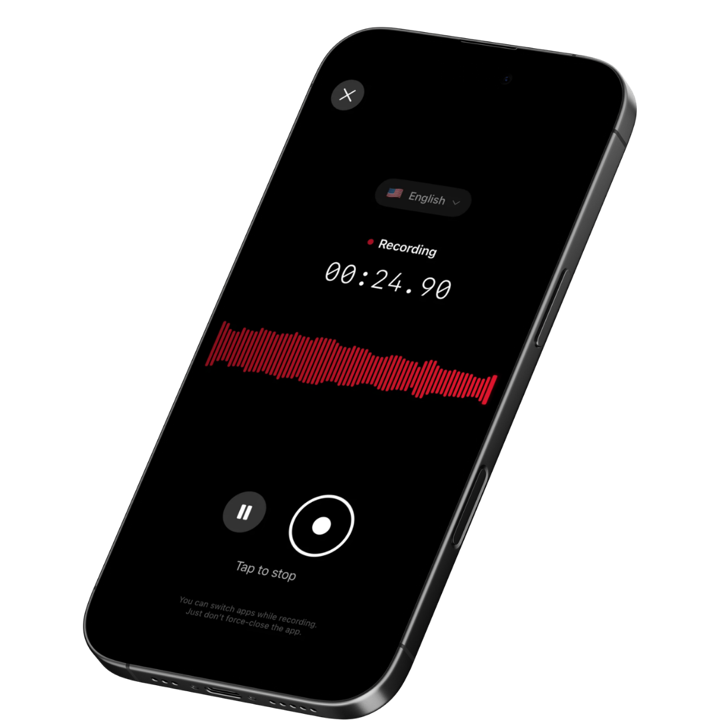
Voice recording with AI transcription creates a record of contributions that might otherwise go unnoticed. Meeting summaries, action items, and key decisions are captured automatically - giving managers and peers visibility into work that deserves recognition.
Download SpeakWise from the App Store and make every contribution visible with one-tap recording, AI summaries, and automatic Notion integration.
Join 10,000+ professionals who capture the work that matters so nothing goes unrecognized.
Get SpeakWise Free
4.9-star App Store Rating | iOS Optimized

🎯 4.9★ App Store Rating | 📱 Built for iOS
