Employee Retention Statistics 2026: Turnover Costs, Quiet Quitting, and What Makes People Stay

Used by recruiters, executives, consultants, and more.
Employee Retention Statistics 2026: Turnover Costs, Quiet Quitting, and What Makes People Stay
U.S. employee engagement has plummeted to its lowest point in a decade-just 31%-while 64% of workers worldwide qualify as "quiet quitters." Companies collectively spend $900 billion per year replacing employees who leave, and yet 42% of that turnover is entirely preventable. These 21 statistics expose the real forces driving people out the door-and the surprisingly simple factors that make them stay.
The retention crisis isn't coming. It's here. Despite a cooling job market and headlines about layoffs in certain sectors, the underlying dynamics of employee dissatisfaction have only intensified. Engagement is cratering. Burnout is surging. And more than half the American workforce is either actively job-hunting or keeping one eye on the exit. The irony is sharp: organizations are spending more than ever on perks, wellness programs, and employer branding while ignoring the structural frustrations that actually push people to leave-clunky workflows, communication overload, lack of clarity, and the persistent feeling that nobody is listening.
What the data reveals is counterintuitive. Pay ranks surprisingly low among the reasons people quit. Recognition, meaningful work, flexible tools, and competent management matter far more. The organizations winning the retention war aren't the ones with the fanciest offices or the most generous stock options. They're the ones that respect their employees' time, reduce unnecessary friction, and invest in the everyday experience of work. When only 46% of employees clearly know what's expected of them, the problem isn't motivation-it's communication. When 82% are at risk of burnout, the problem isn't laziness-it's overload.
In this post, we'll explore 21 statistics that expose the true state of employee retention in 2026. These numbers cover the staggering financial cost of turnover, the quiet quitting epidemic, the engagement elements in steepest decline, and the proven factors that keep people committed. Whether you're an HR leader building a business case for change, a manager trying to hold your team together, or a professional wondering why work feels harder than it should, these data points offer a clear, research-backed roadmap for what's broken-and what to fix.
Key Employee Retention Statistics (2026)
- Employee retention is under strain as U.S. employee engagement sits at just 31%, matching its lowest level in a decade (Gallup).
- Companies lose an estimated $900 billion every year replacing U.S. employees who quit voluntarily (Work Institute 2024 Retention Report).
- Globally, 64% of employees are "quiet quitting"-putting in the bare minimum without emotional investment in their work (Gallup).
- Nearly half of all turnover is avoidable: 42% of employees who quit say their employer could have prevented it (Gallup).
- Manager engagement suffered its steepest drop on record, falling from 27% to 22% between 2024 and 2025 (Gallup).
- Hybrid work arrangements cut employee attrition by 33% compared with full-time office schedules (Nature).
- 92% of workers did not change jobs in 2025, a "job hugging" trend of staying put despite frustration (Owl Labs).
1. U.S. employee engagement fell to 31% in 2024-the lowest in a decade
Gallup's survey of 79,000 U.S. employees throughout 2024 revealed that employee engagement has dropped to levels not seen since 2014. The two-point decline from the previous year translates to approximately 3.2 million fewer engaged employees across the country. To put that in perspective, that's more than the entire population of Chicago suddenly checking out of their work. When nearly seven out of ten workers are not fully engaged, the downstream effects on retention are inevitable-disengaged employees are far more likely to leave, underperform, or quietly disengage from their responsibilities entirely. The percentage of actively disengaged employees-those who are not just uninvolved but actively undermining their workplace-held steady at 17%, mirroring 2014 levels as well. Source: Gallup
2. 64% of employees worldwide are "quiet quitting"-costing the global economy $10 trillion
According to Gallup's State of the Global Workplace report, nearly two-thirds of the world's workforce is disengaged, performing the bare minimum without emotional investment in their work. This mass disengagement carries a price tag of $10 trillion in lost productivity, equivalent to 9% of global GDP. To grasp the scale: that's more than the combined economic output of Japan and Germany-vanishing not because of recession or natural disaster, but because workers simply stopped caring. Quiet quitting isn't laziness-it's a rational response from workers who feel unheard, unsupported, and undervalued. The cost isn't just economic; it's cultural, eroding team morale and making retention even harder for the engaged employees who remain. When your best people see their colleagues coasting, they don't get motivated-they get resentful. And then they leave. Source: Gallup
3. U.S. companies spend nearly $900 billion per year replacing employees who quit
The Work Institute's 2024 Retention Report, based on analysis of over 20,000 exit interviews, found that American businesses collectively spend close to $900 billion annually on the direct and indirect costs of replacing voluntary departures. This figure encompasses recruiting, hiring, onboarding, training, and the productivity loss during the transition period. For context, that's more than the entire GDP of countries like Switzerland or Saudi Arabia-spent not on innovation or growth, but on refilling seats that didn't need to be emptied. The hidden costs are even more insidious: every departure disrupts team chemistry, forces remaining employees to absorb extra workload, and sends a signal to other team members that leaving is an option worth considering. Turnover begets turnover, creating a cycle that compounds the financial damage with every resignation. Source: Work Institute 2024 Retention Report
4. Replacing a single employee costs between 50% and 200% of their annual salary
Gallup puts the cost at one-half to two times an employee's annual salary-and calls that a conservative estimate. For a 100-person company with an average salary of $50,000, total annual turnover and replacement costs can run from $660,000 to $2.6 million. These aren't just recruiting expenses-they include lost institutional knowledge, disrupted team dynamics, reduced client satisfaction, and the months of ramping up it takes before a new hire reaches full productivity. There's also the "brain drain" factor that rarely makes it into the spreadsheet: when experienced employees walk out the door, they take with them relationships, context, and tacit knowledge that can never be fully documented or transferred. The true cost of losing a veteran team member is almost always higher than any formula can capture. Source: Gallup
5. 42% of employee turnover is preventable
Perhaps the most damning statistic in this entire list: Gallup found that nearly half of employees who left their organizations believed their employer could have done something to prevent their departure. These weren't people lured away by irresistible offers from competitors-they were people who left because fundamental workplace problems went unaddressed. Common themes in their exit feedback include insufficient recognition, unclear growth paths, poor management communication, and work-life balance violations. The gap between "preventable" and "prevented" represents an enormous opportunity for organizations willing to actually listen to what their people need. It also raises an uncomfortable question: if nearly half of all departures could have been avoided, why aren't more organizations investing in the conversations, tools, and processes that would surface these issues before it's too late? Source: Gallup
6. 52% of U.S. employees are actively searching for or watching for new job opportunities
More than half the American workforce has at least one foot out the door, according to Gallup's continuously updated workforce tracking. This reveals that the "Great Resignation" didn't end-it simply went underground. Even in a tighter labor market with fewer open positions, workers are keeping their options open, scrolling job boards during lunch breaks, and networking with recruiters on LinkedIn. For employers, this means retention isn't something you can take for granted just because quit rates have moderated from their 2022 peak. The intent to leave is still pervasive, simmering beneath the surface. The difference between an employee who is "watching for opportunities" and one who submits a resignation is often just a single bad week, a botched promotion cycle, or one too many frustrating workflows. Source: Gallup
7. Only 46% of employees clearly know what is expected of them at work
Among the twelve engagement elements Gallup measures, clarity of expectations saw one of the steepest declines-dropping ten percentage points from a high of 56% in March 2020 to just 46% in 2024. This is arguably the most foundational element of the employee experience. When more than half of employees aren't sure what they're supposed to be doing, everything else falls apart: performance suffers, frustration builds, and people start wondering if they'd be better off somewhere else. The decline likely reflects the compounding chaos of hybrid work, fragmented communication channels, and the explosion of digital tools that generate more noise than clarity. Employees aren't asking for elaborate strategy decks-they want to know, on a daily basis, what success looks like in their role. Clear communication isn't a soft skill-it's the foundation of retention. Source: Gallup
8. Career development drives 17.4% of departures-more than any other reason, while pay accounts for just 9.1%
The Work Institute's analysis of exit interviews reveals a striking truth that upends conventional management wisdom: the number-one reason people leave has nothing to do with their paycheck. Career-related concerns-limited advancement, lack of growth opportunities, feeling stuck-drive 17.4% of departures, more than any other single category. Health and family issues account for another 12.3%, and work-life balance for 11.9%. Total rewards-pay and benefits, the factor most managers assume drives turnover-explain just 9.1% of why people walk out the door, tied with relocation as the smallest categories tracked. This doesn't mean compensation is irrelevant-it means that once pay crosses a threshold of fairness, other factors become far more decisive. The organizations throwing money at retention while ignoring career growth and culture are solving the wrong problem. They're treating a systemic illness with aspirin. Source: Work Institute via Select Software Reviews
9. Managers account for 70% of the variance in employee engagement
Gallup's landmark research on manager impact, published in their State of the American Manager report, found that the single most powerful predictor of whether an employee is engaged-and by extension, whether they'll stay-is who they report to. If you know nothing else about an employee except who their manager is, you can predict their engagement level with surprising accuracy. Managers set the tone for communication clarity, recognition frequency, development opportunities, and the daily work experience. A great manager can retain talent even in a struggling organization; a bad manager can drive people away from the best company in the world. Yet most organizations promote people into management roles based on technical skill rather than leadership ability, then provide minimal training. The most cost-effective retention strategy may simply be investing in better leadership at every level. Source: Gallup
10. Well-recognized employees are 45% less likely to have turned over after two years
Longitudinal data from Gallup and Workhuman found that employees who receive meaningful, high-quality recognition are dramatically less likely to leave. The effect is even more pronounced when recognition meets at least four pillars of strategic recognition-in those cases, employees are 65% less likely to be actively looking for another job. Despite this powerful connection, only 22% of employees say they receive the right amount of recognition for their work-a figure that hasn't improved since 2022. Companies with effective recognition programs report 31% lower voluntary turnover, according to research cited by Achievers. The recognition gap is a retention gap. And closing it doesn't require elaborate programs or expensive platforms-it requires managers who consistently notice, acknowledge, and communicate appreciation for the contributions their people make every day. Source: Gallup and Achievers
11. 82% of employees are at risk of burnout in 2025
The burnout epidemic has reached staggering proportions. A 2025 workplace research report synthesizing data from McKinsey, Deloitte, Gallup, and SHRM found that 82% of white-collar, desk-based knowledge workers report being "slightly" to "extremely" burned out. The numbers are even more alarming when broken down by demographics: women report burnout at 42% compared to 35% for men, and Gen Z and millennial workers are hitting peak burnout at age 25-seventeen years earlier than the average American, who typically experiences peak burnout at 42. Burnout doesn't just reduce productivity; it accelerates turnover. Research published in the American Journal of Preventive Medicine estimates the economic cost to employers at $3,999 per burned-out employee per year in disengagement, absenteeism, and lost effectiveness. Multiply that across a workforce where 82% are affected, and the organizational cost becomes devastating. The root causes-information overload, constant connectivity, blurred work-life boundaries, and the relentless pressure of digital communication-aren't going away on their own. Source: The Interview Guys
12. Unrecognized employees are twice as likely to leave their job within a year
Employees who don't feel sufficiently recognized are twice as likely to say they'll leave their job within the year, according to Gallup research cited by Achievers. Recognition doesn't have to be expensive or elaborate-employees who receive acknowledgment at least monthly are 2.5 times more likely to feel a strong sense of belonging at work compared to those recognized quarterly or less, and 91% of employees say recognition motivates them to put in more effort. Employees who are meaningfully recognized at least monthly are also far ahead on other measures: 89% feel warmly welcomed at their company, and they report three times more trust in their manager than their peers. The organizations getting retention right aren't necessarily the ones spending the most-they're the ones where appreciation flows frequently, specifically, and genuinely from managers who pay attention to what their people actually do. Source: Achievers
13. Hybrid work reduces quit rates by 33%
A landmark randomized controlled trial published in Nature-covering 1,612 graduate-level employees at a large technology firm-found that hybrid work arrangements reduced attrition by 33% compared to full-time office schedules. This wasn't a self-selected sample or a survey about preferences-employees were randomly assigned to hybrid or full-time-office groups and their actual turnover was tracked. The study, led by Stanford economist Nicholas Bloom, also found hybrid schedules improved job-satisfaction measures without damaging performance. The financial case is overwhelming: if replacing a single employee costs between $15,000 and $50,000 or more, even modest improvements in quit rates translate to hundreds of thousands in savings for mid-sized organizations. Flexibility isn't a perk anymore. It's a retention strategy with one of the highest returns on investment available to any employer. Source: Nature (Bloom, Han & Liang, 2024)
14. Only 12% of employees think their company does a great job onboarding new hires
Gallup finds that just 12% of employees strongly agree their organization does a great job onboarding new hires-a foundational failure with outsized consequences. Employee turnover can run as high as 50% in the first 18 months of employment, according to SHRM, and replacing that employee costs six to nine months of their salary to identify and onboard someone new. These numbers point to a massive failure in onboarding and early-stage employee experience: most organizations lose a significant share of their new hires to a problem they know exists but haven't fixed. Every early departure represents wasted recruiting spend, wasted training time, and a demoralized team that has to start over. Source: Gallup
15. 88% of organizations name learning and development their top retention strategy
LinkedIn Learning's 2025 Workplace Learning Report found that 88% of organizations are concerned about retention and name learning opportunities their number-one retention strategy. The mechanism isn't hard to understand-employees who see a growth trajectory within their organization have less reason to seek one elsewhere. 91% of L&D professionals agree that continuous learning is more important than ever for career success, and 84% of employees say learning adds purpose to their work. But support is eroding just as demand rises: only 15% of employees say their manager helped them build a career plan in the past six months, down five points from the year before. Development isn't just a nice-to-have benefit or an HR line item-it's one of the most powerful retention levers available, signaling to employees that the organization sees a future for them and is willing to invest in it. When people believe they're growing, they stay. When they feel stagnant, they start looking. Source: LinkedIn Learning 2025 Workplace Learning Report
16. 40% of workers would start job hunting if forced back to the office full-time
Flexibility has shifted from a perk to a prerequisite for a large share of the modern workforce. Almost half of workers-40%-say they would start job hunting if their employer eliminated remote and hybrid options entirely, and another 5% say they would quit outright. Organizations implementing rigid return-to-office mandates are learning this lesson the hard way, losing their highest performers to more flexible competitors while retaining those with fewer options. The broader data reinforces the trend: 37% of workers would reject a job offer that didn't include flexible hours, and 34% would turn down a role that required full-time office attendance. The most common hybrid model remains three days in the office and two days remote, with 39% of hybrid employees following this pattern. The organizations that resist flexibility aren't just inconveniencing their workforce-they're fighting against the gravitational pull of the entire labor market and hemorrhaging talent in the process. Source: Owl Labs State of Hybrid Work 2025
17. Global employee engagement fell to 20% in 2025-the second straight year of decline
The engagement crisis isn't limited to the United States. Gallup's State of the Global Workplace 2026 report shows worldwide engagement fell to 20% in 2025, down from 21% in 2024 and a peak of 23% in 2022-the first time global engagement has declined for two consecutive years. In the U.S., the erosion is concentrated in the most human elements of the workplace experience: only 39% of employees strongly agree that someone at work cares about them as a person-down from 47% in March 2020. Only 30% strongly agree that someone at work encourages their development, down from 36% over the same period. Connection to mission, clarity of purpose, and a sense of being valued have all declined significantly. These aren't abstract metrics on an HR dashboard. They measure whether people feel seen, valued, and invested in-the emotional foundations that determine whether someone commits to an organization or begins mentally packing their bags. When engagement keeps sliding two years running, the message is clear: this isn't a one-year blip. It's a sustained reckoning with how work is structured, managed, and experienced. Source: Gallup
18. Manager engagement suffered its steepest drop on record, falling from 27% to 22% in a single year
Gallup's State of the Global Workplace 2026 report found that manager engagement fell five points-from 27% in 2024 to 22% in 2025-the largest year-over-year drop the metric has ever recorded. Managers already account for the majority of the variance in whether their direct reports are engaged, so a decline this sharp doesn't stay contained to the leadership layer-it cascades downward, showing up as lower engagement, weaker recognition, and higher flight risk across entire teams. An organization that hasn't checked in on its managers' own engagement in 2026 is likely missing the earliest warning sign of a much bigger retention problem. Source: Gallup
19. U.S. employee engagement stayed flat at 31% in 2025, five years after its 36% peak
Gallup's most recent tracking confirms the crisis isn't easing: U.S. employee engagement averaged 31% in 2025, unchanged from 2024 and still far below the 36% high recorded in 2020. Two flat years in a row suggest the 2024 drop wasn't a one-time dip but a new, lower baseline-organizations that assumed engagement would naturally recover as the labor market cooled have been proven wrong. The plateau means the retention risk documented throughout 2024 hasn't faded; it has simply become the normal state of the American workplace. Source: Gallup
20. Full-time office workers are far more disengaged than remote employees-46% versus 30%
Owl Labs' 2025 State of Hybrid Work report found that 46% of full-time in-office workers report feeling disengaged, compared to just 30% of remote employees-a 16-point gap that undercuts the argument that mandatory office attendance boosts commitment. The finding lands as more employers push return-to-office mandates in the name of culture and collaboration, even as the data suggests those same mandates may be actively eroding the engagement they're meant to protect. For retention-focused leaders, the gap is a warning: forcing people back to a desk doesn't automatically bring them back emotionally. Source: Owl Labs
21. 92% of workers did not change jobs in 2025-they're "job hugging" instead of quitting
A new behavior is replacing the Great Resignation: Owl Labs' 2025 State of Hybrid Work report found that 92% of workers did not change jobs in 2025, with many describing themselves as feeling stuck in their current position rather than actively engaged in it. Unlike quiet quitting, which describes disengaged effort inside a job, "job hugging" describes disengaged loyalty to a job itself-employees staying out of caution about the labor market rather than genuine commitment. For employers, a stable headcount can mask a retention crisis that hasn't gone away; it's just gone quiet, sitting in seats rather than showing up in exit interviews. Source: Owl Labs
The Retention Paradox: Why Spending More Doesn't Mean Keeping More
The statistics above reveal a fundamental disconnect between how organizations approach retention and what actually drives people to stay. Companies are pouring billions into recruitment, signing bonuses, and flashy employer branding campaigns while ignoring the everyday experiences that determine whether someone feels engaged or exploited. The result is a paradox: the more money organizations spend on replacing people, the less they have available to invest in the conditions that would have kept those people in the first place. It's a self-reinforcing cycle of hemorrhaging talent and hemorrhaging cash.
Consider the math. If 42% of turnover is preventable and companies spend $900 billion annually on replacement, that's roughly $378 billion in avoidable costs every single year. What could organizations do with that money? They could invest in better managers-the single factor that accounts for 70% of engagement variance. They could build recognition programs that cut turnover by 45%. They could provide the flexibility, development opportunities, and communication tools that employees consistently rank above salary when explaining why they stay or go. The ROI on these investments isn't speculative. It's documented, replicated, and sitting in plain sight across decades of workplace research.
The quiet quitting epidemic is particularly telling. When 64% of the global workforce is disengaged, the problem isn't individual character-it's systemic failure. Workers aren't quiet quitting because they don't want to contribute. They're pulling back because the tools, processes, and management practices they deal with every day make meaningful contribution unnecessarily difficult. Information overload, communication chaos, unclear expectations, and friction-filled workflows don't just reduce productivity-they erode the emotional connection that keeps people committed. Every unnecessary meeting, every clunky tool, every message that could have been a voice note but instead became a 15-email chain chips away at an employee's willingness to go above and beyond. Eventually, they stop going above. Then they stop showing up entirely.
The path forward isn't more spending. It's smarter investment in the daily texture of work. The organizations that will win the retention war are those that reduce unnecessary friction, provide clarity instead of confusion, make people feel heard and valued, and give employees tools that amplify their capabilities rather than adding to their burden. The data is unambiguous: retention isn't about grand gestures, annual surveys, or pizza parties. It's about getting the everyday experience right-the tools people use, the clarity they receive, the recognition they feel, and the degree to which their time and intelligence are respected.
The retention crisis won't be solved by bigger budgets or better benefits packages. It will be solved by organizations that fundamentally rethink how work gets done-reducing friction, respecting time, and creating environments where engaged, talented people actually want to remain.---
Ready to give your team tools that make them want to stay?
The statistics are clear: employees don't leave because of salary alone. They leave because of frustration-with unclear communication, overcomplicated workflows, and tools that create more work than they eliminate. When 82% of knowledge workers are at risk of burnout and only 46% clearly understand what's expected of them, the last thing any team needs is another app that adds complexity to an already overwhelming workday. The organizations losing talent aren't the ones that pay too little. They're the ones that demand too much cognitive overhead for basic tasks like capturing ideas, documenting conversations, and keeping everyone aligned. Every friction point in the workday sends a subtle message: your time doesn't matter. And eventually, employees listen.
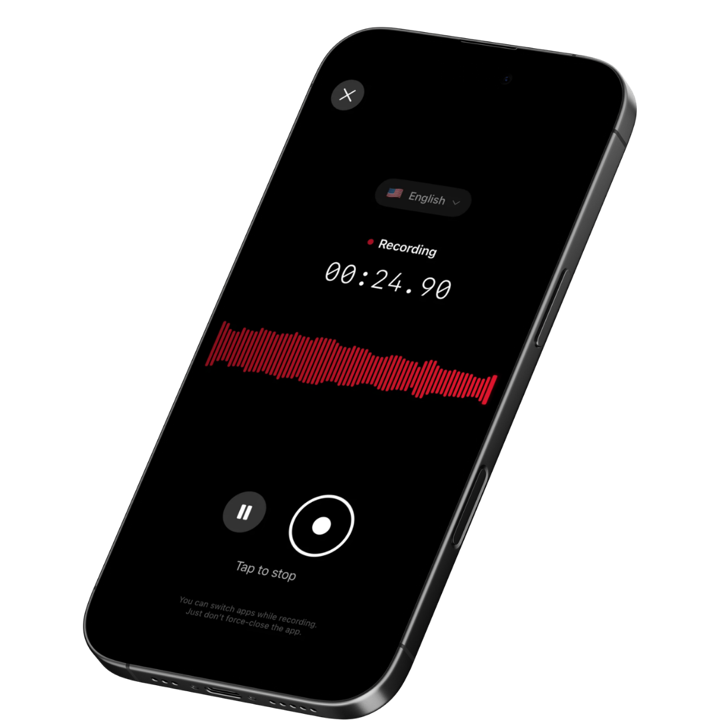
Voice capture offers a fundamentally different approach. Instead of burdening your team with yet another tool that adds to their workload, SpeakWise simplifies it. One tap to record, AI handles transcription and summaries, and Notion integration keeps everything organized. Less friction. Less frustration. More reasons to stay.
Download SpeakWise from the App Store and discover how one-tap recording, AI transcription, intelligent summaries, and Notion integration can help your team work smarter-and happier.
Join 10,000+ professionals who've discovered that the best retention strategy isn't more perks-it's better tools that respect people's time and attention.
Get SpeakWise Free →
4.9★ App Store Rating | iOS Optimized

🎯 4.9★ App Store Rating | 📱 Built for iOS
