Employee Satisfaction Statistics 2026

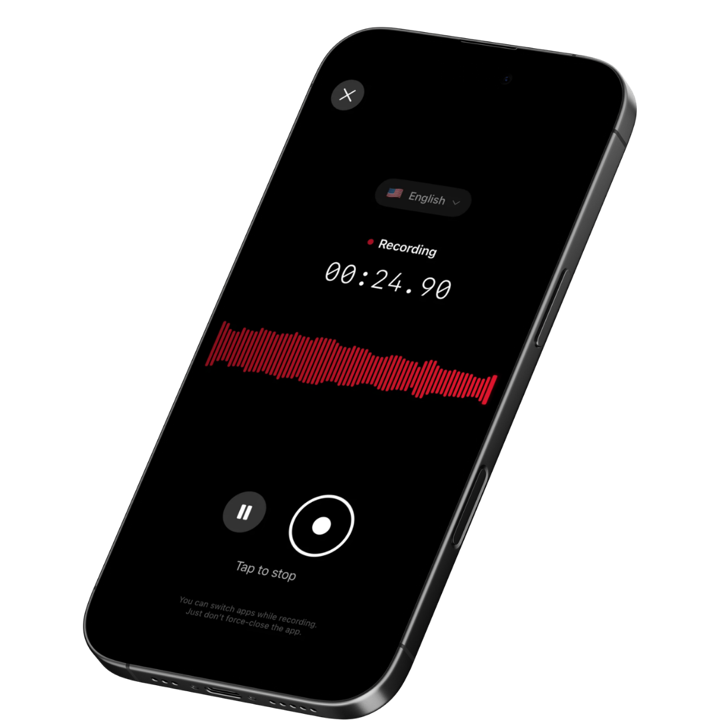

Used by recruiters, executives, consultants, and more.
Employee Satisfaction Statistics 2026
Job satisfaction spiked by 5.7 percentage points in 2025 - the largest single-year jump in survey history. But workers under 25 were the only group to see a decline, with only 57.4% satisfied. Work-life balance now tops pay as the #1 motivator for the first time in 22 years. Hybrid workers report the highest satisfaction scores. These 16 statistics reveal the complex reality of employee satisfaction in 2026.
Employee satisfaction numbers look better than they have in decades. But the averages hide a complicated story. Older workers are more satisfied. Younger workers are less. Hybrid employees thrive. Remote workers experience both higher engagement and higher stress. The drivers of satisfaction have shifted fundamentally, with flexibility and balance overtaking compensation.
This post covers 16 statistics on employee satisfaction in 2026. These numbers reveal who is satisfied (and who is not), what drives satisfaction today, and where the gaps are widening.
1. Job satisfaction hit its highest level since 1987
The Conference Board's annual job satisfaction survey recorded its highest level since tracking began in 1987. Satisfaction spiked by 5.7 percentage points in a single year - the largest jump in the survey's history. This surge reflects several factors: a strong labor market giving workers more leverage, increasing adoption of flexible work models, and growing employer investment in wellbeing programs. The headline number is positive. The details beneath it are more nuanced.
Source: The Conference Board - Job Satisfaction 2025
2. Only 57.4% of workers under 25 are satisfied
The generational divide in satisfaction is the most concerning finding in the data. Only 57.4% of U.S. workers under age 25 report being satisfied with their jobs. Workers aged 55 and older report 72.4% satisfaction. While overall satisfaction climbed, workers under 25 were the only age group to experience a decline. The youngest workers are entering a workforce that is supposedly improving - yet they feel worse about it than any other group.
Source: The Conference Board - Job Satisfaction 2025
3. Work-life balance now tops pay as the #1 motivator
For the first time in 22 years, work-life balance has officially surpassed compensation as the top motivator for employees. 28% of all employees rank balance as their primary workplace priority, slightly above the 27% who rank compensation first. This shift represents a fundamental change in the employment value proposition. Organizations that compete primarily on salary are fighting the last war.
Source: SurveyMonkey - Work-Life Balance Statistics 2025
4. 50% of U.S. employees are extremely or very satisfied
About half of U.S. employees (50%) report being extremely or very satisfied with their jobs. Another 38% are somewhat satisfied. The remaining 12% are not satisfied at all. These numbers suggest that while dissatisfaction is not the majority experience, deep satisfaction is not either. Half the workforce occupies a lukewarm middle ground where they are not unhappy enough to leave but not engaged enough to bring their best work.
Source: High5 Test - Employee Satisfaction Statistics 2024-2025
5. Hybrid workers report the highest satisfaction scores
Work model has become a primary satisfaction driver. Hybrid workers consistently report the highest satisfaction scores across most dimensions of the work experience. Remote work increases the likelihood of job satisfaction by 67% but also increases the likelihood of job stress by 26%. This paradox reveals that the ideal model is not fully remote but a balanced hybrid that combines autonomy with connection.
Source: Owl Labs - State of Hybrid Work 2025
6. 60% of remote-capable employees prefer hybrid models
The preference data confirms what the satisfaction data suggests. 60% of remote-capable employees prefer a hybrid work model. 83% of all employees express a preference for some form of hybrid arrangement. The consistency of this preference across surveys, industries, and geographies makes hybrid the de facto standard for knowledge work. Satisfaction strategies that ignore this preference will fail.
Source: Owl Labs - State of Hybrid Work 2025
7. 46% of employees would quit if forced back to the office full-time
Flexibility has shifted from a perk to a condition of employment. 46% of employees say they would quit if forced to return to the office full-time. Another 40% would start actively job hunting if flexible work were taken away. 22% would expect a raise to compensate for lost flexibility, valuing it at the equivalent of an 8% salary increase. These numbers make flexibility a retention imperative, not a policy debate.
Source: Owl Labs - State of Hybrid Work 2025
8. Women's job satisfaction surpassed men's for the first time since 2011
The gender gap in job satisfaction has inverted. Women's overall job satisfaction (68.8%) surpassed men's (67.9%) for the first time since 2011. This shift may reflect increased workplace flexibility benefiting women who disproportionately manage caregiving responsibilities. It may also reflect growing organizational attention to equity and inclusion. Regardless of cause, the convergence represents progress.
Source: The Conference Board - Job Satisfaction 2025
9. Only 21% of employees globally are engaged at work
The satisfaction-engagement gap is important to understand. While satisfaction numbers are historically high, global engagement remains at just 21%. Satisfaction measures whether employees feel positive about their jobs. Engagement measures whether they are invested in their work. You can be satisfied - comfortable, fairly treated, adequately compensated - without being engaged. Engagement requires meaning, challenge, and connection that satisfaction alone does not capture.
Source: Gallup - State of the Global Workplace Report
10. Better health insurance is the #1 perk employees would trade for
When asked what benefits would increase satisfaction, employees prioritized practical needs. Better health insurance (73%) topped the list, followed by more or unlimited vacation (71%), a four-day workweek (68%), and flexible working hours (65%). These preferences reveal that employees value security and autonomy over flashy perks. Ping-pong tables and free snacks do not move the satisfaction needle. Healthcare and flexibility do.
Source: The Interview Guys - State of Remote Work 2025
11. Remote workers report 31% higher engagement but 45% more stress
Remote work delivers a paradox that satisfaction surveys struggle to capture. Remote workers report 31% higher engagement than their in-office counterparts. But they also experience 45% more stress. This dual reality means that remote work amplifies both the positive and negative aspects of the work experience. It creates more autonomy and flexibility but also more isolation, blurred boundaries, and always-on pressure.
Source: The Interview Guys - State of Remote Work 2025
12. 76% cite improved work-life balance as the top benefit of hybrid work
When asked to identify the greatest benefit of hybrid work, 76% of respondents pointed to improved work-life balance. This alignment between the top satisfaction driver (balance) and the top benefit of the preferred work model (hybrid) creates a clear formula: organizations that enable hybrid work are directly addressing the factor employees care about most.
Source: Zoom - Hybrid Work Statistics 2025
13. 32.6 million Americans now work remotely
The remote workforce has stabilized. Approximately 32.6 million Americans work remotely in 2025, representing about 22% of the total workforce. While this is down from pandemic peaks, it represents a permanent structural shift. Remote and hybrid work are no longer experiments. They are established work models that organizations must design satisfaction strategies around.
Source: The Interview Guys - State of Remote Work 2025
14. 40% of workers would take a pay cut for flexibility
The financial value employees place on flexibility is measurable. 40% of workers say they would accept a pay cut in exchange for flexible work arrangements. Workers value this flexibility at the equivalent of an 8% salary increase. This willingness to trade compensation for autonomy quantifies just how deeply flexibility has embedded itself in employee satisfaction calculations.
Source: Owl Labs - State of Hybrid Work 2025
15. Stress remains near record highs despite rising satisfaction
A puzzling finding: employee stress remains near record highs even as satisfaction reaches historic peaks. Workers report elevated workload pressure, economic uncertainty, and digital overload. This suggests that satisfaction and stress can coexist. Employees may be satisfied with their employer, their role, and their compensation while still experiencing unsustainable levels of daily stress. Satisfaction is necessary but not sufficient for wellbeing.
Source: YouGov - US Job Satisfaction Report 2025
16. 24% of new job postings offer flexible arrangements
The supply side is responding to demand. 24% of new job postings now offer flexible work arrangements, while fully remote roles have stabilized at 12% of all postings. These numbers show that employers are adapting, though the gap between employee preferences (83% want hybrid) and employer offerings (24% are hybrid) remains significant. Organizations that close this gap fastest will win the talent competition.
Source: The Interview Guys - State of Remote Work 2025
The Satisfaction Paradox: Better Numbers, Bigger Gaps
The headline satisfaction numbers are encouraging. But the underlying data reveals growing divides that demand attention. Young workers are less satisfied while everyone else improves. Stress remains high even as satisfaction climbs. Engagement lags far behind satisfaction, suggesting that most workers are content but not committed.
The driver shift from pay to balance represents the most fundamental change in workplace expectations in a generation. Organizations that built their retention strategies around compensation are discovering that money alone cannot hold talent when flexibility, meaning, and balance are what employees actually want. The 46% who would quit over lost flexibility represent a structural constraint on return-to-office mandates.
The hybrid model has emerged as the clear satisfaction optimizer. It delivers the balance employees prioritize, the connection that engagement requires, and the autonomy that reduces turnover intent. Organizations that refine their hybrid models rather than mandate office returns will see the strongest satisfaction outcomes. Those that resist will face the labor market consequences.
Job satisfaction is at its highest level in nearly four decades, yet only 21% of workers are engaged. The gap between feeling okay about work and feeling invested in it is where the next decade of culture strategy must focus.---
Stay connected and satisfied without the overload
The tension between connection and overload is at the heart of the satisfaction challenge. Employees want to be informed, aligned, and part of the team. They do not want more meetings, more emails, and more notifications. Satisfaction increases when information flows freely. It decreases when that flow demands constant real-time presence.
Voice recording with AI transcription solves this tension. Share updates asynchronously. Capture meeting decisions for team members in different time zones. Keep everyone in the loop without requiring everyone to be online at the same time.
Download SpeakWise from the App Store and boost team satisfaction with voice-based updates, AI transcription in 100+ languages, and Notion integration that keeps hybrid teams aligned.
Join 10,000+ professionals who stay connected and satisfied by sharing context through voice - not through more meetings.
Get SpeakWise Free
4.9-star App Store Rating | iOS Optimized

🎯 4.9★ App Store Rating | 📱 Built for iOS
