Employee Wellness Statistics 2026: ROI Data


Used by recruiters, executives, consultants, and more.
Employee Wellness Statistics 2026: ROI Data
95% of companies that measure the ROI of wellness programs see positive returns. Comprehensive programs yield up to $6 in healthcare savings for every $1 invested. 91% of HR leaders report lower healthcare costs after implementing wellness initiatives. Yet only a third of workers with access to wellness programs actually use them. The global corporate wellness market reached an estimated $71.89 billion in 2026, on its way to $118.21 billion by 2034.
Employee wellness has shifted from a nice-to-have perk to a core business strategy. The data now overwhelmingly supports that investing in worker health and wellbeing produces measurable financial returns through reduced healthcare costs, lower absenteeism, improved retention, and higher productivity. Yet a significant gap persists between program availability and actual participation.
This post presents 15 statistics that quantify the state, impact, and ROI of employee wellness programs. These numbers come from Wellhub, Health Affairs, the Global Wellness Institute, and major employer surveys to show what works, what does not, and where the market is heading.
Key Employee Wellness Statistics (2026)
- Employee wellness statistics for 2026 show that 95% of companies that measure the ROI of their wellness programs report positive returns (Wellhub).
- Comprehensive employee wellness programs generate $6 in healthcare savings for every $1 invested (Health Affairs).
- 91% of HR leaders report lower healthcare costs after implementing an employee wellness program (Wellhub).
- The global corporate wellness market reached $71.89 billion in 2026 and is projected to hit $118.21 billion by 2034 (Fortune Business Insights).
- 89% of workers say their personal wellness directly impacts their job performance (Wellhub).
- Only 61% of companies actually measure the ROI of their wellness programs, though 95% of those that do see a positive return (Wellhub).
- Just 10% of the global workforce is covered by any kind of workplace wellness program (Global Wellness Institute).
1. 95% of companies measuring wellness ROI see positive returns
95% of organizations that track the return on investment of their corporate wellness programs report positive returns, up from 90% in 2023. Nearly two-thirds of these companies report at least $2 back for every $1 invested. The high positive-return rate addresses the most common objection to wellness spending: uncertainty about whether it works. When 19 out of 20 companies that measure results see positive returns, the question shifts from "should we invest?" to "how much should we invest?" The key qualifier is measurement. Companies that track outcomes are more likely to design effective programs and more likely to see the returns.
Source: Wellhub - Study Reveals Strong Return on Investment for Corporate Wellness Programs
2. Comprehensive wellness programs yield $6 in healthcare savings for every $1 invested
Research published in Health Affairs found that comprehensive employee wellness programs generate an average of $6 in healthcare savings for every $1 spent. More specifically, medical costs fall by approximately $3.27 per dollar invested, and absenteeism costs fall by roughly $2.73 per dollar invested. The $6 return is among the highest ROI figures in any category of corporate spending. Few investments of any kind produce a 6:1 return. The key word is "comprehensive" - programs that address multiple dimensions of health (physical, mental, financial, social) produce significantly better returns than narrow programs focused on a single issue.
Source: Health Affairs - Workplace Wellness Programs Can Generate Savings
3. 91% of HR leaders report lower healthcare costs after wellness programs
91% of HR leaders said the cost of healthcare benefits decreased after implementing a wellness program, up from 78% in 2023. The 13-percentage-point increase in just two years suggests that wellness programs are becoming more effective as organizations gain experience in designing and implementing them. The near-universal cost reduction among companies with wellness programs makes the investment case straightforward. Healthcare benefits are typically the second-largest expense after payroll for most organizations. Any initiative that reduces that cost for 91% of adopters deserves serious consideration from every CFO.
Source: Wellhub - Study Reveals Strong Return on Investment for Corporate Wellness Programs
4. The global corporate wellness market reached $71.89 billion in 2026
The global corporate wellness market reached an estimated $71.89 billion in 2026, up from $68.41 billion in 2025, and is projected to grow to $118.21 billion by 2034 at a compound annual growth rate of about 6.41%. This rapid expansion reflects increasing employer investment in worker health across all dimensions: physical fitness, mental health support, nutrition programs, financial wellness, and digital health platforms. The market's steady growth signals that wellness is no longer a niche benefit offered by progressive tech companies. It has become a mainstream business investment pursued by organizations of every size and industry. The growth rate also indicates that employers who delay investing in wellness are falling further behind their competitors.
Source: Fortune Business Insights - Corporate Wellness Market
5. 85% of workers now have access to at least one wellness program
As of 2025, 85% of workers have access to at least one employer-sponsored wellness program, up from 78% just three years earlier, according to Alight. The rapid expansion in access means that workplace wellness has reached near-universal coverage among the employers that offer it. However, access does not equal utilization. The gap between the 85% with access and the much smaller percentage who actually participate represents the central challenge facing the wellness industry. Making programs available is the easy part. Getting workers to use them consistently requires thoughtful design, effective communication, and programs that genuinely meet employee needs.
Source: Select Software Reviews - 65+ Critical Workplace Wellness Statistics of 2026
6. Only about a third of workers with access to wellness programs use them
Despite 85% access rates, only about one-third of employees with available wellness programs actually use them. Among the workers who do use them, 85% say the programs are valuable. The utilization gap is the wellness industry's most pressing problem. Companies invest in programs that the majority of their workforce ignores. The reasons vary: inconvenient timing, lack of awareness, perceived irrelevance, privacy concerns, and program designs that do not match actual employee needs. Closing this gap requires moving from one-size-fits-all offerings to personalized, accessible programs.
Source: Select Software Reviews - 65+ Critical Workplace Wellness Statistics of 2026
7. 89% of workers link wellness to higher job performance
A 2026 survey by Wellhub found that 89% of workers believe their personal wellness directly impacts their job performance. This finding validates the core premise of workplace wellness programs: healthy workers perform better. The near-universal worker agreement that wellness drives performance creates an opportunity for organizations to frame wellness programs not as benefits but as performance tools. When workers already believe the connection exists, they are more receptive to programs positioned as professional development rather than healthcare perks.
Source: Wellhub - Work-Life-Wellness 2026
8. Mental health is the most popular wellness benefit category in 2025
Mental health and wellbeing is the most popular employee benefit category in 2025, with 86% of employee benefits brokers reporting that their clients are investing more in mental health support. The mental health focus reflects the data showing that mental health challenges are now among the leading drivers of absenteeism, presenteeism, and disability claims. Within mental health, brokers report the sharpest growth in stress management and resilience programs (70%) and mindfulness and meditation offerings (55%). The trend signals that employers are moving past one-off perks toward sustained, multi-year investment in mental health infrastructure.
Source: Wellable - 120 Employee Wellness Statistics for 2026
9. 64% of brokers report clients are investing more in wellness engagement programs
64% of employee benefits brokers say their clients increased investment in wellness engagement programs in 2025, signaling growing organizational commitment to employee health as a business priority. The spending increase reflects both the strength of the ROI data and growing employee expectations for wellness support. As wellness programs become standard, companies that underspend risk losing talent to competitors who invest more heavily. The broker-reported increase means that the wellness market will continue to grow, with employers who do not keep pace falling behind in both employee experience and health cost management.
Source: Wellable - 120 Employee Wellness Statistics for 2026
10. 72% of employers saw reduced healthcare costs after implementing wellness
A broad survey found that 72% of employers reported lower healthcare costs after implementing wellness programs. The cost reductions came from fewer emergency room visits, lower prescription drug utilization, reduced hospital admissions, and improved management of chronic conditions. The 72% success rate is encouraging but notably lower than the 91% reported by companies that specifically measure ROI. The gap suggests that organizations that rigorously measure wellness outcomes design better programs and achieve better results. Measurement itself is an intervention that improves program quality and accountability.
Source: Wellable - 120 Employee Wellness Statistics for 2026
11. Comprehensive programs achieve returns of 150% or more; narrow programs max out at 50%
Research by Wellhub found that companies with comprehensive wellbeing approaches - covering physical, mental, financial, and social health - saw returns of 150% or more, with 24% of companies achieving this level. Companies offering only one or two types of support saw returns between 0% and 50%. The gap between comprehensive and narrow programs is the most actionable finding in the wellness data. It tells organizations exactly what to do: invest broadly. A gym membership alone will not move the needle. A program that combines physical activity, mental health support, financial coaching, and social connection produces dramatically better outcomes.
Source: Wellhub - Study Reveals Strong Return on Investment for Corporate Wellness Programs
12. Only 61% of companies measure the ROI of their wellness programs
Just 61% of companies actually measure the return on investment of their wellbeing programs, according to Wellhub's 2026 Return on Wellbeing Report, a global survey of more than 1,500 HR and benefits leaders across 10 countries. Among the companies that do measure ROI, 95% report a positive return - but the nearly 40% that never measure results have no way to know whether their wellness spending is working. The measurement gap represents one of the biggest blind spots in corporate wellness: money is being spent on programs whose value is simply never checked. Closing this gap is often the fastest way for an organization to improve its wellness ROI, since measurement itself tends to drive better program design.
Source: Wellhub - 2026 Return on Wellbeing Report
13. 85% of HR leaders say wellness programs are important for retaining top performers
85% of HR leaders say wellness programs are important for retaining top performers, according to Wellhub's 2026 Return on Wellbeing Report. The same survey found 88% of organizations rank retaining top performers as a top priority for 2026 as companies adapt to AI-driven change and rising performance demands. Wellness has moved from a background perk to a front-line retention tool: when top performers leave, it is treated as a direct hit to business performance rather than just an HR problem. Organizations that connect their wellness strategy explicitly to retention goals are better positioned to keep the employees whose departure would cost them the most.
Source: Wellhub - 2026 Return on Wellbeing Report
14. 75% of organizations report wellness ROI above 50%, and nearly 25% see returns exceeding 100%
75% of organizations report a return on investment of more than 50% on their wellbeing programs, and nearly 25% report returns exceeding 100%, according to Wellhub's 2026 Return on Wellbeing Report. These figures show that strong wellness returns are now the norm rather than the exception among companies that invest seriously in the category. A quarter of organizations more than doubling their investment through returns is a rare result in corporate spending of any kind. The data reinforces that wellness is not a speculative bet: for most organizations that commit to it, the financial case resolves clearly in favor of the program.
Source: Wellhub - 2026 Return on Wellbeing Report
15. Just 10% of the global workforce is covered by a workplace wellness program
The Global Wellness Institute estimates that only about 10% of the global workforce is covered by any kind of workplace wellness program or service. The figure is a reminder that, despite the rapid growth of the corporate wellness market, wellness benefits remain concentrated in a small slice of the world's employers - mostly large companies in wealthy countries. For the vast majority of workers globally, employer-sponsored wellness support simply does not exist yet. The gap represents both an unmet need and a significant long-term growth opportunity for the wellness industry as coverage expands into small and mid-sized employers and into emerging markets.
Source: Global Wellness Institute - Workplace Wellness
The Wellness Paradox: Programs Exist, but Workers Do Not Use Them
The data tells two stories simultaneously. The first is a success story: wellness programs work. They reduce healthcare costs, lower turnover risk, and produce returns that rival or beat almost any other category of corporate spending. Ninety-five percent of companies that measure returns see positive results, and a quarter of organizations see returns of more than 100%. The evidence base for corporate wellness is now overwhelming.
The second story is one of unrealized potential. Despite 85% access rates, only about a third of workers actually use the programs available to them. Globally, only about 10% of the workforce is covered by any kind of employer-sponsored wellness program, and even among companies that do offer one, only 61% measure whether it is working. The gap between availability and utilization means that much of what companies spend on wellness never reaches the workers who need it most - and for hundreds of millions of workers worldwide, there is no program to use in the first place.
The path forward is measurement and expansion. Companies that track outcomes consistently report stronger returns than those that do not, and brokers report growing employer investment specifically in mental health support - the category with the clearest link to absenteeism, presenteeism, and disability claims. The wellness industry's next chapter will be defined not by whether programs work but by how far coverage extends beyond the large employers who currently dominate the market, and by how many of the companies that do offer wellness benefits actually measure what they get from them.
95% of measured programs show positive ROI. Comprehensive wellness yields $6 for every $1 invested. Yet only about a third of workers with access actually use their programs, and just 10% of the global workforce has access at all. The biggest opportunity in employee wellness is not creating more programs - it is extending access to the workers who have none and getting the workers who already have one to use it.---
Wellness starts with reducing daily work friction
These 15 statistics show that wellness programs work best when they reduce the stressors that cause health problems in the first place. Meeting overload, information chaos, and the cognitive strain of manual documentation all contribute to the burnout and stress that wellness programs try to fix. Removing friction from daily work is itself a wellness intervention.
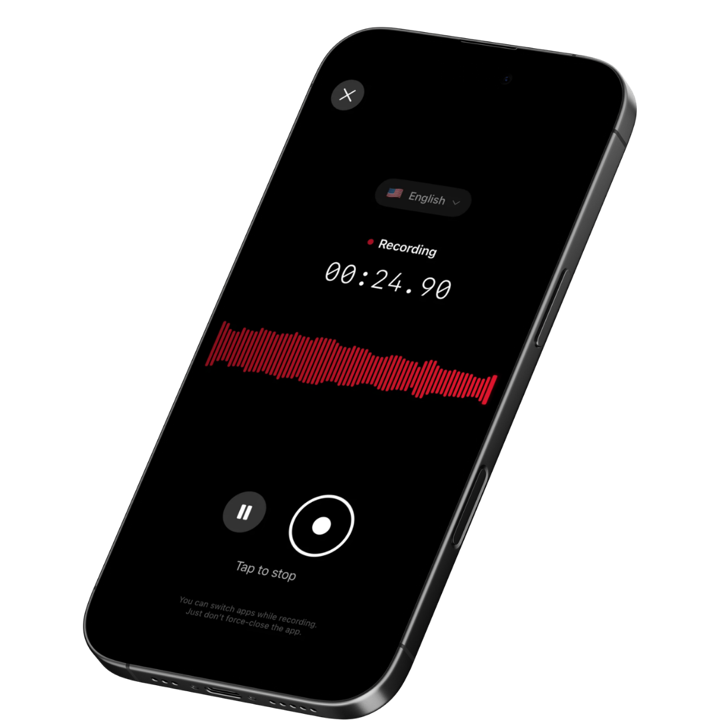
Voice capture reduces one of the most persistent daily stressors: the burden of capturing, organizing, and following up on meeting content. When AI handles transcription, summarization, and action item extraction, workers reclaim mental energy for the work - and rest - that actually matters.
Download Speakwise from the App Store and reduce daily work stress by letting AI capture your meetings, organize your notes, and track your action items automatically.
Join 10,000+ professionals who protect their wellbeing by eliminating the busywork that drains their energy.
Get Speakwise Free
4.9-star App Store Rating | iOS Optimized

🎯 4.9★ App Store Rating | 📱 Built for iOS
