Executive Communication Statistics 2026
Used by recruiters, executives, consultants, and more.
Executive Communication Statistics 2026
Ineffective communication costs organizations $54,860 per senior employee annually. Only 19% of associates trust their CEO to tell the truth about the organization. Senior employees lose 63 work days per year due to communication failures, and 48% of C-level leaders must intervene in projects because of miscommunication. These 15 statistics expose the high cost and low trust that define executive communication in 2026.
Executive communication is different from all other workplace communication. When a frontline employee miscommunicates, one task might go wrong. When an executive miscommunicates, entire departments shift direction based on misunderstood priorities. The stakes are higher, the audience is larger, and the consequences cascade further.
This post presents 15 statistics on executive communication in 2026. These numbers cover the financial cost of poor executive messaging, the trust gap between leaders and employees, the time executives spend on communication, and emerging trends in AI and measurement. Whether you are a C-suite leader, an internal communications professional, or a manager trying to bridge the gap between leadership and frontline teams, these data points reveal where the system is broken and where it can be fixed.
1. Ineffective communication costs $54,860 per senior employee annually
For employees earning over $200,000 per year, ineffective communication extracts a staggering toll. Each senior employee loses $54,860 in productivity annually due to communication failures. This figure reflects time spent clarifying ambiguous directions, correcting misunderstandings, and managing the downstream effects of unclear messaging. For a company with 100 senior leaders, that adds up to nearly $5.5 million per year lost to communication friction at the top.
Source: Axios HQ - Internal Communications Statistics 2025
2. Senior employees lose 63 work days per year to communication failures
The time cost is equally alarming. Senior employees lose an average of 63 work days per year to ineffective communication. That is roughly three months of working time consumed by chasing clarifications, attending unnecessary meetings to align on misunderstood priorities, and rebuilding context that was never properly shared. For leaders whose time is the organization's most expensive resource, this waste is extraordinary.
Source: Axios HQ - Internal Communications Statistics 2025
3. Only 19% of associates trust their CEO to tell the truth
The trust gap at the executive level is severe. Only 19% of associates - frontline and mid-level employees - trust their CEO to tell the truth about the organization. Compare this to 52% of fellow executives who trust the CEO. This 33-point gap between executive trust and associate trust reveals a fundamental credibility problem. The further you are from the C-suite, the less you believe what the C-suite says.
Source: Staffbase - Employee Communication Impact Study 2025
4. 48% of C-level leaders must intervene in projects due to miscommunication
Nearly half of all C-level leaders report having to get more involved in projects than they typically should because of ineffective communication. This is a costly failure mode. When executives are pulled into operational details to fix communication breakdowns, they are not spending time on strategy, vision, or the high-value work that only they can do. Poor communication does not just waste time. It misallocates the most expensive talent in the organization.
Source: Axios HQ - Internal Communications Statistics 2025
5. 33% of leaders set aside their own work to fix communication fires
A third of all leaders surveyed report having to abandon their planned tasks to address urgent communication failures. These "fire drills" are symptomatic of communication systems that break down under pressure. When leaders spend their days responding to preventable miscommunication instead of advancing strategic priorities, the entire organization operates in reactive mode rather than proactive mode.
Source: Axios HQ - Internal Communications Statistics 2025
6. 10% of leaders preparing critical updates spend over 10 hours per week on them
Executive communication requires significant time investment. Among leaders who prepare critical organizational updates, 10% spend more than 10 hours per week drafting and delivering those updates. Another 20% spend 5 to 10 hours. The total distribution shows that executive communication is not a quick email task. It is a substantial time commitment that must be made efficient to avoid consuming the leader's entire week.
Source: Axios HQ - Internal Communications Statistics 2025
7. 86% of leaders say transparency increases workforce trust
The solution to the trust gap is clear. 86% of business leaders surveyed by Deloitte said that the more transparent an organization is, the greater the workforce trust. Transparency does not mean sharing every detail. It means explaining the reasoning behind decisions, acknowledging challenges honestly, and keeping employees informed about the organization's direction. The data confirms what employees already know: honesty builds trust.
Source: O.C. Tanner - 2026 Global Culture Report
8. Clear leadership communication makes employees 3x happier
Employees who rate leadership communication as very clear are three times as likely to report being happy in their roles compared to those who describe communication as unclear. Happiness at work is not just about salary, perks, or flexibility. It is fundamentally about understanding what is expected, why decisions are made, and where the organization is headed. Clarity is a precondition for engagement.
Source: O.C. Tanner - 2026 Global Culture Report
9. Transparent leadership reduces employee anxiety by 40%
The mental health impact of executive communication is measurable. When leaders communicate transparently about work changes, challenges, and expectations, the odds of employees experiencing probable anxiety decrease by 40%. This finding transforms executive communication from a business efficiency issue into a wellbeing issue. How leaders communicate directly affects the psychological health of every person in the organization.
Source: O.C. Tanner - 2026 Global Culture Report
10. 75% of communications professionals use AI to draft or edit executive content
AI has become a standard tool in executive communication. 75% of internal communications professionals report using generative AI to draft or edit content, including executive messages, company updates, and organizational announcements. This adoption rate signals a fundamental shift in how executive communication is produced. AI helps leaders communicate more frequently and consistently without proportionally increasing the time burden.
Source: Axios HQ - Internal Communications Report 2025
11. 47% of organizations use AI for meeting transcription and note-taking
Nearly half of all organizations now use AI to transcribe meetings and take notes. For executives, this means critical discussions, decisions, and commitments can be captured accurately without relying on someone's memory or handwritten notes. This trend directly addresses one of the most common executive communication failures: decisions made in meetings that never get documented or distributed.
Source: Axios HQ - Internal Communications Report 2025
12. 76% of employees globally trust their employer
While CEO trust is low, employer trust as a general institution remains high. 76% of employees globally trust their employer, making employers the most trusted institution ahead of NGOs, media, and government. However, this figure declined from 79% in 2024, suggesting that even institutional trust is eroding. The gap between trusting the organization and trusting the CEO reveals an opportunity: improve executive communication and overall trust rises.
Source: Staffbase - Employee Communication Impact Study 2025
13. Quantitative metrics are now the most-used way to measure internal communications
For the first time, quantitative metrics have become the most common method for measuring internal communications success. Open rates, click-through rates, and engagement scores have replaced anecdotal feedback as the primary performance indicators. This shift toward measurement creates accountability for executive communication in ways that did not exist before. If a CEO's town hall message has low engagement, the data now shows it.
Source: Axios HQ - Internal Communications Report 2025
14. 25% of organizations use AI to analyze employee sentiment
One in four organizations now uses AI to analyze how employees feel about executive communication and organizational decisions. Sentiment analysis provides real-time feedback that traditional surveys cannot match. Instead of learning months later that employees felt blindsided by a decision, leaders can see the reaction within days and adjust their communication accordingly.
Source: Axios HQ - Internal Communications Report 2025
15. Non-desk employees receive communication from managers at significantly lower rates
The executive communication gap is widest for non-desk workers. Only 48% of non-desk employees report feeling well-informed by their managers, compared to 65% of desk-based employees. Executive messages that flow through digital channels often never reach the frontline. This 17-point gap means that a significant portion of the workforce operates without the strategic context that executives assume everyone has received.
Source: Staffbase - Employee Communication Impact Study 2025
The Executive Communication Crisis: Trust, Time, and Transparency
These statistics reveal three interconnected problems. First, executives spend enormous time on communication, yet the output often fails to reach or convince the audience. Second, the trust gap between executives and frontline employees means that even well-crafted messages are received with skepticism. Third, the financial cost of these failures, at $54,860 per senior employee, makes executive communication one of the most expensive broken systems in business.
The positive signals are the growing adoption of AI tools for drafting, transcription, and sentiment analysis. These technologies can help executives communicate more frequently, more clearly, and with better feedback loops. But technology alone will not close the trust gap. That requires a fundamental commitment to transparency, honesty, and consistency.
The organizations excelling at executive communication in 2026 treat it as a strategic function, not an afterthought. They measure it rigorously, invest in it deliberately, and hold leaders accountable for the clarity and reach of their messaging.
When only 19% of associates trust the CEO to tell the truth, the problem is not what executives say. It is how - and whether - the message reaches the people who need to hear it.---
Help executives communicate clearly without losing hours to preparation
The data shows executives spending up to 10+ hours per week preparing organizational updates. Meanwhile, the most impactful communication often happens in real-time conversations, meetings, and discussions that never get properly documented or shared beyond the room.
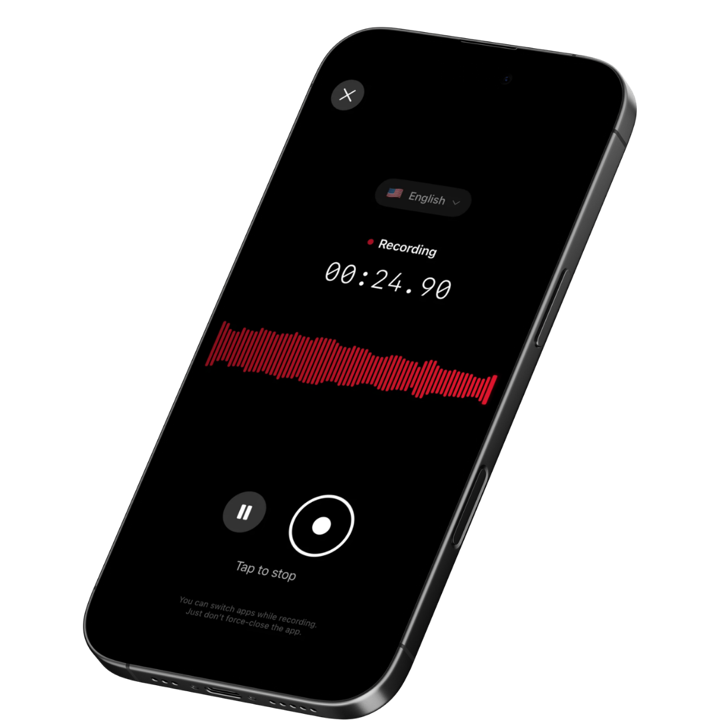
Voice capture bridges this gap. Instead of spending hours drafting the perfect email summary of what was discussed, executives can record the conversation and let AI handle the rest. The transcript captures every detail. The summary highlights what matters. The action items get extracted automatically.
Download Speakwise from the App Store and turn executive conversations into clear, shareable records with one-tap recording, AI transcription in 100+ languages, and instant Notion sync.
Join 10,000+ professionals who save hours on communication follow-up by capturing it at the source.
Get Speakwise Free
4.9-star App Store Rating | iOS Optimized

🎯 4.9★ App Store Rating | 📱 Built for iOS
