Feedback Culture Statistics 2026
Used by recruiters, executives, consultants, and more.
Feedback Culture Statistics 2026
96% of employees say regular feedback drives their daily motivation, yet less than 30% of global workers receive it consistently. Meaningful feedback lifts engagement 4x more than office attendance mandates. 97% of Gen Z workers want regular feedback, trained managers see 22% higher engagement, and 66% of employees would leave if they felt unappreciated. These 16 statistics expose the gap between what workers need and what organizations deliver.
Feedback is the simplest performance lever most organizations underuse. It costs nothing to implement. It directly improves engagement, retention, and productivity. Yet the data consistently shows that most employees are starved for it. The annual performance review model is dying, but most organizations have not built anything meaningful to replace it.
This post covers 16 statistics that reveal the current state of feedback culture in 2026. From the demand side - what employees want - to the supply side - what organizations provide - these numbers make the business case for building a continuous feedback culture that goes beyond quarterly check-ins.
1. 96% of employees say regular feedback drives daily motivation
Feedback is not a perk. It is a primary driver of motivation. 96% of employees state that receiving regular feedback is a key driver of their daily motivation at work. This near-universal demand means that withholding feedback - whether through neglect, busyness, or discomfort - directly undermines the motivation of almost every worker. The data could not be clearer: people want to know how they are doing, and they want to know regularly.
Source: HireBorderless - Employee Feedback Statistics 2026
2. Less than 30% of workers receive consistent feedback
Despite the overwhelming demand, delivery falls far short. Less than 30% of global workers report receiving the consistent feedback they need. This means more than 70% of the workforce operates in a feedback vacuum - making decisions, building skills, and navigating relationships without regular input on what is working and what is not. The feedback gap is not a minor inconvenience. It is a structural failure in how most organizations develop their people.
Source: HireBorderless - Employee Feedback Statistics 2026
3. Meaningful feedback lifts engagement 4x more than office mandates
The return-to-office debate has dominated workplace strategy, but the data points elsewhere. The lift in employee engagement from meaningful feedback is four times greater than the increase seen from simply working the "right" number of office days. This comparison should reshape how leaders allocate their attention. Time spent crafting return-to-office policies might deliver more impact if redirected toward training managers to give better feedback.
Source: Qualtrics - Employee Experience Trends 2026
4. 97% of Gen Z workers want regular feedback
The incoming generation of workers has the strongest feedback expectations yet. 97% of Gen Z workers say they are open to receiving feedback regularly or after projects. This generation grew up with instant feedback loops in gaming, social media, and education. They expect the same responsiveness at work. Organizations that fail to meet this expectation will struggle to attract and retain the youngest segment of the talent pool.
Source: Peaceful Leaders Academy - Employee Feedback Statistics 2025
5. 83% of employees appreciate feedback, whether positive or negative
The fear of giving negative feedback is often overstated. 83% of employees say they appreciate feedback regardless of whether it is positive or negative. Workers do not just want praise. They want honest, actionable input that helps them improve. This finding should give managers confidence that direct, constructive feedback is not only accepted but actively welcomed by the vast majority of their teams.
Source: Peaceful Leaders Academy - Employee Feedback Statistics 2025
6. Only 16% of employees say their last manager conversation felt meaningful
Frequency alone does not solve the feedback problem. Quality matters just as much. Only 16% of employees feel their most recent conversation with a manager was deeply meaningful. The remaining 84% experience check-ins and reviews as superficial, performative, or disconnected from their actual work. Meaningful feedback requires specificity, context, and genuine engagement - not just ticking a box on a quarterly schedule.
Source: Qualtrics - Employee Experience Trends 2026
7. Trained managers see 22% higher engagement and 28% lower turnover
Manager training on feedback delivery produces measurable results. When managers are trained to give strengths-based, meaningful feedback, they report up to 22% higher personal engagement. Their teams see up to 18% higher engagement, over 12% greater productivity, and turnover drops by as much as 28%. The compounding effect of these improvements makes feedback training one of the highest-ROI investments in people development.
Source: OrangeHRM - Employee Feedback Statistics 2026
8. 66% of employees would leave if they felt unappreciated
The retention risk of a feedback-poor culture is severe. 66% of employees say they would likely leave their job if they did not feel appreciated by their manager. This statistic transforms feedback from a "nice to have" development tool into a critical retention mechanism. In a labor market where replacing an employee costs 50-200% of their salary, the math strongly favors investing in recognition and feedback systems.
Source: HiBob - Employee Engagement and Retention Statistics 2025
9. 62% of workers want more peer feedback, not just manager feedback
Feedback culture is not just a top-down responsibility. 62% of workers wish their peers gave them more input on their performance and collaboration. This demand reflects a mature understanding that the people you work with daily often have the most relevant and timely observations about your strengths and areas for growth. Building a true feedback culture means making it everyone's responsibility, not just the manager's.
Source: OrangeHRM - Employee Feedback Statistics 2026
10. Organizations with high engagement see 59% lower turnover
The connection between engagement and retention is one of the strongest in organizational research. Organizations with high employee engagement - driven in large part by effective feedback - show 59% lower turnover rates compared to disengaged workforces. They also report 23% higher profitability. Engagement is not an abstract metric. It is a leading indicator of whether people stay, perform, and contribute at their best.
Source: HiBob - Employee Engagement and Retention Statistics 2025
11. Only 23% of workers feel they get enough recognition
Recognition is the most basic form of positive feedback, and most organizations fall short. Only 23% of workers strongly agree that they receive enough recognition for their efforts. When over three-quarters of the workforce feels under-recognized, the effects ripple through engagement scores, discretionary effort, and team morale. Recognition does not require complex systems. It requires consistent, specific acknowledgment of good work.
Source: Peoplebox - Employee Engagement Statistics 2025
12. Global engagement dropped from 23% to 21% in 2024
The engagement crisis is getting worse, not better. Global employee engagement fell from 23% to 21% in 2024, the largest decline since the pandemic. Multiple factors contribute to this drop, but the feedback deficit plays a central role. When workers feel disconnected from their managers, invisible in their contributions, and unsure about their performance, engagement erodes. Feedback culture is one of the most direct paths to reversing this trend.
Source: HiBob - Employee Engagement and Retention Statistics 2025
13. 42% of turnover is preventable with better management practices
Not all attrition is inevitable. Research shows that 42% of employee turnover is preventable, and better management practices - including more frequent, higher-quality feedback - are the primary lever. This means nearly half the cost of replacing departing employees could be avoided with relatively straightforward changes to how managers communicate with their teams. The ROI of feedback training calculates quickly when measured against turnover costs.
Source: SecondTalent - Employee Retention Statistics 2025
14. 84% of highly engaged employees plan to stay with their employer
Engagement driven by strong feedback creates loyalty. 84% of highly engaged employees plan to stay with their current employer, compared to far lower retention rates among disengaged workers. This stability provides compounding benefits: lower recruiting costs, preserved institutional knowledge, stronger team dynamics, and more effective onboarding as experienced employees mentor newcomers. Feedback culture builds the foundation for this kind of organizational stability.
Source: eLearning Industry - Employee Engagement Statistics 2025
15. The average organization loses 18.3% of its workforce annually
Employee turnover is a persistent challenge that feedback culture can address. The average organization loses 18.3% of its workforce annually, with voluntary departures accounting for 76% of all exits. For a 1,000-person company, that means roughly 183 departures per year, most of which are voluntary. Given that 42% of turnover is preventable and 66% of employees leave over feeling unappreciated, improving feedback could meaningfully reduce this churn.
Source: SecondTalent - Employee Retention Statistics 2025
16. More than half of employees are considering leaving their jobs
The retention risk is not hypothetical. More than half of employees are currently considering leaving their jobs, meaning self-reported turnover risk is the highest it has been since 2015. This wave of potential departures represents an enormous risk - and opportunity. Organizations that respond with stronger feedback cultures, better recognition systems, and more meaningful manager conversations can differentiate themselves in a market where most employers are losing the retention battle.
Source: HiBob - Employee Engagement and Retention Statistics 2025
The Feedback Gap Is a Leadership Gap
The data tells a simple story. Employees overwhelmingly want feedback. Most do not get it. The organizations that close this gap see dramatically better outcomes - higher engagement, lower turnover, greater productivity. Those that ignore it pay a steep price in attrition, disengagement, and lost potential.
The biggest barrier is not time. It is skill and habit. Most managers were never trained to give feedback effectively. They default to vague praise, avoid difficult conversations, and treat annual reviews as a compliance exercise. The 16% who feel their last manager conversation was meaningful represent a standard that should be the norm, not the exception.
Building a feedback culture requires three things: training managers on how to deliver specific, strengths-based feedback; creating systems that make feedback a regular habit rather than a scheduled event; and extending feedback beyond the manager-employee relationship to include peer input. The companies moving ahead in 2026 have already started.
The most engaged, productive, and loyal teams are not the ones with the best perks. They are the ones where people hear honest, specific, actionable feedback - and hear it often.---
Capture feedback in the moment - before it fades
The best feedback happens in real time. A quick observation after a presentation. A coaching note during a client call. A peer insight after a brainstorm. The problem is that most of these moments happen verbally and are never recorded. By the time the next one-on-one arrives, the specifics are gone.
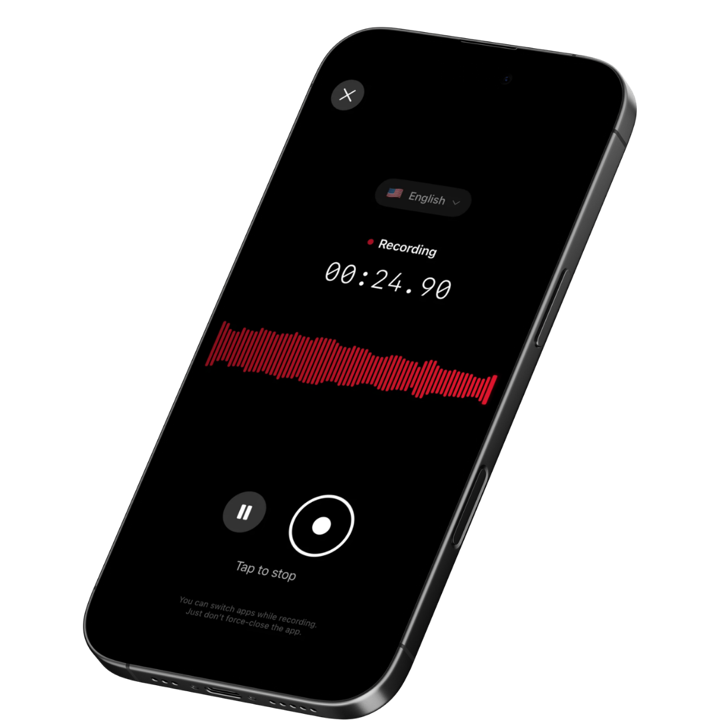
Voice notes solve this problem. Capture feedback the moment it occurs by speaking it into your phone. AI transcription converts your spoken feedback into organized text. Summaries highlight key points. Everything syncs to Notion, creating a running record of feedback that managers and peers can reference, build on, and track over time.
Download SpeakWise from the App Store and start capturing real-time feedback that drives growth, retention, and performance.
Join 10,000+ professionals who use SpeakWise to build a feedback culture powered by voice capture and AI organization.
Get SpeakWise Free
4.9-star App Store Rating | iOS Optimized

🎯 4.9★ App Store Rating | 📱 Built for iOS
