Freelancer Productivity Statistics 2026: Key Data


Used by recruiters, executives, consultants, and more.
Freelancer Productivity Statistics 2026: Key Data
More than 70 million Americans now identify as gig workers, and 46.6% of the global workforce engages in freelancing or independent work. The average U.S. freelancer earns $108,028 annually. 60% use AI-powered platforms for skill development, up from 35% in 2023. And the global gig economy is projected to reach $674.1 billion in 2026. These statistics capture a workforce transformation that shows no signs of slowing.
The freelance economy has moved well beyond side hustles and temp work. High-earning freelancers making $100,000 or more surged from 3 million in 2020 to 5.6 million in 2025. Three-quarters of U.S. freelancers say they earn more now than in their previous salaried positions. AI tools are amplifying productivity, and 82% of gig workers say they are happier working independently.
This post presents 16 statistics that define freelancer productivity in 2026. Whether you are considering freelancing, already independent, or managing teams that include freelancers, these numbers provide the data foundation for understanding how the world's fastest-growing workforce segment actually works.
1. 70 million Americans now identify as gig workers
The freelance workforce has reached critical mass in the United States. More than 70 million Americans now identify as gig workers, representing a substantial portion of the total labor force. This figure has grown steadily over the past five years as platform technology, remote work infrastructure, and changing attitudes toward traditional employment have lowered barriers to independent work. The scale of this shift means freelancing is no longer a niche career path. It is a mainstream employment model.
Source: The Interview Guys - The State of the Gig Economy in 2025
2. 46.6% of the global workforce engages in freelancing or independent work
Freelancing is not just an American phenomenon. Approximately 46.6% of the global workforce - roughly 1.57 billion people - engages in freelancing or independent work as of 2025. This near-majority share reflects a global shift in how work is structured. In many developing economies, gig work has always been the norm. What is new is the convergence: developed economies are now catching up, driven by digital platforms that connect skilled professionals with global clients regardless of location.
Source: DemandSage - Freelance Statistics 2026
3. The global gig economy is projected to reach $674.1 billion in 2026
The financial scale of the gig economy continues to expand. The global gig economy market is projected to reach a valuation of $674.1 billion in 2026, growing at a consistent 15.79% compound annual growth rate. This growth is driven by both supply and demand: more workers choose freelancing for flexibility, and more organizations engage freelancers for specialized skills and project-based needs. The market size rivals or exceeds many national economies.
Source: HRStacks - 2026 Gig Economy and Freelance Work Statistics
4. The average U.S. freelancer earns $108,028 annually
Freelancer earnings have risen significantly. As of August 2025, the average annual pay for a freelancer in the United States is $108,028. This figure challenges the outdated perception of freelancing as low-paid work. High-earning freelancers making $100,000 or more surged from 3 million in 2020 to 5.6 million in 2025 according to MBO Partners. The growth in high-income independent work reflects increasing demand for specialized skills in technology, consulting, and creative fields.
Source: Upwork - Freelancing Stats in 2026
5. 60% of freelancers now use AI-powered platforms for skill development
AI adoption among freelancers has nearly doubled in two years. 60% of freelancers now use AI-powered platforms for skill development, up from just 35% in 2023. This rapid adoption reflects the competitive dynamics of freelancing. Independent workers must continuously update their skills to remain marketable, and AI tools provide affordable, accessible learning at any time. Freelancers are leading the broader workforce in AI-for-learning adoption because their income depends directly on staying current.
Source: HRStacks - 2026 Gig Economy and Freelance Work Statistics
6. 95% of freelancers say generative AI makes them more competitive
The competitive advantage of AI tools is nearly universally recognized among freelancers. 95% say generative AI makes them more competitive, and 66% say AI specifically increases their productivity and efficiency. For freelancers, productivity directly equals income. Any tool that reduces time on administrative tasks, speeds up content creation, or improves deliverable quality translates immediately to higher earnings or more available hours for billable work.
Source: Upwork - Freelancing Stats in 2026
7. Freelance writers using AI report a 40% reduction in content creation time
AI's productivity impact is particularly measurable in content creation. Freelance writers using AI tools for writing report a 40% reduction in their content creation time. This does not mean quality declines. Writers use AI for research, outlining, first drafts, and editing - tasks that previously consumed significant hours. The time saved allows writers to take on more projects, invest in higher-quality output, or reclaim personal time. The 40% efficiency gain is among the highest measured in any freelance discipline.
Source: HRStacks - 2026 Gig Economy and Freelance Work Statistics
8. 75% of U.S. freelancers earn more than they did in salaried positions
The income comparison favors freelancing for a clear majority. Three-quarters of U.S. freelancers say they earn more now than they did when they worked in a salaried position. This statistic undermines the traditional assumption that employment provides financial security while freelancing means financial risk. For skilled professionals in high-demand fields, the income ceiling is higher as a freelancer because pricing is tied to market value rather than organizational salary bands.
Source: Upwork - Freelancing Stats in 2026
9. The average full-time freelancer works 43 hours per week
Full-time freelancers work slightly more than the standard 40-hour week. On average, a full-time freelancer works 43 hours per week. However, the structure of those hours differs significantly from salaried work. Freelancers typically have more control over when they work, which allows them to align work hours with their peak productivity periods. The extra three hours often go toward business development, invoicing, and client communication - overhead that salaried employees do not manage directly.
Source: DemandSage - Freelance Statistics 2026
10. 82% of gig workers say they are happier working independently
Satisfaction among independent workers is remarkably high. 82% of gig workers say they are happier working independently, and 77% report being very satisfied with their choice. These satisfaction levels exceed what most employee engagement surveys report for salaried workers, where only 21% are truly engaged globally according to Gallup. Autonomy, flexibility, and the ability to choose projects appear to drive higher baseline satisfaction even when freelancers face income volatility and benefits gaps.
Source: Carry - 2025 Gig Economy Trends for Freelancers
11. 60% of freelancers work remotely, compared to 32% of non-freelance professionals
Remote work is nearly twice as common among freelancers. 60% of freelancers work remotely, compared to just 32% of non-freelance professionals. This gap reflects both the nature of freelance work and the infrastructure freelancers have built over decades. Many freelancers were remote long before the pandemic made it mainstream. Their experience with distributed work, asynchronous communication, and self-managed schedules gives them a productivity advantage that newer remote workers are still developing.
Source: Upwork - Freelancing Stats in 2026
12. 73% of freelancers cite flexible schedules as their top benefit
Schedule flexibility is the single most valued benefit of freelancing. 73% of freelancers cite flexible schedules as their top advantage, followed by 69% who value working on projects that match their personal interests. This flexibility is not just a lifestyle preference. Research shows that control over work timing correlates with higher productivity. Freelancers can work during their peak cognitive hours and schedule administrative tasks for low-energy periods, a luxury most salaried workers do not have.
Source: Carry - 2025 Gig Economy Trends for Freelancers
13. Freelancers collectively generated $1.5 trillion in earnings in 2024
The total economic output of the freelance workforce is enormous. Freelancers collectively generated $1.5 trillion in earnings in 2024. This figure rivals the GDP of countries like South Korea and Australia. It reflects not just the number of freelancers but the increasingly high-value nature of their work. As more senior professionals, executives, and specialists choose freelancing, the average value of freelance output rises alongside the workforce count.
Source: Upwork - Freelancing Stats in 2026
14. 34% of freelancers work in web, mobile, and software development
The freelance workforce is heavily concentrated in technical fields. 34% of freelancers work in web, mobile, and software development, making it the largest freelance category. Writing accounts for 18%, administrative support for 11%, and design and creative for 9%. This distribution reflects where demand is strongest and where remote delivery is most feasible. The dominance of technical freelancing also helps explain the high average earnings, as software development commands premium rates.
Source: DemandSage - Freelance Statistics 2026
15. 80% of freelancers struggle with unexpected $1,000 expenses
Despite high satisfaction and strong earnings, financial vulnerability remains a real challenge. 80% of freelancers struggle with unexpected expenses of $1,000 or more. Income irregularity, delayed payments, and the absence of employer-provided benefits create financial fragility even for well-compensated freelancers. This statistic reveals the gap between headline earnings and financial resilience. Freelancers may earn more on average, but the variability of that income creates stress that salaried workers rarely face.
Source: Carry - 2025 Gig Economy Trends for Freelancers
16. Remote workers report 24% higher job satisfaction than fully on-site workers
Remote work - the dominant mode for freelancers - correlates strongly with satisfaction. Remote workers are 24% more satisfied with their jobs compared to those working fully on-site. For freelancers who work remotely (60% of them), this satisfaction premium compounds with the autonomy and flexibility benefits they already experience. The combination of remote work and freelance independence creates what appears to be the highest-satisfaction work arrangement available in the current labor market.
Source: FlexJobs - Remote Work Index 2026
The Freelance Productivity Advantage: Autonomy, AI, and Flexibility
These 16 statistics paint a picture of a workforce that is growing, earning well, and leveraging technology to stay competitive. 70 million Americans freelance. Nearly half the global workforce participates. AI adoption among freelancers is nearly double what it was two years ago. And satisfaction levels consistently exceed those of salaried employees.
The productivity advantage of freelancing comes from three sources. First, autonomy: freelancers control when, where, and how they work, allowing them to optimize for output rather than presence. Second, AI: freelancers adopt productivity tools faster because their income depends on efficiency. Third, flexibility: the ability to match work hours to peak cognitive performance produces more output per hour than rigid schedules.
The challenges are real. Income volatility, benefits gaps, and financial fragility affect even high-earning freelancers. But the trajectory is clear. The gig economy is growing at nearly 16% annually, earnings are rising, and AI tools are making independent work more productive than ever. Freelancing is no longer the alternative to employment. For a growing share of the workforce, it is the preferred way to work.
The data shows that freelancers are not just choosing flexibility over stability. They are building a work model that delivers higher earnings, greater satisfaction, and faster productivity growth than traditional employment.---
Capture Client Calls, Ideas, and Deliverables Without Missing a Beat
Freelancers juggle client calls, project meetings, creative brainstorms, and business development - often in the same day. Taking detailed notes during a client call means losing focus on the conversation. Missing a key deliverable detail means rework and lost income.
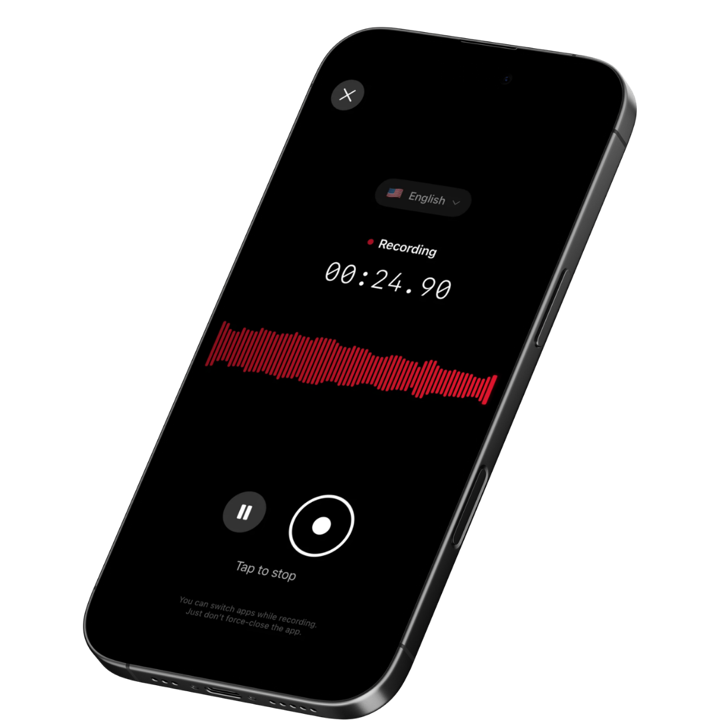
Voice capture lets freelancers stay fully present in every conversation while capturing everything. Record client briefs, project discussions, and creative ideas with a single tap. AI transcription delivers instant summaries, action items, and searchable transcripts. No more scrambling to reconstruct what was discussed after the call ends.
Download Speakwise from the App Store and turn every client conversation, creative session, and project meeting into structured notes with automatic action items - so nothing falls through the cracks.
Join 10,000+ professionals who use voice-first capture to stay productive and never miss a client detail.
Get Speakwise Free
4.9-star App Store Rating | iOS Optimized

🎯 4.9★ App Store Rating | 📱 Built for iOS
