Gig Economy Statistics 2026


Used by recruiters, executives, consultants, and more.
Gig Economy Statistics 2026
Over 70 million Americans now freelance, representing 36% of the total U.S. workforce. The global gig economy is projected to reach $674.1 billion in 2026. Average freelancer income has climbed to $108,028, and high earners making $100K+ surged from 3 million to 5.6 million in five years. These 18 statistics reveal a fundamental shift in how people work, earn, and build careers.
The gig economy is no longer a niche segment of the labor market. It is the labor market's fastest-growing sector. By 2027, projections suggest nearly half of all American workers will freelance in some capacity. This shift is being driven by technology platforms, worker preferences for flexibility, and corporate demand for specialized skills without long-term commitments.
This post covers 18 statistics on the gig economy in 2026 - from market size and earnings to demographics and challenges. Whether you are a freelancer, hire freelancers, or are considering the independent path, these numbers provide the clearest picture of where this movement stands.
Key Gig Economy Statistics (2026)
- Gig workers now number more than 70 million in the U.S., about 36% of the total workforce (The Interview Guys).
- The global gig economy is valued at $674.1 billion in 2026 (DemandSage).
- Average freelancer income in the U.S. has reached $108,028 a year (The Interview Guys).
- By 2027, the U.S. freelance workforce could reach 86.5 million (HR Stacks).
- 77% of gig workers say they are very satisfied with their choice to freelance (The Interview Guys).
- Freelancers contributed $1.27 trillion to the U.S. economy in 2023 (Upwork).
- 63% of independent workers say going independent was entirely their choice (MBO Partners).
1. Over 70 million Americans now participate in freelance work
The U.S. freelance workforce has reached critical mass. More than 70 million Americans engage in freelance or gig work, representing approximately 36% of the total workforce. This is not a side-hustle statistic - it includes full-time independents, part-time freelancers, and contract workers. The growth has been steady: from 53 million in 2014 to 64 million in 2023 to over 70 million in 2025. Freelancing has gone mainstream.
Source: The Interview Guys - State of the Gig Economy 2025
2. The global gig economy is projected to reach $674.1 billion in 2026
The financial scale of the gig economy has become enormous. Global gig economy market value is expected to hit $674.1 billion in 2026, driven by platform expansion, cross-border digital work, and growing corporate reliance on contingent labor. This figure encompasses ride-sharing, delivery, professional freelancing, and creative services. The market has more than doubled in five years, with no sign of slowing.
Source: DemandSage - Gig Economy Statistics 2026
3. Average freelancer income reached $108,028 per year
The earnings narrative around gig work has shifted dramatically. The average annual pay for a freelancer in the United States is $108,028. This figure is driven upward by the growing share of high-skill freelancers in technology, consulting, and creative fields. High-earning freelancers making $100,000 or more surged from 3 million in 2020 to 5.6 million in 2025 - an 87% increase in five years.
Source: The Interview Guys - State of the Gig Economy 2025
4. By 2027, 86.5 million Americans could be freelancing
Industry projections suggest that within the next year, the number of American freelancers could reach 86.5 million - roughly half of the total workforce. This trajectory means that traditional full-time employment may soon be the minority work arrangement, not the default. The shift carries profound implications for benefits systems, tax policy, and how organizations structure their talent strategies.
Source: HR Stacks - 2026 Gig Economy & Freelance Work Statistics
5. Gen Z college graduates are turning to gig work early
Gen Z is entering the workforce through gig and freelance work at high rates. Among 2026 college graduates, 32.5% are looking at gig work and 28% are exploring freelance work as a career path, according to ZipRecruiter's 2026 Graduate Report. Nearly 38% of these graduates are also considering starting their own business. For many, this reflects a shrinking entry-level job market as much as a preference for flexibility and autonomy.
Source: Fortune - With entry-level jobs vanishing, Gen Z grads are ditching corporate jobs
6. 77% of gig workers report being satisfied with their work arrangement
Satisfaction levels among independent workers are high and rising. Seventy-seven percent of gig workers say they are very satisfied with their choice to freelance. The flexibility to control hours, choose clients, and work from anywhere drives this satisfaction premium.
Source: MBO Partners via The Interview Guys - State of the Gig Economy 2025
7. Freelancers contributed $1.27 trillion to the U.S. economy
Upwork's research quantified the economic contribution of American freelancers at $1.27 trillion in 2023 - a figure that rivals the GDP of many nations. This contribution includes direct income, spending on tools and services, and the value freelancers create for the companies that hire them. The trillion-dollar impact underscores that freelancing is not a marginal labor market phenomenon. It is a pillar of the American economy.
Source: Upwork - Gig Economy Statistics and Market Trends 2026
8. 74% of freelancers report better work-life balance than traditional employees
Three-quarters of freelancers say their work-life balance improved after going independent, compared to 62% of traditional workers who report good balance. The ability to set schedules, choose when and where to work, and decline projects that do not fit drives this advantage. However, the balance comes with trade-offs: freelancers must manage their own boundaries without the structure that traditional employment provides.
Source: The Interview Guys - State of the Gig Economy 2025
9. Only 40% of gig workers have access to health insurance
The benefits gap remains the gig economy's most significant challenge. Only 40% of gig workers have access to employer-sponsored medical insurance. Just 25% have dental, 20% have life insurance, and only 5% have short-term disability coverage. Freelancers pay both employer and employee portions of Social Security and Medicare taxes (15.3% of net income), further reducing their effective earnings. Benefits access is the top policy issue for the gig workforce.
Source: The Interview Guys - State of the Gig Economy 2025
10. 60% of freelancers now use AI-powered platforms for skill development
AI is transforming the gig economy from within. Sixty percent of freelancers use AI-powered platforms for upskilling - up from just 35% in 2023. AI tools help freelancers price projects, improve deliverables, find clients, and develop new competencies. This rapid adoption signals that independent workers are often ahead of traditional employees in embracing AI, driven by the direct connection between skills and income.
Source: DemandSage - Gig Economy Statistics 2026
11. 82% of freelancers see more job opportunities in 2025 than the prior year
The gig labor market is expanding rapidly. Eighty-two percent of freelancers report more available opportunities in 2025 compared to the year before - significantly higher than the 63% of traditional employees who say the same. Companies are increasingly turning to freelancers for specialized projects, seasonal work, and roles they cannot fill with permanent staff. The demand side of the gig economy is as strong as the supply side.
Source: Carry - 2025 Gig Economy Trends
12. 80% of full-time gig workers cannot cover a $1,000 emergency expense
Financial vulnerability remains a stark reality for many gig workers. Eighty percent of full-time freelancers whose primary income comes from gig work say they would have difficulty covering an unexpected $1,000 expense. Income volatility, lack of benefits, and inconsistent client payments create financial precarity that higher average earnings do not fully offset. The gig economy's flexibility premium comes with a financial stability discount.
Source: The Interview Guys - State of the Gig Economy 2025
13. 63% of freelancers say the decision to freelance was entirely their choice
The narrative that gig workers are forced into freelancing by a lack of alternatives does not match the data. MBO Partners' 2025 State of Independence report found that 63% of independent workers say going independent was entirely their choice. The same report found that 86% of independent workers report being happier, and 67% feel more secure, than in traditional employment. Voluntary freelancers approach their work as a career choice, not a compromise.
Source: MBO Partners - 2025 State of Independence in America Report
14. Ages 27-42 account for 48% of gig workers
Millennials dominate the gig workforce. Workers aged 27-42 make up nearly half (48%) of all gig workers, bringing a combination of established skills, professional networks, and digital fluency. Gen Z (ages 18-26) comprises approximately 30% of the gig workforce. Together, these two generations account for nearly 80% of all independent workers - a demographic tilt that will only accelerate as older workers retire.
Source: DemandSage - Gig Economy Statistics 2026
15. The average global freelance hourly rate is $23, but specialized skills pay far more
Across all freelance categories worldwide, the average hourly rate for independent workers is $23, according to Payoneer research cited by Upwork. Rates vary sharply by region: North American freelancers average $56 per hour, more than double the global rate, compared to $27 in Western Europe and $20 in Asia. The highest-paid freelance specialties push far past these averages. Media buyers and public relations managers earn $50 to $100 per hour, business consultants $28 to $98, and cybersecurity developers $40 to $90.
Source: Upwork - Gig Economy Statistics and Market Trends 2026
16. Skilled freelancing jumped from 28% to 38% in a single year
Freelancing is accelerating fastest among skilled knowledge workers. Upwork's Future Workforce Index 2026, based on a survey of 2,400 U.S.-based workers conducted in March and April 2026, found that skilled freelancing rose from 28% of skilled knowledge workers in 2025 to 38% in 2026. At the same time, 58% of full-time employees say they are considering freelancing to access better professional opportunities, up from 36% the year before. Freelancers are also moving faster than employers on AI: 41% now use AI agents for autonomous task execution, compared to 34% of full-time employees.
Source: Upwork - The Future Workforce Index 2026
17. 74% of independent workers now use AI in their work
AI adoption among independent workers is high and growing. MBO Partners' 2025 State of Independence report found that 74% of independents used AI in 2025, and 61% say it saves them time and increases their output. Independent workers who embrace AI are positioning themselves to compete directly with agencies and larger firms on speed and output, without adding headcount.
Source: MBO Partners - 2025 State of Independence in America Report
18. 36% of traditional employees now have a side gig
The line between "employee" and "freelancer" is blurring from the other direction too. MBO Partners' 2025 State of Independence report found that 36% of traditional employees now report having a side gig alongside their full-time job, on top of the 72.9 million Americans MBO counts as independent workers overall. Moonlighting has become mainstream even among workers who still hold traditional jobs, not just a phenomenon among the fully self-employed.
Source: MBO Partners - 2025 State of Independence in America Report
The Gig Economy Is Becoming the Economy
These 18 statistics describe a labor market transformation that is already past the tipping point. With 70 million Americans freelancing and the number projected to reach 86.5 million by 2027, the question is no longer whether the gig economy will become a major force. It already is.
The data reveals both promise and peril. High satisfaction rates, rising incomes, and growing demand paint a positive picture for skilled independents. But the benefits gap, financial vulnerability, and income volatility show that the infrastructure supporting gig workers has not kept pace with their numbers. Policy and platforms need to catch up.
The companies that adapt their talent strategies to this reality - blending full-time employees with freelance specialists - will have access to a broader, more flexible talent pool. The workers who invest in high-demand skills, build professional networks, and manage the financial complexities of independence will thrive. The gig economy rewards capability and initiative more directly than any traditional employment model.
When 36% of Americans freelance and $1.27 trillion flows through the gig economy, this is not an alternative work arrangement. It is the future of work.---
Built for the way independents work
Freelancers and gig workers do not have the luxury of letting ideas, client feedback, or project details slip away. Every conversation is a potential contract. Every meeting is a deliverable. The margin for lost information is zero.
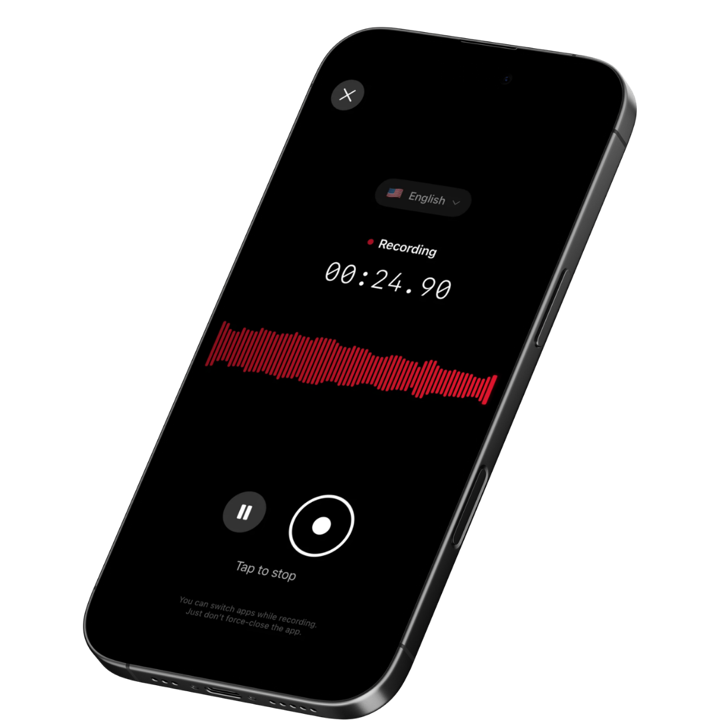
Voice notes let you capture client calls, brainstorm sessions, and project notes in real time - without interrupting your workflow. AI transcription turns spoken content into searchable text. Summaries pull out the action items automatically.
Download Speakwise from the App Store and run your independent career with one-tap recording, AI-powered transcription in 100+ languages, and automatic Notion sync.
Join 10,000+ professionals who capture every client conversation and never miss a deliverable.
Get Speakwise Free
4.9-star App Store Rating | iOS Optimized

🎯 4.9★ App Store Rating | 📱 Built for iOS
