Hybrid Work Statistics 2026: Schedules, Productivity Outcomes, and the Return-to-Office Debate


Used by recruiters, executives, consultants, and more.
Hybrid Work Statistics 2026: Schedules, Productivity Outcomes, and the Return-to-Office Debate
53% of remote-capable employees now work hybrid. A peer-reviewed Nature study found hybrid work reduces quit rates by 33% with zero productivity loss. Yet 67% of companies are tightening return-to-office mandates. With 83% of workers favoring flexible arrangements and employees valuing hybrid work at 8% of their salary, these 17 statistics reveal why the future of work remains the most contested question in business.
The hybrid work experiment that began as a pandemic necessity has become the defining workplace debate of our era. On one side, executives push for more office days, citing collaboration, culture, and control. On the other, employees who've experienced flexibility refuse to give it up-and the data increasingly suggests they shouldn't have to. The evidence on hybrid work's impact on productivity, retention, and satisfaction is no longer anecdotal. It's rigorous, peer-reviewed, and surprisingly clear.
In this post, we'll explore 17 statistics that capture the real state of hybrid work in 2025 and 2026. These numbers reveal not just adoption rates and scheduling patterns, but the hard productivity data, retention impacts, and employee preferences that should inform every organization's workplace strategy. Whether you're a CEO weighing a return-to-office mandate, a manager navigating hybrid team dynamics, or an employee evaluating your next career move, these data points cut through the rhetoric with evidence.
1. 53% of remote-capable employees work hybrid, 27% fully remote, 20% fully on-site
Hybrid work has decisively won the adoption battle. Gallup's ongoing workforce panel data shows that among remote-capable employees in the U.S., 53% now work in a hybrid arrangement, 27% work fully remote, and just 20% work entirely on-site. This means eight in ten knowledge workers have some form of location flexibility-a fundamental restructuring of the employer-employee relationship that shows no signs of reverting to pre-pandemic norms. Source: Gallup - Future of the Office Has Arrived: It's Hybrid
2. Workers globally average 1.4 days working from home per week
The global picture confirms hybrid work as the new equilibrium. Data from the Survey of Working Arrangements and Attitudes (SWAA), led by Stanford economist Nicholas Bloom, shows that workers across 35 countries average approximately 1.4 days working from home per week, with English-speaking countries averaging 1.7 days. This represents a permanent structural shift from pre-pandemic levels near zero-a change that researchers describe as equivalent in magnitude to decades of previous workplace evolution compressed into three years. Source: WFH Research - Survey of Working Arrangements and Attitudes
3. Hybrid work shows zero productivity loss in a peer-reviewed randomized controlled trial
The most rigorous evidence on hybrid productivity comes from a study published in Nature in June 2024. Researchers Nicholas Bloom, Ruobing Han, and James Liang conducted a randomized controlled trial at Trip.com with 1,612 employees, finding that hybrid work (three days in office, two days at home) showed no measurable difference in productivity, performance reviews, or promotion rates compared to full-time office work. This isn't a survey or self-report-it's a controlled experiment with the gold-standard methodology of medical research. Source: Nature - Hybrid Working Improves Retention Without Damaging Performance
4. Hybrid work reduces quit rates by 33%
The same Nature study revealed hybrid work's most compelling benefit for employers: a 33% reduction in quit rates among employees given hybrid schedules compared to those required to work full-time in the office. In an era where replacing an employee costs $15,000 to $50,000 or more, this retention benefit alone can justify hybrid policies financially. The reduction was especially pronounced among women, employees with long commutes, and non-managers-demographics that organizations often struggle most to retain. Source: Nature - Hybrid Working Improves Retention Without Damaging Performance
5. 75% of hybrid companies use structured schedules with mandated office days
The era of "work from wherever you want" is giving way to structured flexibility. Data from the Flex Index shows that approximately 75% of companies with hybrid policies now use structured or mandated schedules-requiring specific days in the office rather than leaving it entirely to employee discretion. The most common model is three days in office and two days remote, used by roughly 40-44% of hybrid organizations. This structured approach reflects employers' desire for predictable collaboration time while maintaining flexibility. Source: Flex Index - Flex Report
6. 83% of workers favor a mix of remote and in-office days
The employee verdict on hybrid work is overwhelming. Research shows that approximately 83% of workers prefer a hybrid arrangement combining remote and in-office days, making it by far the most popular work model across demographics. This preference is so strong that 40% of workers say they would begin job hunting if flexible work were eliminated, 22% would demand a raise to compensate for lost flexibility, and 5% would quit outright. Source: Owl Labs - State of Hybrid Work 2025
7. Employees value hybrid work at roughly 8% of their salary
The economic value workers place on flexibility is now quantifiable. Research from the SWAA survey led by Bloom, Barrero, and Davis found that the average employee values the ability to work from home two to three days per week at approximately 8% of their salary-meaning they would accept roughly 8% less pay to keep their hybrid arrangement. This figure represents a significant "flexibility premium" that makes hybrid work a competitive advantage in talent acquisition without requiring higher compensation. Source: WFH Research - Survey of Working Arrangements and Attitudes
8. Tuesday through Thursday are peak office days, with mid-week occupancy 2x Monday and Friday
The weekly rhythm of hybrid work has crystallized into a clear pattern. Building access data from Kastle Systems across 2,600+ buildings in 47 cities shows that Tuesday, Wednesday, and Thursday are consistently the busiest office days, with mid-week occupancy roughly double that of Monday and Friday. This "barbell" pattern reflects a natural compromise: employees concentrate collaboration and in-person meetings mid-week while preserving Monday and Friday for focused remote work. Source: Kastle Systems - Back to Work Barometer
9. 24% of new job postings are hybrid, up from 9% in early 2023
Employers are increasingly formalizing hybrid work in their hiring. Robert Half data shows that 24% of new job postings in Q4 2025 were designated as hybrid, up dramatically from just 9% in early 2023. Fully remote postings grew from 10% to 15% in the same period. This shift in job advertising signals that hybrid work has moved from an informal accommodation to a deliberate talent strategy-companies that don't offer it risk losing candidates before the first interview. Source: Robert Half - Remote Work Statistics and Trends
10. Average office occupancy has plateaued at roughly 50% of pre-pandemic levels
Despite high-profile return-to-office mandates from companies like Amazon and JPMorgan, actual office utilization tells a different story. Kastle Systems' Back to Work Barometer shows that average office occupancy across U.S. markets has plateaued at approximately 50% of pre-pandemic levels. This gap between mandate and reality suggests that many RTO policies are either inconsistently enforced or quietly softened-and that employee behavior has shifted more permanently than executive proclamations suggest. Source: Kastle Systems - Back to Work Barometer
11. 1 in 3 workers would look for a new job if forced to return to the office full-time
Return-to-office mandates carry significant retention risk. Resume Builder survey data shows that approximately one in three workers say they would actively look for a new job if forced to return to the office full-time. This figure rises among workers in tech, finance, and professional services-precisely the knowledge workers whose skills command the most competitive labor market. Organizations implementing strict mandates are effectively choosing to test whether their culture and compensation can offset the flexibility their competitors offer. Source: Archie - Return-to-Office Statistics 2026
12. Strict RTO mandates correlate with senior employee attrition
The workers most likely to leave over RTO mandates are often the ones companies can least afford to lose. A study by researchers at the University of Pittsburgh and University of Chicago found that companies implementing strict return-to-office mandates experienced significant increases in employee departures, with senior and tenured employees being the most likely to leave. These experienced workers have the professional networks and market credibility to find flexible positions quickly, leaving organizations with both a talent gap and an institutional knowledge loss. Source: SSRN - Return to Office and the Tenure Distribution
13. In-office frequency is climbing-39% of hybrid workers now come in 3 days, 34% come in 4 days
While hybrid work has won as a model, the balance is shifting toward more office time. Owl Labs' State of Hybrid Work 2025 report found that the majority of hybrid workers now come to the office three days (39%) or four days (34%) per week-both figures up from 2024. The three-day model has become the floor rather than the ceiling, and a growing minority of firms are pushing for four office days. The center of gravity has moved from the employee-favored two-day model toward the employer-preferred three-to-four-day model. Source: Owl Labs - State of Hybrid Work 2025
14. 6 in 10 remote-capable employees would job-search if flexibility were eliminated
Gallup data underscores the retention risk of abandoning flexible work: six in ten fully remote-capable employees say they are "extremely likely" to begin job-searching if their employer eliminates remote flexibility entirely. This represents a potential attrition crisis for any organization that moves from hybrid to fully on-site without compelling justification. The data suggests that flexibility has joined compensation and career growth as a non-negotiable element of the employment value proposition. Source: Gallup - Future of the Office Has Arrived: It's Hybrid
15. Companies with hybrid models can reduce real estate costs by 15-30%
Hybrid work doesn't just benefit employees-it offers significant cost savings for organizations. McKinsey and JLL analysis of corporate real estate shows that companies with hybrid models can reduce office space costs by 15-30% through space consolidation, hot-desking, and smaller physical footprints. For a company spending $50 million annually on real estate, that represents $7.5 to $15 million in potential savings-money that can be redirected toward talent, technology, or strategic growth. Source: McKinsey - Empty Spaces and Hybrid Places
16. Hybrid teams report the least amount of deep focus time-just 31% of hours
Hybrid work isn't without challenges. The Hubstaff 2026 Global Benchmarks Report found that hybrid teams reported the least amount of uninterrupted deep focus time at just 31% of working hours, compared to 45% for fully in-office teams and 41% for fully remote teams. The constant switching between home and office environments, coupled with the coordination overhead of managing both synchronous and asynchronous communication, creates a unique focus challenge that hybrid-first organizations must actively address. Source: Hubstaff - How Work Is Really Structured 2026
17. 98% of workers want to work remotely at least some of the time
The most definitive employee preference statistic comes from Buffer's annual State of Remote Work survey: 98% of workers say they want to work remotely at least some of the time for the rest of their careers. This near-universal desire for flexibility-shared across industries, seniority levels, and demographics-suggests that the question is no longer whether to offer hybrid work, but how to implement it effectively. The 2% who prefer full-time office work are a statistical rounding error. Source: Buffer - State of Remote Work
The Flexibility Paradox: Everyone Wants It, Nobody Agrees on the Terms
The statistics reveal a workplace in negotiation. Employees overwhelmingly want flexibility. Employers increasingly want presence. The data says hybrid works-no productivity loss, significant retention gains, real estate savings-but the details of how many days, which days, and who decides remain fiercely contested.
The fundamental tension is between coordination and autonomy. Organizations need predictable in-person time for collaboration, mentoring, and culture-building. Employees need protected remote time for deep work, personal responsibilities, and the autonomy that drives satisfaction. The companies that thrive will be those that find the balance-not those that pretend the pre-pandemic default still makes sense.
What's clear from the data is that rigid positions on either side carry costs. Full remote sacrifices some collaboration benefits. Full office sacrifices retention, flexibility premiums, and real estate savings. The structured hybrid model-with clear expectations, protected focus time, and intentional in-person collaboration-isn't a compromise. It's the optimal configuration the data supports.
The question isn't whether hybrid work is here to stay-that debate is over. The question is whether your organization will design hybrid thoughtfully, or stumble through it with mandates that the data says will cost you your best people.---
Ready to make hybrid work actually work?
The biggest challenge of hybrid work isn't scheduling-it's information continuity. When half the team is remote and half is in the office, decisions get made in hallway conversations, context gets lost between locations, and everyone spends more time catching up than moving forward.
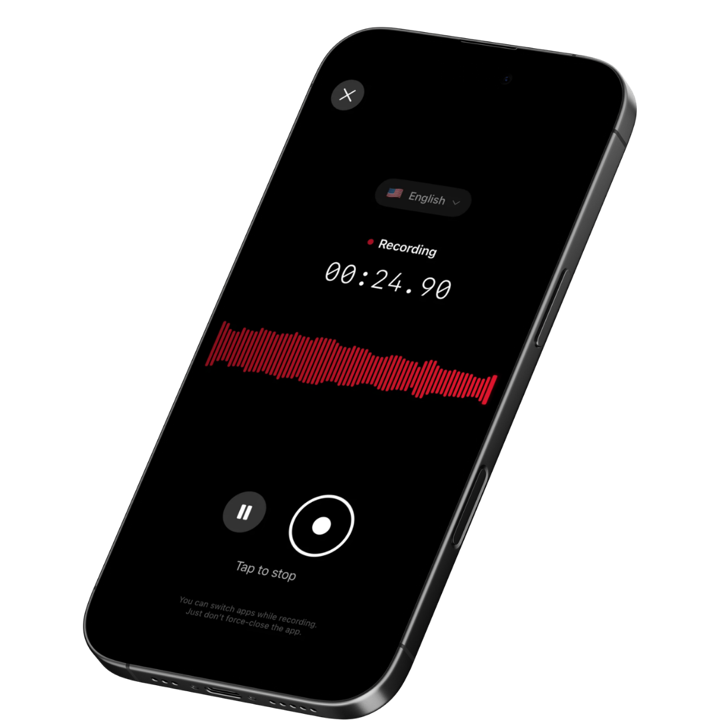
Voice recording bridges this gap. Capture the meeting in the office, share the transcription with remote colleagues, and let everyone stay aligned without requiring everyone to be in the same room at the same time.
Download SpeakWise from the App Store and discover how one-tap recording, AI transcription, intelligent summaries, and Notion integration can help your hybrid team stay connected-without forcing everyone onto the same calendar.
Join 10,000+ professionals who've discovered that the best way to make hybrid work isn't more meetings-it's better information capture.
Get SpeakWise Free →
4.9★ App Store Rating | iOS Optimized

🎯 4.9★ App Store Rating | 📱 Built for iOS
