Imposter Syndrome Statistics 2026: Key Data


Used by recruiters, executives, consultants, and more.
Imposter Syndrome Statistics 2026: Key Data
Approximately 70% of people experience imposter syndrome at some point in their careers. A KPMG survey found 75% of female executives have dealt with it. Imposter syndrome costs UK employees up to 10 full workdays per year through over-preparing and perfectionism, and 45% of workers avoid promotions or new opportunities due to fear of being exposed as a fraud. The workplace cost of self-doubt is far larger than most organizations realize.
Imposter syndrome - the persistent feeling that your success is undeserved and that you will eventually be "found out" - affects workers at every level, in every industry, and at every stage of their careers. It is not limited to newcomers or junior staff. CEOs, surgeons, professors, and elite athletes all report experiencing it. What makes imposter syndrome so damaging is its invisibility. Workers suffering from it rarely speak up, creating a silent epidemic of self-doubt that suppresses performance, stalls careers, and drives burnout.
This post presents 18 statistics that quantify imposter syndrome's prevalence, demographic patterns, and workplace impact. These numbers come from peer-reviewed research, KPMG, Asana, and large-scale workplace surveys.
Key Imposter Syndrome Statistics (2026)
- Imposter syndrome affects an estimated 70% of people at some point in their working lives, a figure that traces back to peer-reviewed research on the impostor phenomenon (International Journal of Behavioral Science).
- 62% of knowledge workers worldwide say they experience imposter syndrome, according to Asana's own research (Asana).
- 75% of female executives have experienced imposter syndrome at some point in their careers, per a KPMG survey of 750 executives (KPMG via PR Newswire).
- Imposter syndrome costs UK employees up to 10 full workdays per year in lost productivity through over-preparing and perfectionism (Training Industry).
- 45% of employees avoid promotions or new opportunities specifically because of imposter syndrome (Training Industry).
- Prevalence estimates for imposter syndrome range from 9% to 82% depending on the population and screening tool used, per a systematic review of 62 studies (Journal of General Internal Medicine).
- A 2026 workplace survey found that 43% of employed workers experience self-doubt in their roles while 66% feel pressure to appear more confident than they actually are (Lab Manager).
1. 70% of people experience imposter syndrome at some point in their careers
Research estimates that approximately 70% of people from all walks of life experience imposter syndrome at least once during their professional lives. This statistic, originally derived from clinical observations by psychologists Pauline Rose Clance and Suzanne Imes, has been replicated across multiple populations and settings. The 70% figure means imposter syndrome is not a rare condition - it is a near-universal human experience. Yet most people suffer in silence, assuming they are the only ones who feel like frauds. The gap between how common imposter syndrome is and how rarely it is discussed creates an environment where self-doubt thrives unchallenged.
Source: International Journal of Behavioral Science - The Impostor Phenomenon (Sakulku, 2011)
2. 62% of knowledge workers worldwide experience imposter syndrome
A broader measure finds that 62% of knowledge workers across the globe are currently experiencing imposter syndrome, according to workplace surveys. This is not a lifetime prevalence figure - it captures workers who are actively dealing with self-doubt right now. That nearly two-thirds of the global knowledge workforce currently feels like a fraud has enormous implications for productivity, innovation, and risk-taking. Workers in the grip of imposter syndrome are less likely to share ideas, volunteer for challenging projects, or push back on flawed strategies. They play it safe, and organizations pay the price in missed opportunities.
Source: Asana - 15 Tips to Turn Your Imposter Syndrome into Confidence
3. 75% of female executives have experienced imposter syndrome
A KPMG survey of 750 female executives found that 75% reported experiencing imposter syndrome at some point in their careers. Furthermore, 85% of these executives said they believe imposter syndrome is commonplace among women in corporate America. The KPMG findings highlight a significant gender dimension to imposter syndrome. Women in leadership positions - those who have objectively succeeded - still carry persistent doubts about their competence. When three-quarters of female executives have experienced feeling like a fraud, the problem is not individual psychology. It reflects workplace cultures that make women feel they need to constantly prove they belong.
Source: KPMG - 75% of Female Executives Have Experienced Imposter Syndrome
4. Nearly twice as many women (21%) suffer from imposter syndrome as men (12%)
Research across the working population shows that 21% of women report experiencing imposter syndrome very frequently or always, compared to 12% of men. The gender gap persists even when controlling for job level, industry, and performance. The nearly 2:1 ratio reflects both psychological and structural factors. Women receive more scrutiny, face more questioning of their competence, and operate in environments where they are more likely to be the minority. These conditions create fertile ground for self-doubt. The disparity also means that organizations with gender-balanced leadership must be particularly attentive to imposter syndrome among their female talent.
Source: Workplace Insight - Imposter Syndrome Afflicts Most People
5. Imposter syndrome costs UK employees up to 10 full workdays per year
Research found that imposter syndrome is the underlying cause of up to 10 full days of lost productivity per year for UK employees. The productivity loss comes from over-preparing, perfectionism, and the excessive time spent double-checking work driven by fear of being exposed as incompetent. Ten lost workdays per year represents roughly 4% of total working time consumed not by lack of ability but by anxiety about perceived lack of ability. Workers with imposter syndrome often produce high-quality work - they just take far longer to produce it because they cannot trust their own output without obsessive verification.
Source: Training Industry - Combatting Imposter Syndrome in the Workplace
6. 45% of employees avoid promotions or new opportunities due to imposter syndrome
45% of workers report avoiding promotions, new roles, or challenging opportunities specifically because of imposter syndrome. They turn down leadership positions, decline stretch assignments, and stay in roles they have outgrown because advancing feels like it would increase the risk of being "found out." The career cost is enormous. Nearly half the workforce is self-selecting out of growth opportunities. Organizations lose access to talent that is qualified but unwilling to step forward. The 45% avoidance rate means that many of the best candidates for leadership roles never apply - not because they lack the skills, but because they do not trust that they have them.
Source: Training Industry - Combatting Imposter Syndrome in the Workplace
7. 31% of workers do not complete important projects for fear of being found out
Nearly a third of employees (31%) report failing to complete important projects because of imposter syndrome. The fear of producing work that reveals their perceived incompetence leads to avoidance, procrastination, and ultimately incomplete deliverables. This statistic connects imposter syndrome directly to business outcomes. When almost one in three workers leaves important work unfinished due to self-doubt, organizations face real costs in delayed projects, missed deadlines, and incomplete initiatives. The work gets abandoned not because it is too difficult, but because the worker fears their output will expose them.
Source: Training Industry - Combatting Imposter Syndrome in the Workplace
8. Prevalence ranges from 9% to 82% depending on measurement and population
Systematic reviews of imposter syndrome research show that prevalence rates range from 9% to 82% depending on the population studied and the screening tools used. A 2019 systematic review published in the Journal of General Internal Medicine analyzed 62 studies and found this wide range reflects differences in threshold definitions, cultural contexts, and professional fields. The broad range tells an important story: imposter syndrome is not a fixed condition with a clear diagnostic boundary. It exists on a spectrum, and where you draw the line determines how many people qualify. Even at the conservative 9% estimate, the affected population is enormous. At the higher end, imposter syndrome is functionally universal.
Source: Journal of General Internal Medicine - Prevalence, Predictors, and Treatment of Impostor Syndrome
9. One in three American workers often doubts their professional abilities
33% of American workers report that the statement "I often doubt my professional abilities or achievements" describes them somewhat or very well. This means one in three workers carries active self-doubt about their competence as a regular feature of their professional life. Unlike the broader 70% lifetime prevalence figure, this statistic captures current, ongoing doubt. Workers are not recalling a past episode - they are describing their present experience. When a third of the workforce actively doubts their abilities right now, the aggregate impact on decision-making speed, innovation, and initiative is substantial.
10. 20% of senior managers always or very frequently feel like a fraud
One in five senior managers (20%) report always or very frequently feeling like a fraud at work. Among all employees, the figure is 13%. The fact that the rate is higher among senior managers than among the general employee population challenges the assumption that imposter syndrome fades with experience and success. If anything, the stakes of being "found out" feel higher at senior levels. Managers with imposter syndrome may avoid difficult conversations, delay decisions, and over-rely on consensus to protect themselves - behaviors that directly impact team performance and organizational agility.
Source: Workplace Insight - Imposter Syndrome Afflicts Most People
11. Millennials are the most affected generation at 27%
Workers aged 25 to 39 (Millennials) are the most likely to regularly experience imposter syndrome, with 27% reporting frequent feelings of being a fraud. By contrast, only 3% of workers aged 65 and above regularly suffer from imposter syndrome. The generational gap is striking. The sevenfold difference between Millennials and older workers may reflect both career stage effects and cohort effects. Millennials entered the workforce during economic uncertainty, faced intense social media comparison, and work in increasingly competitive environments where benchmarks for success are constantly shifting. These conditions are ideal breeding grounds for self-doubt.
Source: Workplace Insight - Imposter Syndrome Afflicts Most People
12. 62% of health service professionals experience imposter syndrome
A 2025 meta-analysis published in BMC Psychology, examining 30 studies with over 11,000 participants, found that 62% of health service professionals experience imposter syndrome. The finding is notable because healthcare workers undergo extensive training and credentialing - yet nearly two-thirds still doubt their competence. The healthcare finding suggests that imposter syndrome is not about actual skill level. It persists even in professions with rigorous qualification processes that objectively verify competence. If years of medical training and board certification cannot prevent imposter feelings, the problem runs deeper than any credential can reach.
Source: BMC Psychology - Global Prevalence of Imposter Syndrome in Health Service Providers
13. 45% of leaders aged 24-44 report frequent impostor thoughts
45% of leaders in the 24-44 age bracket report frequent impostor thoughts, compared to just 23% of those aged 55-74. The gap narrows with experience but never fully closes. Even among the most senior age group, nearly a quarter still experience impostor feelings regularly. The age gradient reveals that while experience helps, it does not cure imposter syndrome. Young leaders are most vulnerable because they face the dual pressure of proving themselves in new roles while managing teams that may include more experienced colleagues. The 45% rate among younger leaders means that nearly half the next generation of organizational leadership is operating under a cloud of self-doubt.
Source: Asana - 15 Tips to Turn Your Imposter Syndrome into Confidence
14. Nearly 100% of women returning to tech cite imposter syndrome as a barrier
A 2023 Tech Returners survey of 250 women trying to re-enter the technology industry found that nearly 100% identified imposter syndrome as a major barrier to their return. The technology sector's combination of rapid change, youth-oriented culture, and intense competition creates an environment where anyone who has been away feels instantly behind. For women returning after career breaks for caregiving or other reasons, the gap between their last technical experience and the current landscape feels insurmountable. The near-universal imposter syndrome among this group represents a massive loss of potential talent that organizations need but cannot access because self-doubt blocks re-entry.
Source: LeadDev - Can We Cure Imposter Syndrome in Tech?
15. 47% said a supportive manager helps reduce imposter syndrome most
When asked which workplace dynamics would most help reduce imposter syndrome, 47% of the surveyed executives cited having a supportive performance manager, while 29% pointed to feeling valued and being rewarded fairly. These findings shift the responsibility for addressing imposter syndrome from the individual to the organization. Supportive management does not mean lowering standards. It means providing clear feedback, acknowledging contributions, normalizing mistakes as learning opportunities, and creating psychological safety. When nearly half of respondents say managerial support is the primary antidote to self-doubt, leadership development becomes a direct intervention for imposter syndrome.
Source: KPMG - 75% of Female Executives Have Experienced Imposter Syndrome
16. Imposter syndrome is strongly correlated with anxiety, depression, and burnout
Research consistently finds that imposter syndrome is strongly associated with anxiety, depression, low self-esteem, and burnout. A cross-sectional study published in MDPI's Behavioral Sciences journal confirmed that individuals scoring high on imposter syndrome measures showed significantly elevated probability of developing depressive and anxiety symptoms. The mental health connection transforms imposter syndrome from a career development issue into a health issue. Workers who feel like frauds are not just underperforming - they are suffering. The chronic stress of expecting to be exposed takes a measurable toll on psychological wellbeing that compounds over time.
Source: MDPI - The Prevalence of Imposter Syndrome and Its Association with Psychological Distress
17. 43% of workers experience self-doubt, and 66% feel pressure to appear more confident than they are
A 2026 national survey of more than 1,000 full-time US workers found that 43% of respondents experience self-doubt in their roles, while 66% feel pressure to appear more confident or knowledgeable than they actually are. Researchers describe this gap as "confidence theater" - a workplace dynamic in which uncertainty is concealed to meet expectations of competence. Only 25% of workers reported not experiencing self-doubt at work at all. The finding reinforces that imposter syndrome in 2026 is not a fringe experience but a routine part of how most employees present themselves at work, masking doubts that leadership rarely sees.
Source: Lab Manager - Nearly Half of Workers Experience Impostor Feelings, New Survey Finds
18. 65% of workers say leaders rarely or never discuss their own doubts or mistakes
The same 2026 workplace survey found that 65% of respondents said leaders rarely or never discuss their own doubts or mistakes, while only 35% reported leaders addressing these topics occasionally. This leadership transparency gap compounds imposter syndrome: when employees never see senior leaders admit uncertainty, they assume confidence is universal at the top and that their own self-doubt marks them as uniquely unqualified. The same survey found that 58% of workers said self-doubt had negatively affected their career growth, and 7% reported declining major opportunities as a result - a direct link between what leaders model and what employees are willing to pursue.
Source: Lab Manager - Nearly Half of Workers Experience Impostor Feelings, New Survey Finds
The Imposter Epidemic: Success Cannot Cure Self-Doubt
These eighteen statistics expose a paradox at the heart of modern work: the more people achieve, the more many of them doubt they deserve it. Imposter syndrome does not target the incompetent. It targets the conscientious, the ambitious, and the high-performing. When 75% of female executives and 20% of senior managers feel like frauds, it is clear that success alone does not resolve self-doubt. In many cases, success amplifies it by raising the stakes of potential exposure.
The workplace costs are concrete and measurable. Ten lost workdays per year to over-preparation. 45% of workers avoiding promotions. 31% leaving important projects incomplete. These are not abstract wellbeing metrics - they are direct impacts on output, leadership pipelines, and organizational capacity. Companies are losing talent not to competitors but to their own employees' inability to recognize their worth.
The data also points clearly to solutions. Supportive management, fair recognition, and psychological safety are the most effective interventions. Imposter syndrome thrives in environments of silence, comparison, and ambiguity. It withers in environments where contributions are acknowledged, feedback is clear, and mistakes are treated as learning rather than evidence of fraud.
70% of people experience imposter syndrome. 45% avoid promotions because of it. The greatest untapped potential in most organizations is not in new hires - it is in the existing employees too afraid to step into the roles they have already earned.---
Capture your expertise before self-doubt erases it
These 18 statistics show that imposter syndrome causes workers to second-guess, over-prepare, and leave valuable ideas unspoken. The thoughts that matter most - meeting insights, strategic observations, expertise born from experience - get suppressed by the fear that they are not good enough to share.
Voice capture bypasses the self-editing that imposter syndrome creates. When you speak your thoughts immediately, they get recorded before the inner critic has time to intervene. Your ideas, observations, and decisions become a searchable, permanent record that proves your contributions are real and valuable.
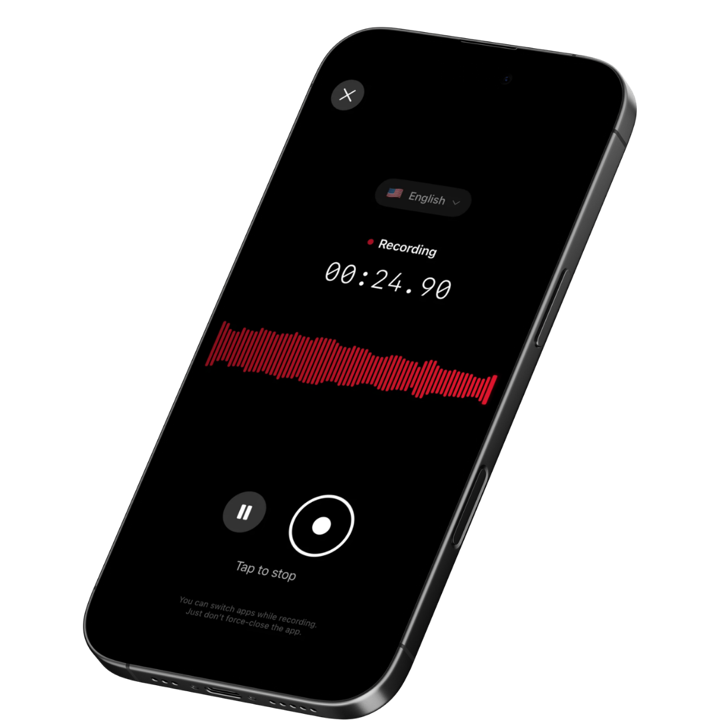
Download Speakwise from the App Store and build an undeniable record of your expertise with AI-powered voice notes that capture your insights, meeting contributions, and ideas the moment they happen.
Join 10,000+ professionals who trust voice capture to preserve their best thinking before self-doubt can second-guess it.
Get Speakwise Free
4.9-star App Store Rating | iOS Optimized

🎯 4.9★ App Store Rating | 📱 Built for iOS
