Internal Communication Statistics 2026
Used by recruiters, executives, consultants, and more.
Internal Communication Statistics 2026
Poor internal communication costs companies between $9,284 and $37,440 per employee per year, while only 29% of frontline workers feel satisfied with communication quality. Professionals waste 13 hours weekly on ineffective communication, and 86% of employees blame workplace failures on poor collaboration. These 16 statistics expose why internal communication remains the most expensive problem most organizations refuse to measure.
Internal communication is the operating system of every organization. When it works, decisions move fast, employees stay aligned, and teams execute with confidence. When it breaks down, everything slows. Projects stall. Morale drops. Talented people leave.
This post covers 16 statistics that reveal the true state of internal communication in 2026. From the staggering financial costs of miscommunication to the engagement gap between desk workers and frontline employees, these numbers show why internal comms deserves far more attention than most leaders give it.
1. Poor communication costs companies up to $37,440 per employee annually
The financial impact of broken internal communication is severe. Research shows that poor communication costs organizations between $3,640 and $37,440 per employee per year, depending on salary level. For senior employees earning over $200,000, the cost rises to $54,860 annually. These figures account for wasted time, duplicated effort, missed deadlines, and rework caused by unclear or missing information. For a 500-person company, even the conservative estimate translates to over $1.8 million in annual losses.
Source: Pumble - Workplace Communication Statistics 2026
2. Only 29% of frontline workers are satisfied with communication quality
The communication gap between desk and non-desk workers is alarming. Only 29% of non-desk employees report being very or rather satisfied with the quality of internal communication, compared to 47% of desk-based employees. This disparity matters because frontline workers represent the majority of the global workforce. When these employees feel disconnected from organizational updates, strategy, and feedback loops, execution suffers at the point where it matters most - the customer-facing edge.
Source: Staffbase - Employee Communication Impact Study 2025
3. Professionals waste 13 hours per week on ineffective communication
Almost two full workdays per week are lost to communication that does not accomplish its purpose. Research shows professionals waste an average of 13 hours per week on ineffective communication, including unnecessary emails, unclear messages, meetings that could have been memos, and chasing down information that should have been easily accessible. At 676 hours per year per employee, this represents a massive productivity drain that most organizations accept as normal.
Source: Pumble - Workplace Communication Statistics 2026
4. 86% of employees blame workplace failures on poor communication
When projects fail, communication is almost always part of the story. 86% of employees and executives cite poor communication or lack of collaboration as the primary cause of workplace failures. This statistic reflects how deeply communication problems permeate organizational performance. Failed product launches, missed targets, client losses, and strategic misalignment frequently trace back to information that was not shared, understood, or acted upon in time.
Source: Sociabble - Communications Statistics 2026
5. Only 26% of employees are engaged in their work
Employee disengagement has reached a critical point. According to the Achievers Workforce Institute's 2026 report, only 26% of employees are engaged in their work. The remaining 74% range from passively disengaged to actively disengaged. Engagement and internal communication are tightly linked. Workers who feel informed, heard, and connected to their organization's mission consistently show higher engagement scores. The engagement crisis is, in large part, a communication crisis.
Source: Achievers Workforce Institute - Employee Engagement and Retention Report 2026
6. U.S. businesses lose $1.2 trillion annually to miscommunication
The aggregate cost of communication failures across American businesses is staggering. U.S. companies collectively lose an estimated $1.2 trillion every year due to miscommunication and collaboration breakdowns. This figure accounts for everything from minor misunderstandings that waste an afternoon to major strategic misalignments that cost millions. The scale of this number suggests that improving internal communication may be the highest-ROI investment most companies are not making.
Source: Pumble - Workplace Communication Statistics 2026
7. 63% of job seekers cite poor communication as a reason for quitting
Internal communication directly affects retention. 63% of people who are actively looking to quit their jobs claim that poor internal communication influenced their decision. When employees feel out of the loop, undervalued, or unable to get the information they need to do their work, they start looking elsewhere. In a competitive talent market, poor internal comms is not just an operational issue. It is a recruiting liability.
Source: Prose Media - The Silent Impact of Poor Internal Communication
8. Effective communication boosts employee retention by 4.5x
The flip side of the retention problem reveals the opportunity. Workplaces with effective communication strategies enjoy 4.5 times higher employee retention than those with poor communication. This multiplier effect means that investing in clear, consistent internal communication delivers compounding returns through reduced turnover costs, preserved institutional knowledge, and stronger team cohesion. Few other organizational investments offer a comparable retention impact.
Source: Sociabble - Communications Statistics 2026
9. 28% of employees blame poor communication for missed deadlines
Communication breakdowns have a direct line to delivery failures. 28% of employees say that poor communication was the direct cause of delays or failures in delivering work on time. When expectations are unclear, priorities conflict, or status updates do not reach the right people, deadlines slip. This statistic underscores that on-time delivery is not just a project management problem. It is a communication problem.
Source: Pumble - Workplace Communication Statistics 2026
10. Business leaders lose a full workday per week to communication barriers
The communication burden falls hardest on leaders. Business leaders lose nearly one full workday per week managing communication barriers, which translates to $26,041 in lost productivity per leader annually. This includes time spent clarifying misunderstandings, mediating conflicts caused by miscommunication, and manually relaying information between teams. When leaders spend 20% of their time on communication management, their strategic and decision-making capacity suffers.
Source: High5Test - Communication in the Workplace Statistics
11. Only 20% of internal communicators feel confident in their measurement approach
You cannot improve what you do not measure, and most organizations are flying blind. Only 20% of internal communication professionals feel truly confident in their measurement approach. Email open rates and click-through rates remain the most widely used metrics at 63.5%, despite providing limited insight into whether messages were understood, retained, or acted upon. The measurement gap means most companies cannot quantify how well their internal communication actually works.
Source: Staffbase - Employee Communication Impact Study 2025
12. 28% of communicators use AI to draft internal messaging
AI is entering the internal communications function. 28% of communicators now use AI to draft internal messaging, yet less than 10% disclose that fact to employees. This gap between AI adoption and transparency raises important questions about authenticity and trust. As AI-generated content becomes more common in internal newsletters, announcements, and updates, the balance between efficiency and genuine connection will become a defining challenge for internal comms teams.
Source: Staffbase - Employee Communication Impact Study 2025
13. Teams that communicate effectively see 25% higher productivity
Effective communication is not a soft skill. It is a productivity multiplier. Teams that communicate effectively see an employee productivity increase of up to 25% compared to teams with poor communication practices. This gain comes from reduced rework, faster decision-making, fewer misunderstandings, and less time spent searching for information. A quarter improvement in productivity from better communication alone makes it one of the most impactful levers any organization can pull.
Source: Sociabble - Communications Statistics 2026
14. 20-25% productivity loss occurs in organizations with poor communication
McKinsey research quantifies the damage from the opposite direction. Organizations with poor communication structures experience a 20-25% loss in overall productivity. This loss compounds across teams and departments, creating a drag effect where every process takes longer, every decision requires more meetings, and every project carries unnecessary overhead. The gap between well-communicating and poorly-communicating organizations is not marginal. It is transformative.
Source: High5Test - Communication in the Workplace Statistics
15. 78% of employees who use AI are not told it is used in internal comms
Transparency around AI in internal communications lags far behind adoption. When only 10% of communicators disclose AI usage to employees, it means that 78% of workers who receive AI-assisted internal messages are unaware of it. As AI becomes a bigger part of how companies communicate internally, this transparency gap could erode trust if employees feel they are receiving automated messages dressed up as personal communication.
Source: Staffbase - Employee Communication Impact Study 2025
16. Global engagement dropped from 23% to 21% in 2024
The broader engagement trend is moving in the wrong direction. Global employee engagement dropped from 23% to 21% in 2024, representing the largest decline since the pandemic. This decline coincides with growing communication tool fatigue, return-to-office tensions, and organizational uncertainty. While engagement is influenced by many factors, internal communication sits at the center. Organizations that maintain clear, honest, two-way communication tend to resist the engagement downturn more effectively.
Source: HiBob - Employee Engagement and Retention Statistics 2025
The Communication Deficit Nobody Budgets For
These statistics reveal a pattern that most organizations overlook. Internal communication failures are not dramatic, visible events. They are a slow, steady drain that erodes productivity, engagement, and retention day after day. A $37,440 annual cost per employee sounds abstract until you multiply it by headcount.
The disconnect between investment and outcomes is striking. Companies spend billions on communication tools yet still lose $1.2 trillion to miscommunication. The problem is not technology. It is how information flows - or fails to flow - between the people who need it. Leaders manage communication barriers instead of strategy. Frontline workers feel excluded. Job seekers leave because nobody told them what was happening.
The organizations that will lead in 2026 are not the ones with the most communication tools. They are the ones with the clearest processes for sharing the right information with the right people at the right time. That requires intention, measurement, and a willingness to treat internal communication as infrastructure rather than overhead.
Internal communication is not a cost center. It is the system that makes every other investment in your organization work - or fail.---
Turn conversations into captured knowledge - automatically
The biggest internal communication failure is not what people say. It is what gets lost after they say it. Meeting decisions, hallway conversations, coaching feedback, and strategy discussions happen constantly. Most of that content disappears the moment the conversation ends.
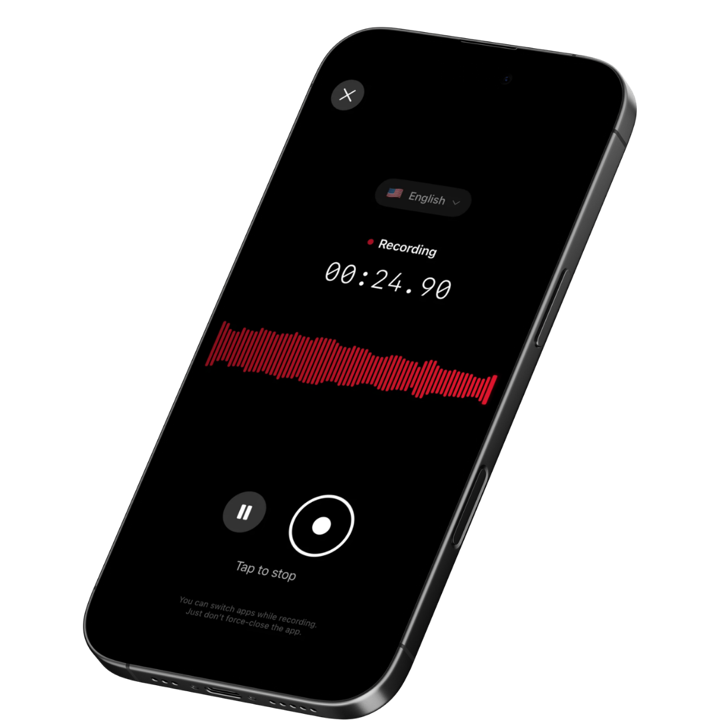
Voice capture changes this equation. Instead of relying on memory or manual note-taking, you record conversations with one tap and let AI extract the key points. Summaries, transcripts, and action items flow directly to Notion, where they become searchable, shareable organizational knowledge. Every conversation becomes a documented asset instead of a forgotten exchange.
Download SpeakWise from the App Store and start turning internal conversations into searchable, actionable records that keep your entire team aligned.
Join 10,000+ professionals who use SpeakWise to ensure that important information never gets lost between conversations.
Get SpeakWise Free
4.9-star App Store Rating | iOS Optimized

🎯 4.9★ App Store Rating | 📱 Built for iOS
