Job Interview Statistics 2026: Hiring Data
Used by recruiters, executives, consultants, and more.
Job Interview Statistics 2026: Hiring Data
93% of job seekers experience anxiety before interviews. Only 2% of applicants reach the interview stage. The average time-to-hire has grown to 42 days, and offer acceptance rates have fallen to 51%. Referrals deliver 11% of total hires despite representing just 2% of applicants. These 16 statistics reveal how competitive, stressful, and rapidly evolving the job interview landscape has become in 2026.
The job interview process in 2026 looks nothing like it did five years ago. AI screening tools, multi-round interview panels, skills assessments, and video interviews have transformed a once-simple handshake-and-conversation into a complex evaluation pipeline. Candidates face fiercer competition, longer timelines, and higher expectations at every stage.
This post covers 16 statistics that capture the state of job interviews in 2026. The data comes from the Bureau of Labor Statistics, LinkedIn, Gallup, and major hiring research firms. Whether you are a candidate preparing for interviews or a hiring manager optimizing your process, these numbers reveal what is actually happening in the hiring pipeline.
1. 93% of people experience anxiety before job interviews
Job interview anxiety is nearly universal. Research shows that 93% of candidates report feeling nervous before an interview. This anxiety affects performance, communication clarity, and first impressions. The widespread nature of this statistic means that virtually every candidate in every interview is managing some degree of stress. For employers, this raises an important question: are you evaluating talent, or are you evaluating who handles anxiety best?
Source: Teamtailor - 93 Percent Feel Anxious Before Job Interview
2. Only 2% of applicants reach the interview stage
The funnel from application to interview has never been narrower. Across all industries, only about 2% of applicants make it to the interview stage. With the average job posting now receiving 340 applicants, that means roughly 7 people get interviews for every open position. The other 333 are filtered out by resume screening, ATS systems, and recruiter evaluation. This extreme selectivity means that reaching the interview itself is already a significant achievement.
Source: Second Talent - Job Interview Statistics 2026
3. The average job posting receives 340 applicants
Application volumes have surged 182% since 2021. The average job posting now receives approximately 340 applicants, creating an overwhelming evaluation challenge for hiring teams. This volume is driven by easy-apply features on job platforms, remote work expanding the candidate pool geographically, and AI tools that help candidates submit applications at scale. The result is a paradox: more applicants apply, but each application receives less individual attention.
Source: HiringThing - 2025 Job Application Statistics
4. 63% of hiring decisions are made within the first 5 minutes
First impressions dominate hiring outcomes. Research shows that 63% of hiring managers make their decision about a candidate within the first five minutes of an interview. This means the remaining 25 to 55 minutes of a typical interview often serve as confirmation of an initial impression rather than genuine evaluation. For candidates, this statistic underscores the importance of opening strong, projecting confidence, and communicating clearly from the very first moment.
Source: Passive Secrets - Job Interview Statistics 2025
5. Offer acceptance rates have fallen to 51%
Even when companies find the right candidate, closing the deal has become harder. Offer acceptance rates dropped to 51% in Q2 2025, down from 74% in Q2 2023. Nearly half of extended offers are now declined or withdrawn. This decline reflects a labor market where candidates have more options, longer evaluation timelines, and higher expectations for compensation and flexibility. Companies that move slowly through the interview process lose candidates to faster competitors.
Source: GoodTime - 2026 Hiring Statistics
6. The average time-to-hire has grown to 42 days
Hiring timelines continue to expand. The average time from first contact to accepted offer is now approximately 42 days, driven by additional interview rounds, skills assessments, and deliberate decision-making. While thorough evaluation is valuable, extended timelines carry real costs. Top candidates receive multiple offers, and each day of delay increases the probability that your first choice accepts a competing offer. Speed and quality must be balanced, not traded off.
Source: GoodTime - 2026 Hiring Statistics
7. 42% of candidates abandon the process when scheduling takes too long
Scheduling friction kills hiring pipelines. 42% of candidates report leaving a recruitment process because it took too long to schedule an interview. In a market where candidates have options, every day of scheduling delay is a day closer to losing the candidate entirely. The irony is that scheduling is one of the most solvable problems in hiring. Automated scheduling tools can eliminate this friction, yet many organizations still rely on manual back-and-forth email coordination.
Source: GoodTime - 2026 Hiring Statistics
8. Referrals represent 2% of applicants but deliver 11% of hires
Employee referrals remain the highest-quality hiring channel by a wide margin. While referrals make up just 2% of the total applicant pool, they account for 11% of successful hires. Referral candidates have a 6.6% probability of being hired, compared to just 2.6% for cold applicants. The reason is straightforward: referred candidates come pre-vetted for culture fit and skill relevance by someone who understands the role. This makes the interview process more efficient for both sides.
Source: VisualCV - 2026 Hiring Statistics
9. 72% of job seekers report negative mental health impacts from hiring processes
The modern hiring process takes a measurable toll on mental health. 72% of job seekers report negative mental health impacts from long hiring processes and poor employer communication. Ghosting by recruiters, unclear timelines, and multi-week waits between interview rounds create sustained stress. This finding should concern employers. A damaging candidate experience does not just lose one hire. It creates negative word-of-mouth that affects future talent pipelines.
Source: GoodTime - 2026 Hiring Statistics
10. 50% of candidates say anxiety reduces their interview performance
Half of all job seekers believe their anxiety actively reduces how well they perform in interviews. This is not a perception problem. Research confirms that stress impairs working memory, verbal fluency, and the ability to think on your feet. All skills that interviews are designed to evaluate. When anxiety is the primary variable in interview performance, interviews stop measuring competence and start measuring composure under artificial pressure.
Source: Anxiety.org - Adults Anxiety Job Interviews
11. 75% of hiring managers say being too nervous is a common candidate mistake
Three-quarters of hiring managers identify excessive nervousness as one of the most common mistakes candidates make during interviews. This creates a troubling feedback loop. Candidates are anxious because interviews are high-stakes. Hiring managers penalize them for that anxiety. And the penalty reinforces the anxiety for future interviews. Organizations that genuinely want to evaluate talent should design interview processes that reduce rather than amplify candidate stress.
Source: Passive Secrets - Job Interview Statistics 2025
12. Candidates have just 7 seconds to make a first impression
Research on impression formation shows that interviewers form initial judgments about candidates within 7 seconds of meeting them. These snap judgments are based on body language, eye contact, handshake quality, and vocal confidence. The substance of what candidates say matters far less in these opening moments than how they present themselves. This finding highlights an uncomfortable truth about interviews: they are partly performance evaluations where presence and communication style can outweigh competence.
Source: Passive Secrets - Job Interview Statistics 2025
13. Only 26% of candidates trust AI to evaluate them fairly
AI is increasingly present in the hiring process, yet candidate trust remains low. Only 26% of job seekers trust AI to evaluate them fairly. This skepticism is driven by concerns about algorithmic bias, lack of transparency in how AI scores candidates, and the impersonal nature of automated screening. While AI-assisted hiring can improve efficiency, the trust gap represents a significant candidate experience problem that organizations must address through transparency and human oversight.
Source: GoodTime - 2026 Hiring Statistics
14. 69% of organizations struggle to hire full-time employees
Despite the volume of applicants, hiring remains difficult for employers. 69% of organizations report struggling to fill full-time positions in 2025. The challenge is not a lack of candidates. It is a mismatch between what candidates offer and what employers need, combined with competition from other employers for the same qualified individuals. This hiring difficulty means that organizations must optimize their interview process to identify and secure the right candidates faster.
Source: SSR - Recruitment Statistics 2026
15. AI-assisted messaging improves quality of hires by 9%
When used thoughtfully, AI can improve hiring outcomes. AI-assisted communication throughout the hiring process improves the quality of hires by 9% and saves recruiters 20% of their time. The key is using AI for efficiency - scheduling, follow-up communication, and initial screening - while keeping human judgment at the center of final decisions. The 9% quality improvement suggests that faster, more consistent communication helps organizations secure better candidates before competitors do.
Source: GoodTime - 2026 Hiring Statistics
16. Applicants submit 32 to 200+ applications before receiving an offer
The volume of applications required to land a job has reached staggering levels. Depending on industry and experience level, candidates now submit between 32 and over 200 job applications before receiving an offer. With only 0.1% to 2% of cold applications resulting in a job, the modern job search is fundamentally a numbers game. This reality creates immense pressure on candidates and underscores why interview preparation matters so much. Every interview opportunity is precious.
Source: HiringThing - 2025 Job Application Statistics
The Interview Process Is Broken for Both Sides
The data reveals a hiring system that fails candidates and employers simultaneously. Candidates face anxiety-inducing, multi-week processes that often end in silence. Employers struggle to fill roles despite receiving hundreds of applications. The disconnect between volume and quality, between process length and outcome quality, suggests that the entire interview model needs rethinking.
The most striking tension in the data is between what interviews claim to measure and what they actually measure. When 63% of decisions are made in 5 minutes and 75% of managers penalize nervousness, interviews are rewarding presentation skills over substance. The 93% anxiety rate means virtually every candidate is performing under stress, which may reveal composure but obscures competence.
The path forward involves making interviews more human, not more automated. Structured interviews, realistic job previews, and faster timelines all improve outcomes. The organizations that fix their interview process first will have a decisive advantage in the competition for talent.
The best hiring processes do not just evaluate candidates. They make candidates want to work for you.---
Prepare for interviews by thinking out loud
The best interview preparation is not memorizing answers. It is practicing clear verbal communication under pressure. The statistics show that first impressions, confidence, and articulate responses matter enormously. Voice practice helps you refine your narrative, hear how your answers sound, and build verbal fluency before the real thing.
Recording yourself answering interview questions reveals filler words, unclear explanations, and missed points that you would never catch in your head. AI-powered transcription turns your practice sessions into reviewable text you can refine.
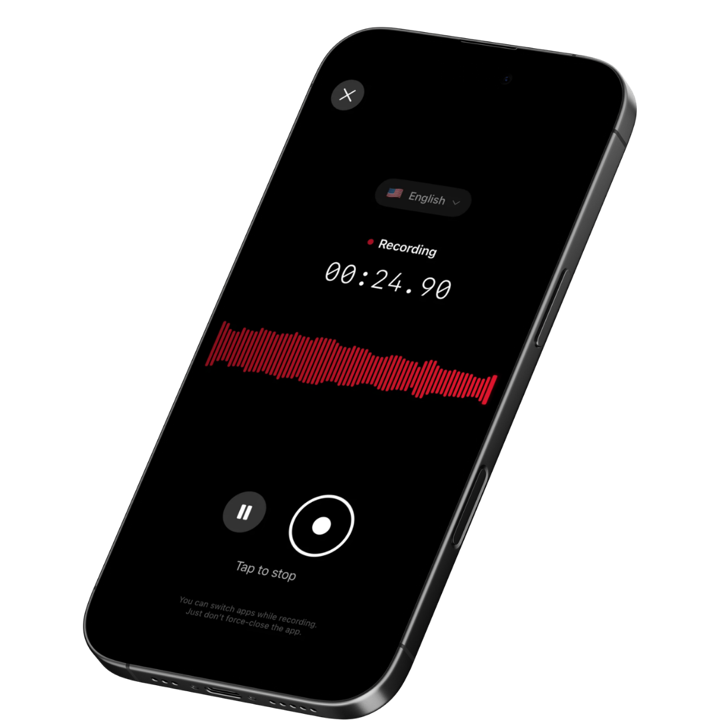
Download SpeakWise from the App Store and practice interview answers with one-tap voice recording. Get AI transcription of your responses, review your verbal patterns, and walk into every interview prepared and confident.
Join 10,000+ professionals who use voice capture to prepare for career-defining conversations.
Get SpeakWise Free
4.9-star App Store Rating | iOS Optimized

🎯 4.9★ App Store Rating | 📱 Built for iOS
