Lunch Break at Work Statistics 2026: Trends
Used by recruiters, executives, consultants, and more.
Lunch Break at Work Statistics 2026: Trends
55% of American workers skip lunch on hectic days. The average lunch break has shrunk to just 35 minutes. Yet 98% of workers say breaks boost their job performance, and taking regular lunch breaks increases productivity by 20%. With 33% of employees eating at their desks and 22% afraid their boss will judge them for stepping away, these 16 statistics expose the growing gap between what we know about breaks and what we actually do.
The lunch break is vanishing from the modern workplace. What was once a protected hour for rest and recovery has been compressed, co-opted, or eliminated entirely. Workers eat at their desks, answer emails between bites, and feel guilty about stepping away. The irony is striking: the science overwhelmingly supports taking breaks, yet workplace culture pushes in the opposite direction.
This post presents 16 statistics on lunch break habits, health impacts, and productivity effects. These numbers make the case that reclaiming the midday break is not indulgence - it is a performance strategy.
1. 55% of American workers skip lunch on hectic days
More than half of employed Americans forgo lunch entirely on busy days, choosing work over food. This is not a rare occurrence - it is a regular pattern driven by workload pressure and workplace culture. When the majority of a workforce skips its primary recovery period, the downstream effects on afternoon productivity, decision quality, and energy levels are predictable and measurable.
Source: StudyFinds - Why 55% of Workers Skip Lunch
2. 51% of workers skip lunch at least once per week
Beyond hectic days, the habit is chronic. 51% of employees skip lunch at least once a week - not because they are not hungry, but because they feel they do not have time. This weekly pattern means the average worker misses roughly 50 lunch breaks per year. Over a career, that adds up to thousands of hours of skipped recovery time, with compounding effects on health and cognitive function.
Source: Yahoo Finance - Lunch Breaks Shrinking
3. The average lunch break has shrunk to just 35 minutes
The traditional "lunch hour" now lasts just 35 minutes on average, with the typical worker eating at 12:48 PM. More than half of workers take 30 minutes or less. This compression reflects both increased workload demands and a culture that treats visible busyness as a proxy for productivity. The shorter the break, the less time for genuine mental recovery.
Source: Workforce.com - Lunch Break Statistics
4. 33% of employees eat lunch at their desk or workstation
One-third of American workers routinely eat their midday meal at their desk. An additional 13% eat while actively working, never taking an actual break from tasks. Desk dining eliminates the mental separation between work and rest that makes breaks restorative. Research shows that eating at your desk provides the calories but none of the cognitive recovery benefits of stepping away.
Source: Workforce.com - Lunch Break Statistics
5. 98% of workers believe breaks boost their job performance
Nearly every worker surveyed acknowledges the value of breaks. 98% say lunch breaks strengthen their job performance. Yet the gap between belief and behavior is enormous - more than half still skip lunch regularly. This disconnect points to a systemic problem: individual knowledge cannot override workplace culture. When the environment signals that breaks are a luxury, even informed workers comply.
Source: Yahoo Finance - Lunch Breaks Shrinking
6. Regular breaks increase productivity by 20% and creativity by 15%
The performance case for breaks is backed by data. Employees who take routine breaks show a 20% increase in productivity and a 15% boost in creativity compared to those who power through. These gains are not marginal - they represent the difference between a productive afternoon and a sluggish one. The return on a 30-minute break far exceeds the cost of the time spent away from the desk.
Source: ResearchGate - Productivity and Innovation: The Power of Taking Breaks
7. 22% of employees fear their boss will judge them for taking breaks
Workplace culture is a powerful deterrent. 22% of employees worry that their bosses will not think they are hardworking if they take regular breaks. This fear creates a chilling effect where workers sacrifice their own wellbeing to maintain the appearance of dedication. The result is a workforce that is physically present but cognitively depleted by mid-afternoon.
Source: Jobera - Taking Break at Work Statistics
8. 40% of employees feel less stressed after taking lunch breaks
Stress reduction is one of the most immediate benefits of stepping away. 40% of employees report feeling measurably less stressed after taking a proper lunch break. This stress reduction improves not just afternoon performance but also interpersonal interactions, decision-making quality, and overall job satisfaction. The break acts as a reset button for the second half of the workday.
Source: Yahoo Finance - Lunch Breaks Shrinking
9. 73% of UK workers feel more productive after a proper lunch break
Research from Compass Group found that 73% of UK workers report feeling more productive after taking a genuine lunch break. This self-reported data aligns with objective productivity measurements showing better afternoon output among break-takers. The key word is "proper" - eating at the desk while answering emails does not deliver the same benefit as actually stepping away.
Source: Compass Group - UK Lunch Break Survey
10. 74% of office workers eat lunch alone at their desk most days
As many as 74% of non-remote corporate workers eat lunch alone at their desk at least half of their working days. In the UK, 25 million employees regularly eat lunch alone, with 84% spending their lunch breaks solo. Social isolation during the workday is linked to lower engagement and reduced sense of belonging. The solitary desk lunch has become the default, replacing what was once a communal activity.
Source: Duke University - Why You Should Ditch Your Desk
11. People who eat with others report better health and stronger social networks
Research shows that people who dine with colleagues have stronger social networks, better health outcomes, and experience more positive emotions than those who eat alone. Shared meals build trust and rapport in ways that formal meetings cannot replicate. The lunch break is one of the few unstructured social opportunities in the workday, and losing it to desk dining weakens team cohesion.
Source: Duke University - Why You Should Ditch Your Desk
12. 81% of daily lunch break takers want to be active members of their company
Employees who take lunch breaks every day show higher engagement across the board. 81% of those who take a daily lunch break report a strong desire to be an active member of their company. Lunch break takers also show higher job satisfaction and lower burnout rates. The break itself signals a healthier relationship with work - one that sustains performance over the long term rather than burning through energy reserves.
Source: Workforce.com - Lunch Break Statistics
13. 5-minute micro-breaks boost overall performance by 25%
You do not need a full hour to see benefits. A meta-analysis spanning 22 independent studies found that micro-breaks of just 5 minutes increase overall performance by 25% and reduce burnout by 30%. These short pauses make workers feel more vigorous, less fatigued, and more productive upon returning to their tasks. Even in the busiest schedules, five minutes of genuine disengagement delivers measurable returns.
Source: PMC - Efficacy of Micro-Breaks for Well-Being and Performance
14. 21% of workers say they lack time for a proper break
Time pressure is the most cited reason for skipping lunch. 21% of workers explicitly say they do not have enough time for a proper break. This perception often reflects meeting-heavy calendars and unrealistic workload expectations rather than actual task urgency. When workers feel they cannot afford 30 minutes away from their screen, the schedule itself needs examination.
Source: Jobera - Taking Break at Work Statistics
15. Working through lunch makes you worse at your job
A World Economic Forum report on research from multiple universities found that working lunches degrade job performance. Workers who eat while continuing to work show reduced cognitive function in the afternoon, lower creativity, and increased decision fatigue. The "productive" desk lunch is an illusion - the time saved is offset by lower quality output for the rest of the day.
Source: World Economic Forum - Working Lunches Are Making You Bad at Your Job
16. 94% of workers feel happier when they take their lunch break
The emotional impact is clear. 94% of employees say they feel happier when they actually take their lunch break. Happiness at work correlates strongly with engagement, retention, and collaborative behavior. The simplest intervention for afternoon morale may not be a new perk or program - it may be protecting the time that already exists on every worker's calendar.
Source: Compass Group - UK Lunch Break Survey
The Lunch Break Paradox: Everyone Knows, Nobody Acts
The data reveals a striking contradiction. Workers overwhelmingly know that breaks improve their performance, yet more than half skip lunch regularly. The problem is not information - it is culture. When 22% of employees fear judgment for stepping away and 33% eat at their desks by default, the workplace environment is overriding individual knowledge.
The productivity research is unambiguous. Breaks boost output, creativity, and decision quality. Skipping them degrades all three. The 20% productivity gain from regular breaks far exceeds the perceived value of working through lunch. Organizations that protect break time are not being generous - they are being strategic.
The path forward requires structural change. Block lunch hours on team calendars. Normalize visible breaks. Stop scheduling meetings between 12:00 and 1:00 PM. The data shows that when workers take breaks, everyone benefits - the individual, the team, and the organization.
The lunch break is not lost time. It is the most undervalued productivity tool in the modern workplace.---
Turn your lunch break into a capture moment
The best lunch breaks combine rest with light reflection. A quick voice note after a productive morning can capture key decisions, lingering questions, or ideas that surfaced during conversation. Instead of losing those thoughts to the afternoon rush, you preserve them effortlessly.
Voice recording turns a brief pause into a structured record. No typing, no apps to navigate - just speak and move on.
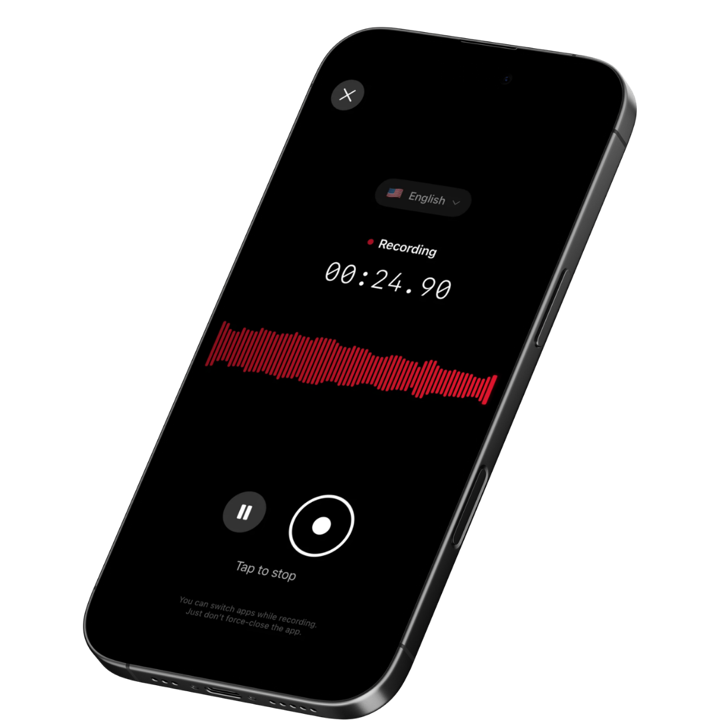
Download SpeakWise from the App Store and use your lunch break to capture the morning's best insights. AI transcription, instant summaries, and Notion sync mean your thoughts are organized before you finish eating.
Join 10,000+ professionals who use voice capture to make every break count.
Get SpeakWise Free
4.9-star App Store Rating | iOS Optimized

🎯 4.9★ App Store Rating | 📱 Built for iOS
