Meeting Agenda Statistics 2026: Key Data
TL;DR
Meeting agenda statistics for 2026 show most meetings start with no agenda. 67% of professionals say a clear agenda is the most important part of a good meeting (Fellow). This post collects 16 statistics on meeting agendas. Speakwise records the meeting itself and writes an AI summary with decisions and action items, even when no agenda was set.
Used by recruiters, executives, consultants, and more.
Meeting Agenda Statistics 2026: Key Data
63% of meetings are conducted without a predefined agenda. Unproductive meetings cost the U.S. economy $399 billion per year. Yet 67% of professionals say a clear agenda is the single most important element of an effective meeting. Workers waste 6 hours per week in ineffective meetings, and 54% leave meetings without knowing what to do next. These 16 statistics reveal why the meeting agenda is the most underused productivity tool in business.
The meeting agenda is simple, free, and proven to work. It takes minutes to create and can save hours of wasted time. Yet nearly two-thirds of meetings proceed without one. The result is a global epidemic of unstructured, unfocused gatherings that drain productivity, frustrate participants, and generate no actionable outcomes.
This post compiles 16 statistics on meeting agendas, covering how often they are used, what happens without them, and the measurable difference they make. The data applies to anyone who schedules, facilitates, or attends meetings - which is nearly everyone in knowledge work.
1. 63% of meetings are conducted without a predefined agenda
Nearly two-thirds of all meetings proceed without an agenda. This means the majority of business meetings start without defined objectives, time allocations, or expected outcomes. Without an agenda, meetings drift, tangents dominate, and participants leave unsure of what was decided or who owns what. The 63% statistic represents not a minor process gap but a systemic organizational failure.
Source: Flowtrace - Meeting Statistics 2026
2. 67% of professionals say a clear agenda is the most important meeting element
Two-thirds of professionals identify the agenda as the single most important factor in hosting an effective meeting - above facilitation skills, technology, or participant selection. This near-consensus view makes the 63% no-agenda rate even more striking. Workers know what makes meetings work. Organizations simply fail to enforce the practice.
Source: Fellow - Meeting Statistics 2025
3. Unproductive meetings cost the U.S. economy $399 billion per year
The financial cost of bad meetings is staggering. A Doodle report estimated that unproductive meetings cost the U.S. economy $399 billion annually. The lack of agendas is a primary contributor: without structure, meetings run long, revisit already-decided topics, and fail to produce outcomes. At the individual level, this translates to roughly $25,000 per employee per year wasted on meetings that accomplish nothing.
Source: Ambitions ABA - Time Wasted in Meetings
4. Workers waste 6 hours per week in ineffective meetings
The average employee loses 6 hours per week to meetings that participants themselves consider ineffective. Over a year, that totals 312 hours - nearly eight full workweeks. The agenda is the first line of defense against this waste. When meetings have clear objectives and time limits, the ineffective hours drop dramatically. Without them, the waste compounds week after week.
Source: My Hours - Meeting Statistics 2025
5. 24 billion hours are wasted in unproductive meetings each year globally
The global scale of meeting waste is measured in billions. 24 billion hours per year are consumed by unproductive meetings worldwide. This figure represents one of the largest productivity drains in the knowledge economy. A meaningful percentage of this waste could be eliminated with a practice that costs nothing: writing an agenda before scheduling the meeting.
Source: TheTreetop - Time Wasted in Meetings Statistics
6. 54% of workers leave meetings without knowing what to do next
More than half of meeting attendees walk out without a clear understanding of their next steps. 54% of workers say they leave meetings without any idea of what to do or who has ownership of tasks. This failure of outcome clarity is a direct result of agenda-free meetings. When there is no structured closing that confirms decisions, assigns action items, and sets deadlines, meetings produce conversation but not progress.
Source: Rep.ai - Time Wasted in Meetings
7. 39% of meeting time is spent discussing issues that were not on the agenda
Even when agendas exist, meetings frequently go off-track. 39% of meeting time is consumed by topics that were not included in the agenda. While some flexibility is necessary, nearly 40% off-topic time indicates a failure of facilitation. Strong agendas include time allocations for each item and a designated facilitator who keeps the discussion focused. Without enforcement, the agenda becomes decorative.
Source: Rep.ai - Time Wasted in Meetings
8. 92% of meeting attendees multitask during meetings
Nearly all meeting participants are doing something else during the meeting. 92% admit to multitasking - checking email, messaging, or working on other tasks. Agenda-less meetings drive this behavior because participants cannot predict when (or if) something relevant to them will be discussed. A clear agenda with time-stamped sections lets attendees know when to pay attention and when they are not needed.
Source: Flowtrace - State of Meetings Report 2025
9. 67% of meetings are deemed unproductive by executives
The problem is visible at every level. 67% of meetings are considered unproductive, and executives are among the harshest critics. This means that two out of every three meetings fail to achieve their stated purpose. For senior leaders, this represents a massive waste of organizational capacity. The agenda is not a minor optimization - it is the difference between productive meetings and pointless ones.
Source: Fellow - Meeting Statistics 2025
10. Companies that cut meeting size by 27% saw better outcomes
Flowtrace found that companies adopting structured meeting practices cut average meeting size by 27% and one-off meeting participants by 34%. Smaller, more focused meetings with clear agendas produced better outcomes than large, unfocused gatherings. The agenda helps determine who actually needs to attend, reducing both meeting size and the total person-hours consumed.
Source: Flowtrace - State of Meetings Report 2025
11. Agenda variance dropped 24% in 2025 as preparation improved
Meeting agendas are becoming more standardized and concise. Agenda variance dropped 24% in 2025, indicating that organizations are adopting more consistent preparation practices. This trend toward structured, purposeful meetings reflects growing awareness that unstructured meetings are a primary productivity drain. The standardization suggests that templates and best practices are gaining traction.
Source: Flowtrace - State of Meetings Report 2025
12. 96% of employees have missed essential information in meetings
In agenda-less meetings, critical information falls through the cracks. 96% of employees report having overlooked essential information during meetings. Without a structured flow that ensures key topics are covered, important announcements get buried under tangential discussions. The agenda serves as a checklist that guarantees nothing critical is skipped.
Source: Digiexe - Meeting Statistics 2026
13. AI notetakers reduce post-meeting admin by 80%
Technology is closing the execution gap. Organizations using AI-powered notetakers report an 80% reduction in post-meeting administrative time. These tools automatically generate transcripts, extract action items, and distribute summaries. When combined with a pre-meeting agenda, the entire meeting workflow - from preparation to follow-up - becomes structured and efficient.
Source: Flowtrace - State of Meetings Report 2025
14. 15% of organizational time is spent in meetings, with 25-50% wasted
Research shows that 15% of an organization's collective time goes to meetings. Of that time, 25% to 50% is considered wasted. For a 1,000-person company, that means between 37 and 75 person-years of productivity lost to ineffective meetings annually. Introducing mandatory agendas could reclaim a significant portion of this waste without reducing meeting frequency.
Source: Worklytics - The Hidden Cost of Ineffective Meetings
15. Workers spend 57% of their time on communication activities
Employees dedicate 57% of their working time to communication-related activities - meetings, emails, messages, and coordination. This leaves just 43% for actual task execution. Meeting agendas help compress the communication overhead by making meetings more efficient. A well-run 30-minute meeting with an agenda can replace an unfocused 60-minute meeting without one.
Source: Digiexe - Meeting Statistics 2026
16. Companies training on hybrid facilitation see 49% higher meeting satisfaction
The meeting experience depends on facilitation quality. Organizations that invest in training leaders on meeting facilitation - including agenda creation, time management, and hybrid format management - see 49% higher satisfaction scores. The agenda is the foundation of good facilitation. Without it, even skilled facilitators are navigating without a map.
Source: Flowtrace - State of Meetings Report 2025
The Agenda Gap: Simple Fix, Massive Impact
The data tells a frustrating story. The meeting agenda is the single most impactful meeting improvement, costs nothing to implement, and takes minutes to create. Yet 63% of meetings proceed without one, contributing to a $399 billion annual productivity drain and 24 billion wasted hours globally.
The fix is not complex. Before scheduling any meeting, answer three questions: What is the objective? What topics will be covered? What outcomes do we need? Write those down. Share them in advance. Hold the meeting to the plan. This simple practice separates productive meetings from the 67% that executives call failures.
The trend toward more structured meetings is encouraging. Agenda standardization is improving. AI tools are automating post-meeting follow-up. Meeting sizes are shrinking. But progress is slow because the underlying behavior - scheduling meetings without preparation - remains the default. Until agenda creation becomes a mandatory precondition for every meeting, the waste will continue.
The meeting agenda is the simplest, cheapest, and most effective productivity intervention in business. And most organizations still do not use one.---
Let AI handle what the agenda cannot
Even the best agenda cannot prevent information loss during the meeting itself. Participants forget details. Notes are incomplete. Action items are agreed verbally but not tracked. The agenda sets the structure, but voice recording and AI transcription capture the substance.
Record the meeting, get a complete transcript, and let AI extract the action items and decisions. The agenda ensures the meeting stays on track. The recording ensures nothing is lost.
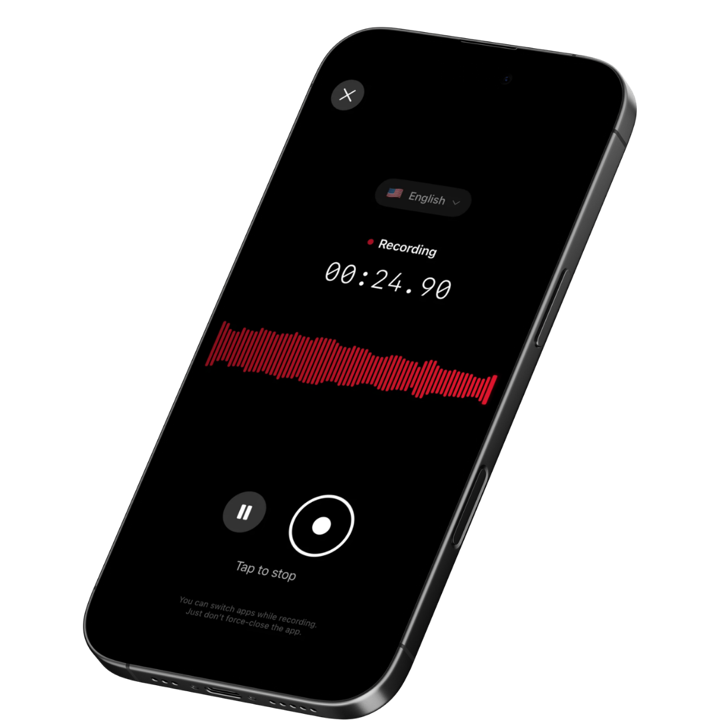
Download SpeakWise from the App Store and complement your meeting agendas with complete capture. One-tap recording, AI transcription, automatic action item extraction, and Notion sync create a complete meeting record from preparation to follow-up.
Join 10,000+ professionals who combine agendas with AI capture for meetings that actually produce results.
Get SpeakWise Free
4.9-star App Store Rating | iOS Optimized

🎯 4.9★ App Store Rating | 📱 Built for iOS
