Meeting Fatigue Statistics 2026: Burnout, Declining Productivity, and Calendar Overload
Used by recruiters, executives, consultants, and more.
Meeting Fatigue Statistics 2026: Burnout, Declining Productivity, and Calendar Overload
78% of workers say they can't get their work done because of meeting overload. 76% feel completely drained on meeting-heavy days. And employees now spend 392 hours per year-ten full workweeks-sitting in meetings. With 72% of meetings deemed ineffective and time wasted in unproductive meetings doubling since 2019, these 20 statistics reveal why meeting fatigue has become the defining workplace crisis of 2026.
The modern calendar has become a battlefield. What was once a tool for scheduling has transformed into an ever-shrinking canvas where "real work" fights for survival against an endless tide of meeting invites. The numbers tell a story of workers drowning in back-to-back calls, directors working overtime just to complete basic tasks, and an entire workforce reporting a phenomenon researchers now call "meeting recovery syndrome."
In this post, we'll explore 20 statistics that capture the full scope of meeting fatigue in 2026. These numbers reveal not just how many hours we're losing, but the cascading effects on productivity, mental health, and organizational performance. Whether you're a leader questioning your company's meeting culture, an employee whose calendar resembles a game of Tetris, or simply wondering why you feel exhausted despite "just sitting in meetings all day," these data points offer clarity-and a path toward reclaiming your workday.
Key Meeting Fatigue Statistics (2026)
- Meeting fatigue now touches nearly every knowledge worker: 78% say meeting overload prevents them from getting their actual work done (Atlassian).
- On heavy meeting days, 76% of employees feel completely drained, a toll that carries over into the rest of the workweek (Atlassian).
- The average employee now spends 392 hours per year-ten full workweeks-sitting in meetings (Flowtrace State of Meetings Report 2025).
- 72% of meetings are deemed ineffective at achieving their stated purpose, wasting time that could go to focused work (Fortune - Atlassian Report).
- 90% of workers report a productivity "meeting hangover" that lingers well after a heavy meeting day ends (Raconteur).
- Beyond time in the room, employees spend nearly 25 hours a week preparing for, attending, and following up on meetings, according to 2025 Deloitte research commissioned by Zoom (Zoom & Deloitte).
- Almost 1 in 10 employees spends more than 15 hours a week in meetings-nearly two full workdays consumed by calls alone (Raconteur).
1. 78% of workers say meeting overload prevents them from getting their work done
Meeting overload has crossed from annoyance into crisis. Atlassian's comprehensive survey of 5,000 knowledge workers across four continents found that 78% of respondents say they're expected to attend so many meetings that it's hard to get their actual work done. This isn't a minor complaint-it's a fundamental breakdown in how work gets accomplished. When nearly four in five employees can't complete their core responsibilities due to meeting demands, organizations face a systemic productivity problem that no amount of individual time management can solve. Source: Atlassian Workplace Woes: Meetings
2. 76% of employees feel completely drained on meeting-heavy days
The physical and mental toll of excessive meetings is measurable and significant. Atlassian's research reveals that 76% of workers agree they feel drained on days when they have a lot of meetings. This fatigue isn't simply tiredness-it represents a depletion of cognitive resources that affects decision-making, creativity, and interpersonal effectiveness. When three-quarters of your workforce ends meeting-heavy days feeling exhausted, you're not just losing productivity during those meetings; you're losing the quality of everything that follows. Source: Atlassian Workplace Woes: Meetings
3. Time wasted in unproductive meetings has doubled since 2019-now 5 hours per week
The productivity drain from bad meetings is accelerating. Asana's 2024 research found that time wasted in unproductive meetings has doubled since 2019, reaching 5 hours per week per employee. That's 260 hours annually-over six full workweeks-spent in meetings that participants themselves recognize as wasteful. The doubling of this figure in just five years suggests that despite widespread awareness of "meeting culture problems," organizations have failed to implement meaningful change. Source: Asana State of Work Report 2024
4. Employees spend 392 hours per year in meetings-ten full workweeks
The sheer volume of meeting time has reached staggering proportions. Flowtrace's analysis of millions of meetings found that the average employee now spends 392 hours per year in meetings-equivalent to ten full workweeks or 16 complete workdays. This figure represents time in meetings alone, before accounting for preparation, follow-up, or the cognitive switching costs between meetings and focused work. For organizations, this means a double-digit percentage of every employee's annual capacity is consumed by synchronous gatherings. Source: Flowtrace State of Meetings Report 2025
5. 51% of employees work overtime due to meetings-67% for directors and above
Meeting overload doesn't just consume scheduled work hours; it forces employees into extended days. Atlassian found that 51% of workers have to work overtime at least a few days a week specifically because meetings during the day prevent them from completing their actual work. For those at the director level and above, this figure rises to 67%. The implication is clear: meetings have expanded to fill the official workday, pushing "real work" into evenings and weekends. Source: Atlassian Workplace Woes: Meetings
6. 90% of employees report a productivity "meeting hangover" after heavy meeting days
The impact of excessive meetings extends well beyond the meetings themselves. Research reported by Raconteur found that roughly 90% of employees report experiencing a productivity "meeting hangover" after days packed with calls and gatherings. This phenomenon-where cognitive depletion from meetings impairs work quality even after the meetings end-explains why meeting-heavy Mondays can derail productivity for the entire week. The effects don't stop when the calendar clears. Source: Raconteur - Workplace Meetings Research
7. 72% of meetings are deemed ineffective at achieving their stated purpose
Perhaps most damning is how rarely meetings actually accomplish their goals. Atlassian's research found that meetings are ineffective at disseminating information, encouraging collaboration, and accomplishing tasks a staggering 72% of the time. That means nearly three in four meetings could have been replaced by a written memo, a brief Slack conversation, or simply not held at all. Organizations continue scheduling meetings at unprecedented rates while acknowledging that the vast majority fail to deliver value. Source: Fortune - Atlassian Report
8. 44% of workers actively dread meetings
Meeting fatigue has evolved beyond mere inconvenience into genuine dread. Asana's research found that 44% of workers say they dread meetings, with 45% admitting they sometimes make excuses or even lie to skip them. For their most recent meeting, 48% of workers said it was unnecessary, 53% called it a waste of time, and 61% said little was accomplished. When nearly half your workforce approaches meetings with dread rather than purpose, something fundamental has broken. Source: Archie Meeting Statistics 2025
9. 80% of workers say they'd be more productive with fewer meetings
The solution, according to those most affected, is straightforward. Atlassian found that 80% of respondents agree they would be more productive if they spent less time in meetings. This near-universal consensus suggests that meeting reduction isn't a fringe idea but a widely shared desire across roles and industries. The challenge isn't identifying the problem-it's building organizational cultures that prioritize focused work over performative collaboration. Source: Atlassian Workplace Woes: Meetings
10. 83% of knowledge workers are at risk of burnout in 2026
Meeting fatigue contributes to a broader burnout epidemic that has reached crisis levels. DHR Global's 2026 Workforce Trends Report, which surveyed 1,500 white-collar workers across North America, Europe, and Asia, found that 83% reported being "slightly" to "extremely" burned out-essentially unchanged from 82% the year before and showing no signs of declining. While burnout has multiple causes, the relentless pace of meetings, the inability to complete focused work, and the resulting overtime create a perfect storm of chronic stress. Meeting culture isn't just an efficiency problem; it's a mental health crisis. Source: DHR Global - Workforce Trends Report 2026
11. 45% of employees feel overwhelmed by the number of meetings they attend
Nearly half the workforce is struggling under the weight of meeting volume. Flowtrace's State of Meetings Report found that 45% of employees feel overwhelmed by the number of meetings they attend, resulting in reduced engagement and frustration. This overwhelm creates a vicious cycle: fatigued employees become disengaged in meetings, meetings become less productive, and more meetings get scheduled to compensate for the lack of outcomes. Source: Flowtrace State of Meetings Report 2025
12. 92% of workers multitask during virtual meetings
Engagement in meetings has reached a crisis point. Flowtrace found that 92% of workers admit to multitasking during virtual meetings-checking email, responding to messages, or working on other tasks. This near-universal multitasking reflects both the ineffectiveness of many meetings and the pressure employees feel to keep up with their actual work. The result is a vicious cycle: multitasking makes meetings less productive, which leads to more meetings, which leads to more multitasking. Source: Flowtrace State of Meetings Report 2025
13. Context switching can reduce productivity by up to 40%
The hidden cost of meeting-fragmented days is cognitive. Research from the American Psychological Association found that task-switching can reduce productivity by up to 40%. Every time an employee shifts from focused work to a meeting and back again, they lose not just the meeting time but additional minutes regaining focus and context. For workers whose calendars show 30-minute gaps between hour-long meetings, these fragments are often too short for meaningful deep work, rendering the "free time" nearly useless. Source: Cosmos Video - Meeting Fatigue Research
14. Reducing meetings by 40% increases productivity by 71%
The business case for meeting reduction is now backed by hard data. A study conducted by Benjamin Laker and reported in Harvard Business Review found that when meetings were reduced by 40%, employee productivity increased by 71%, and satisfaction improved significantly as well. This dramatic improvement suggests that most organizations are operating far above their optimal meeting load, and that aggressive cuts to meeting culture could yield substantial returns in both output and morale. Source: FlexOS - Atlassian Research Analysis
15. Employees are interrupted every 2 minutes during core work hours-275 times per day
Meetings are just one component of a broader interruption crisis. Microsoft's 2025 Work Trend Index analysis of trillions of productivity signals reveals that during core work hours, employees face an interruption-from meetings, emails, or chats-every two minutes. Over a full day, that adds up to 275 interruptions. When meetings are sprinkled throughout the day rather than batched together, they amplify this interruption frequency and make sustained focus nearly impossible. Source: Microsoft Work Trend Index 2025
16. 55% feel lonely at work even on meeting-heavy days
Perhaps the cruelest irony of meeting culture is that it fails to deliver on its social promise. Atlassian found that while 44% of workers say meetings are their go-to method for driving team connection, 55% report feeling lonely at work even on days packed with meetings. When researchers asked what actually builds connection, only 17% pointed to meetings-versus 45% who cited working through challenging projects together. Meetings often substitute performative togetherness for genuine collaboration. Source: Atlassian Meeting Overload Research
17. 89% of employees vent to colleagues to recover from bad meetings
Bad meetings don't just waste time in the moment-they create ripple effects throughout the organization. Asana's research found that employees experience lingering negative effects after 28% of their meetings, and 89% say they vent to colleagues to recover from particularly draining or frustrating sessions. This venting behavior spreads negativity, consumes additional time, and reinforces a culture where meetings are seen as something to be endured rather than leveraged. Source: Archie Meeting Statistics 2025
18. Employees now spend nearly 25 hours a week on meeting-related work
The true cost of meetings extends well beyond the time spent in the room. Research conducted by Deloitte and commissioned by Zoom, published in October 2025, found that employees spend nearly 25 hours a week-more than three full workdays-preparing for, participating in, and following up on meetings. This figure captures the invisible tax of meeting culture: the pre-meeting prep, the follow-up emails, and the context-switching that never shows up on a calendar but consumes just as much attention as the meetings themselves. When nearly two-thirds of the standard workweek is absorbed by meeting-adjacent tasks, it's little wonder employees report having no time left for focused work. Source: Zoom & Deloitte - The Productivity Payoff of Next-Generation Collaboration
19. Almost 1 in 10 employees spend more than 15 hours a week in meetings
For a meaningful slice of the workforce, meeting overload isn't just a nuisance-it's nearly a second job. Research reported by Raconteur found that almost one in ten employees spends more than 15 hours per week in virtual or in-person meetings-close to two full workdays consumed entirely by synchronous calls. For this group, meeting fatigue compounds daily: with more than a third of the workweek gone before any focused work begins, evenings and weekends become the only realistic window for actual output. Source: Raconteur - Workplace Meetings Research
20. 82% of workers want meetings to end by 4pm to protect the rest of their day
Even as meetings expand to fill the workday, employees are pushing back on where the boundaries should sit. Owl Labs' 2025 State of Hybrid Work Report, surveying 2,000 full-time U.S. knowledge workers, found that 82% of respondents prefer meetings to wrap up by 4 p.m., leaving the tail end of the day free for wrap-up tasks, focused work, or logging off on time. The preference reflects a broader pushback against calendar overload: employees aren't just asking for fewer meetings, they're asking for meetings that respect the edges of the workday. Source: Owl Labs State of Hybrid Work 2025
The Meeting Fatigue Paradox: More Connection, Less Productivity
The statistics reveal a fundamental contradiction at the heart of modern work. Organizations schedule more meetings than ever in pursuit of alignment, collaboration, and connection-yet 72% of those meetings fail, 80% of workers would be more productive with fewer of them, and 55% feel lonely even on their most meeting-packed days.
The root cause isn't that meetings are inherently bad. It's that they've become the default response to every organizational need: sharing updates, making decisions, building relationships, managing projects. When every problem gets solved with "let's schedule a call," calendars fill to capacity, deep work disappears, and the actual value of being together gets diluted across too many low-stakes gatherings.
The solution requires both cultural and structural change. Organizations need to treat meeting time as a finite resource, establish clear criteria for when synchronous communication is truly necessary, and invest in asynchronous alternatives that let employees process information on their own schedules. For individuals, the path forward means protecting focus time, declining low-value meetings, and finding ways to capture and share information without requiring everyone to be present at the same time.
The question isn't whether to eliminate meetings-it's whether to treat every hour of employee attention as the scarce, valuable resource it truly is.---
Ready to capture meetings without the calendar chaos?
The irony of meeting fatigue is that the information shared in meetings often matters-it's the format that fails. Important decisions get made, key context gets shared, and valuable ideas emerge. But without a way to capture that information, the meeting must be attended live, repeated for those who missed it, or summarized in follow-up emails that add to everyone's inbox load.
Voice recording and AI transcription offer an escape from this trap. By capturing meetings effortlessly, you create a searchable record that lets teammates catch up asynchronously, reference key decisions later, and stop attending meetings "just in case something important comes up."
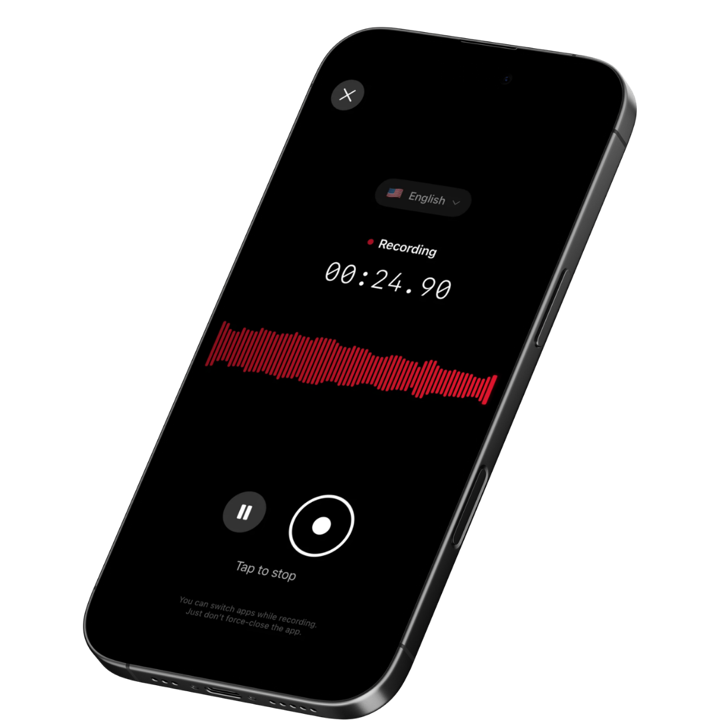
→ Download SpeakWise from the App Store and discover how one-tap recording, AI transcription, intelligent summaries, and Notion integration can help you escape meeting overload-without missing the information that actually matters.
Join 10,000+ professionals who've discovered that the best way to fight meeting fatigue isn't attending fewer meetings-it's capturing more of what matters and reviewing it on your own time.
Get SpeakWise Free →
4.9★ App Store Rating | iOS Optimized

🎯 4.9★ App Store Rating | 📱 Built for iOS
