Meeting Follow-Up Statistics 2026
TL;DR
Meeting follow-up statistics for 2026 show that meeting follow-up often breaks down. 44% of meeting action items never get finished (Fellow). 75% of leaders take notes or share action items every week (Zoom). This post collects 16 sourced statistics on meeting follow-up, and Speakwise records the meeting so the action items are not lost.
Used by recruiters, executives, consultants, and more.
Meeting Follow-Up Statistics 2026
44% of action items from meetings never get completed. Unproductive meetings cost U.S. businesses $37 billion annually. The average employee spends 11.3 hours per week in meetings, and 48% of attendees say their most recent meeting was unnecessary. These 16 statistics reveal why meeting follow-up has become the critical missing link between conversation and results.
Meetings generate decisions, commitments, and ideas. Follow-up turns them into outcomes. Yet the data consistently shows that the gap between what happens in a meeting and what happens after it represents one of the largest productivity losses in modern work. Without effective follow-up, meetings become expensive conversations that produce no lasting value.
This post covers 16 statistics on meeting follow-up in 2026. The data draws from Zoom, Fellow, Flowtrace, and major workplace research. Whether you run meetings, attend them, or are drowning in them, these numbers reveal the true cost of poor follow-through and what separates productive meetings from wasted time.
1. 44% of action items from meetings never get completed
Nearly half of all commitments made in meetings vanish without a trace. Research shows that 44% of action items generated during meetings never get completed. This statistic represents an enormous waste of meeting investment. Every meeting that produces action items operates under the assumption that those items will be executed. When nearly half are abandoned, meetings become elaborate exercises in generating work that no one does.
Source: Fellow - How to Manage Meeting Action Items
2. 71% of meetings fail to achieve their objectives due to poor follow-through
The failure rate of meetings is staggering when measured against their stated purpose. 71% of meetings do not achieve their intended objectives because of inadequate follow-through. This means that the majority of time spent in meetings produces no tangible results. The problem is rarely the meeting itself. It is the absence of systematic processes for capturing decisions, assigning ownership, setting deadlines, and tracking completion after the meeting ends.
Source: Flowtrace - Meeting Statistics 2026
3. Workers spend 11.3 hours per week in meetings
The volume of meeting time has reached extraordinary levels. The average employee now spends 11.3 hours per week in meetings, roughly 28% of their entire workweek. That amounts to 392 hours per year, or more than 16 full workdays. When 44% of the action items from these meetings are never completed, the effective waste is even larger. Workers are spending nearly a third of their time generating commitments that are not honored.
Source: My Hours - Meeting Statistics 2025
4. Unproductive meetings cost U.S. businesses $37 billion annually
The financial toll of meetings without follow-through is staggering. Unproductive meetings cost U.S. businesses approximately $37 billion annually. This figure captures the salary cost of time spent in meetings that produce no meaningful outcomes. For large companies, the cost can reach $300 million per year from inefficient meetings alone. The majority of this waste comes not from the meeting itself but from the failure to act on what was discussed afterward.
Source: Notta - Meeting Statistics 2025
5. 48% of employees say their most recent meeting was unnecessary
Almost half the workforce believes the meetings they attend should not have happened at all. 48% of employees say their most recent meeting was unnecessary. When combined with the 53% who say their last meeting was a waste of time, the picture becomes clear: most meetings are not serving their intended purpose. The follow-up problem begins before the meeting starts. Meetings that lack clear agendas, defined outcomes, and assigned action items are destined to produce nothing actionable.
Source: Archie App - Meeting Statistics 2025
6. Time wasted in unproductive meetings has doubled since 2019
Meeting waste is accelerating. Time wasted in unproductive meetings has doubled since 2019 to approximately 5 hours per week per employee. This doubling reflects the meeting inflation driven by remote work, where virtual meetings replaced hallway conversations, quick questions, and informal check-ins. The ease of scheduling a video call has led to a culture where meetings are the default communication method, regardless of whether a meeting is the most appropriate format.
Source: Join Genius - Meeting Statistics 2025
7. 52% of attendees lose attention within the first 30 minutes
Even when meetings happen, attention fades quickly. 52% of meeting attendees report losing focus within the first 30 minutes. This attention dropout means that critical information, decisions, and action items discussed later in the meeting may never register with half the participants. Without a follow-up mechanism that recaps key points, the information shared after the 30-minute mark is effectively lost for the majority of attendees.
Source: Notta - Meeting Statistics 2025
8. Managers spend an average of 13 hours per week in meetings
The meeting burden falls disproportionately on managers. On average, managers spend 13 hours per week in meetings, consuming more than a third of their workweek. This leaves limited time for the activities that drive their teams forward: coaching, strategic thinking, and focused work. When managers are trapped in back-to-back meetings, follow-up suffers because there is no time to process, organize, and distribute action items between sessions.
Source: Notta - Meeting Statistics 2025
9. 31 hours per month are spent in unproductive meetings per employee
The monthly toll of meeting waste adds up quickly. The average employee spends approximately 31 hours per month in meetings that are unproductive, equivalent to nearly four full workdays. Over a year, this totals nearly 50 lost workdays per employee. The lost productivity represents not just wasted time but wasted opportunity. Those 31 hours could be spent on focused work, skill development, or meaningful collaboration that actually produces results.
Source: BOOQED - Meeting Statistics
10. Only 45% of employees feel their meetings are productive
Fewer than half of workers rate their meetings as productive. This 45% satisfaction rate means that the majority of the workforce experiences meetings as a net drain rather than a net contribution. The gap between meeting volume and meeting quality suggests that organizations need fewer, better meetings rather than more meetings with better agendas. Quality follow-up is the single most powerful lever for moving meetings from the unproductive majority to the productive minority.
Source: Archie App - Meeting Statistics 2025
11. 75% of leaders take meeting notes or share action items weekly
Note-taking is widespread among leadership. Nearly 75% of leaders take notes during meetings or share notes and action items with their colleagues at least a few times per week. However, the 44% action item completion rate suggests that taking notes is not the same as following through on them. The gap between documentation and execution represents the core meeting follow-up challenge. Notes without accountability systems produce awareness but not results.
Source: Zoom - Meeting Statistics 2025
12. 32% of Millennials use AI transcription tools for meeting notes
AI-powered meeting documentation is gaining traction. 32% of Millennials report using AI note-taking or automated transcription tools for meeting documentation. This adoption rate is the highest among any generation and signals a broader shift toward automated follow-up. AI transcription removes the manual bottleneck from meeting documentation. When every word is captured and processed automatically, the follow-up challenge shifts from documentation to execution.
Source: Zoom - Meeting Statistics 2025
13. Action item completion rates jump from 50-60% to 85-95% with automated tracking
The impact of systematic action item tracking is dramatic. Teams that move from manual to automated action item systems see completion rates increase from 50-60% to 85-95%. This near-doubling of follow-through transforms meeting ROI. The automated systems work because they provide three things manual processes lack: persistent visibility, automated reminders, and clear ownership records. When action items are tracked automatically, they cannot be forgotten or deprioritized into oblivion.
Source: Fellow - How to Track Action Items
14. Meeting durations have increased by 10% over 15 years
Meetings are getting longer in addition to more frequent. Research shows that average meeting duration has increased by 10% over the past 15 years. This elongation means that each meeting consumes more time while producing inconsistent follow-through. The combination of longer meetings and poor follow-up creates a compounding waste problem. Workers spend more time in meetings, generate more action items, and complete proportionally fewer of them.
Source: My Hours - Meeting Statistics 2025
15. 53% of employees say little was accomplished in their last meeting
More than half of workers leave their most recent meeting feeling that little of value was achieved. This 53% figure reflects the cumulative effect of poor agendas, lack of facilitation, and absent follow-up. The perception of wasted time in meetings is self-reinforcing. Workers who believe meetings are unproductive invest less attention and effort, which makes the meetings even less productive. Breaking this cycle requires demonstrating through consistent follow-up that meetings produce real outcomes.
Source: Archie App - Meeting Statistics 2025
16. The median meeting duration is now 35 minutes with only 12% exceeding an hour
There is some encouraging news in the data. The median meeting duration sits at 35 minutes, and only 12% of meetings run longer than an hour. This suggests that organizations are getting better at keeping individual meetings concise. However, shorter meetings require even more disciplined follow-up because there is less time to repeat key points and assignments. A tight 35-minute meeting with zero follow-up wastes 35 minutes. The same meeting with effective follow-up can be highly productive.
Source: My Hours - Meeting Statistics 2025
Follow-Up Is Where Meeting Value Is Created or Destroyed
The statistics tell a simple but powerful story: meetings are only as valuable as the follow-up they produce. The sheer volume of meeting time, now 11.3 hours per week, means that organizations are making massive investments in conversation. The 44% action item abandonment rate means those investments are producing roughly half the returns they should.
The pattern across the data is consistent. Most meetings happen. Most notes are taken. Most action items are assigned. And then nearly half of everything evaporates. The breakdown occurs in the transition from meeting to execution, when verbal commitments must become tracked tasks, when shared understanding must become individual accountability, and when good intentions must become measurable progress.
The organizations that solve the follow-up problem gain a disproportionate advantage. When 85-95% of action items are completed instead of 50-60%, the same number of meetings produces nearly twice the output. The most leveraged productivity improvement available to most organizations is not reducing meeting time. It is ensuring that meetings produce lasting results.
The most expensive part of a meeting is not the hour in the room. It is the follow-up that never happens.---
Never lose a meeting action item again
The data is clear: manual follow-up fails almost half the time. The solution is not more discipline. It is better capture. When meeting content is recorded and processed by AI, every decision, action item, and commitment is documented automatically. No one needs to remember what was said. It is captured, transcribed, and organized before the meeting room clears.
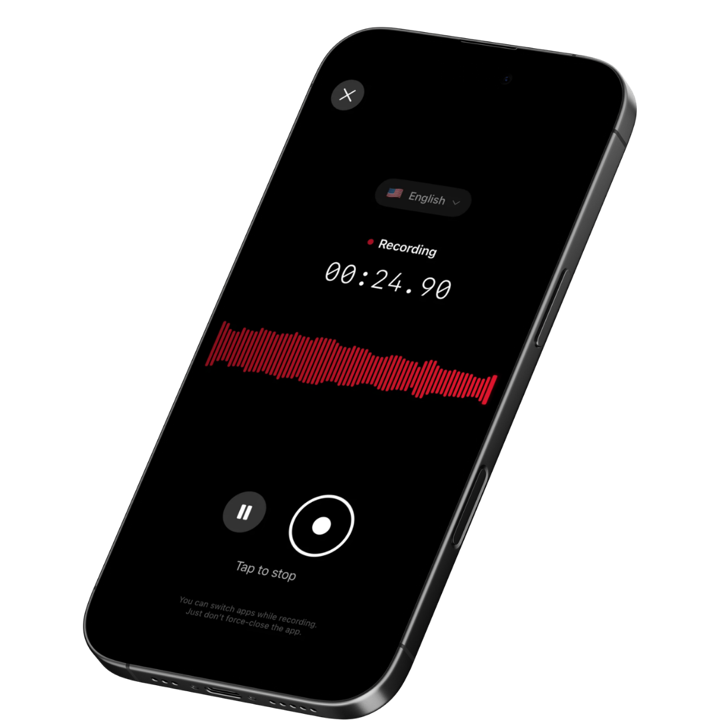
SpeakWise transforms in-person meetings into documented, actionable records. One-tap recording captures every word. AI transcription creates a searchable record. Automatic action item extraction turns verbal commitments into tracked tasks.
Download SpeakWise from the App Store and close the follow-up gap. With 94% action item extraction accuracy and Notion integration, every meeting commitment becomes a tracked, visible task.
Join 10,000+ professionals who save 73% of their post-meeting follow-up time and never lose an action item.
Get SpeakWise Free
4.9-star App Store Rating | iOS Optimized

🎯 4.9★ App Store Rating | 📱 Built for iOS
