Meeting Overload Statistics 2026: Calendar Saturation, Declining Returns, and the War on Focus
Used by recruiters, executives, consultants, and more.
Meeting Overload Statistics 2026: Calendar Saturation, Declining Returns, and the War on Focus
The average knowledge worker now spends 392 hours per year in meetings-ten full workweeks-while 72% of those meetings are deemed ineffective. Unproductive meetings cost U.S. businesses $37 billion annually, and time wasted in pointless gatherings has doubled since 2019 to 5 hours per week. Meanwhile, organizations that reduce their meeting load by just 40% see productivity soar by 71%. These 20 statistics reveal that calendar saturation has crossed from nuisance into full-blown organizational crisis, and the war on focus is being lost one calendar invite at a time.
Meeting overload isn't a new complaint. But it has become a new kind of problem. The post-pandemic workplace promised flexibility and autonomy. Instead, it delivered a 192% increase in weekly meetings, calendars packed from morning standup to evening sync, and an entire generation of knowledge workers who must work overtime just to get their "real work" done after the meetings end. What started as a temporary adaptation to remote work has hardened into a permanent structural burden that shows no signs of reversing on its own.
The numbers in this post tell a story that goes deeper than "too many meetings." They reveal a self-reinforcing system where ineffective meetings breed more meetings, where focus time has been compressed to near extinction, and where the financial cost of gathering people in virtual rooms has ballooned into the tens of billions. Whether you're a team lead wondering why output is declining despite a fully engaged team, an individual contributor whose deepest thinking happens after 6 PM because your calendar is wall-to-wall from 9 to 5, or an executive trying to understand why your organization's calendar seems to have a gravitational pull of its own, these 20 data points map the full landscape of the meeting overload crisis-from the hours consumed to the dollars lost to the cognitive damage inflicted.
In this post, we explore three dimensions of the crisis: calendar saturation (the sheer volume of meetings consuming the workday), declining returns (the growing evidence that most meetings fail to achieve their purpose), and the war on focus (the cognitive cost of a meeting-fragmented schedule). The data comes from Microsoft, Atlassian, Harvard Business Review, the University of California, and other leading research institutions. The trajectory is alarming, and the case for a fundamentally different approach to workplace communication has never been stronger.
Key Meeting Overload Statistics (2026)
- Meeting overload now costs the average knowledge worker 392 hours per year-the equivalent of ten full workweeks (Flowtrace).
- Since February 2020, employees are in 192% more Microsoft Teams meetings and calls per week than before the pandemic (Microsoft Work Trend Index).
- 72% of meetings fail to achieve their stated purpose, according to Atlassian's survey of 5,000 knowledge workers across four continents (Atlassian).
- Unproductive meetings cost U.S. businesses $37 billion annually in wasted salaries and lost opportunity (Otter.ai).
- Organizations that cut their meeting load by 40% see productivity climb 71%, per a Harvard Business Review study of 76 companies (Harvard Business Review).
- 60% of meetings are now unscheduled, ad hoc calls with no calendar invite, meaning calendar audits undercount the real scope of the overload (Microsoft Work Trend Index).
- Meetings starting after 8 PM are up 16% year-over-year as Microsoft's "triple peak day" pushes work deep into the evening (Microsoft Work Trend Index).
1. Employees spend 392 hours per year in meetings-ten full workweeks
The raw volume of time consumed by meetings has reached staggering proportions. Analysis of millions of calendar events shows that the average employee now devotes 392 hours annually to meetings-the equivalent of ten complete workweeks or nearly 50 full eight-hour days. This figure represents meeting time alone. It does not account for the preparation that precedes each meeting, the follow-up that follows, or the cognitive switching cost of transitioning between meetings and focused work. For an organization of 500 employees, this translates to 196,000 hours per year spent in meetings before a single deliverable is produced. The question every organization must answer: how many of those 196,000 hours actually generate value? Source: Flowtrace - 100 Meeting Statistics for 2026
2. Meeting time has tripled since the start of the pandemic-a 192% increase
The shift to remote and hybrid work didn't just change where meetings happen; it fundamentally altered how many meetings happen. Microsoft's analysis of trillions of productivity signals across its platform found that since February 2020, people are in three times more Teams meetings and calls per week-a 192% increase. What began as a necessary response to distributed teams has calcified into permanent habit. The "quick sync" replaced the hallway conversation, the "check-in" replaced the desk drop-by, and the "alignment meeting" replaced the whiteboard session. But unlike hallway conversations, each of these digital substitutes requires a calendar invite, a link, and everyone's simultaneous attention. The frictionless informality of in-person communication has been replaced by the formal overhead of scheduled synchronous sessions-and the volume has never come back down. Even as offices have reopened, the meeting habits formed during lockdown have persisted, layering digital meetings on top of in-person ones rather than replacing them. Source: Microsoft Work Trend Index - Will AI Fix Work?
3. 78% of workers say meeting overload prevents them from completing their actual work
Nearly four in five knowledge workers report that they are expected to attend so many meetings that getting their core work done has become genuinely difficult. This finding comes from Atlassian's comprehensive survey of 5,000 knowledge workers across four continents and represents more than a scheduling inconvenience-it signals a systemic breakdown in how modern organizations allocate their most precious resource: employee attention. When nearly 80% of your workforce identifies meetings as a barrier to productivity rather than a driver of it, the problem has moved from the individual calendar to the organizational operating system. The meetings themselves have become the work, crowding out the work they were supposed to support. Source: Atlassian Workplace Woes: Meetings
4. 72% of meetings are ineffective at achieving their stated purpose
Volume alone would be manageable if the meetings themselves delivered results. They don't. Atlassian's research found that meetings are ineffective at disseminating information, encouraging collaboration, and accomplishing tasks a staggering 72% of the time. That means nearly three in every four meetings-the status updates, the brainstorms, the alignment sessions-fail to accomplish the very thing they were scheduled to do. Participants leave without clear outcomes, action items dissolve into ambiguity, and the same topics resurface in the next meeting, perpetuating a cycle where the failure of one meeting becomes the justification for scheduling another. Source: Fortune - Meetings Are a Productivity Killer, Atlassian Report
5. Unproductive meetings cost U.S. businesses $37 billion per year
The financial hemorrhage from ineffective meetings is enormous. Research reported by Doodle's State of Meetings survey estimates the annual cost of unnecessary meetings at $37 billion in wasted salaries and opportunity cost across U.S. businesses. For large companies, the damage is even more concentrated: Otter.ai's research, conducted in partnership with University of North Carolina professor Dr. Steven Rogelberg, found that companies with more than 5,000 employees could be losing upward of $100 million annually to meetings their own employees deem unnecessary. These aren't abstract projections-they represent real payroll dollars spent on gatherings where participants themselves report no meaningful output. Source: Otter.ai - One-Third of Meetings Are Unnecessary
6. Time wasted in unproductive meetings has doubled since 2019-now 5 hours per week
The problem isn't just that there are more meetings; the meetings themselves are getting worse. Research tracking meeting productivity over time found that hours wasted in unproductive meetings has doubled since 2019, climbing to 5 hours per week per employee. That's 260 hours per year-over six full workweeks-spent in meetings that the participants themselves recognize as wasteful. The doubling of this figure in just five years, despite widespread awareness of "meeting culture problems" and the proliferation of meeting management tools, suggests that surface-level fixes like agendas and time limits are failing to address the deeper structural issue: most of these meetings should never have been scheduled in the first place. Source: Archie - Work Meetings in Numbers: Meeting Statistics 2025
7. One-third of all meetings are entirely unnecessary, costing $25,000 per employee annually
Otter.ai's survey of 632 employees, conducted in partnership with leading meetings researcher Dr. Steven Rogelberg, found that nearly a third of all meetings are unnecessary. The financial implications are sobering: companies pay an average of $80,000 per professional employee to attend meetings each year, and $25,000 of that-31%-goes toward meetings those employees deem completely unnecessary. Despite this, 78% of companies and managers have never addressed declining meetings with their employees, leaving workers to sit through gatherings they know add no value, feeling "annoyed," "frustrated," and powerless to change the pattern. Source: Otter.ai - Cost of Unnecessary Meeting Attendance
8. 51% of employees work overtime because meetings consume their workday-67% for directors
Meeting overload doesn't just eat into scheduled work hours; it forces employees into extended days. Atlassian found that 51% of workers have to work overtime at least a few days a week specifically because meetings during the day prevent them from completing their actual tasks. For those at the director level and above, the figure rises to a staggering 67%-two-thirds of senior leaders are regularly working evenings and weekends because their daytime hours have been commandeered by meetings. The implication is that meetings have expanded to fill the entire official workday, banishing "real work" to personal time and blurring the line between professional responsibility and personal sacrifice. Source: Atlassian Workplace Woes: Meetings
9. Microsoft 365 users spend 57% of their time on communication and only 43% on creation
Microsoft's analysis of how people actually use its productivity suite reveals a troubling imbalance. Across Microsoft 365, users spend 57% of their time on emails, chats, and meetings-and only 43% in creation apps like Word, Excel, and PowerPoint. In other words, the majority of the modern knowledge worker's day is consumed by the coordination overhead of work rather than the work itself. The tools designed for producing output are sitting idle while the tools designed for talking about output dominate the screen. This 57/43 split represents a fundamental inversion of what most organizations actually need from their employees. Source: Microsoft Work Trend Index - Will AI Fix Work?
10. Executives spend 23 hours per week in meetings-double the figure from the 1960s
Leadership roles have become meeting roles. Research published in Harvard Business Review found that executives now spend nearly 23 hours per week in meetings, a figure that has more than doubled since the 1960s when the average was under 10 hours. CEOs face even more extreme saturation: a separate HBR study tracking how CEOs actually spend their time found they average at least 37 meetings per week and spend 72% of their total work time in meetings. The organizational irony is that the people best positioned to make strategic decisions about the company's direction spend the vast majority of their time in the format least conducive to deep, strategic thinking. Source: Harvard Business Review - Stop the Meeting Madness
11. It takes 23 minutes and 15 seconds to regain focus after each meeting interruption
The damage a meeting inflicts on productivity extends far beyond the meeting itself. Gloria Mark, a researcher at the University of California, Irvine, found in her studies of workplace interruptions that it takes an average of 23 minutes and 15 seconds to fully regain focus on the original task after an interruption. Applied to meetings, this means a 30-minute meeting doesn't just cost 30 minutes-it costs 30 minutes of meeting time plus 23 minutes of recovery time, totaling nearly an hour of lost productive capacity. For a worker with five meetings scattered throughout the day, the recovery cost alone approaches two additional hours of degraded cognitive performance. The meeting is the tip of the iceberg; the real damage is what happens to focus, creativity, and problem-solving capacity afterward. Source: Gallup Business Journal - Gloria Mark Interview
12. Employees are interrupted every 2 minutes during core work hours-275 times per day
Meetings don't operate in isolation. They exist within a broader interruption ecosystem that has reached overwhelming levels. Microsoft's 2025 Work Trend Index, drawing on analysis of trillions of productivity signals, found that during core work hours employees face an interruption-from meetings, emails, or chats-every two minutes. Over a full day, that compounds to 275 interruptions. When meetings are scattered throughout the day rather than batched, they amplify this interruption frequency and fragment what remains of focused work into shards too small for meaningful deep thinking. The average employee gets just two to three hours of genuine focus time per day-and for many, even that is an optimistic estimate. Source: Microsoft Work Trend Index 2025 - Breaking Down the Infinite Workday
13. Reducing meetings by 40% increases productivity by 71%
The strongest evidence for meeting reduction comes from a study of 76 companies conducted over 14 months and reported in Harvard Business Review. When organizations cut their meeting load by 40%, employee productivity jumped by 71%. But the benefits didn't stop there: employee satisfaction increased by 52%, engagement rose, stress decreased, and micromanagement declined. The mechanism is straightforward-when employees own their time, they own their output. They hold themselves accountable, prioritize more effectively, and perform at higher levels. This study provides the clearest available evidence that most organizations are operating far above their optimal meeting threshold, and that aggressive reduction yields outsized returns. Source: Harvard Business Review - Dear Manager, You're Holding Too Many Meetings
14. Shopify deleted 12,000 meetings and projected savings of 322,000 hours in a single year
In January 2023, Shopify made headlines by purging 12,000 recurring meetings from its calendars in a single sweep. The company projected it would eliminate 322,000 hours and 474,000 discrete calendar events for the year. To reinforce the cultural change and prevent meetings from creeping back, Shopify built a Meeting Cost Calculator-a Chrome extension embedded in Google Calendar that shows employees the estimated dollar cost of any meeting with three or more attendees, factoring in average compensation data, attendee count, and meeting length. The results were eye-opening: a 30-minute meeting with three employees costs between $700 and $1,600; adding an executive can push it above $2,000. Five months into the experiment, average meeting time per person had dropped 14%, with Wednesday meeting time down 26%. The company estimated that eliminating even three meetings per person per week would yield a 15% reduction in overall costs. The lesson from Shopify's experiment is both simple and powerful: making the true cost of meetings visible to the people scheduling them fundamentally changes behavior. Source: Fortune - Shopify CFO Explains Meeting Cost Calculator
15. 80% of workers say they would be more productive with fewer meetings
The solution, according to those experiencing meeting overload firsthand, is not complicated. Atlassian's survey of 5,000 knowledge workers found that 80% agree they would be more productive if they spent less time in meetings. This near-universal consensus spans roles, seniority levels, industries, and geographies. It represents the clearest mandate a workforce can give: fewer meetings, more time for focused work. The challenge isn't that employees don't know what they need-it's that organizational inertia, fear of missing information, and a culture that equates presence with contribution keep the calendar full despite widespread recognition that it shouldn't be. Source: Atlassian Workplace Woes: Meetings
16. 44% of workers actively dread meetings, and 45% make excuses to skip them
Meeting overload has progressed from fatigue to active avoidance. Research found that 44% of workers now say they dread meetings, with 45% admitting they sometimes make excuses or even lie to avoid attending. When asked about their most recent meeting specifically, 48% said it was unnecessary, 53% called it a waste of time, and 61% said little was accomplished. These numbers reflect a workforce that has given up on meetings as a productive format. The dreading, the avoidance, the post-meeting frustration-these aren't signs of disengaged employees. They're signs of rational people responding to a system that consistently wastes their time and delivers diminishing returns. Source: Archie - Work Meetings in Numbers: Meeting Statistics 2025
17. 76% of employees feel completely drained on meeting-heavy days
The cumulative effect of meeting overload is measurable exhaustion. Atlassian found that 76% of workers agree they feel drained on days when they have a lot of meetings. This is not ordinary tiredness-it represents a depletion of cognitive and emotional resources that impairs decision-making, creativity, and the quality of interpersonal interactions for the remainder of the day. When combined with the finding that roughly 90% of employees report a "meeting hangover" that carries over into subsequent workdays, the picture becomes clear: meeting overload doesn't just consume time in the moment. It degrades the quality of everything that follows, creating a deficit that compounds across the workweek. Source: Atlassian Workplace Woes: Meetings
18. 60% of meetings are now unscheduled, ad hoc calls with no calendar invite
Calendar audits undercount the true scope of the meeting overload problem, because most meetings never make it onto the calendar in the first place. Microsoft's Work Trend Index, drawing on telemetry from millions of Microsoft 365 users, found that 60% of meetings are unscheduled or ad hoc-conjured on the spot rather than planned in advance-and roughly 1 in 10 scheduled meetings gets booked at the last minute as well. The implication is stark: fixing meeting overload by trimming recurring calendar invites addresses only part of the problem, since the majority of interruptions arrive without warning at all. Source: Microsoft Work Trend Index - Breaking Down the Infinite Workday
19. Meetings starting after 8 PM are up 16% year-over-year
The meeting overload crisis is no longer confined to the traditional nine-to-five. Microsoft's Work Trend Index found that meetings starting after 8 p.m. have risen 16% year-over-year, driven largely by an increase in cross-time-zone collaboration among global and flexible teams-nearly a third of meetings now span multiple time zones, up 8 percentage points since 2021. What Microsoft calls the "triple peak day" is no longer a pandemic-era anomaly; it has become the norm, with the workday stretching well into the evening as employees squeeze in one more sync after dinner. Every late-night meeting is a late-night interruption to personal time that never shows up in a standard 40-hour workweek calculation. Source: Microsoft Work Trend Index - Breaking Down the Infinite Workday
20. More than 1 in 4 workers lose 10+ minutes per meeting to technical setup alone
Even when a meeting is scheduled and starts and ends on time, the overload compounds before anyone says a word. Owl Labs' 2025 State of Hybrid Work report, surveying 2,000 full-time U.S. workers, found that employees lose more than six minutes on average just getting a hybrid meeting started, and more than 1 in 4 (27%) report losing 10 or more minutes per meeting to tech setup alone-fumbling with video, audio, or screen-share before the actual conversation can begin. Multiplied across a 392-hour meeting year, this friction tax adds hours of pure overhead with zero content exchanged. Source: Owl Labs - State of Hybrid Work 2025
The Meeting Overload Paradox: Why More Meetings Produce Fewer Results
Step back from the individual statistics and a paradox emerges. Organizations are holding more meetings than at any point in history-three times more than before the pandemic-yet 72% of those meetings are deemed ineffective, 78% of workers say meetings prevent them from doing their jobs, and 80% believe they'd be more productive with fewer of them. The meeting was supposed to be a tool for coordination and alignment. Instead, it has become the single largest consumer of productive capacity in the modern workplace.
The root of the paradox lies in a flawed assumption: that synchronous, calendar-based communication is the default solution for every organizational need. Status updates get a meeting. Decision approvals get a meeting. Project kickoffs, retrospectives, brainstorms, one-on-ones, skip-levels, all-hands, sprint planning, weekly syncs, daily standups-the calendar becomes an ever-expanding organism that consumes the very time it was supposed to help organize. Each meeting is individually justifiable. Collectively, they create a system where no one has time to do the work the meetings are supposedly about.
The financial cost is enormous-$37 billion in the U.S. alone, with individual companies losing tens of millions annually on meetings their own employees identify as unnecessary. But the deeper cost is cognitive. When employees are interrupted every two minutes, when they need 23 minutes to regain focus after each interruption, and when their calendars leave only two to three hours of focus time per day, organizations aren't just losing meeting hours. They're losing the capacity for the deep, concentrated thinking that produces innovation, solves complex problems, and drives strategic advantage. The war on focus is being lost not through a single dramatic battle, but through the accumulation of a thousand 30-minute calendar invites.
The companies achieving breakthrough results-Shopify's 322,000-hour recovery, the 71% productivity gain from a 40% meeting reduction-share a common insight: the goal isn't to make meetings better. It's to make meetings rarer. When synchronous time is treated as a precious, finite resource rather than a free and unlimited default, organizations discover that most of what flows through meetings can flow more effectively through other channels. Written updates replace status meetings. Recorded walkthroughs replace alignment sessions. Asynchronous decision-making replaces the meeting that exists only because "we need to get everyone in a room." Voice memos and AI-generated summaries replace the information-sharing sessions that consume 30 minutes to convey 3 minutes of actual content.
The path forward requires a cultural shift as much as a technological one. Organizations must develop the discipline to ask, before every meeting invite, "Could this information be shared asynchronously?" The data strongly suggests that for the majority of workplace meetings, the answer is yes. Status updates, project check-ins, informational presentations, routine decision-making-these constitute the bulk of most meeting calendars, and none of them inherently require simultaneous presence. The meetings that remain should be reserved for what synchronous communication does uniquely well: complex negotiation, creative collaboration, sensitive conversations, and relationship building. Everything else can-and should-flow through channels that respect each individual's time, attention, and cognitive capacity.
The data is unambiguous: the modern workplace does not have a meeting quality problem. It has a meeting quantity problem. And the organizations that solve it will unlock a competitive advantage measured not in incremental percentage points, but in multiples of current productivity.---
Ready to break free from meeting overload?
Meetings exist because information needs to flow-updates need to be shared, decisions need context, and teams need alignment. The problem isn't the information; it's the delivery mechanism. Most of what gets communicated in a 30-minute meeting could be absorbed in 3 minutes of reading or listening. Most of what requires "getting everyone in a room" could be handled asynchronously if the right capture and distribution tools existed. The 20 statistics above prove that the synchronous meeting, as a default communication format, has failed at scale. It wastes $37 billion annually, steals 392 hours per year from every employee, and fails to achieve its stated purpose 72% of the time. The answer isn't to optimize a broken format with better agendas and stricter time limits-it's to replace the format entirely with something that respects both the information and the people who need it.
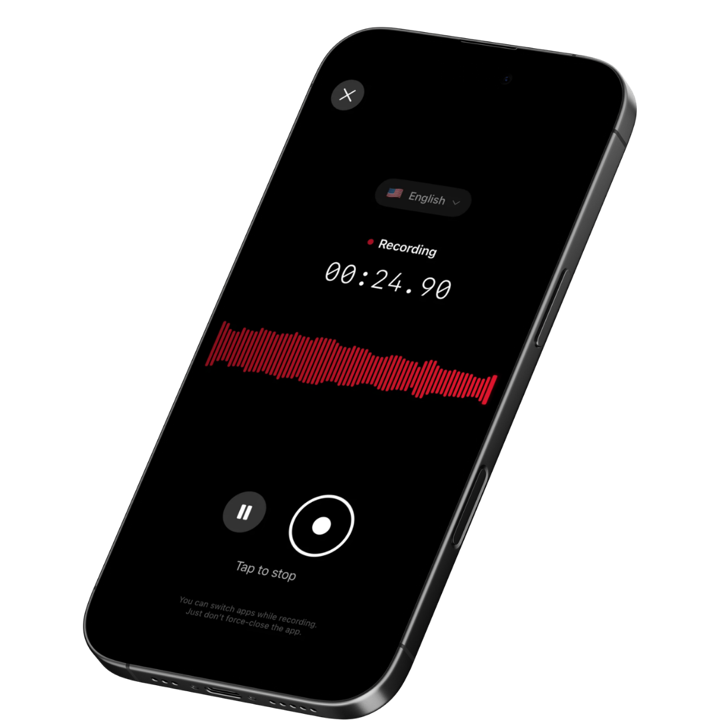
Voice capture offers a fundamentally different approach. Instead of scheduling another meeting to share an update, discuss a decision, or align on next steps, you simply speak-and AI handles the rest. A 2-minute voice note replaces a 30-minute meeting, and your team gets a transcript, summary, and action items without a calendar invite.
Download SpeakWise from the App Store and discover how one-tap recording, AI transcription, intelligent summaries, and Notion integration can help you replace meetings with async voice communication.
Join 10,000+ professionals who've discovered that the best meeting is the one you didn't need to have.
Get SpeakWise Free →
4.9★ App Store Rating | iOS Optimized

🎯 4.9★ App Store Rating | 📱 Built for iOS
