Meeting Recall Statistics 2026: What We Forget, Missed Action Items, and Memory Gaps
Used by recruiters, executives, consultants, and more.
Meeting Recall Statistics 2026: What We Forget, Missed Action Items, and Memory Gaps
You just left a 60-minute meeting. Within the hour, half of what was discussed has already slipped from your memory. By tomorrow, you'll retain only 30%. Within a week, 90% will be gone-along with the action items, decisions, and context that made the meeting worth having in the first place.
This isn't a personal failing. It's how human memory works, and it explains why 67% of meetings are deemed unproductive, why 30% of agreed-upon actions never get completed, and why organizations lose an estimated $37 billion annually to meeting inefficiency.
The gap between what happens in meetings and what actually gets remembered, documented, and executed represents one of the largest hidden productivity drains in modern workplaces. Here are 17 statistics that reveal the scale of the meeting memory problem-and what leading organizations are doing about it.
1. People forget 50% of new information within one hour of learning it. The forgetting curve, first identified by psychologist Hermann Ebbinghaus, shows that memory decay happens fastest immediately after exposure. Research on learning retention confirms that within the first hour, learners forget an average of half of the information presented. This applies directly to meetings: by the time you return to your desk, half the discussion has already faded.
Source: Indegene, Learning Retention Research
2. Within 24 hours, 70% of meeting content is forgotten. The forgetting curve steepens dramatically in the first day. Studies show that people retain only about 30% of new information after 24 hours without any reinforcement. For a one-hour meeting packed with updates, decisions, and action items, this means roughly 42 minutes of content becomes inaccessible to memory by the next morning.
Source: Bearded Skeptic, Learning Retention Statistics 2025
3. After one week, 90% of unreinforced information is lost. Without review or documentation, people recall only about 10% of what they learned seven days earlier. For recurring weekly meetings, this creates a compounding problem: by the time the next meeting arrives, almost nothing from the previous session remains accessible. The forgetting curve illustrates why meeting notes aren't optional-they're the only defense against near-total information loss.
Source: BCIT Study Skills, Memory Retention Research
4. 92% of employees admit to multitasking during meetings. Memory formation requires attention, and attention is in short supply. Research from Muse found that nearly all employees (92%) multitask during meetings-whether unintentionally or deliberately. Of these, 41% admit to multitasking often or all the time. When attention is divided between the meeting and email, Slack, or other work, encoding fails before memory decay even begins.
Source: Muse, via Notta Meeting Statistics
5. 91% of meeting participants have daydreamed during meetings. Beyond active multitasking, passive disengagement is nearly universal. Surveys show 91% of employees admit to daydreaming during meetings rather than paying attention. The mind wanders, attention drifts, and information that never reaches conscious processing cannot become memory. When combined with the forgetting curve, these lapses create permanent gaps in meeting recall.
Source: Coolest Gadgets, Meeting Statistics 2024
6. 95% of meeting participants lose focus and miss parts of the meeting. HR Digest research found that nearly all meeting participants (95%) experience attention lapses significant enough to miss portions of the discussion entirely. This isn't about boring meetings-it reflects the cognitive limits of sustained attention. Even engaged participants experience periodic attention failures, creating gaps in their record of what occurred.
Source: HR Digest, via Notta Meeting Statistics
7. 52% of attendees lose attention within the first 30 minutes. Attention has a shelf life. Flowtrace research shows that more than half of meeting attendees have mentally checked out by the 30-minute mark, with 96% losing attention by 50 minutes. For the standard one-hour meeting, this means most participants are operating with degraded attention for at least the final third of the discussion-often when decisions are being made and action items assigned.
Source: Flowtrace, State of Meetings Report 2025
8. 30% of employees don't complete actions agreed on during meetings due to poor recall. The consequences of meeting memory gaps extend beyond knowledge loss to execution failure. Wundamail research found that 30% of employees fail to complete actions agreed upon during meetings, attributed in part to a tendency not to recall key information after the meeting concludes. When people can't remember what they committed to, follow-through becomes impossible.
Source: Wundamail, via BOOQED Meeting Statistics
9. Only 37% of meetings result in a decision. If meetings are for making decisions, most are failing. Flowtrace analysis found that just 37% of meetings produce a clear decision, leaving 63% as discussion without resolution. For the decisions that are made, the lack of documentation means even participants often can't accurately recall what was decided or why-creating confusion, rework, and relitigated discussions.
Source: Flowtrace, State of Meetings Report 2025
10. 54% of employees want post-meeting summaries and action items, but only 39% receive them. There's a 15-percentage-point gap between what workers need and what they get. Zoom research found that more than half of employees (54%) want structured post-meeting summaries with clear action items, yet only 39% report receiving them. This documentation gap leaves the majority of employees relying solely on their fallible memories to reconstruct what happened in meetings.
Source: Zoom, Meeting Statistics 2025
11. Only 37% of workplace meetings use an agenda. Agendas don't just organize discussion-they aid memory by providing structure for encoding. Yet Flowtrace found that 63% of meetings proceed without any agenda at all. Unstructured meetings are harder to remember because the brain lacks a framework for organizing the information. The absence of agendas contributes directly to the recall problem.
Source: Flowtrace, State of Meetings Report 2025
12. 51% of meeting attendees take their own individual notes, creating divergent records. When organizations do capture meeting information, they often do so inconsistently. Fellow research found that 51% of attendees take individual notes during meetings, meaning every person leaves with a different version of what occurred. These divergent records compound the memory problem with a documentation problem, as there's no single source of truth to reference later.
Source: Fellow, via Notta Meeting Statistics
13. 60% of remote workers struggle to retain information from virtual meetings. Virtual meetings create additional memory challenges. SuperAGI research found that nearly 60% of remote workers report difficulty retaining information from virtual meetings specifically. The lack of physical presence, reduced non-verbal cues, and increased temptation to multitask in home environments all contribute to weaker memory formation for virtual discussions.
Source: SuperAGI, AI Meeting Transcription Research
14. 75% of professionals now use an AI note-taker in work meetings. The meeting memory crisis has driven rapid AI adoption. Fellow's 2025 survey found that three-quarters of professionals now use AI note-taking tools in their work meetings. What began as early-adopter technology has become core workplace infrastructure, with AI handling the documentation that human memory cannot reliably perform.
Source: Fellow, State of AI Notetakers 2025
15. Organizations using AI meeting transcription report 25% fewer meetings and 30% higher productivity. AI documentation doesn't just capture information-it changes meeting behavior. Research shows organizations implementing AI meeting transcription experience a 25% reduction in meeting time and 30% productivity increases. When discussions are reliably captured, meetings can be shorter and less frequent, with searchable records replacing redundant status updates.
Source: Sonix, Automated Transcription Statistics
16. 75% of teams using AI transcription report higher meeting productivity. The productivity gains from AI documentation are widely recognized by users. Zight research found that three-quarters of teams using AI transcription tools report improved meeting productivity. The ability to focus on discussion rather than note-taking, combined with reliable post-meeting records, transforms how teams engage with and benefit from their meetings.
Source: Zight, AI Transcription Trends 2025
17. The AI meeting assistants market is projected to grow from $2.44 billion in 2024 to $15.16 billion by 2032. The scale of investment in solving the meeting memory problem is substantial. The global AI meeting assistants market is growing at 25.6% annually, driven by enterprises seeking to capture, organize, and act on the information generated in the billions of meetings held each year. The rapid growth reflects recognition that human memory alone cannot meet the documentation demands of modern collaboration.
Source: Data Bridge Market Research
The Memory Architecture Gap
These statistics reveal a fundamental mismatch between how meetings operate and how human memory works. Meetings assume participants will retain discussions, remember decisions, and execute on commitments. Human memory guarantees they won't-at least not reliably.
The consequences compound across organizations. When 92% of people are multitasking and 95% miss parts of meetings, the "shared understanding" that meetings are supposed to create exists only partially in each participant's mind-and the partial pieces don't match. When 30% of action items go uncompleted due to recall failures, projects stall and deadlines slip. When only 37% of meetings produce decisions and even fewer document them, organizations relitigate the same questions repeatedly.
The 15-point gap between employees wanting post-meeting summaries (54%) and receiving them (39%) represents organizational dysfunction at scale. People know they need documentation to compensate for memory limitations, but the friction of manual note-taking-and the cognitive load of taking notes while also participating-leaves most meetings undocumented.
AI meeting assistants are filling this gap not because they're better than human note-takers at any single task, but because they can perform the task at all. When 75% of professionals now use AI note-takers, it signals that the meeting memory problem has become too costly to leave unsolved.
Never Forget What Matters
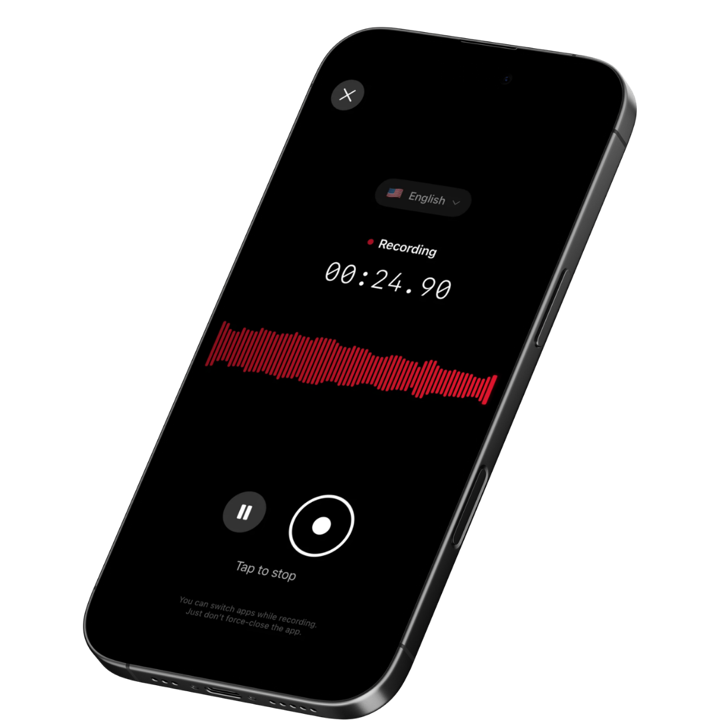
Speakwise captures your spoken thoughts with one tap-whether it's meeting insights you want to remember, action items you can't afford to miss, or decisions that need documentation. Record anywhere, get instant AI transcription and summaries, and sync everything to Notion where it becomes searchable, permanent, and actionable.
Your memory has limits. Your documentation doesn't have to.

🎯 4.9★ App Store Rating | 📱 Built for iOS
