Micromanagement Statistics 2026: Trust Deficits, Employee Disengagement, and Productivity Backfire
Used by recruiters, executives, consultants, and more.
Micromanagement Statistics 2026: Trust Deficits, Employee Disengagement, and Productivity Backfire
79% of employees have experienced micromanagement in the workplace. 85% say it negatively impacted their morale. Globally, disengaged workers now cost the economy $8.9 trillion per year. And here is the real twist: 72% of employees say monitoring technology does nothing to improve their performance. These 17 statistics paint a damning portrait of the management style that refuses to die.
Micromanagement is one of the most pervasive and destructive forces in modern workplaces. Despite decades of research demonstrating its corrosive effects on trust, engagement, productivity, and retention, micromanagement persists across industries, company sizes, and management levels. The pattern is disturbingly consistent: managers who tighten control in pursuit of better outcomes achieve the exact opposite. Employees disengage. Innovation stalls. Top performers walk out the door. And the organization pays an enormous price, both in the direct costs of turnover and recruitment and in the harder-to-measure erosion of culture, institutional knowledge, and competitive advantage that accumulates over months and years.
The data is especially alarming in the context of hybrid and remote work, where the temptation to over-monitor has given rise to an entirely new era of digital surveillance. Employee monitoring software is now used by nearly three-quarters of U.S. employers, yet the research consistently shows that surveillance backfires, driving down morale and job satisfaction while doing little or nothing to move the productivity needle. The gap between what managers believe monitoring achieves and what employees actually experience represents one of the starkest disconnects in modern management, and organizations are paying billions for it.
In this post, we will explore 17 statistics that expose the true cost of micromanagement, from trust deficits and employee disengagement to the productivity paradox of excessive control. These numbers draw from Gallup's global workplace research, Harvard Business Review publications, peer-reviewed studies in psychology journals, and large-scale employee surveys spanning thousands of organizations. Whether you are a manager trying to avoid the micromanagement trap, an HR leader building the case for cultural change, or an employee looking for validation that you are not imagining the problem, these statistics tell a clear and consistent story: the tighter you grip, the more you lose.
1. 79% of employees have experienced micromanagement in the workplace
A landmark survey conducted by Trinity Solutions found that nearly four out of five employees reported experiencing micromanagement at some point in their careers. The survey, published in Harry Chambers' book My Way or the Highway, remains one of the most comprehensive examinations of micromanagement prevalence in the workplace. The sheer scale of this number demolishes the notion that micromanagement is a fringe problem limited to a few bad managers. It is a systemic issue embedded in organizational cultures, promotion criteria, incentive structures, and management training programs that consistently reward control over trust. When four-fifths of a workforce has been subjected to the same destructive pattern, the problem is not individual managers. It is the system that creates and enables them.
Source: Trinity Solutions / Harry Chambers
2. 85% of employees say micromanagement negatively impacted their morale
From the same Trinity Solutions survey, an overwhelming majority of micromanaged employees reported significant morale damage. This is not a minor inconvenience, a personality clash, or a matter of employee sensitivity. When 85% of people experiencing a management style report that it actively hurts their morale, the style itself is the problem. Low morale cascades through organizations in ways that are difficult to contain. It affects collaboration, because demoralized employees withdraw from team efforts. It suppresses creativity, because people who feel scrutinized stop taking risks. It erodes willingness to go above and beyond, because employees see no point in exceeding expectations when their basic competence is constantly questioned. Morale damage is the first domino in a chain reaction that ends with turnover, lost institutional knowledge, and a culture where mediocrity becomes the safest strategy.
Source: Trinity Solutions / Harry Chambers
3. 71% of micromanaged employees say it interfered with their job performance
Beyond morale, the Trinity Solutions survey found that seven in ten employees reported that micromanagement directly hurt their ability to do their jobs well. The mechanism is straightforward: when employees must constantly seek approval for routine decisions, explain their reasoning at every step, copy managers on every email, and perform tasks to someone else's exact specifications rather than applying their own professional expertise, both the quality and speed of work degrade significantly. The manager's pursuit of control actively undermines the performance they are supposedly trying to optimize. This creates a vicious cycle where the poor results caused by micromanagement are interpreted as evidence that even more oversight is needed, which further degrades performance, which justifies even tighter control. Breaking this cycle requires managers to understand that they are often the cause of the problem they think they are solving.
Source: Trinity Solutions / Harry Chambers
4. 69% of employees considered changing jobs because of micromanagement
The Trinity Solutions data also revealed that more than two-thirds of micromanaged workers seriously considered leaving their positions. This figure represents enormous latent turnover costs for organizations. The Society for Human Resource Management estimates that replacing an employee costs between 50% and 200% of their annual salary when you factor in recruiting, onboarding, training, and the productivity ramp-up period. When nearly seven in ten employees are mentally one foot out the door because of management style alone, the organization faces a retention crisis that no amount of compensation increases, office perks, or team-building retreats can fully address. The old saying holds: people do not leave companies; they leave managers. And micromanagers are the managers they leave fastest.
Source: Trinity Solutions / Harry Chambers
5. Managers account for 70% of the variance in employee engagement
Gallup's research across hundreds of companies and 2.5 million work units spanning two decades produced perhaps the most consequential finding in modern management science: the single most important factor in whether employees are engaged or disengaged is the quality of their direct manager. Not compensation. Not company culture broadly defined. Not the industry, the office layout, or the benefits package. The manager. This statistic reframes the entire engagement conversation. If you want to fix engagement, you do not need new ping-pong tables, unlimited PTO, or motivational speakers at the quarterly all-hands. You need better managers. And "better" almost always means managers who empower rather than control, who set clear expectations and then trust their people to meet them, and who treat information-sharing as a two-way dialogue rather than a one-way extraction process.
Source: Gallup
6. Global employee engagement dropped to 21% in 2024, costing $8.9 trillion in lost productivity
According to Gallup's State of the Global Workplace 2025 Report, global employee engagement fell two percentage points to just 21% in 2024, matching the lowest levels recorded during the COVID-19 pandemic. The economic impact is staggering: $8.9 trillion in lost productivity, equivalent to roughly 9% of global GDP. To put that in perspective, that figure exceeds the entire GDP of every country on Earth except the United States and China. While micromanagement is not the sole cause of global disengagement, it is among the most potent and well-documented drivers. The decline was especially pronounced among young managers and female managers, suggesting that the very leadership pipeline organizations depend on for the future is under particular strain from controlling management cultures.
Source: Gallup State of the Global Workplace
7. U.S. employee engagement fell to its lowest level in a decade, with only 31% of workers engaged
Gallup's 2025 data revealed that American employee engagement dropped to levels not seen in ten years, with only 31% of workers reporting they are actively engaged in their work. That means nearly seven in ten U.S. workers are either not engaged, going through the motions without genuine investment, or actively disengaged, which Gallup defines as being miserable at work and spreading that misery to colleagues. This represents a massive pool of talent that is showing up but not fully contributing. For managers tempted to respond to visible disengagement with more oversight, tighter deadlines, or additional check-ins, the research unequivocally suggests this impulse will make the problem worse, not better. Disengaged employees need autonomy, clear purpose, meaningful feedback, and genuine trust. Not more surveillance.
Source: Gallup
8. People at high-trust companies report 74% less stress and 50% higher productivity than those at low-trust companies
Research by Paul J. Zak, published in Harvard Business Review, found that trust is not just a feel-good aspiration or a soft management concept. It is a measurable, quantifiable performance multiplier with neurochemical underpinnings. Employees at high-trust organizations reported 74% less stress, 106% more energy at work, 50% higher productivity, 76% more engagement, 13% fewer sick days, 29% more satisfaction with their lives, and 40% less burnout compared to their peers at low-trust companies. These are not marginal differences. They are transformational gaps that compound over time and across teams. Micromanagement is fundamentally an expression of distrust. Every time a manager hovers over a task, demands unnecessary approvals, or deploys monitoring software, they are communicating to their team: "I do not trust you." And these numbers quantify exactly what that distrust costs.
Source: Harvard Business Review - The Neuroscience of Trust
9. 59% of employees have worked for a micromanager at some point in their career
A survey by Accountemps, now operating under the Robert Half brand, confirmed the pervasiveness of micromanagement across industries and seniority levels. Nearly six in ten employees reported having worked under a micromanager at some point. Of those who experienced micromanagement, 68% said it decreased their morale and 55% said it directly hurt their productivity. The Accountemps data is particularly significant because it comes from one of the world's largest staffing firms, with visibility across thousands of organizations, industries, and job functions. The findings suggest that micromanagement is not concentrated in any single industry, company size, or geographic region. It is a universal management pathology that transcends organizational boundaries.
Source: Robert Half / Accountemps
10. 74% of U.S. employers now use online tracking tools to monitor employees
As of 2025, nearly three-quarters of American employers have deployed some form of digital employee monitoring, according to a comprehensive workplace surveillance study by ExpressVPN. This includes keystroke logging, screen recording, email and chat scanning, GPS tracking, webcam activation, and real-time activity dashboards. An additional 67% of employers now collect biometric data, including fingerprints and facial recognition. The surge in monitoring software adoption, dramatically accelerated by the shift to remote and hybrid work during and after the pandemic, represents micromanagement at an industrial scale never before possible. What was once a single manager looking over your shoulder in a physical office has become a sophisticated technological infrastructure recording every click, every idle moment, and every bathroom break. And as the following statistics demonstrate, employees are not responding the way employers hoped.
Source: ExpressVPN Workplace Surveillance Report
11. 72% of monitored employees say surveillance technology has no positive impact on their performance
Despite managers' confidence that monitoring improves output, seven in ten monitored employees report that surveillance tools do nothing to boost their performance, and in many cases actively diminish it. This is perhaps the most damning indictment of digital micromanagement: the technology designed and deployed specifically to increase productivity fails to do so by the measure of the very people it targets. The disconnect between managerial perception and employee reality is breathtaking in its scale. Seven in ten managers believe monitoring technology improves performance. Nearly the same proportion of employees say it does not. Someone is wrong, and the preponderance of evidence suggests it is the managers. Productivity is not something you can surveil into existence. It flows from engagement, motivation, clarity of purpose, and trust, all of which monitoring systematically erodes.
Source: Apploye Employee Monitoring Statistics
12. 54% of employees would consider quitting if their employer increased surveillance
An ExpressVPN survey of 2,000 employees found that more than half would contemplate leaving their jobs if their employer implemented or expanded surveillance measures. Even more striking, one in four said they would accept a pay cut of 25% or more to avoid being monitored. When employees would rather earn significantly less money than work under digital surveillance, it signals something far more profound than a preference. It signals a fundamental violation of the psychological contract between employer and employee, the unwritten agreement about mutual respect that makes productive working relationships possible. Monitoring does not just fail to improve performance. It actively drives away the people organizations most want to keep: high performers who have options and refuse to tolerate environments that treat them like suspects.
Source: ExpressVPN Surveillance Survey
13. 3 in 4 monitored workers say surveillance lowers their job satisfaction
The evidence against digital micromanagement extends well beyond productivity metrics into the realm of employee satisfaction, loyalty, and retention intention. Seventy-five percent of tracked employees report lower job satisfaction as a direct result of being monitored, and more than one-third of monitored workers are actively looking for new jobs. That active job-search rate is double that of unmonitored employees. This creates an expensive and self-defeating paradox: the tools deployed to maximize output instead maximize turnover intention. Organizations invest in monitoring software to squeeze more productivity from existing staff, only to accelerate the departure of experienced employees who must then be replaced by new hires facing their own onboarding learning curve, training period, and extended productivity ramp-up. The monitoring saves nothing and costs everything.
Source: ExpressVPN Workplace Surveillance Report
14. Nearly 24% of monitored employees use stealth tactics to fake productivity
Rather than working more diligently under observation, nearly a quarter of tracked workers admit to gaming the system. The tactics are as creative as they are telling: mouse jigglers that simulate cursor movement to avoid idle-time flags, strategically opening and closing applications to generate the appearance of activity, scheduling emails to send at specific times, and other evasive behaviors designed to satisfy monitoring algorithms without actually accomplishing meaningful work. Seventeen percent of tracked employees said they have specifically purchased or used personal tools to circumvent monitoring. This statistic illustrates the most deeply counterproductive outcome of surveillance-based micromanagement: instead of eliminating unproductive behavior, it incentivizes a more sophisticated, harder-to-detect, and fundamentally adversarial form of it. The organization has not gained productivity. It has gained an arms race.
Source: ExpressVPN Workplace Surveillance Report
15. Employees with high workplace autonomy report 47% greater job satisfaction
A study published in the Journal of Applied Psychology found that employees who experience genuine autonomy in how they plan, execute, and prioritize their work report dramatically higher satisfaction levels compared to those with low autonomy. This finding is consistent with decades of research rooted in Self-Determination Theory, developed by psychologists Edward Deci and Richard Ryan, which identifies autonomy as one of three fundamental psychological needs, alongside competence and relatedness, that must be met for intrinsic motivation to flourish. When these needs are met, employees are not just satisfied; they are energized, creative, and self-directed. When they are thwarted, as micromanagement systematically does, the result is disengagement, resentment, and a regression to doing the bare minimum required to avoid negative consequences. Micromanagement, by definition, strips away the very autonomy that fuels high performance.
Source: Journal of Applied Psychology / APA
16. Micromanagement is among the top three reasons employees resign
Research consistently places micromanagement alongside inadequate compensation and lack of growth opportunities as the primary drivers of voluntary turnover. A comprehensive review by the Human Capital Hub found that the toxic combination of eroded trust, suppressed autonomy, and chronic morale damage makes micromanaged employees significantly more flight-prone than their peers under empowering leadership. With the average cost of replacing an employee estimated at 50-200% of their annual salary depending on the role's seniority and specialization, micromanagement is not just a people problem or a cultural issue. It is a direct financial hemorrhage that shows up in recruiting budgets, training costs, lost productivity during transitions, and the invisible but substantial cost of lost relationships and institutional memory that walk out the door with every departing employee.
Source: The Human Capital Hub
17. 77% of employees who feel controlled or micromanaged are at risk of burnout
The link between micromanagement and burnout is well-established in organizational psychology research. When employees feel they have no control over how they do their work, when every decision requires explicit approval and every completed task is scrutinized for deviations from the manager's preferred approach, the psychological toll is enormous and cumulative. More than three-quarters of employees who report feeling controlled are at elevated burnout risk. Burned-out workers are 2.6 times more likely to be actively seeking a new job and 63% more likely to take a sick day. In a labor market where talent acquisition costs continue to climb and specialized skills are increasingly scarce, micromanagement-driven burnout represents one of the most expensive, most damaging, and most entirely preventable management failures an organization can make.
Source: HeartCount Research
The Micromanagement Paradox: Why Control Destroys What It Tries to Protect
The 17 statistics above tell a consistent, reinforcing, and devastating story. Micromanagement does not produce the outcomes managers seek. It does not improve performance, increase accountability, ensure quality, or protect against mistakes. Instead, it systematically destroys morale, drives away talented employees, suppresses innovation, encourages deception, and creates a culture of fear and learned helplessness where the safest strategy is to do exactly what you are told and nothing more. The data from multiple independent sources spanning decades of research is unambiguous: the tighter the grip, the worse the results.
What makes this paradox so persistent is that micromanagement often begins with entirely good intentions. A manager notices a mistake, tightens oversight, and the specific mistake gets corrected. The short-term feedback loop appears positive: more control seemed to produce a better immediate outcome. But the long-term consequences are invisible in that moment. The employee who was corrected and then micromanaged now doubts their own judgment. They stop taking initiative because initiative carries the risk of doing something the manager would not have approved. They wait to be told what to do. They disengage emotionally from outcomes because they no longer feel ownership. And the manager, observing this new passivity and lack of initiative, concludes that the employee is not capable of working independently and that even more oversight is needed. The cycle accelerates, the employee's actual capabilities atrophy, and the manager's belief in the necessity of control becomes a self-fulfilling prophecy.
The trust research from Harvard Business Review makes the economic case impossible to ignore. When employees work in high-trust environments, they produce 50% more, experience 74% less stress, take 13% fewer sick days, and engage at 76% higher levels. These are not marginal improvements that might be explained by other variables. They are transformational performance gaps that reshape what an organization is capable of achieving. And they are realized not by adding controls, monitoring tools, or approval layers, but by removing them. By replacing surveillance with clarity. Hovering with communication. Micromanagement with genuine accountability built on shared understanding and mutual respect.
The rise of digital surveillance tools has added a dangerous and unprecedented new dimension to this paradox. With 74% of U.S. employers now deploying monitoring software, micromanagement has been automated and scaled to a degree that would have been unimaginable even a decade ago. Every keystroke, every mouse movement, every idle second can now be logged, analyzed, and held against an employee. Yet the employee response is clear and consistent across every survey: 72% say monitoring does not improve their performance, 75% say it lowers their job satisfaction, 54% would consider quitting over increased surveillance, and nearly a quarter are actively gaming the system with tools designed to fake productivity. The technology that promised to solve the productivity problem is instead creating an adversarial workplace where trust is the first casualty, engagement the second, and genuine productivity the third.
The path forward is not more oversight. It is better information flow. Organizations that replace surveillance with transparency, that give teams the tools and frameworks to share progress naturally rather than having it extracted through monitoring, consistently outperform their controlling counterparts across every metric that matters. The question for leaders in 2026 is not whether to trust your team. It is whether you can afford the catastrophic costs of refusing to.---
Ready to give your team autonomy with accountability?
Micromanagement almost always stems from a legitimate and understandable information gap. Managers genuinely do not know what their team is working on, what progress has been made, where blockers are emerging, or which priorities have shifted. In the absence of clear, timely information, the instinct to hover is almost irresistible. The result is a cascade of status meetings, check-in calls, Slack pings, project management tool updates, and detailed written reports, each one designed to close the information gap but collectively consuming hours of productive time every week. And as the 17 statistics above make painfully clear, these approaches backfire. They erode the trust and autonomy that drive real performance while consuming enormous amounts of time and energy on both sides of the manager-employee relationship.
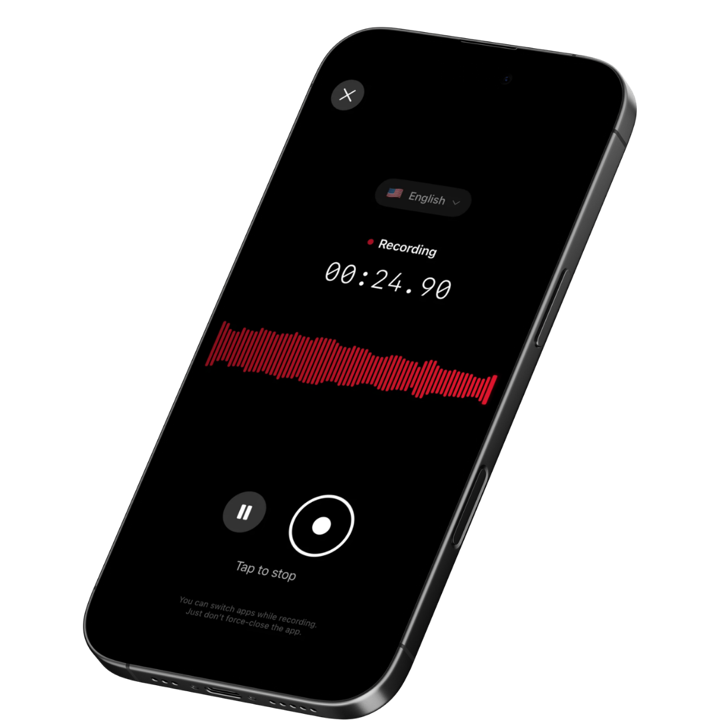
Voice capture offers a fundamentally different approach. Instead of requiring status meetings, check-in calls, or detailed written reports, team members simply speak their updates---and AI handles the rest. Managers get transcripts and summaries without hovering. Team members maintain autonomy without going dark.
Download SpeakWise from the App Store and discover how one-tap recording, AI transcription, intelligent summaries, and Notion integration can help teams share progress without the overhead of micromanagement.
Join 10,000+ professionals who've discovered that the best way to stay informed isn't more check-ins---it's better information capture.
Get SpeakWise Free →
4.9★ App Store Rating | iOS Optimized

🎯 4.9★ App Store Rating | 📱 Built for iOS
