Note-Taking Productivity Statistics 2026


Used by recruiters, executives, consultants, and more.
Note-Taking Productivity Statistics 2026
Information captured in notes has a 34% chance of being remembered, compared to just 5% for information not noted. The global note-taking app market reached $1.2 billion in 2026. 82% of professionals use digital note-taking tools for meeting minutes and project updates. Students who review notes within 24 hours retain 82% of the material versus 51% for those who do not. These 16 statistics reveal why note-taking remains the most underrated productivity habit in the modern workplace.
Note-taking is one of the oldest productivity practices in existence. Yet in 2026, it is being transformed by AI, mobile devices, and the demands of distributed work. The shift from handwritten notebooks to digital platforms has changed not just how we capture information, but how much of it we retain, retrieve, and act on.
This post covers 16 statistics on note-taking and productivity in 2026. The data draws from academic research, market analysis, and workplace surveys. Whether you take notes by hand, use digital tools, or rely on AI transcription, these numbers reveal the measurable impact of capturing information effectively.
1. Information in notes has a 34% chance of being recalled vs. 5% without notes
The most fundamental argument for note-taking comes from recall research. Studies show that if important information is captured in notes, it has a 34% chance of being remembered later. Information that is not recorded in notes drops to just a 5% chance of recall. This nearly 7x difference in retention explains why note-takers consistently outperform those who rely on memory alone. In a workplace context, this means that meetings without notes lose 95% of their value within days.
Source: World Metrics - Note Taking Statistics 2026
2. The global note-taking app market reached $1.2 billion in 2026
The note-taking app market has grown to $1.2 billion in 2026, up from $995 million in 2025, and is projected to reach $1.48 billion by 2027. This rapid growth reflects the increasing centrality of digital note-taking in both professional and academic workflows. The market expansion is driven by remote work, mobile-first usage, AI integration, and the growing demand for cross-device synchronization. Note-taking has evolved from a personal habit into a business-critical infrastructure category.
Source: Global Growth Insights - Note Taking App Market 2026
3. 82% of professionals use note-taking tools for meeting minutes and project updates
Digital note-taking has become a workplace standard. 82% of professionals report using note-taking tools to store meeting minutes, client records, and project updates. This high adoption rate reflects the practical necessity of documentation in distributed teams. When decisions are made across Zoom calls, in-person meetings, and Slack conversations, centralized notes become the single source of truth. Without them, teams rely on inconsistent memories and fragmented recollections.
Source: World Metrics - Note Taking Statistics 2026
4. Students who review notes within 24 hours retain 82% of information
Timing matters enormously for note effectiveness. Research shows that students who revise their notes within 24 hours retain 82% of the information, compared to just 51% for those who do not review promptly. This 31-percentage-point gap highlights the importance of not just taking notes, but processing them quickly. In a workplace context, this means that meeting notes reviewed the same day preserve far more value than notes that sit untouched for a week.
Source: World Metrics - Note Taking Statistics 2026
5. 58% of professionals use digital note-taking as their primary productivity tool
More than half of professionals have made digital note-taking their go-to productivity tool. This 58% figure represents a decisive shift from paper to digital capture. The drivers are clear: searchability, cloud sync, sharing capabilities, and integration with other tools make digital notes more useful than paper for professional workflows. The remaining 42% who prefer analog methods often cite the cognitive benefits of handwriting, creating an ongoing tension between capture efficiency and processing depth.
Source: Market Research Future - Note Taking App Market
6. Handwritten notes produce 34% better long-term retention than typed notes
The handwriting advantage is real but nuanced. Research shows that handwritten notes result in 34% better long-term retention compared to typed notes. The reason is cognitive: handwriting is slower, which forces the note-taker to process, summarize, and paraphrase rather than transcribe verbatim. However, this benefit comes with a trade-off. Typed notes capture more information, which is valuable when accuracy and completeness matter more than recall. The ideal approach depends on the context.
Source: Scientific American - Why Writing by Hand Is Better for Memory
7. Typed notes have nearly twice the word overlap with source material
Research on note-taking methods found that students who typed their notes had nearly twice the "word overlap" with source material compared to those who wrote by hand. This means typists captured information more verbatim but processed it less deeply. The study found that word overlap was negatively correlated with performance, suggesting that transcription without processing reduces learning. This finding has direct implications for meeting notes: capturing everything verbatim is less valuable than capturing key points with context.
Source: Psychological Science - Writing Notes Replication
8. 63% of remote workers rely on note-taking to stay organized across virtual meetings
Remote work has increased reliance on digital notes. 63% of remote workers use note-taking tools specifically to stay organized across virtual meetings. Without the informal memory cues of an office environment, such as whiteboard notes, overheard conversations, and physical proximity to colleagues, remote workers depend more heavily on deliberate documentation. Digital notes serve as the connective tissue that holds distributed teams together across time zones and communication channels.
Source: World Metrics - Note Taking Statistics 2026
9. Hybrid note-takers show 36% better retention than single-method users
The best note-takers use multiple methods. Research shows that hybrid note-takers who combine handwritten and digital methods achieve 36% better retention than those who use either method alone. This finding suggests that different contexts call for different capture methods. Handwriting may be ideal for brainstorming and learning, while digital tools excel at meeting documentation and task tracking. The key insight is that flexibility in note-taking method produces better outcomes than rigid adherence to any single approach.
Source: World Metrics - Note Taking Statistics 2026
10. Notes taken during lectures are 2.5x more likely to trigger long-term recall
Active note-taking during information delivery produces dramatically better outcomes. Research shows that notes taken during lectures or presentations are 2.5 times more likely to trigger long-term memory recall than passively re-reading slides or documents after the fact. The act of deciding what to write down engages evaluative processing that strengthens memory encoding. In meetings, this means that real-time note-taking produces far better retention than reviewing shared slides later.
Source: World Metrics - Note Taking Statistics 2026
11. Demand for cross-device note synchronization has grown by 34%
Users increasingly expect their notes to be available everywhere. Demand for cross-device synchronization in note-taking apps has grown by more than 34% year-over-year. This growth reflects the reality that professionals capture information across multiple devices: phones during commutes, laptops during meetings, and tablets during workshops. Notes that are trapped on a single device lose much of their value. Seamless sync has become a baseline expectation, not a premium feature.
Source: Global Growth Insights - Note Taking App Market 2026
12. 42% of higher education students use digital note-taking apps for lecture tracking
Nearly half of university students globally have adopted digital note-taking applications for tracking lecture content. This 42% adoption rate among students signals the future of workplace note-taking. As these students enter the workforce, they bring expectations for digital-first documentation tools. Organizations that still rely on manual meeting minutes or email-based note sharing will find themselves out of step with the note-taking habits of their newest employees.
Source: Market Research Future - Note Taking App Market
13. 70% of professionals use productivity tools to enhance work efficiency
Note-taking exists within a broader productivity ecosystem. Nearly 70% of professionals use some form of productivity tool to enhance their work efficiency. Note-taking apps are the most widely adopted category within this ecosystem, serving as the entry point for task management, project documentation, and knowledge management. The integration between note-taking tools and broader productivity platforms has made notes actionable rather than static. Notes now generate tasks, populate project boards, and feed into knowledge bases.
Source: Productivity Hub - Productivity Statistics 2025
14. The share of users shifting from paper to digital notes grew by 29%
The migration from analog to digital note-taking is accelerating. The share of users shifting from traditional paper notes to digital platforms increased by more than 29% over the past year. This shift is driven by practical advantages: searchability, shareability, backup security, and AI-powered features like transcription and summarization. Paper notes offer cognitive benefits for learning, but for professional documentation where retrieval and sharing matter, digital tools have clear advantages.
Source: Global Growth Insights - Note Taking App Market 2026
15. 28% of new note-taking apps include standard cloud security
Security has become a priority in note-taking. 28% of new note-taking product launches now incorporate standard cloud security and GDPR-compliant storage options. This reflects growing awareness that professional notes often contain sensitive information: client details, strategic plans, financial data, and personal reflections. As note-taking tools become more central to workflows, the security requirements increase proportionally. Users and organizations are rightly demanding that their captured information be protected.
Source: Global Growth Insights - Note Taking App Market 2026
16. Handwritten notes take 20% longer to create but support deeper processing
The time investment in handwriting pays cognitive dividends. Research shows that handwritten notes take approximately 20% longer to create than typed notes, but they support significantly deeper processing of the material. This trade-off is the central tension in note-taking productivity: speed versus depth. In fast-paced meetings where complete capture matters, typing or recording wins. In reflective settings where understanding matters, handwriting has the edge. The smartest approach matches the method to the moment.
Source: Paperlike - Notetaking Statistics
Notes Are the Bridge Between Information and Action
These statistics reveal that note-taking is far more than a study habit. It is a productivity system that determines how much of every meeting, conversation, and learning experience actually translates into retained knowledge and completed work. The 34% vs. 5% recall gap between noted and un-noted information means that the majority of professional interactions are effectively wasted without documentation.
The market growth tells a parallel story. A $1.2 billion industry built around capturing and organizing information reflects a workforce that recognizes the cost of forgetting. Every missed action item, forgotten decision, and lost insight represents preventable waste.
The most effective note-takers in 2026 are not those who capture the most words. They are those who match their capture method to the context, review their notes promptly, and integrate their documentation into actionable workflows. The future of note-taking is not about writing more. It is about capturing smarter.
The difference between productive professionals and overwhelmed ones is not how much they do. It is how much they remember and act on.---
Capture everything without writing a word
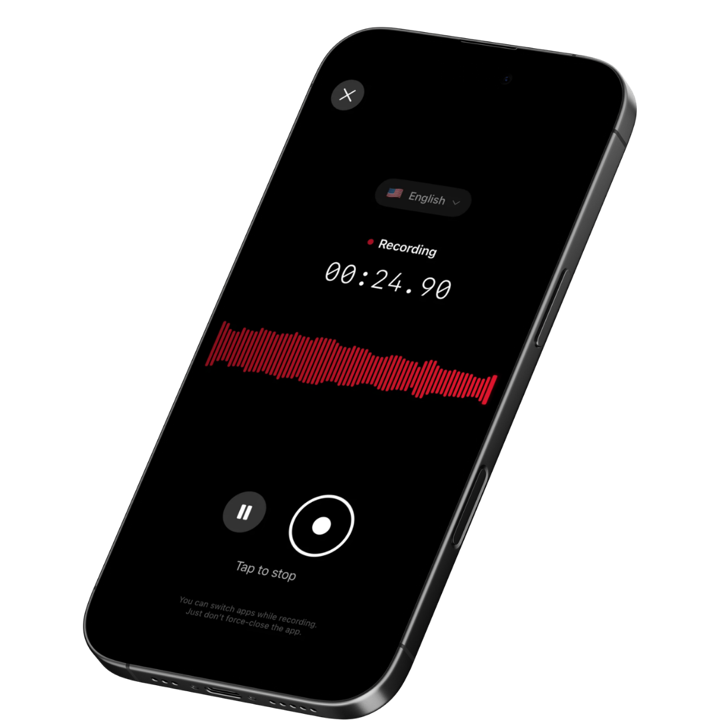
Traditional note-taking forces a difficult choice: participate in the conversation or document it. You cannot do both well simultaneously. Voice recording eliminates this trade-off entirely. Capture every word of a meeting, brainstorm, or lecture while staying fully present and engaged.
SpeakWise transforms voice recordings into searchable, organized notes with AI-powered transcription and automatic summaries. No typing, no missed details, no choice between listening and writing.
Download SpeakWise from the App Store and experience note-taking that captures 100% of the conversation. AI transcription in 100+ languages, intelligent summaries, and automatic action item extraction give you complete notes without lifting a pen.
Join 10,000+ professionals who save 73% of their post-meeting follow-up time with voice-powered note-taking.
Get SpeakWise Free
4.9-star App Store Rating | iOS Optimized

🎯 4.9★ App Store Rating | 📱 Built for iOS
